Book review: The Hypnotist’s Love Story by Liane Moriarty

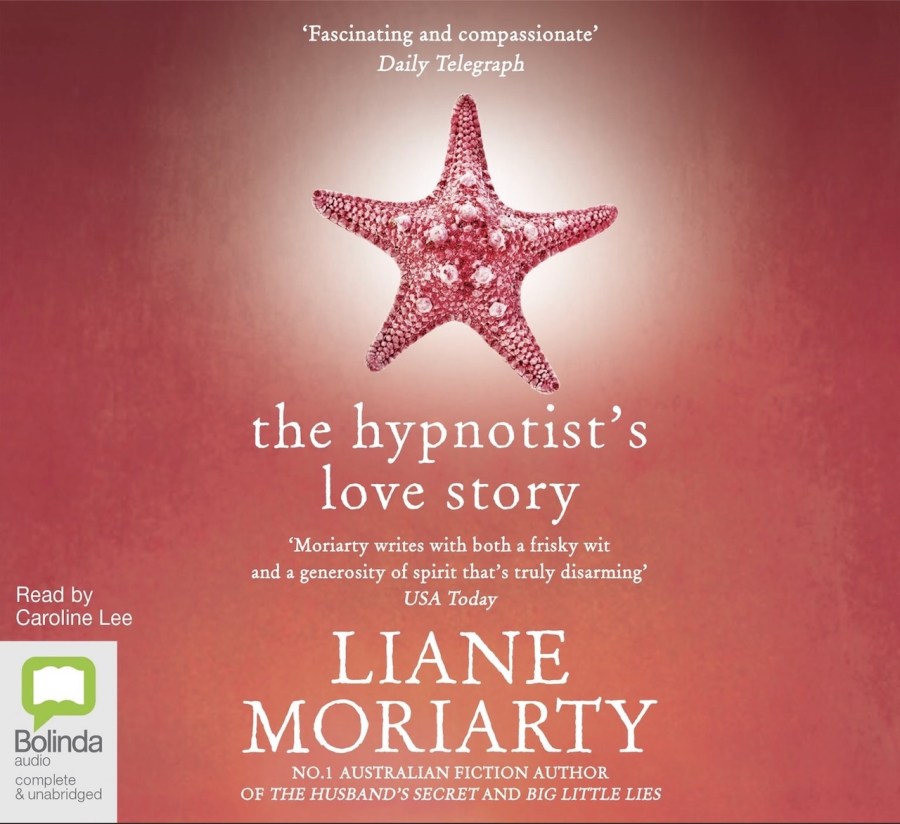
The Hypnotist’s Love Story by Liane Moriarty, is a melodramatic romantic comedy about a hypnotist, a widowed surveyor, his young son, and a stalker.

Hindsight, it’s always just a fraction too late.

Ellen is an empath and a hypnotist who is fascinated by human behaviour and helps people with issues like giving up smoking and pain management. When she starts dating single dad Patrick and he tells her about an ex-girlfriend, Saskia, who has been stalking him relentlessly, Ellen becomes intrigued by her motivation. Even when it becomes evident that she is actually one of Ellen’s clients, using a fake name and Saskia’s behviour becomes more and more obsessive and bizarre, Ellen maintains a level of sympathy for her.

Mum used to say that when she met my dad it was like a perfect love story. I thought Patrick was my perfect love story. Except he’s not. He’s the hypnotist’s love story. I’m the ex-girlfriend in the hypnotist’s love story. Not the heroine. I’m only a minor character.

The story unfolds through the duel points of view of Ellen and Saskia, and we observe Patrick’s anxiety, paranoia and anger at being constantly followed and watched through their lens. Patrick is also grieving his deceased wife while growing to love Ellen. 

I liked Kate. She was a tiny bit odd. Not eccentric, just a bit off-kilter. She always spoke a beat too late or too soon.

The Hypnotist’s Love Story is ultimately about letting go, and while it grapples with some serious topics, it does so with a sense of whimsy that keeps the story light and the villain likeable.

I’d forgotten that the best part of dating wasn’t the actual dating at all but the talking about it: the analysis of potential new boyfriends with your girlfriends.

Moriarty has a skill for amplifying ordinary human frailties and exploring them with humour through quirky larger than life, yet believable characters. The Hypnotist’s Love Story is an entertaining holiday read.

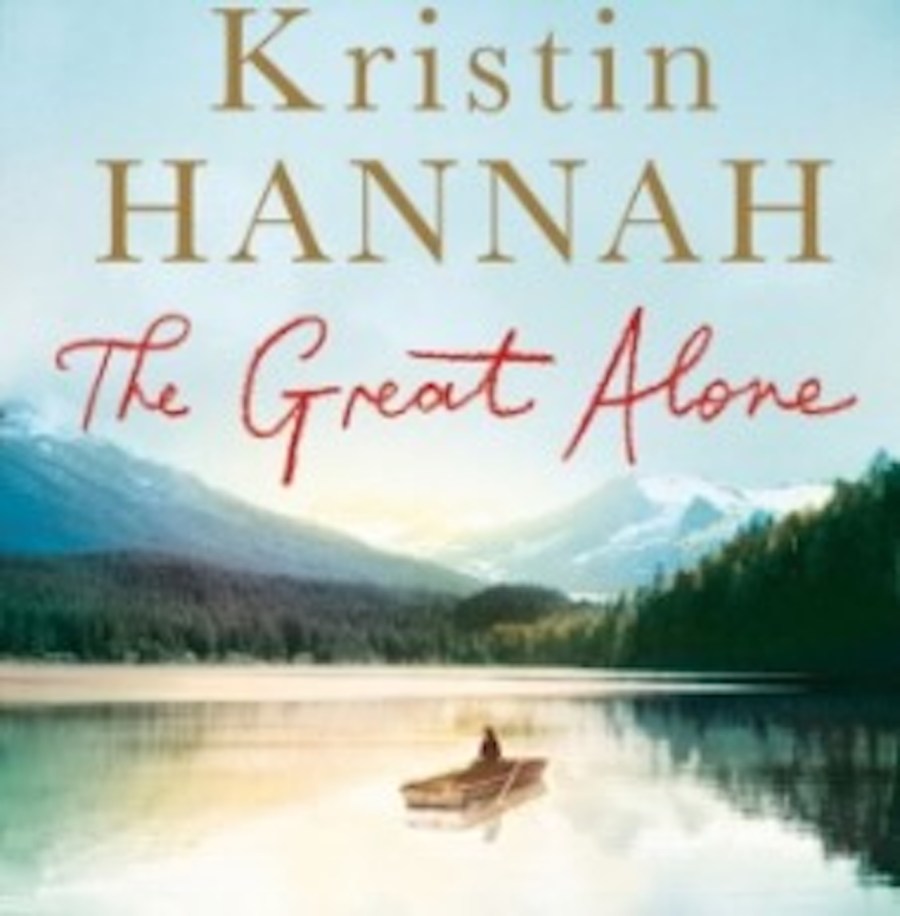
Book review: The Great Alone by Kristin Hannah

The Great Alone by Kristin Hannah is a semi-autobiographical novel about a family’s move to Alaska, set in the 1970s.

You know what they say about finding a man in Alaska—the odds are good, but the goods are odd.

Former POW and Vietnam War veteran with untreated PTSD, Ernt Allbright, decides to move his family to Alaska on impulse, hoping it will enable him to escape his torment. His hippie wife, Cora, and thirteen year old daughter, Leni, go along with it hoping the next move will restore Ernt’s wellbeing.

Alaska isn’t about who you were when you headed this way. It’s about who you become.

Of course moving a slightly unhinged man to an isolated location populated with a tight community of other people escaping civilisation for one reason or another, is unlikely to end well. As the day’s grow shorter and the winter darkness descends, Ernt’s behaviour becomes more and more bizarre and violent. Cora continues to make excuses for him, and Leni finds their living arrangements more and more claustrophobic.

like all fairy tales, theirs was filled with thickets and dark places and broken dreams, and runaway girls.

Characters brimming with eccentricities, small town politics and paranoia’s, good guys, bad guys and the vast Alaskan wilderness tell a story of human resilience and vulnerability living on frontiers.  The Great Alone is a dramatic, harrowing tale about family, trauma, small town communities, survival, and the beauty and brutality of the northern wilderness. A gripping read, but not for the faint hearted.

Book review: A Gentleman in Moscow by Amor Towles

I studied Russian history in high school and became fascinated by the Tsars, so when I heard about A Gentleman in Moscow by Amor Towles, I had to read it. I was not disappointed, the historical novel has a bit of everything – poetry, politics, espionage, friendship, romance and  parental duties.

If a man does not master his circumstances then he is bound to be mastered by them.

In 1922 after the Russian Revolution, aristocratic count Alexander Ilyich Rostov is accused of writing a counter revolutionary poem by the Emergency Committee of the People’s Commissariat for Internal Affairs and sentenced to a life of confinement in Moscow’s Hotel Metrolpol. He is moved from his luxury suit at the hotel to a cramped room on the 6th floor. 

Alexander Rostov was neither scientist nor sage; but at the age of sixty-four he was wise enough to know that life does not proceed by leaps and bounds. It unfolds. At any given moment, it is the manifestation of a thousand transitions. Our faculties wax and wane, our experiences accumulate and our opinions evolve–if not glacially, then at least gradually. Such that the events of an average day are as likely to transform who we are as a pinch of pepper is to transform a stew.

Over the decades of his incarceration Count Rostov overcomes despair at his circumstances to make a full life for himself within the confines of the hotel, inspired by a young girl he meets who has a great curiosity and a skeleton key. He discovers the hotels hidden treasures and idiosyncrasies. Through the years at the hotel, Count Rostov becomes a waiter with a knack for seating guests in such a way as to avoid any disruptions to diners, falls in love and has a daughter.

If patience wasn’t so easily tested, then it would hardly be a virtue. . . 

A charming romp through Russian history, A Gentleman in Moscow has a fairytale quality about it, but is also a beautiful literary novel brimming with delightful colourful characters and a setting that adds colour to the suffering taking place outside its walls through decades of wars and revolutions.

Book review: We are the Stars by Gina Chick

I rarely watch television, but was compelled to last year after a number of people insisted that I would enjoy Alone season 1 set in Tasmania. They were right – I love the Tasmanian wilderness and I loved that an unassuming middle aged women beat a load of blokes at a survival contest while being real and vulnerable. That was my first encounter with Gina Chick. 

Music grows into crips, sonic flowers. Harmonic fragrances weave and bloom. It’s an anthem I know and my heart grows wings.

At my last book group meeting, Gina’s memoir, we are the stars, was selected for our monthly read. I can say that it exceeded my expectations and at various times made me laugh and weep. Her writing voice has a lovely poetic magical realism quality to it that captured me.

I’ve lost connection with the girl who danced with storms and talked to birds. Forgotten what it is to follow a flickering shadow, tracking the scalloped breast of a hunting eagle, primary feathers splayed, micro adjustments to keep its body suspended on a cushion of air. I can’t remember the last time I walked barefoot in the bush, lit a fire and slept beside it, caught starts on my tongue, let the booboo’s haunting refrain circle my dreams.

Gina grew up in Jarvis Bay and was, in her own words, a strange kid. She had a greater affinity with animals than other children and was ostracised by her peers at school. Fortunately she had a loving family, a love of reading, and an endless stream of critters to look after, to fortifier her from loneliness during her childhood.

When did I abandon the fey creature who saw worlds of wonder hiding beyond the membrane of the real, and brimmed with love for every living thing?

As a young person at university in Sydney, she found her people in the queer community and at dance parties. But she also possessed a naivety, and that, along with a lingering sense of ‘otherness’ and desire to be liked, meant she was vulnerable to exploitation and found herself in a relationship with a con man who left her with a large debt to pay off. 

Every heart is a house of cards, easily undone by the right lever. The right words. The con whispers a spell, the mark activates it and confers the power to self-destruct, simply by believing it. That’s the kicker with a con. They set things up so we willingly take the gun they’ve so lovingly prepared, turn it on ourselves, and pull the trigger.

Her mother suggests to her that she could be autistic, which makes sense given her narrative about her childhood, forthrightness and vulnerability to exploitation. Despite the setback, soon her extraordinary resilience kicked in and she found a way to clear herself of debt and find her way back to herself through reconnecting with the wilderness. 

I’ve never been able to hate Grayson. He behaved in his nature and I in mine. I wonder if my curse follows him; the consequences of his actions a slow, creeping raft of misery and loneliness. A long life looking out of his own eyes, hearing only the hollow rattle of his stories in the echo chamber of his castle of lies. 

Gina’s mother was adopted. When Gina was 18 her mother discovered her birthmother was writer Charmain Clift, another unconventional women, who’s discovery helped Gina to make more sense of herself.

Stooped into itself, a piano beckons with sweet purity. I’m grateful for the balm of music. 

True love found Gina in the US in a man she met on a wilderness survival course. The two married and had a child called Blaize. Tragedy struck the couple when their daughter died, aged three. Gina shares her deep grief with an extraordinary vulnerability in her memoir – this is the point where I found myself in tears on an plane on my way to Canberra. 

Our only true safety lies in our own resilience and honesty, in being able to look our darkness in the eye and say, yes, you are part of me, a segment of my deepest mystery, even if I don’t understand you yet. Safe is being willing to reach through our fear to clasp the hands of our demons and welcome them in. Not hiding from any part of ourselves.

I think parts of Gina’s story will resonate with many women who grew up in the 80s, and it’s wonderful to see a woman living boldly in mid life. There are so are so many moments that present opportunity for connection for readers – from her love of nature, challenges growing up, finding her people and partying, her losses and grief as an adult, and her life-force that endows her with an extraordinary human resilience and a strength to carry on. We are the stars is a beautifully crafted memoir that inspires reflection on life and what is important. Highly recommend it.

In the magnificent wilderness of my body I’ve become a gardener, hands buried to the elbows in earth and mud and the rot of compost, churning and turning the soil, uncovering small, sad seeds of belief that I’m not enough. It takes tenderness to plant them, right side up, water them with benedictions and whispered spell of forgiveness. With enoughness.
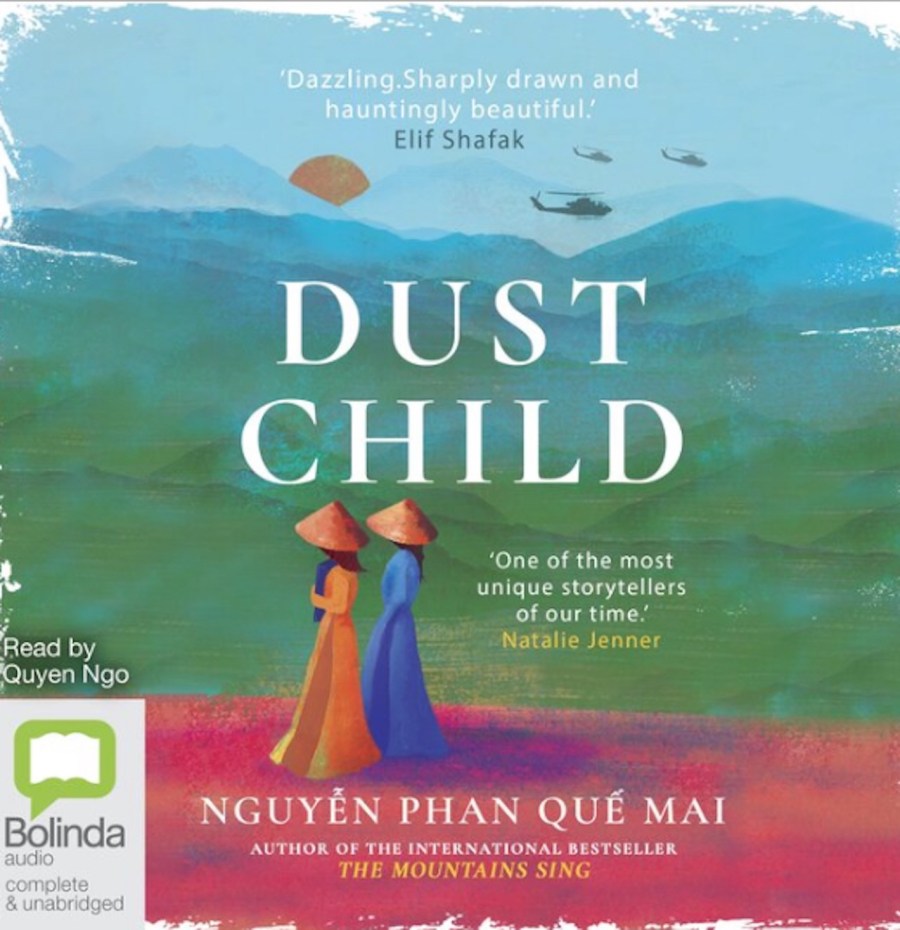
Book review: Dust Child by Nguyễn Phan Quế Mai

Dust Child by Nguyễn Phan Quế Mai was based on her doctoral research on Vietnamese Amerasians. The seven years of research shows in the detail about the history, culture and Vietnam. The story spans multiple timelines between 1969 and 2016.

Vietnamese Amerasian, Nguyễn Tấn Phong’s application for an American visa for himself and his family under the Amerasian Homecoming Act is denied. He was caught out having had applied before and attempting to include people he was not related to. 

During the Vietnam War, tens of children were born into relationships between American soldiers and Vietnamese women. Tragic circumstances separated most of these Amerasian children from their fathers and, later their mothers. Many have not found each other again.

Soon after Phong meets an American couple, Dan and Linda who (according to Linda) have come to Vietnam as therapy for her veteran husband’s trauma. Linda doesn’t know that Dan wants to find Kim (real name Trang), a woman he had kept as a mistress while he was a helicopter pilot during the Vietnam war. Phong undertakes to help him and act as the couple’s tour guide.

She had tried to live an honest life, but the war had given her no choice. It had forced her to make up a version of herself which was acceptable to others. In a way, making up stories had been the basis of her survival and her success.

The story is told on two timelines – Phong and Dan’s present-day narration and Kim’s war-time story when she was and her sister worked to earn money to pay off their parents debts by keeping American soldiers company. Dan leaves Vietnam, abandoning a pregnant Kim.

Everyone came from dust and would one day return to dust. Life is transitory, after all.

Soon the three storylines converge.

What I found most interesting about Dust Child is that it tells the Vietnam war experience from the perspective of ordinary Vietnamese people both during the war and afterward, shining a light on the lasting effects.

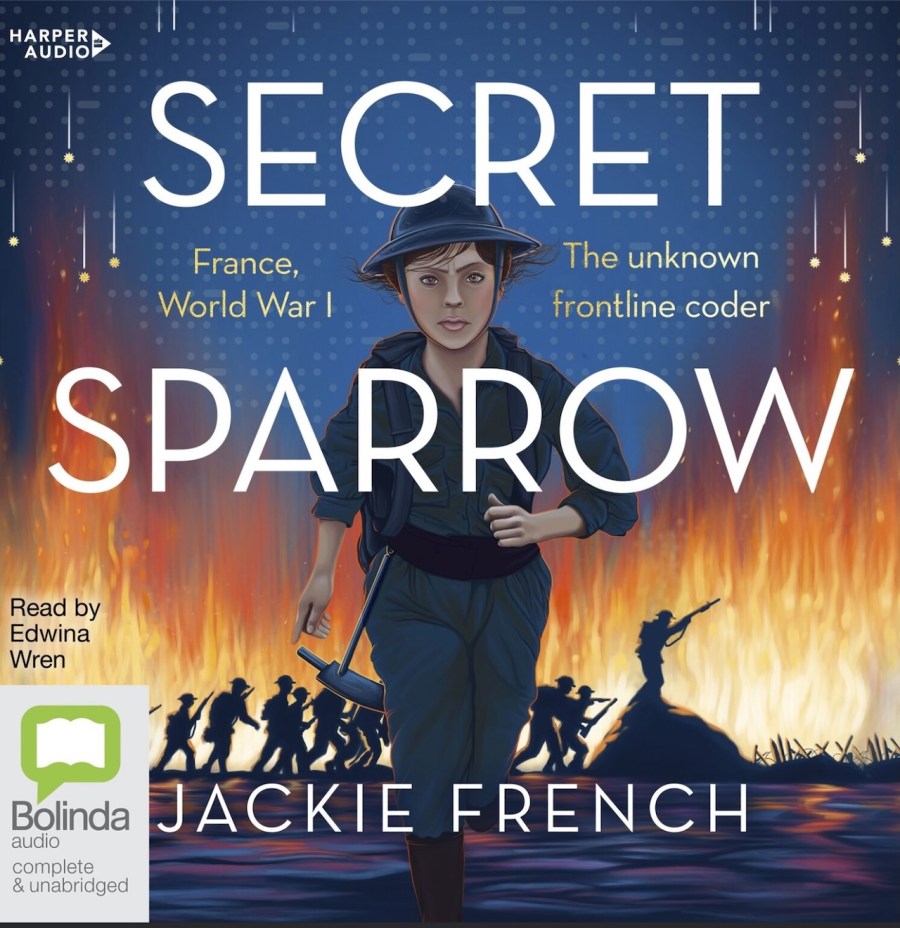
Book review: Secret Sparrow by Jackie French

Secret Sparrow by Jackie French is a historical fiction novel about the contribution a female signallers to the war effort during World War I. Sixteen year old Jean McLain works in a post office in England. When she wins a national Morse code competition, the British army approaches her to become a clandestine signaller in France. Her contribution could help Britain win the war.

Jean was fast. Faster than her older brothers, who had learned Morse code from the crystal radio sets they’d built. Before the war they tapped out message to each other on their bedroom walls.

Jean will be one of a team of women at Rouen receiving and sending messages for the army, working in 12 hours shifts without so much as a toilet break. The British army wished to hide the involvement of women so much that they burned every document evidencing how women and girls were working in the trenches and battles of World War I. Soon, Jean is sent to the front due to her exceptional skills to help at the ill fated Battle of Cambrai.

The motorbike swerved wildly, jumping up onto the footpath then into the slightly higher ground of the new park, tearing through the marigolds. Bikies don’t care about flowers, thought Arjun, then realised the figure he held wasn’t the sturdy shape of a bloke, but a woman’s, skinny under the leather jacket. Her helmet hid her face.

The story of Secret Sparrow is told in 1978 by an old postmistresses, about her time as a ‘telegraph girl’ in WWI. She she tells her tale to Arjun, a young boy, after she rescues him from a flood on her motorbike in the country town of Burrangong. She relays her story to pass the time while they are sheltering in a bin on top of a hill above floodwaters trying to keep warm in the rain. 

But women signallers? She’d never heard of such a thing. There’d been no reports of women doing any such work in the newspapers.

Secret Sparrow is based on true events and gives women who were involved in the war effort a voice. The story sets a cracking pace, and while it does not shy away from describing the terrible conditions of war, it is crafted to be suitable for readers of 12+.

Book review: Yellowface by Rebecca F Kuang

A member of my writing group recommended Yellowface to me, and ironically I began reading it a few days prior to printing out my latest manuscript to give to my writing group colleagues to critique.

Every writer I know feels this way about someone else. Writing is such a solitary activity. You have no assurance that what you’re creating has any value, and any indication that you’re behind in the rat race sends you spiraling into the pits of despair. Keep your eyes on your own paper, they say. But that’s hard to do when everyone else’s papers are flapping constantly in your face.

Yellowface is a story about two ambitious young novelists who met at college. Athena has written a critically acclaimed novel that’s also secured a deal with Netflix, and she is revelling in her success. Her friend Juniper’s debut has almost disappeared from the shelves of bookstores due to poor sales, and she struggles with jealousy of her successful friend.

Writing is the closest thing we have to real magic. Writing is creating something out of nothing, is opening doors to other lands. Writing gives you power to shape your own world when the real one hurts too much.

The young women go out on the town to celebrate Athena’s success then return to Anthea’s apartment where she shows Juniper her, until now, unseen new manuscript. She also decides makes pancakes to dilute their boozy evening. Suddenly, Athena is choking on pancake, clawing at her throat, unable to breathe. She dies while Juniper is on the phone to emergency services.

But the best revenge is to thrive.

On impulse, Juniper slips Anthea’s secret new manuscript into her bag and takes it home to study. Before she knows it she’s refining and editing, then publishing the manuscript as her own work, using her middle name as her surname as it, well, sounds more Asian. June Song. And Juniper’s dream of becoming a famous writer comes true.

The truth is fluid, there is always another way to spin the story.

The trouble with deception is that you set yourself up against both your internal and external worlds, and it’s a fraught space to maintain a fake self. There’s constantly needing to convince yourself that you are not a fraud, it’s as much your work as your dead friends given all the effort you put into making it publishing ready after all. Then there’s the worry about evidence in the world that the work actually belonged to Athena, managing the reactions when people discover you are not in fact Asian, and the growing whispers on Twitter about plagiarism.

But Twitter is real life; it’s realer than real life, because that is the realm that the social economy of publishing exists on, because the industry has no alternative.

Yellowface is a literary heist about the fickle publishing industry, cultural appropriation, and writing the other. It is also a hilarious literary caper told by an unreliable narrator, about the creative life and the desire to be seen. It will particularly appeal to the writers among us. 

I wonder if that’s the final, obscure part of how publishing works: if the books that become big do so because at some point everyone decided, for no good reason at all, that this would be the title of the moment.

And, if I suddenly stop my Friday blog, you’ll know where to start looking.

Book review: Magpie by Elizabeth Day

I heard about Magpie by Elizabeth Day on a podcast I was listening to and looked it up without paying any attention to what it was about. Initially I thought it was a run of the mill, if well written, domestic drama about heteronormative relationships and trying to have children. I was about to put it down when things started to get weird.

they had to adapt their dreams, to cut the starry cloth of their imaginings to fit the circumstance of their reality,

Marisa, a children’s book illustrator, falls pregnant only three months into a relationship with Jake and they move in together. When Jake’s work has a crisis that causes his income to dip, they decide to take in a lodger to help pay the mortgage. 

That’s the problem with charm. It means you get away with stuff. It means you never have to develop a real character because no one remembers to look for one. They’re too busy basking in the glow of your attention. They’re too busy being impressed.

Kate, a film publicist, moves in. She is nice but a bit too friendly and Marisa begins to think she could have an ulterior motive. She puts her toothbrush in the master bathroom alongside Jake and Marisa’s then starts to do things like cook Jake his favourite meal. Jake seems to be oblivious.

She had mistaken the bubbles of anxiety in her stomach for a simmering romantic passion, wrongly believing that love felt unsettled, like a half-packed suitcase awaiting a trip that never comes.

Then there is a change of view point and a massive and completely unexpected plot twist, and the story takes on the tone of a baroque domestic noir thriller. And I’m not going to tell you any more as it will give too much away.

I began to realise that if I never achieved anything outwardly ever again, I would still exist. The voice in my head is not who I am.

Magpie is an exceptionally well crafted book, no wonder it was recommended on a writing podcast. It is an exemplary example of the unreliable narrator. Themes include fertility, toxic relationships, dysfunctional families, mental illness, betrayal, and the female gaze. 

Rhubarb Lemonade by Oskar Kroon

Rhubarb Lemonade by Oskar Kroon is about a young woman called Vinga who is in between childhood and adulthood. A sweet coming of age story set in Sweden.


Grandpa used to make maps for me when I was little. Back then it was maps of the garden, which almost always ended under the lilac bush where he had left me a licorice pipe or some other treasure.

Vinga’s parents have separated. She misses her dad and her mother is sad all the time. Her grandfather lives on an island and she is happy to escape her home life to spend the summer with him. She has a strong bond with her grandfather. They share a similar quirkiness and they both love the sea.

The sea holds so much. In the evening it looks empty, but beneath the surface it is undulating and alive. There are secrets down there. And in the sky. Up there, where dark shadows appear, followed by stars at night. So big, so far away. 

Over the summer Vigna works on restoring an old boat and dreams of becoming a sailor like her grandfather. One day Ruth, an outgoing, confident and talkative young woman appears and the two girls become friends. Ruth doesn’t like the slow pace on the island and is afraid of the sea. It’s a case of opposites attract.

You have to know how everything works. You have to know exactly where each chock goes to get the right result. And it has to be this very specific kind of chock…It’s so precise. The curve of the boat isn’t for beauty’s sake. It is beautiful because it’s the best shape to allow the boat to float and move smoothly on the water.

Rhubarb Lemonade is a short, easy read written with a beautiful poetic lilt (even in translation). Themes include first family breakup, blended families, love, loss, mental health and trauma.

Book review: The Women by Kristin Hannah

I enjoy stories that highlight the important roles women played in history, when they have so frequently been relegated to the shadows. 

Thank God for girlfriends. In this crazy, chaotic, divided world that was run by men, you could count on the women.

Anyone who grew up in the 70s and 80s would remember the controversial Vietnam war, intended to contain the spread of communism. In The Women, Kristin Hannah tells a story about the Vietnam war through a women’s gaze, that of military nurses who worked on bases and in field hospitals under fire.

The women had a story to tell, even if the world wasn’t quite yet ready to hear it, and their story began with three simple words. We were there.

In 1966, Frances’s (or Frankie as she becomes known) brother leaves for the Vietnam war. Frankie’s pre-planned debutante life is set to change irrevocably when she decides to enlist as an Army nurse after her brother’s friend tells her ‘Women can be heroes.’

From here, the war was almost beautiful. Maybe that was a fundamental truth: War looked one way for those who saw it from a safe distance. Close up, the view was different

Frankie lands in Vietnam with inadequate training. It’s a ‘learn or die’ situation where she is tutored by seasoned nurses and doctors to patch up men and civilians maimed by military weapons and napalm. Soon she will be able to work during a blackout with bombs dropping around her and a flashlight gripped between her teeth while she staunches a gut wound.

Damn it, McGrath! We don’t have time for fear. You’re good enough. Do it!

While she is away public sentiment turns against America’s involvement in the war, and when Frankie returns, it is not to a hero’s welcome but to shame, protests, nightmares and a family who refuse to acknowledge what she has been doing.

We laugh so we don’t cry.

Reading The Women is a visceral experience. From the chaos and gut wrenching losses of the combat zone to the aftermath and returning home and PTSD. Hannah’s research is impeccable and she keeps the reader absorbed through action and plot twists, recasting the Vietnam war narrative. The Women is not a book for the queasy or faint hearted, but is a captivating, heart wrenching, moving and important fictional contribution to the historical narrative of the Vietnam war.