Book review: Still Life by Sarah Winman

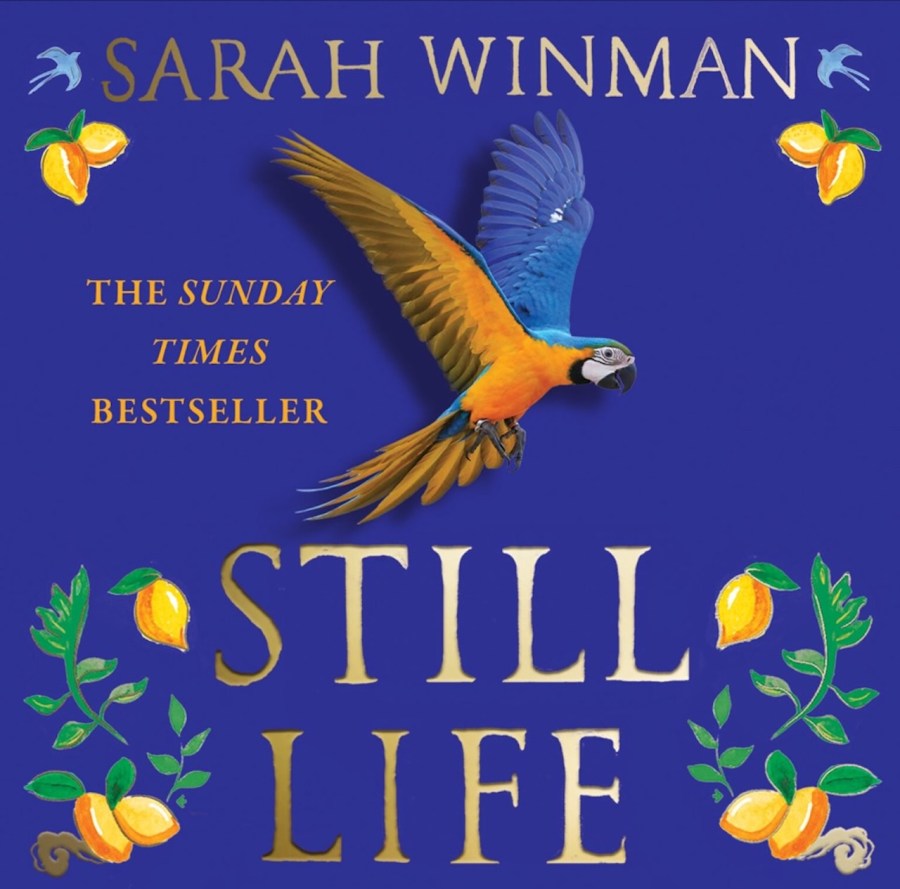
Sarah Winman’s Still Live is a character driven historical fiction novel with a fascinating caste that spans the decades from WWII through to the 1960s. It speaks to a series of life moments and how art, music and food can move us emotionally.

There are moments in life, so monumental and still, that the memory can never be retrieved without a catch to the throat or an interruption to the beat of the heart. Can never be retrieved without the rumbling disquiet of how close that moment came to not having happened at all.

Twenty four year old English soldier Ulysses Temper finds himself in the wine cellar of a deserted Tuscany village during a bombing blitz in 1944. Sixty four year old Evelyn Skinner is a middle aged art historian visiting Italy to salvage paintings and reminisce about her youth. The two meet and connect by chance and the impression they make on one another is enduring. 

Art versus humanity is not the question, Ulysses. One doesn’t exist without the other. Art is the antidote.

Evelyn returns to London to teach. Ulysses returns home and reintegrates with his eclectic friends at The Stout and Parrot until a surprise inheritance from a man whose life he saved sends him back to Italy along with his ex-wife’s daughter, Alys and his friend Cress. Cress talks to trees and recites poetry, and has a parrot Claude who quotes Shakespeare.

So, time heals. Mostly. Sometimes carelessly. And in unsuspecting moments, the pain catches and reminds one of all that’s been missing. The fulcrum of what might have been. But then it passes. Winter moves into spring and swallows return. The proximity of new skin returns to the sheets. Beauty does what is required. Jobs fulfil and conversations inspire. Loneliness becomes a mere Sunday. Scattered clothes. Empty bowls. Rotting fruit. Passing time. But still life in all its beauty and complexity.

There is a beautiful section about the 1966 floods of Arno in Florence where neighbours looked out for one another communicating by candle light. The flood devastated the city displacing citizens and destroying millions of books and artworks.

And for two hours the wine was poured, the cheese cut, and the two men talked. Of what? Who knows? Of love, of war, of the past. And they listened with hearts instead of ears, and in the candle-lit kitchen three floors up in an old palazzo, death was put on hold.

Still Life is a story about what it means to be human, of the many ways we can love people, friendship and chosen family. Art, beauty and luck and how they can move and shape us thread through the narrative.

Book review: Love Objects by Emily Maguire

Love Objects by Emily Maguire is not an easy read. The novel shines a light on the dark side of class relations, the challenges of the mental health condition hoarding and what is means to care for family with mental illness.

As Nic said, second-hand clothes were like day drinking, government handouts and having a lawyer: classy if you’re rich, proof you’re trash if you’re poor.

Forty-five year old Nic, a childless department store check out chick living alone in her inherited childhood home collects random stuff. She falls after climbing onto piles of things to reach a hook to hang something she collected on the way home from work and injures herself badly. Unable to move she drifts in and out of consciousness. Childhood memories keep her company, triggered when she spies an old tiara under her bed.

People have died of sadness, Lena knew. Was this what it felt like, just before?

Lena is Nic’s niece. She lives hand to mouth at the Sydney university where she studies, hiding her economic disadvantage from her wealthy peers. She meets and has sex with rich boy Joshua not realising he is filming them. He posts the video on the internet and despite hiding Lena’s face, she is recognisable by a large scar on her arm.

No such thing as custody rights to your sister’s kid. No matter how destroyed you are by her absence.

Will is Nic’s nephew. After being released from jail for drug offences, he has a relationship with a woman who has children by someone else. He loves this life, but is cut adrift when the woman ends the relationship and he heads south to Sydney to see his sister and aunt. He is trying to deal with a rotten tooth that gives him a lot of pain but he cannot afford a dentist.

Will, she texted, how have we gone all these years and not known our aunty is completely and utterly batshit crazy?

Lena goes looking for Nic after she doesn’t turn up at a lunch date and finds her semi-concsious in her house so crammed with stuff that emergency services have to cut a path through the clutter to get her out. Nic is a hoarder. While Nic is in hospital the house is deemed a health hazard by a social worker and Lena agrees to deal with the contents so Nic can return home. Will arrives and helps Lena finish the job.

She puts today’s newspaper on the kitchen table, where it slips about for a few seconds before settling nicely. It would sit on the kitchen table until she had a chance to finish reading it, and if that hasn’t happened by bedtime she will put it with its colleagues in the hallway, waiting for a day when she has more time, better concentration.

Love Objects has a third person narrative divided between the three main characters – all of whom are dealing with their own losses, but the central focus is Nic’s hoarding disorder and how the three characters respond. Maguire offers great compassion to her characters through her compelling writing and this carries the reader through a difficult read.

Book review: Rapture by Emily Maguire

As a young person in my twenties I spent a couple of years performing acrobalance in a circus. One year we put on a show about the life of Pope Joan, a woman who disguised herself as a man and became pope during the Middle Ages. I became fascinated by that story. Emily Maguire’s historical fiction novel, Rapture, took inspiration from the story of Pope Jaon. 

She does not know it is odd for a girl to read until one of her father’s guests, a Benedictine from Fulda Abbey, spots her bent over a book by the fire and roars as though he’s spied a deer hunting a man.

Set in ninth century Mainz (Germany), Rapture is the story of Agnes whose mother died in childbirth and whose English father, a priest, educates her and raises her to be devout and curious about learning. Not surprisingly Agnes sees no future for herself as a wife and mother, so sheds her identity and dresses as a man to become John in order to have the freedom to follow her interests.

Her self is an illusion yet it is one beloved by most everyone who has heard her speak . . . She is thirty-three years old and there is no one else in the world who knows who she used to be.

Rapture follows Agnes journey from learning from the men in her father’s life while sitting under the dinner table as they talked, to becoming a man and a Benedictine monk so she can be privy to the teachings of god, then rising through the ranks to become a renowned scholar and the Bishop of Rome. Throughout her journey as a man she reflects on her duality as a women in hiding and subjugating her body so it does not betray her.

Thus she learns that great and wise men felt as she had as a child on the forest floor. She learns there are systems of morality based on reason rather than God’s will … She learns that the monks of Fulda can read most anything they like and call it Christian work.

The more I read, the more I was drawn into this meticulously researched story. Despite the subject matter, you do not need to have any interest in religion to read Rapture. It is a beautifully written, thought provoking and engaging story. 

Book review: Theory and Practice by Michelle de Kretser

Michelle de Kretser’s latest novel, Theory & Practice, opens as a conventional fiction narrative, but soon after it begins is abruptly interrupted by the narrator. Cindy proceeds to reflect on her life, first as a child in Sri Lanka and then as a young woman living in Melbourne in 1986 and tackling post graduate study on her idol, Virginia Woolf whom she calls ‘Woolfmother’.  As her studies progress, she struggle with Woolf’s flawed humanity and contradictions between her progressive public persona and her private racism and pretentiousness.

Instead of shapeliness and disguise, I wanted a form that allowed for formlessness and mess. It occurred to me that one way to find that form might be to tell the truth

For those of us who were of University age in the mid 80s when education was free, the work is both familiar and compelling. It was a time when learning was seeped in theories about how we ought to live, while life was experimental and relationships were complicated. This tension between what we believe about how we should live, and how we actually live runs throughout the story as our protagonist’s feminist ideals clash with her lived experience. But as humans we often abandon our moral principles in pursuit of self-interest.

While trusting in feminism’s transformative power, I retained a stubborn, dazed belief in love.

Cindy becomes friends with a couple called Kit and Olivia. Cindy and Kit become lovers and Cindy develops a distant and jealous dynamic with Olivia, behaviour that defies her feminist principles. Meanwhile she contends with a constant stream of passive-aggressive messages from her widowed mother who lives in Sydney and continues to exert maternal influence making Cindy feel guilty for leaving her to move to Melbourne.

I was twenty-four. The first thing I did in Melbourne was buy a vintage dress. The dress was made of lace, and had cap sleeves, an empire waist and a fitted knee-length skirt. It dated from the early sixties, when thousands of its kind must have been made. Now fashion had plucked it from oblivion and filled it with warm young bodies again. Powder-blue and rose and coffee-cream variants existed, but my dress was Intellectual Black.

Theory & Practice is unsentimental and bristling with the anxiety of youth. Fiction and non fiction collide throughout this novel which defies conventional form, blending fiction, essay and memoir.  Themes include identity, displacement, feminism and colonialism. Highly recommended, especially if you enjoy unconventional narratives and remember the 80’s.

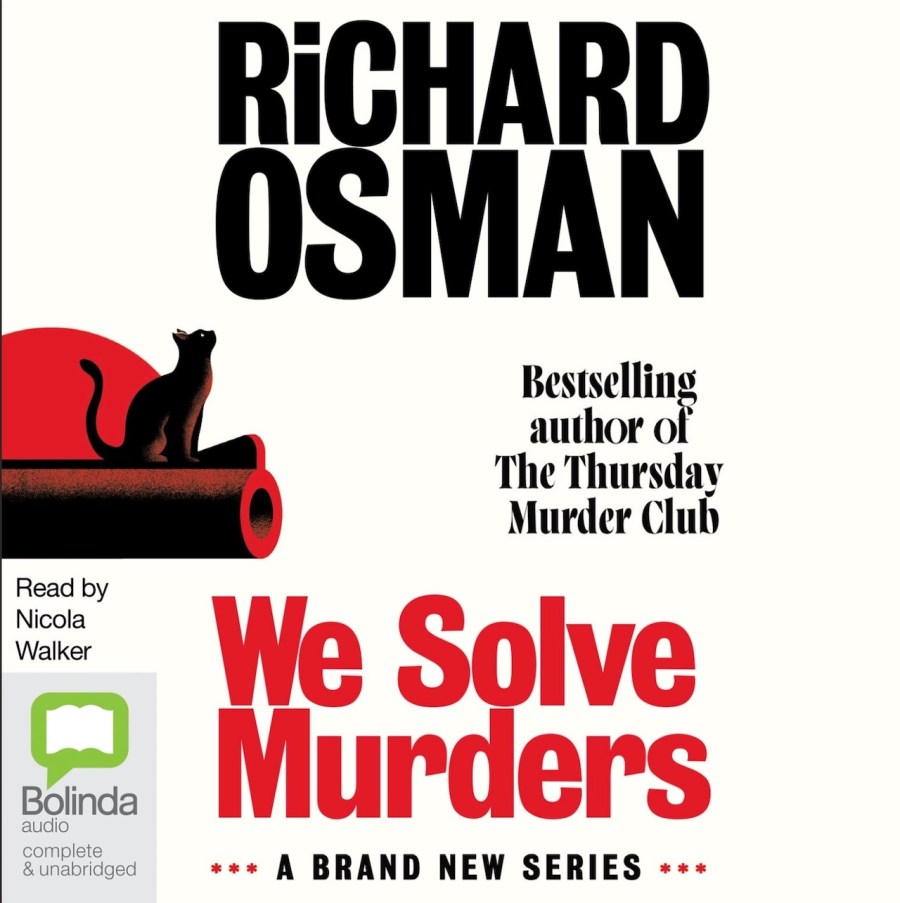
Book review: We Solve Murders by Richard Osman

I am very exited about Richard Osman’s latest novel (and new series), We Solve Murders. Osman is best known for his Thursday Murder Club Mystery Series about a group of mischievous septuagenarians who solve cold case murders (if you search his name on this blog you will find reviews for three).

If you have any sort of personality, someone will eventually want to kill you.

True to Osman’s style, We Solve Murders is a hilarious murderous romp with a bunch of misfits.

There are friendships forged in fire, which end up disappearing like smoke, and other casual, nodding friendships, which will stay with you for the rest of your life.

Private Security Guard, Amy, is charged with the care of best selling novelist Rosie D’Antonio on an exclusive island. 

Steve is grateful that at least he feels loved. Because if you don’t feel loved, it’s difficult to feel anything at all.

Amy’s father in law and widower, Steve, is a retired police officer who lives with a stray cat called Trouble. Steve likes a quiet, predictable life and the Wednesday night quiz at the pub. Amy and Steve are close and speak regularly on the phone.

It’s not every daughter-in-law who will high-five you when you’ve shot a drug dealer in a Coldplay T-shirt, is it?

When Amy discovers she has been set up as the scapegoat for a slew of murders that require her death to wrap up, she and Rosie go on the run, a killer in pursuit. Amy doesn’t know who she can trust to help her. She loves her husband, but he’d be hopeless in a dangerous situation. She lands on Steve – he has relevant skills and she trusts him implicitly. Steve is reluctant to get involved, but he does it for Amy.

Every criminal wants to tell the truth eventually. Enough of the truth to be seen but not enough of the truth to be convicted.

We Solve Murders has the feel of a comedic heist with a cast of larger than life absurdist eccentric characters that make the globe trotting journey such fun, I couldn’t put the story down.

one rule in life: if you see a door, walk through it.

Book review: Our Homesick Songs by Emma Hooper

Our Homesick Songs by Emma Hooper is a book about place and the people who inhabit it. In Big Running, Newfoundland, where the community relies on the fishing industry, the fish have disappeared and the people begin to abandon their homes in search of work.

When they needed to remember where they were from, they could sing to see, to remember. They’d sing along, all together, sing and sing until morning.

Aidan and Martha Connor don’t want to move off the island so they job share on Canada’s mainland while also juggling home and children, Finn aged 10 and Cora aged 14, on the island.  Cora spends her time decorating the abandoned houses in the town by turning them into different countries – Italy, England, Mexico. When Cora goes missing, Finn becomes desperate to attract the fish back to Big Running in the hope it will reunite his family.

And sometimes the water was blue, more blue than sky, and sometimes it was dark and green and thick, and sometimes it was hardly any colour, changing and moving and pushing and pulling like breath.

Our Homesick Songs is a story of what happens to small communities when their primary natural resources disappear and is both heartbreaking and hopeful, in part due to the dual timelines. Finn in the present (1992-93) and his parents union twenty years earlier when fish were plentiful. 

All songs are homesick songs, Finn. Even the happy ones? Especially the happy ones.

Hooper elicits a compelling sense of place and atmosphere in this poetic story about family, love, being brave and keeping the faith. The reader can almost hear the plaintive mermaid song across the water. 

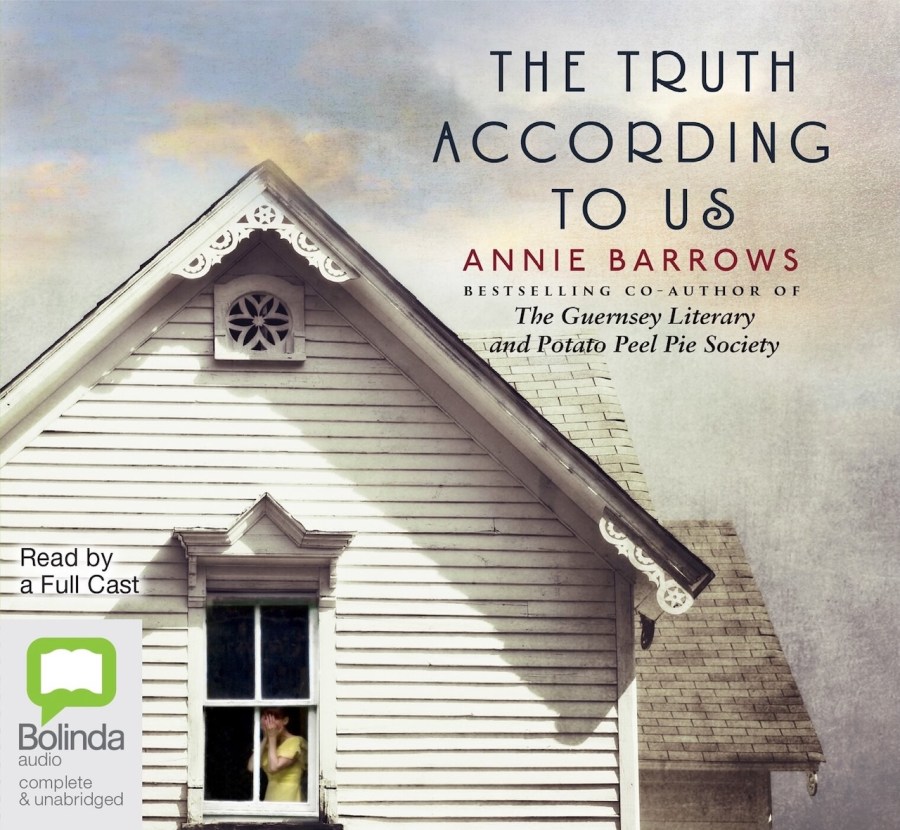
Book review: The Truth According to Us by Annie Barrows

The Truth According to Us by Annie Burrows (co-author of The Guernsey Literary and Potato Peel Pie Society) is about what happens to independent women in 1938 when they refuse to marry a suitor their father thinks they should say yes to.

It’s very demoralizing to be regarded as a problem rather than an individual.

When Layla Beck refuses to marry, her father cuts off her allowance and tells her to get a job. He thinks she’s spoilt. Her uncle helps her out, commissioning her to write the town history of Macedonia, West Virginia, as part of the federal writers project. The version of history she is to write is one sided, dictated by the towns families of influence. No one, including Leyla expects her endeavour to be a success.

I’ve learned that history is the autobiography of the historian, that ignoring the past is the act of a fool, and that loyalty does not mean falling into line, but stepping out of it for the people you love.

She is to board with Romeyns, a local family. The Romeyns household is comprised of twelve year old Willa and her younger sister, Bird, their father Felix and his sisters Jottie, Mae and Minerva. They are the unconventional remnants of a once respected family whose late father ran the local mill.

Whatever gave you the idea we were like everybody else?

Leyla soon begins to thrive, and decides to tell the real history of the town in all its technicolors. Her endeavours takes place against the backdrop of factory strikes and family secrets. What unfolds is the Romeyn family saga (the family become Leyla’s chosen family), and the local towns story, told from the perspectives of Willa, Jottie and Layla.

Ladies don’t smoke in public, Jottie said. In public included a lot of places, even our front room because of all the windows, so Jottie smoked like a stack in the kitchen.

I really enjoyed the unfolding of this tale, and the character building, as hidden truths were unearthed, both by Leyla for her project, and Willa determined to understand the adults in her life and unearth their secrets.

If you’re going to unearth hidden truths, keen observing is your shovel

Book review: The Murder Inn by James Patterson and Candice Fox

I really like the idea of collaborative writing – that is where two or more authors work together to produce a creative work. I have dabbled in collaboration with poetry, but find the idea of collaborating on long form fiction enticing. I imagine it could be very motivating and playful, as well as a challenging learning experience.

One of my favourite crime authors, Candice Fox, began collaborating with American author James Patterson in 2015 and the two have written seven novels together, all of which have been New York Times best sellers.

The Murder Inn is one of Fox and Pattersons collaborations. The Murder Inn, published in 2024, is a sequel to the 2019 collaboration, The Inn, featuring ex cop Bill Robinson. The story also reads as a stand alone. 

Ex cop Bill Robinson runs an Inn with his partner Susan (ex FBI) in Massachusetts. The Inn houses a ragtag collection of tenants. Bill is trying to help Nick, a veteran and guest at the Inn who suffers from PTSD episodes believing someone is trying to kill him.  

The Inn by the Sea was a simple construction: its weather-board exterior, recently painted sunflower-yellow, did little to shut out the freezing Gloucester winters, and its mismatched steel and wood bones rambling with poorly thought-out extensions and adjustments, creaked as the people inside it moved. But it was those people and their stories that give the house its heartbeat.

When Shauna, the widow of Bill’s former colleague (a crooked cop) is assaulted by some thugs who work for a notorious drug lord called Norman Driver who has moved into town, she fights back. The incident uncovers some of her husbands deeply buried secrets. Bill also tries to help Shauna and finds himself in the firing line as well.

Driver had spent most of his twenties feeling the cold hand of Lady Disaster on his shoulder whenever an officer stepped into a diner he was sitting in, or when a police squad car stopped beside him at a traffic light. Pushing sixty now, he simply smiled and nodded.

The personal dramas, dark secrets, betrayals, murders, and violence seeping out of The Murder Inn set a cracking pace and the multiple points of view and plot lines converge to tell a compelling story for thriller lovers.

Book review: The Burrow by Melanie Cheng

The Burrow by Melanie Cheng is a novella about loss and grief in a family after the unspeakable happens. How does a family go on when a very young child dies in an accident whilst in the care of another family member?

There were clues: things she said in passing, a grisly observation about how a particular animal could die, or the prospect of a missing schoolgirl she’d heard about in the news being found alive (which was apparently close to zero). Comments so ghoulish they seemed out of place on the lips of a ten-year-old child

Six years ago, six month old Ruby drowned while being bathed by her grandmother, Pauline, who suffered a stroke.  Set in Melbourne at the tail end of the pandemic, the family, comprise on Jin, Amy and their ten year old daughter Lucie, are stuck in their grief. Their pet rabbit Fiver, was bought during a lock-down and becomes the focus of family members trying to avoid focussing on their own trauma and loss.

Perhaps this was the purpose of pets after all, she thought, to provide a buffer between humans who had forgotten how to talk to one another.

After Pauline has a fall, she is moved in with the family and joins in the focussed care of Fiver. In the novel Fiver reflects back fragility and the pandemic setting amplifies the families isolation and disconnection from one another and themselves. The Burrow is a quiet and sparsely written exploration of intergenerational grief.

Book review: Orbital by Samantha Harvey

You know that sense of amazement when you gaze out an airplane window to the earth, or lie on the grass on a clear dark night and wonder at galaxies of stars? Orbital by Samantha Harvey is this sense taken to the extreme. It is a beautifully written meditation on the everyday and magnificence of life from the perspective of an astronaut. 

Our lives here are inexpressibly trivial and momentous at once, it seems he’s about to wake up and say. Both repetitive and unprecedented. We matter greatly and not at all. To reach some pinnacle of human achievement only to discover that your achievements are next to nothing and that to understand this is the greatest achievement of any life, which itself is nothing, and also much more than everything. Some metal separates us from the void; death is so close. Life is everywhere, everywhere.

The story revolves around six astronauts as they circle the planet sixteen times in a cramped spacecraft. Each of the astronauts, from a variety of countries, are loosely drawn so we do not get to know them in a deep way. But we do learn about the minute of their roles on the ship, the effect of weightlessness on their bodies and what they must do to counteract it, and how it feels to live like this. We see and understand their birdseye view as they witness from space what is happening on earth  in some detail, from their spectacular but strange vantage point where time is bent and distorted.

The earth is the answer to every question. The earth is the face of an exulted lover; they watch it sleep and wake and become lost in its habits. The earth is a mother waiting for her children to return, full of stories and rapture and longing. Their bones a little less dense, their limbs a little thinner. Eyes filled with sights that are difficult to tell.

A slim volume, Orbital is a poetic, immersive reading experience for which Harvey won the Booker Prize in 2024. The story left me with a sense of awe.

How are we writing the future of humanity? We’re not writing anything, it’s writing us. We’re windblown leaves. We think we’re the wind, but we’re just the leaf.