Who hasn’t read, or at least heard of George Orwell’s Animal Farm or Nineteen Eighty-Four? I still have images in my head of Old Major calling his friends together to overthrow the humans, and of Winston being tortured by the thought police. I can sense you all nodding, but do you know who Eileen O’Shaughnessy was? I didn’t.
Orwell’s work was essential in this task. It was a joy, even, revisiting his writing on the systems of tyranny ‘with theft as their aim’, and the ‘vast system of mental cheating’ that is doublethink. It was his insight… that allowed me to see how men can imagine themselves innocent in a system that benefits them, at others’ cost… But his insight into the rapacity of power… never extended to relations between the sexes. Orwell stayed blind to the position of women, though he’d been buying girls for a few rupees a time.
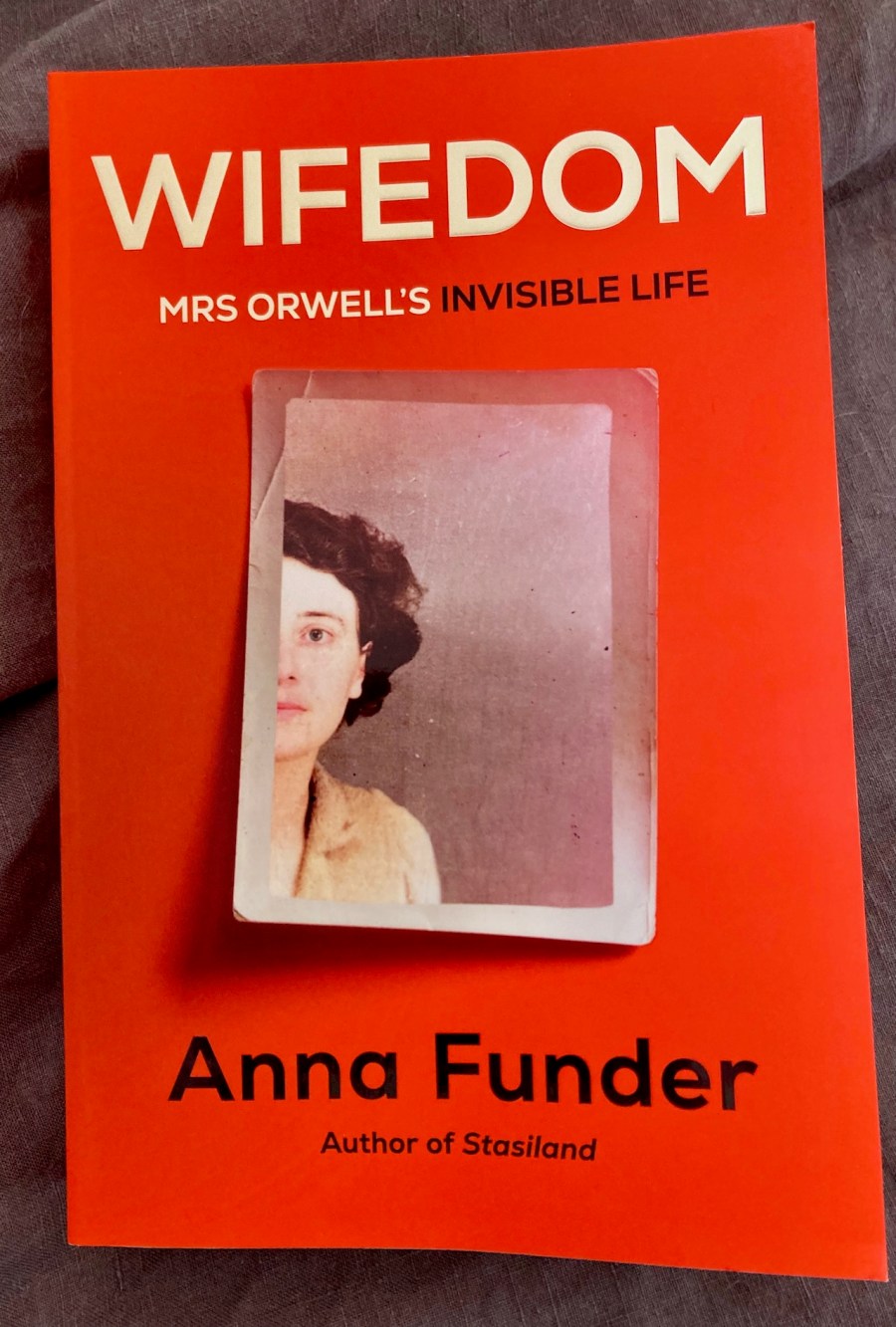
Eileen, Oxford graduate, the woman who gave up her own ambitions to enable Orwell’s work was almost erased from history, that is until Anna Funder discovered her and wrote Wifedom. Orwell biographers barely make a reference to Eileen. And while Orwell referred to his ‘wife’ on occasion in his writing (37 times to be precise according to Funder), it was never by name, and he never mentioned her feats of bravery or her contributions – perhaps because they might have outshone his own.
Eric had decided that he mustn’t let his work be interrupted & complained bitterly when we’d been married a week that he’s only done two good days’ work out of seven.
Eileen ran their farm and raised their adopted child so he could write, cared for him when wounded and sick, visited Orwell on the front, worked at the headquarters of the Independent Labour party in Barcelona during the war, protected him from arrest, and typed up and saved his manuscripts all whilst under the gaze of communist spies.
Eileen knows her life is riddled with spies but feels she can manage it.
Memoir, fiction and fact swirl through the pages of Wifedom, as Eileen is pieced together and rescued from patriarchal erasure by Funder through fragments of facts and six letters written by Eileen to her friend Norah Myles. I found Wifedom to be a compelling read and feel a need to revisit it already.

 R L Smith