Book review: We are the Stars by Gina Chick

I rarely watch television, but was compelled to last year after a number of people insisted that I would enjoy Alone season 1 set in Tasmania. They were right – I love the Tasmanian wilderness and I loved that an unassuming middle aged women beat a load of blokes at a survival contest while being real and vulnerable. That was my first encounter with Gina Chick. 

Music grows into crips, sonic flowers. Harmonic fragrances weave and bloom. It’s an anthem I know and my heart grows wings.

At my last book group meeting, Gina’s memoir, we are the stars, was selected for our monthly read. I can say that it exceeded my expectations and at various times made me laugh and weep. Her writing voice has a lovely poetic magical realism quality to it that captured me.

I’ve lost connection with the girl who danced with storms and talked to birds. Forgotten what it is to follow a flickering shadow, tracking the scalloped breast of a hunting eagle, primary feathers splayed, micro adjustments to keep its body suspended on a cushion of air. I can’t remember the last time I walked barefoot in the bush, lit a fire and slept beside it, caught starts on my tongue, let the booboo’s haunting refrain circle my dreams.

Gina grew up in Jarvis Bay and was, in her own words, a strange kid. She had a greater affinity with animals than other children and was ostracised by her peers at school. Fortunately she had a loving family, a love of reading, and an endless stream of critters to look after, to fortifier her from loneliness during her childhood.

When did I abandon the fey creature who saw worlds of wonder hiding beyond the membrane of the real, and brimmed with love for every living thing?

As a young person at university in Sydney, she found her people in the queer community and at dance parties. But she also possessed a naivety, and that, along with a lingering sense of ‘otherness’ and desire to be liked, meant she was vulnerable to exploitation and found herself in a relationship with a con man who left her with a large debt to pay off. 

Every heart is a house of cards, easily undone by the right lever. The right words. The con whispers a spell, the mark activates it and confers the power to self-destruct, simply by believing it. That’s the kicker with a con. They set things up so we willingly take the gun they’ve so lovingly prepared, turn it on ourselves, and pull the trigger.

Her mother suggests to her that she could be autistic, which makes sense given her narrative about her childhood, forthrightness and vulnerability to exploitation. Despite the setback, soon her extraordinary resilience kicked in and she found a way to clear herself of debt and find her way back to herself through reconnecting with the wilderness. 

I’ve never been able to hate Grayson. He behaved in his nature and I in mine. I wonder if my curse follows him; the consequences of his actions a slow, creeping raft of misery and loneliness. A long life looking out of his own eyes, hearing only the hollow rattle of his stories in the echo chamber of his castle of lies. 

Gina’s mother was adopted. When Gina was 18 her mother discovered her birthmother was writer Charmain Clift, another unconventional women, who’s discovery helped Gina to make more sense of herself.

Stooped into itself, a piano beckons with sweet purity. I’m grateful for the balm of music. 

True love found Gina in the US in a man she met on a wilderness survival course. The two married and had a child called Blaize. Tragedy struck the couple when their daughter died, aged three. Gina shares her deep grief with an extraordinary vulnerability in her memoir – this is the point where I found myself in tears on an plane on my way to Canberra. 

Our only true safety lies in our own resilience and honesty, in being able to look our darkness in the eye and say, yes, you are part of me, a segment of my deepest mystery, even if I don’t understand you yet. Safe is being willing to reach through our fear to clasp the hands of our demons and welcome them in. Not hiding from any part of ourselves.

I think parts of Gina’s story will resonate with many women who grew up in the 80s, and it’s wonderful to see a woman living boldly in mid life. There are so are so many moments that present opportunity for connection for readers – from her love of nature, challenges growing up, finding her people and partying, her losses and grief as an adult, and her life-force that endows her with an extraordinary human resilience and a strength to carry on. We are the stars is a beautifully crafted memoir that inspires reflection on life and what is important. Highly recommend it.

In the magnificent wilderness of my body I’ve become a gardener, hands buried to the elbows in earth and mud and the rot of compost, churning and turning the soil, uncovering small, sad seeds of belief that I’m not enough. It takes tenderness to plant them, right side up, water them with benedictions and whispered spell of forgiveness. With enoughness.
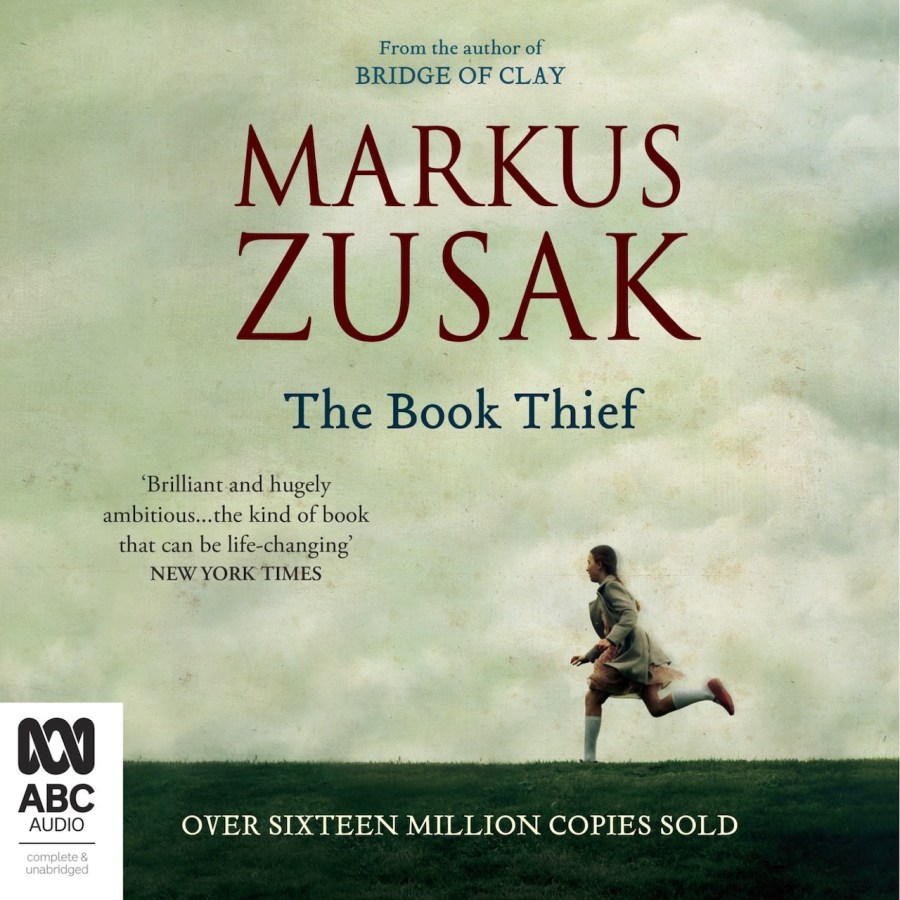
Book review: The Book Thief by Markus Zusak

Set in Nazi Germany at the beginning of World War Two, The Book Thief by Markus Zusak is narrated by Death, a philosophical, sentimental, melancholy grim reaper. Death shares his observations of humans as he collects souls throughout the story.

I wanted to tell the book thief many things, about beauty and brutality. But what could I tell her about those things that she didn’t already know? I wanted to explain that I am constantly overestimating and underestimating the human race—that rarely do I ever simply estimate it. I wanted to ask her how the same thing could be so ugly and so glorious, and its words and stories so damning and brilliant.

The Book Thief tells the story of ten year old Liesel Meminger, beginning when her father is captured and her brother dies, and she steals her first book (The Gravedigger’s Handbook) just before her mother gives her up for adoption.

When she came to write her story, she would wonder when the books and the words started to mean not just something, but everything.

Liesel’s new parents are Hans Hubermann an accordion playing man who teaches Liesel to read, and his wife Rosa, a stern woman who beats Liesel with a wooden spoon intermittently. Neighbour, Rudy Steiner, becomes Liesel’s best friend and the two get up to childhood mischief. 

A snowball in the face is surely the perfect beginning to a lasting friendship.

Reading helps Liesel connect with the living and the dead and she learns how words can heal and instil hope. She develops a penchant for stealing books, taking them from the mayor’s wife’s library by climbing through an open window, and at Nazi book-burnings she shoves books up her shirt while still hot.

The words were on their way, and when they arrived, she would hold them in her hands like the clouds, and she would wring them out like the rain.

When Max Vandenburg, a young Jewish man grappling with guilt for leaving his family to save himself, is taken in and hidden in the basement, Liesel’s life changes as she has to keep him a secret in order for them all to be safe.

In years to come, he would be a giver of bread, not a stealer – proof again of the contradictory human being. So much good, so much evil. Just add water.

There is intense emotion in The Book Thief, a blend of humour, sadness, and hope personified by Liesel in stark contrast to the persecution, propaganda and violence around her. The characters are compelling, the benevolent Death strangely likeable, and the ending will drag tears from your eyes. The Book Thief was made into a film in 2013.

One was a book thief. The other stole the sky.

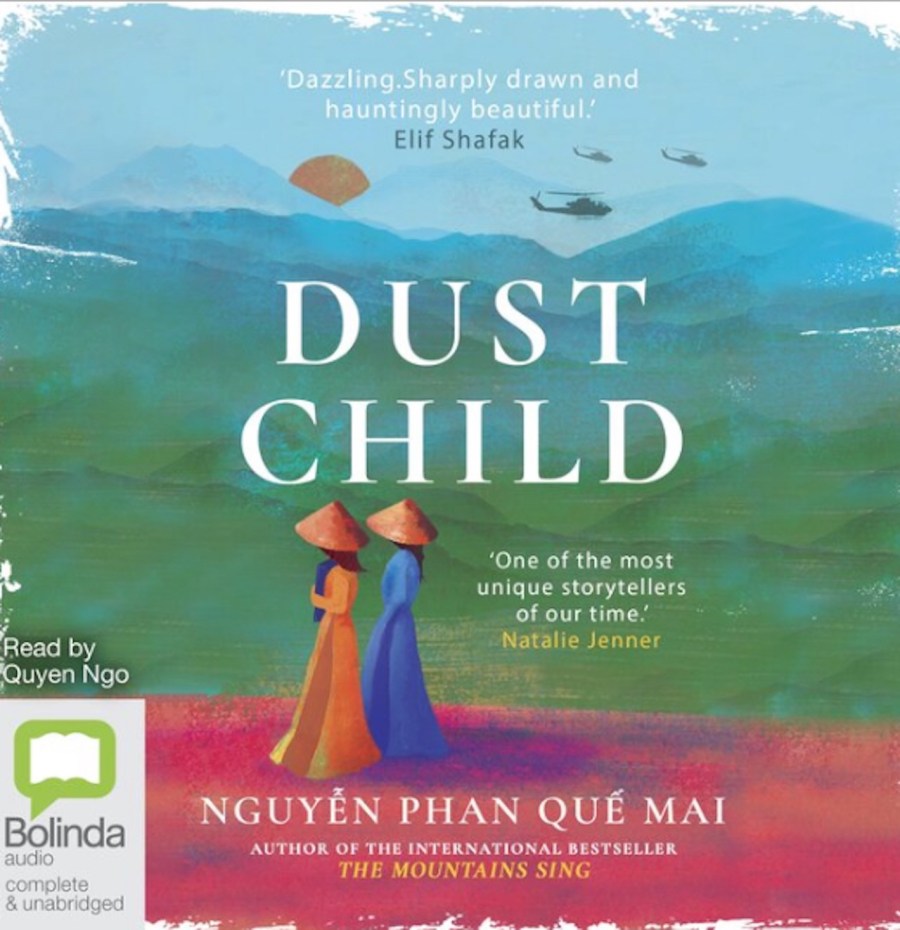
Book review: Dust Child by Nguyễn Phan Quế Mai

Dust Child by Nguyễn Phan Quế Mai was based on her doctoral research on Vietnamese Amerasians. The seven years of research shows in the detail about the history, culture and Vietnam. The story spans multiple timelines between 1969 and 2016.

Vietnamese Amerasian, Nguyễn Tấn Phong’s application for an American visa for himself and his family under the Amerasian Homecoming Act is denied. He was caught out having had applied before and attempting to include people he was not related to. 

During the Vietnam War, tens of children were born into relationships between American soldiers and Vietnamese women. Tragic circumstances separated most of these Amerasian children from their fathers and, later their mothers. Many have not found each other again.

Soon after Phong meets an American couple, Dan and Linda who (according to Linda) have come to Vietnam as therapy for her veteran husband’s trauma. Linda doesn’t know that Dan wants to find Kim (real name Trang), a woman he had kept as a mistress while he was a helicopter pilot during the Vietnam war. Phong undertakes to help him and act as the couple’s tour guide.

She had tried to live an honest life, but the war had given her no choice. It had forced her to make up a version of herself which was acceptable to others. In a way, making up stories had been the basis of her survival and her success.

The story is told on two timelines – Phong and Dan’s present-day narration and Kim’s war-time story when she was and her sister worked to earn money to pay off their parents debts by keeping American soldiers company. Dan leaves Vietnam, abandoning a pregnant Kim.

Everyone came from dust and would one day return to dust. Life is transitory, after all.

Soon the three storylines converge.

What I found most interesting about Dust Child is that it tells the Vietnam war experience from the perspective of ordinary Vietnamese people both during the war and afterward, shining a light on the lasting effects.

Melbourne Fringe review: Annie and Lena Have a Talk Show

The gals from Annie and Lena Have a Talk Show are on before the show even starts. Ushering the crowd in, hustling, trying to make us take sides. Annie and Lena are talk show production assistants with passion, drive and ambition – the narrative arc that ties the show neatly together as they take us behind the scenes of their work.

There is a great vibe between Annie and Lena as they make their way up the ranks and introduce the audience to a range of talk show hosts and their guests. Annie and Lena transform smoothly from one character to another to deliver skits scattered with references to ‘real’ talk show hosts and known celebrities, including Steve Irwin’s unknown third child. There is also the purely fictional, including a six year old gamer with a disturbing ruthlessness.

As their careers progress for production assistants through to video editors, script writers and eventually to hosts of their own prank show, Annie Lumsden and Lena Moon keep the energy high and the gags flowing ranging from fart jokes, to great impressions of southern American show hosts, to feminist fails with Betty Boop-Oop-a-Doop.

Produced for Melbourne Fringe by Kaite Head of SKINT Productions, and sound design by Olivia Mckenna, Annie and Lena Have a Talk Show runs till Sunday 20th October at Trades Hall Festival Hub in Carlton. Grab a ticket, catch the show, have a laugh, and get a drink at the bar afterward.

Podcast review: How to Write a Book

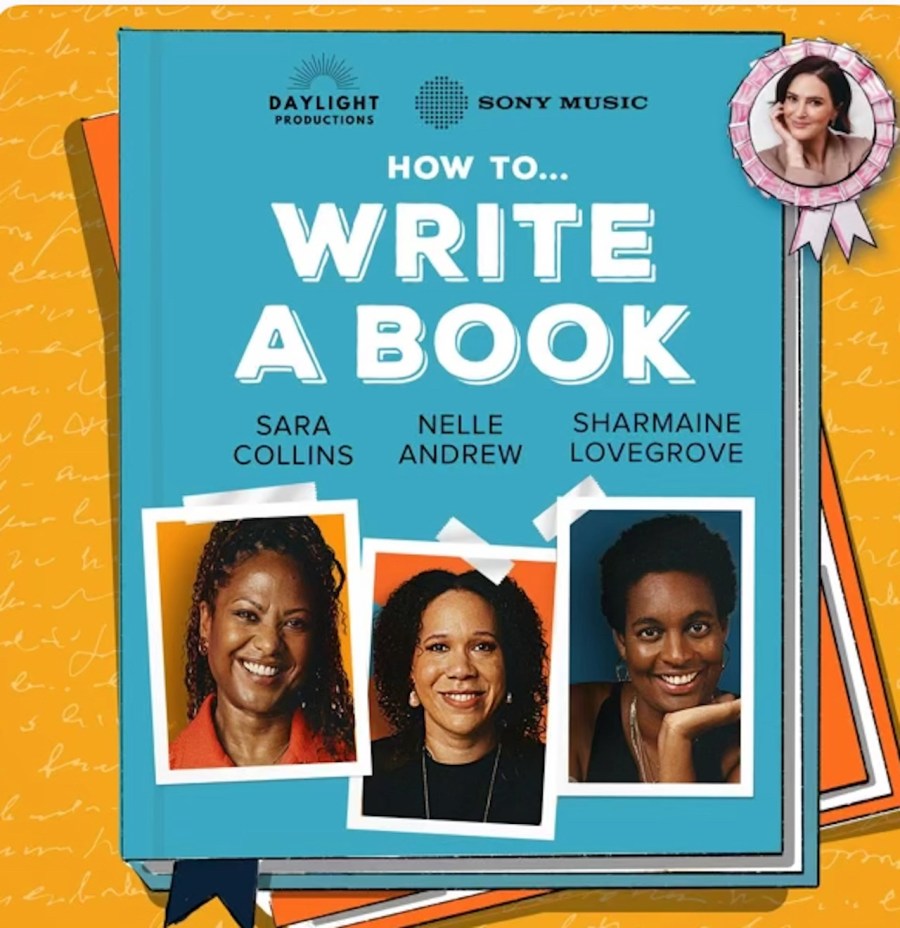
How to Write a Book is a twelve episode podclass produced by author Elizabeth Day, and hosted by author Sara Collins, publisher Sharmaine Lovegrove and agent Nelle Andrew. It’s an entertaining and practical listen that uses examples from published books such as Magpie by Elizabeth Day to demonstrate ideas.

The hosts of How to Write a Book will take you step by step through the writing process. The podclasses span coming up with ideas, discovering your voice, developing characters, dialogue and plot, and publishing. Each episode explores a different element of writing.

The series includes discussion about a range of authors from classics to contemporary, as well as films to demonstrate topic concepts. Books and authors discussed include:

  • The Confessions of Frannie Langton by Sara Collins
  • The Vanishing Half by Brit Bennett
  • Memoirs of a Geisha by Arthur Golden
  • Sacred Hunger by Barry Unsworth
  • The Color Purple by Alice Walker
  • Scissors, Paper, Stone by Elizabeth Day
  • Paradise City by Elizabeth Day
  • Magpie by Elizabeth Day
  • Rainbow Milk by Paul Mendez
  • Gone Girl by Gillian Flynn
  • Lolita by Vladimir Nabokov
  • The Bonfire of the Vanities, Tom Wolfe
  • Vanity Fair, William Thackeray
  • Elizabeth Bennet from Pride and Prejudice by Jane Austen
  • The Unbearable Lightness of Being by Milan Kundera
  • Their Eyes Were Watching God by Zora Neale Hurston
  • The Talented Mr Ripley by Patricia Highsmith
  • Empire of Pain by Patrick Radden Keefe
  • The Art of Storytelling by Will Storr
  • The Remains of the Day by Kazuo Ishiguro
  • The Party by Elizabeth Day
  • The Handmaid’s Tale, by Margeret Atwood
  • Madame Bovary, Gustave Flaubert
  • Flowers for Algernon, Daniel Keyes
  • Rodham by Curtis Sittenfeld
  • Olive Kitteridge by Elizabeth Strout
  • Secret History by Donna Tart
  • Hunger Games by Suzanne Collins
  • The Confessions of Frannie Langton by Sara Collins
  • Fingersmith by Sarah Waters
  • August Blue by Deborah Levy
  • World War Z by Max Brooks
  • Lord of the Rings by John Tolkein
  • A Year of Magical Thinking by Joan Didion
  • Friendaholic by Elizabeth Day
  • In Cold Blood by Truman Capote
  • This Is Not A Pity Memoir by Abbi Morgan
  • Wuthering Heights by Emily Bronte
  • Jane Eyre by Charlotte Bronte
  • How the Body Keeps the Score by Bessel Van Der Kolk
  • The Cazalet Chronicles by Elizabeth Jane Howard
  • Slipstream, a memoir by Elizabeth Jane Howard
  • Paper, Scissors, Stone by Elizabeth Day
  • Bird by bird by Annie Lamott

How to Write a Book is an insightful, practical, funny, easily accessible and educative podcast. Highly recommend for writers and budding writers in the group. 

Book review: Secret Sparrow by Jackie French

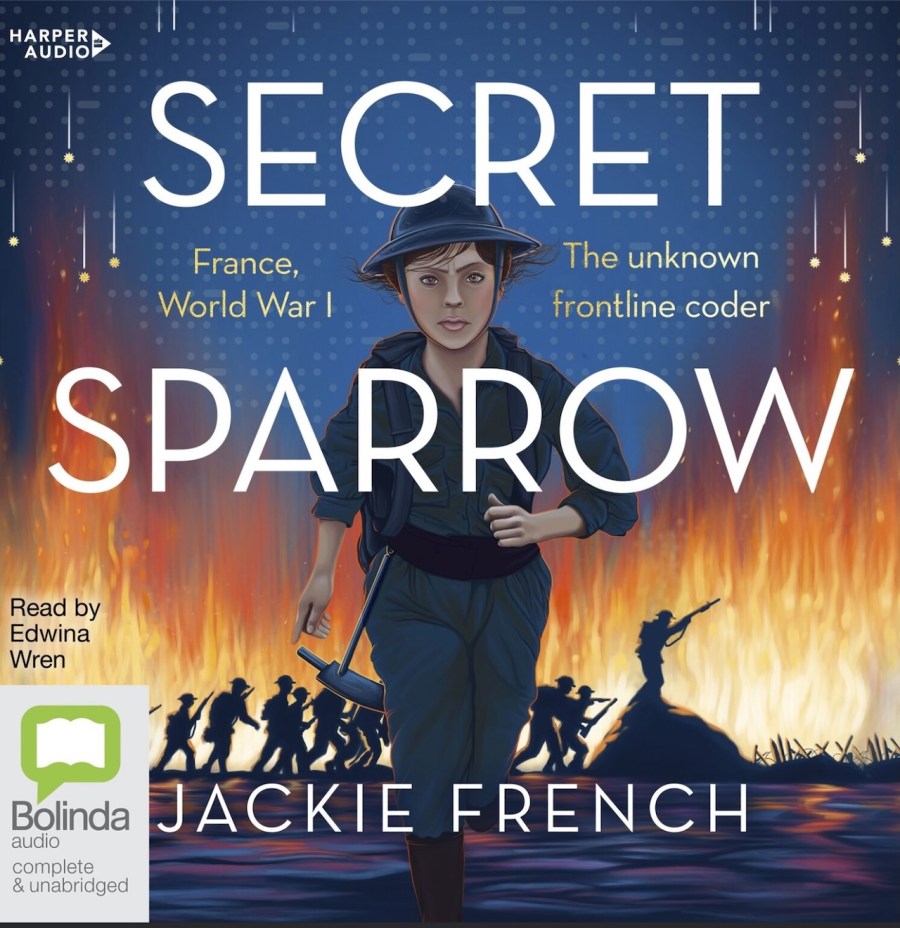
Secret Sparrow by Jackie French is a historical fiction novel about the contribution a female signallers to the war effort during World War I. Sixteen year old Jean McLain works in a post office in England. When she wins a national Morse code competition, the British army approaches her to become a clandestine signaller in France. Her contribution could help Britain win the war.

Jean was fast. Faster than her older brothers, who had learned Morse code from the crystal radio sets they’d built. Before the war they tapped out message to each other on their bedroom walls.

Jean will be one of a team of women at Rouen receiving and sending messages for the army, working in 12 hours shifts without so much as a toilet break. The British army wished to hide the involvement of women so much that they burned every document evidencing how women and girls were working in the trenches and battles of World War I. Soon, Jean is sent to the front due to her exceptional skills to help at the ill fated Battle of Cambrai.

The motorbike swerved wildly, jumping up onto the footpath then into the slightly higher ground of the new park, tearing through the marigolds. Bikies don’t care about flowers, thought Arjun, then realised the figure he held wasn’t the sturdy shape of a bloke, but a woman’s, skinny under the leather jacket. Her helmet hid her face.

The story of Secret Sparrow is told in 1978 by an old postmistresses, about her time as a ‘telegraph girl’ in WWI. She she tells her tale to Arjun, a young boy, after she rescues him from a flood on her motorbike in the country town of Burrangong. She relays her story to pass the time while they are sheltering in a bin on top of a hill above floodwaters trying to keep warm in the rain. 

But women signallers? She’d never heard of such a thing. There’d been no reports of women doing any such work in the newspapers.

Secret Sparrow is based on true events and gives women who were involved in the war effort a voice. The story sets a cracking pace, and while it does not shy away from describing the terrible conditions of war, it is crafted to be suitable for readers of 12+.

Book review: Yellowface by Rebecca F Kuang

A member of my writing group recommended Yellowface to me, and ironically I began reading it a few days prior to printing out my latest manuscript to give to my writing group colleagues to critique.

Every writer I know feels this way about someone else. Writing is such a solitary activity. You have no assurance that what you’re creating has any value, and any indication that you’re behind in the rat race sends you spiraling into the pits of despair. Keep your eyes on your own paper, they say. But that’s hard to do when everyone else’s papers are flapping constantly in your face.

Yellowface is a story about two ambitious young novelists who met at college. Athena has written a critically acclaimed novel that’s also secured a deal with Netflix, and she is revelling in her success. Her friend Juniper’s debut has almost disappeared from the shelves of bookstores due to poor sales, and she struggles with jealousy of her successful friend.

Writing is the closest thing we have to real magic. Writing is creating something out of nothing, is opening doors to other lands. Writing gives you power to shape your own world when the real one hurts too much.

The young women go out on the town to celebrate Athena’s success then return to Anthea’s apartment where she shows Juniper her, until now, unseen new manuscript. She also decides makes pancakes to dilute their boozy evening. Suddenly, Athena is choking on pancake, clawing at her throat, unable to breathe. She dies while Juniper is on the phone to emergency services.

But the best revenge is to thrive.

On impulse, Juniper slips Anthea’s secret new manuscript into her bag and takes it home to study. Before she knows it she’s refining and editing, then publishing the manuscript as her own work, using her middle name as her surname as it, well, sounds more Asian. June Song. And Juniper’s dream of becoming a famous writer comes true.

The truth is fluid, there is always another way to spin the story.

The trouble with deception is that you set yourself up against both your internal and external worlds, and it’s a fraught space to maintain a fake self. There’s constantly needing to convince yourself that you are not a fraud, it’s as much your work as your dead friends given all the effort you put into making it publishing ready after all. Then there’s the worry about evidence in the world that the work actually belonged to Athena, managing the reactions when people discover you are not in fact Asian, and the growing whispers on Twitter about plagiarism.

But Twitter is real life; it’s realer than real life, because that is the realm that the social economy of publishing exists on, because the industry has no alternative.

Yellowface is a literary heist about the fickle publishing industry, cultural appropriation, and writing the other. It is also a hilarious literary caper told by an unreliable narrator, about the creative life and the desire to be seen. It will particularly appeal to the writers among us. 

I wonder if that’s the final, obscure part of how publishing works: if the books that become big do so because at some point everyone decided, for no good reason at all, that this would be the title of the moment.

And, if I suddenly stop my Friday blog, you’ll know where to start looking.

Theatre review: Dredge

Dredge:

To bring something unwelcome and forgot or obscure to people’s attention (Oxford Dictionary)

To remove something unwanted (like mud) from the bottom of a body of water (Cambridge Dictionary)

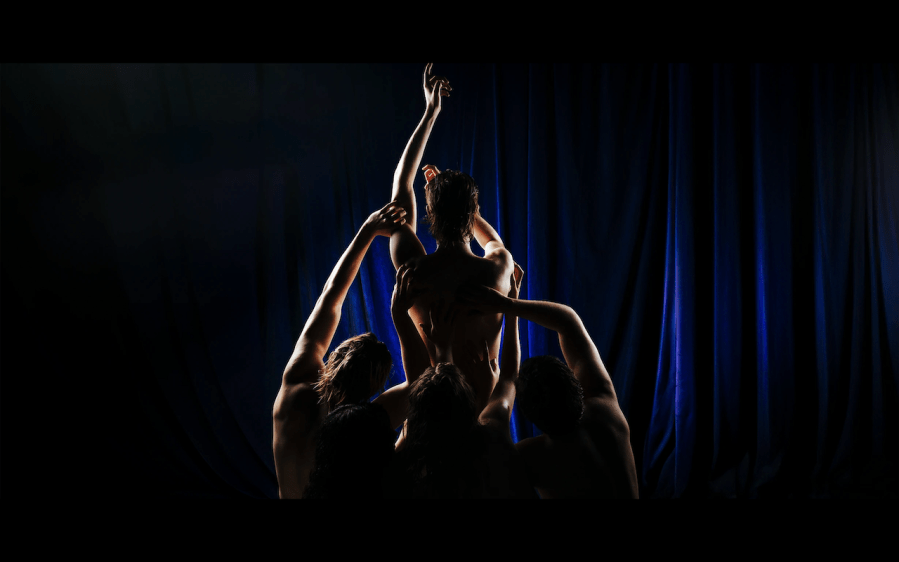
Dredge begins with seven amoeba like creatures pulsating around a well filled with fresh water. The bodies are diverse, but the costumes identical. It is quite a beautiful depiction of curiosity and discovery, initially.

As the show progresses, the well and the actors become muddied – corrupted – and what emerges is brutality, pain, violence, and exhaustion, to the point where the dancers frantic movement begins to destroy the very stage on which they perform – tearing at the curtains in desperation.

What is reflected through movement, water and mud, is the destruction of nature, gender roles, patriarchal systems, and escalating consumerism to the point where we not only consume the planet, but each other, and ultimately ourselves.

How did we get here? Where do we think we are going? And can we be redeemed?

My very smart friend who accompanied me very succinctly described the show as a depiction of the story from Genesis – the creation and fall of man.

What really stood out in this innovative physical theatre piece was the energy, physicality, and body confidence of the actors, who were bold in projecting the emotions the piece demanded of them.  

Dredge is an engaging, energetic and mesmerising piece of experimental physical theatre. Developed and directed by Brandon Armstrong, Dredge is a creation of Femmural Productions with support from The Anchor Theatre Company.

Dredge is showing at Theatre Works in St Kilda until 28th September, tickets can be purchase online.

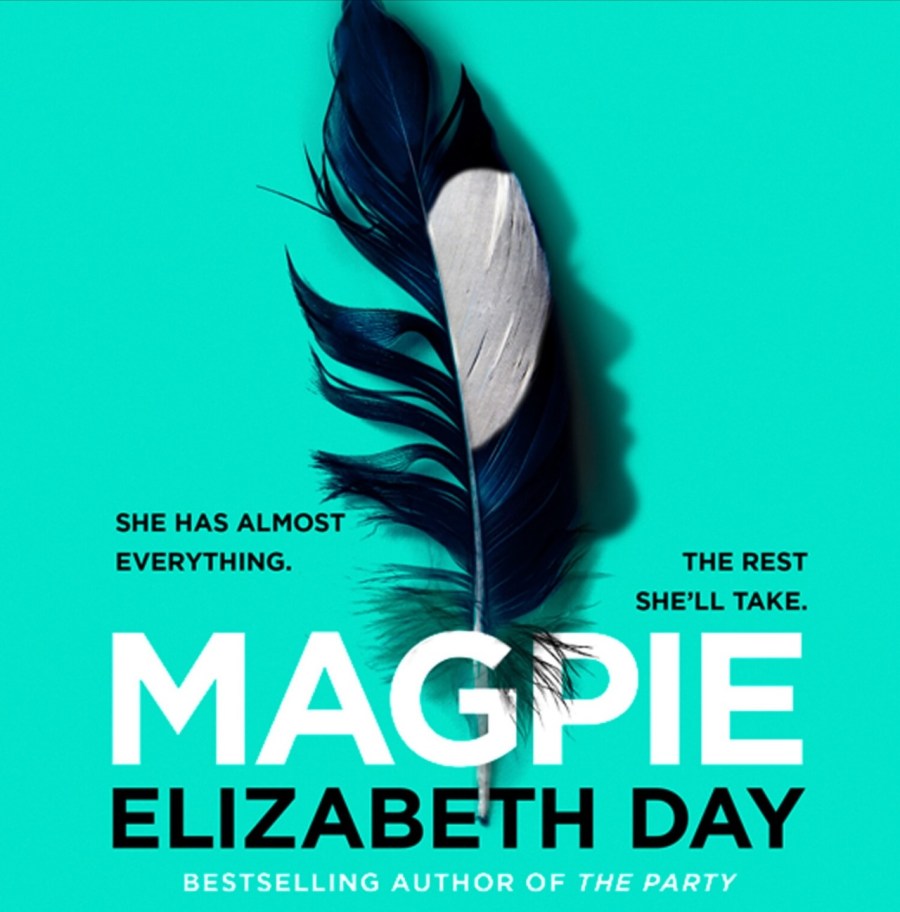
Book review: Magpie by Elizabeth Day

I heard about Magpie by Elizabeth Day on a podcast I was listening to and looked it up without paying any attention to what it was about. Initially I thought it was a run of the mill, if well written, domestic drama about heteronormative relationships and trying to have children. I was about to put it down when things started to get weird.

they had to adapt their dreams, to cut the starry cloth of their imaginings to fit the circumstance of their reality,

Marisa, a children’s book illustrator, falls pregnant only three months into a relationship with Jake and they move in together. When Jake’s work has a crisis that causes his income to dip, they decide to take in a lodger to help pay the mortgage. 

That’s the problem with charm. It means you get away with stuff. It means you never have to develop a real character because no one remembers to look for one. They’re too busy basking in the glow of your attention. They’re too busy being impressed.

Kate, a film publicist, moves in. She is nice but a bit too friendly and Marisa begins to think she could have an ulterior motive. She puts her toothbrush in the master bathroom alongside Jake and Marisa’s then starts to do things like cook Jake his favourite meal. Jake seems to be oblivious.

She had mistaken the bubbles of anxiety in her stomach for a simmering romantic passion, wrongly believing that love felt unsettled, like a half-packed suitcase awaiting a trip that never comes.

Then there is a change of view point and a massive and completely unexpected plot twist, and the story takes on the tone of a baroque domestic noir thriller. And I’m not going to tell you any more as it will give too much away.

I began to realise that if I never achieved anything outwardly ever again, I would still exist. The voice in my head is not who I am.

Magpie is an exceptionally well crafted book, no wonder it was recommended on a writing podcast. It is an exemplary example of the unreliable narrator. Themes include fertility, toxic relationships, dysfunctional families, mental illness, betrayal, and the female gaze. 

Rhubarb Lemonade by Oskar Kroon

Rhubarb Lemonade by Oskar Kroon is about a young woman called Vinga who is in between childhood and adulthood. A sweet coming of age story set in Sweden.


Grandpa used to make maps for me when I was little. Back then it was maps of the garden, which almost always ended under the lilac bush where he had left me a licorice pipe or some other treasure.

Vinga’s parents have separated. She misses her dad and her mother is sad all the time. Her grandfather lives on an island and she is happy to escape her home life to spend the summer with him. She has a strong bond with her grandfather. They share a similar quirkiness and they both love the sea.

The sea holds so much. In the evening it looks empty, but beneath the surface it is undulating and alive. There are secrets down there. And in the sky. Up there, where dark shadows appear, followed by stars at night. So big, so far away. 

Over the summer Vigna works on restoring an old boat and dreams of becoming a sailor like her grandfather. One day Ruth, an outgoing, confident and talkative young woman appears and the two girls become friends. Ruth doesn’t like the slow pace on the island and is afraid of the sea. It’s a case of opposites attract.

You have to know how everything works. You have to know exactly where each chock goes to get the right result. And it has to be this very specific kind of chock…It’s so precise. The curve of the boat isn’t for beauty’s sake. It is beautiful because it’s the best shape to allow the boat to float and move smoothly on the water.

Rhubarb Lemonade is a short, easy read written with a beautiful poetic lilt (even in translation). Themes include first family breakup, blended families, love, loss, mental health and trauma.