Book review: Room by Emma Donoghue

The thing that struck me most about Room was Emma Donoghue’s exceptional ability to maintain the voice of a five year old for an entire novel. Jack has spent his five years in the 12 foot square room he was born in. His Ma has been in the room for two years more after being abducted at nineteen. Ma has spent Jack’s life keeping him entertained and protecting him from their captor. Jack brings their tiny world to life. Each element – Rug, Spoon, Wardrobe, Bed and TV are characters. Room is real, TV world is outside – a place they cannot go. They exercise, tell stories, sing, eat and make up games and poems in the confines of Room.

Outside has everything. Whenever I think of a thing now like skis or fireworks or islands or elevators or yo-yos, I have to remember they’re real, they’re actually happening in Outside all together. It makes my head tired. And people too, firefighters teachers burglars babies saints soccer players and all sorts, they’re all really in Outside. I’m not there, though, me and Ma, we’re the only ones not there. Are we still real?

When their captor comes to Room, Jack has to go in Wardrobe as his Ma doesn’t want the man to see him. Ma has days when she does not get out of bed, it ‘gone’ with a blank stare and Jack just sits or watches TV.

Jack. He’d never give us a phone, or a window. “Ma takes my thumbs and squeezes them. “We are people in a book, and he wont let anybody else read it.

The time comes, half way through the novel, when Ma senses imminent danger and decides they need to escape. She hatches an elaborate plan to get Jack out. He succeeds. Both characters are heroic. Their captor is caught and Ma is freed. The story then moves to ‘Outside’, to explore Jacks confusion by the wider world and their adjustment to it.

Scared is what you’re feeling. Brave is what you’re doing

The point of view limited by the narrators maturity and the constraints of Room contain the story in a way that keeps the reader in a state of unease. Room is a gripping, disturbing, claustrophobic, yet hopeful read. The story a delivers an unique perspective – on love, psychology, politics, sociology, and how we life our lives.

I’ve seen the world and I’m tired now.

Book review: The Beresford by Will Carver

Leave your comfort zone. Will Carver has a dark imagination in which creepy thrills and body counts are dialled to the max. The Beresford is a standalone thriller published in 2021. Bizarre, gripping and grotesque but drawn in smooth prose that will keep both the pages and your stomach turning.

The Beresford was old. It was grand. It evolved with the people who inhabited its rooms and apartments. It was dark and elephantine and it breathed with its people. Paint peeled and there were cracks in places. It was bricks and mortar and plaster and wood. And it was alive.

The ageless Mrs May runs a boarding house in a grand old building. She rarely leaves the premises. The rooms are large and the rent cheap and there are a steady stream of inhabitants. Mrs May passes her days drinking cold black coffee and wine, tending her garden and doing her prayers.

What is that one thing you would give up your soul for?

Tenants come with dreams of a new life, then go, sometimes at an alarming rate, and usually in pieces. Sixty seconds after one dies, a new tenant arrives, and so the cycle continues, a bit like Groundhog Day with gore.

The Beresford was a halfway house for the disenchanted and disenfranchised, whose focus was to become. To be. To discover and make their impact. The inhabitants were not necessarily the outsiders, but were certainly the ones found on the periphery. The wallflowers at society’s ball. They were outside. They floated on the periphery.

Dark and twisted with black humour and skilled plotting drawn in short snappy chapters. The story is intermingled with Carver’s existential ruminations about life, death, humanity, religion, and more that send the reader off on introspective reflections on 21st century life.

We all go a little mad sometimes.

As with Carver’s other novels I have reviewed on this blog – Good Samaritans, Nothing Important Happened Here Today and Hinton Hollow Death Trip, The Beresford will enthralled and disgust you, it will also make you think.

Book Review: The Hideout by Camilla Grebe

The Hideout by Swedish noir and crime fiction writer Camilla Grebe is an intense, twisted and gripping story about crime, religion, parenting and death.

Manfred Olson young daughter is in a coma after a fall. When he is called in to investigate the death of a young man whose body washes up on a beach, his attention is divided between his job and wanting to be at his daughters bedside. When a second body is found wrapped in sheets and chains, his search intensifies.

It’s only afterwards that all the trivialities of a life grow, develop teeth and chase you through the night.

Eighteen year old Samual has to leave town in a hurry after getting caught up with a brutal drug ring when a deal goes wrong. He runs to a sleepy coastal town and finds a job working for Rachel as a live in care assistant to her disabled son Jonas. As Samual’s attraction for Rachel grows, his safety becomes more precarious.

It took me exactly ten days to fuck up my life.

This Scandanavian thriller is slow moving and atmospheric. The two separate plot lines of Manfred and Samual gradually converge with lots of red herrings to keep the reader on their toes and make you squirm.

Theatre review: Vibe Check

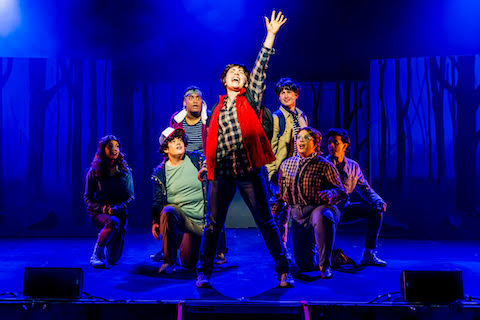
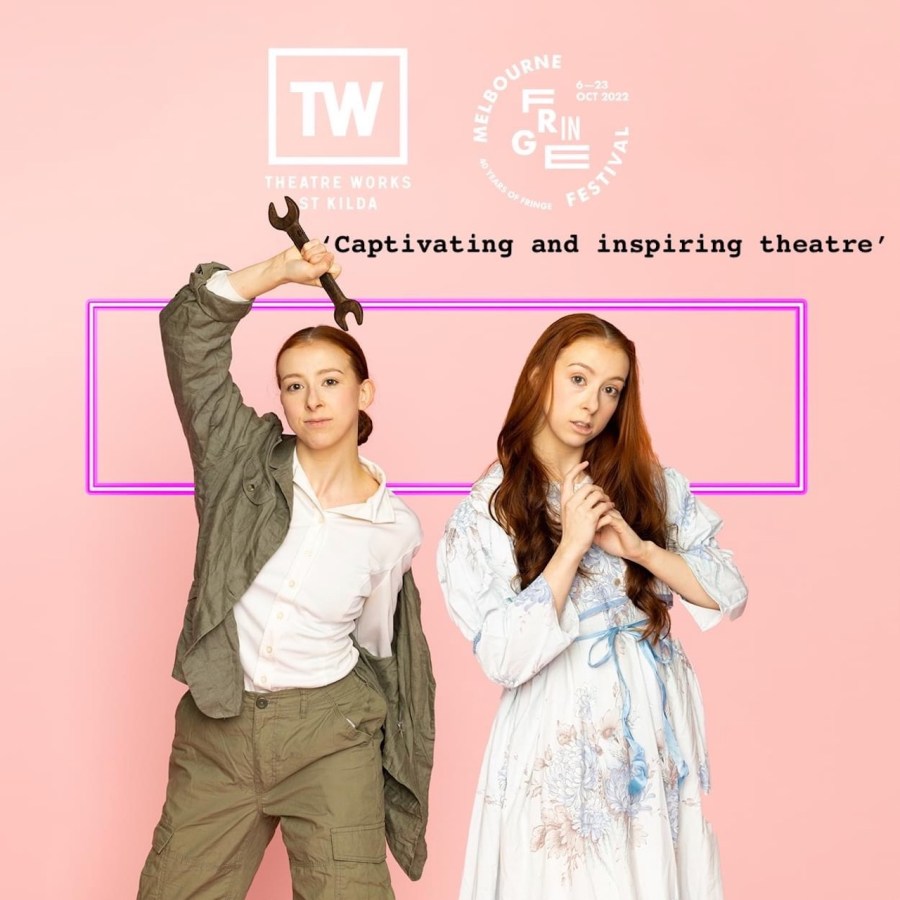
Written by Greta Doell and directed by Stephanie Lee, Vibe check explores the exhilaration, uncertainty and awkwardness of casual dating and how that experience can heighten our personal neuroses like nothing else, bring all our insecurities to the fore and shake the most robust of individuals. We’ve all been there right? When our desire to connect turns us from confident adults into insecure weirdos. When not only are we trying to get to know a new lover, but navigate the multitude of options the ‘relationship menu’ offers – casual, open, monogamous, polyamorous, friends with benefits, it’s almost enough to make you wish you were asexual. But it is great fodder for a good laugh.

The setting is intimate and the props are minimal so Vibe Check is all about the characters and their personal journeys. Beth and Harry (Oscar Morphew and Freya Patience) are hip young self-aware new lovers in the honeymoon phase of their relationship exploring each other to see if their connection is a long term prospect. There is great chemistry between the actors. Beth is nervous, awkward and self-conscious. Harry is a confident, self assured inner city hipster tradie. The pair take the audience on their intimate journey as they talk about and dissect their feelings and preferences in minute detail to try and negotiate the type of relationship they want with a mix of discomfort and hilarity.

The Butterfly Club is a great venue with quirky intimate theatre spaces and a bar. If you had one of those nannas who collected kitch ornaments and artworks and crammed them all into her tiny terrace house, you will get the vibe.

Support a talented emerging play write and great acting talent. Vibe Check runs till 23rd July so grab a ticket for today or tomorrow from the Butterfly Club website so you don’t miss out.

Book review: The Boy from the Mish by Gary Lonesborough

The Boy from the Mish is a queer First Nations bildungsroman fiction novel. This book is an important work as it represents diverse identities – both Aboriginal and queer. Young people who do not ‘fit’ the mainstream ideal need to see themselves in fiction as it helps to validate their lived experience. A lack of diverse representation not only influences how people see themselves but how they are seen (or not seen) by mainstream dominant cultures.

Go to your elders. You should ask them about your country and your totem. Because that is your identity. A blackfella with no identity is a lost blackfella. He don’t know where he belongs.

Individual and institutionalised racism, over-policing of Aboriginal youth, prejudice and lateral violence are confronted throughout this story told from the perspective of seventeen year old Aboriginal Jackson on a journey of self-discovery about who he is emotionally and sexually. On the cusp of adulthood and in his final year of high school, Jackson juggles a social life with his mates and his girlfriend with whom he has not had sex, but doing so hovers as an ever present expectation that he cannot meet.

I’m not too fucking drunk. I’m tipsy at best. And she isn’t ugly, I think she’s beautiful. Maybe my body is just broken, or maybe I’m destined to be an abstinent priest or something.

When he encounters fresh out of juvie Tomas, Jackson is unsettled by his attraction to the other young man and it triggers a change in how Jackson sees himself. The Boy from the Mish is a beautiful and heartwarming story that paints colourful insights into life in Aboriginal family homes, familial relationships and struggles, the emotionality of youth and the fears that make coming out difficult. It is also written in a way that shows white people as ‘the other’, which is refreshing.

If we don’t let ourselves be who we are, love who we are, where we come from, it’ll strangle ya until you can’t fight it no longer.

Book review: The Animals at Lockwood Manor by Jane Healey

The Animals at Lockwood Manor is a gothic queer historical fiction come love story set in London in 1939.

Awkward but determined Hetty Cartwright, an assistant at the history museum has to evacuate the museums sizeable taxidermy collection to a safe place called Lockwood Manor in the countryside. Lockwood turns out to house both attraction and danger.

This was their chosen sacrifice: where other owners of country houses would be preparing for evacuated children and babies, the Lockwood would receive a quiet menagerie

The taxidermied animals move around the house at night, a ghost lurks the hallways, the house staff are hostile, as is Major Lockwood who owns the property, and bugs start eating the taxidermy. However, Major Lockwood has a beautiful but emotionally unstable daughter Lucy and the two women develop a bond.

I had never been the sort of person who was first to offer sympathy, a handkerchief, a listening ear, to an acquaintance who looked distressed, but something about Lucy made me wish to be. I wanted to help her; I wanted to make her smile.

The story is a slow burn. Gently spooky, atmospheric and moody with plenty of creepy cliffhangers. Themes including misogyny, lesbian love, outcasts, colonisation, class, sexual violence and facing your fears. In was particularly fascinated by the taxidermy.

Comedy Review: Big Funny – Max Paton

Max Paton’s show was unfortunately cancelled at the comedy festival. I was so glad he rescheduled Big Funny at The Motley Bauhaus – it‘s a hoot.

Max is a guy with a lot of energy and delivers fast paced absurd hilarity with a delightful innocence. There are no put downs or character assassination in this show. Instead you get a unique perspective on the world that is pure fun. There are plenty of jokes, character dress ups, creative use of audio, and absurd skits to set your inner child free.

From Jim from the gym, to a duck with a screwdriver penis, and a trip to Bunnings akin to a quest for the mighty sword, it’s a wild ride of tomfoolery that was delightfully refreshing. Get yourself to The Motley Bauhaus and support this young comedian. Show only runs till 9th July, so be quick.

The Motley Bauhaus is a cosy venue with comfy seats and good beer. After the show I recommend dropping into The Olive Jar just around the corner in Rathdowne Street for an authentic Italian meal followed by their singing chef. The combination of a good laugh with Max followed by a good feed will be a night to remember.

Book review: The Discomfort of Evening by Marieke Lucas Rijneveld

I listened to the audiobook of The Discomfort of Evening on my drive back to Melbourne from the Blue Mountains in NSW. The first thing that struck me was the amazing imagery Marieke Lucas Rijneveld uses in her debut novel. The second was that the word ‘discomfort’ in the title is understated. I was equally enthralled and disturbed by the novel.

It’s confusing, but grown-ups are often confusing because their heads work like a Tetris game and they have to arrange all their worries in the right place

Ten year old Jas wishes her brother Matthies would die instead of her rabbit. There are two reasons for this – she is not allowed to go ice-skating with him and thinks her dairy farming father has his eye on her pet rabbit for dinner. When her brother falls through the ice and dies, it sets up a massive internal conflict for Jas in an environment where the family is falling apart in the darkness of grief through a lens of devout faith. The unfolding drama is narrated by Jas and reported in an undramatic way, as if what is happening is ok, because she doesn’t know any better. This childlike interpretation adds to the unease for the reader/listener because it is so far from ok.

I don’t want to feel any sadness, I want action; something to pierce my days, like bursting a blister with a pin so that the pressure is eased

Each member of the remaining five in the family develop their own unique dysfunctional responses to the death of Matthies, the oldest son. Talking about his head is forbidden, having feelings is discouraged and everything is contextualised in oblique biblical interpretation.

I’m beginning to have more and more doubts about whether I find God nice enough to want to go and talk to Him. I’ve discovered that there are two ways of losing your belief: some people lose God when they find themselves; some people lose God when they lose themselves. I think I’ll belong to that second group.

The novel is told from the point of view of young Jas who is bewildered by the adult world and has developed distorted views due to the constraints of the families extreme religious beliefs. It is a book about grief, family disfunction, religion, and boundaries (or lack thereof) described in brutally vivid detail. Rijneveld’s writing is beautifully discomforting.

Book Review: The Beekeeper of Aleppo by Christy Lefteri

Aleppo in Syria is one of the oldest continuously inhabited cities in the world. It is where this story begins. Nuri is a beekeeper who lived a peaceful life in Aleppo with his artist wife Afra and their son Sami until their lives were shattered by war. Sami is killed in a bomb blast whilst playing in the garden. The same blast renders Afra blind after seeing Sami die. Afra and Nuri remain in Aleppo longer than they should, not wanting to leave the memory of their young son. Eventually they are forced to go when it becomes apparent that Nuri’s life is at risk. The Beekeeper of Aleppo is the story of their journey fleeing through Turkey and Greece as they try to reach England where Nuri’s cousin who taught him about bees lives.

But in Syria there is a saying: inside the person you know, there is a person you do not know.

Christy Lefteri, herself the daughter of refugees, wrote the novel after spending a couple of years volunteering in a refugee centre in Athens. It is a story about the refugee journey and the experiences they endure in a state of high vulnerability. It touches on the effects of severe trauma, grief, child trafficking, ethnic cleansing, flight, asylum processes, seeking a new home when your own becomes uninhabitable – it is also a love story.

I wanted to set forth the idea that among profound, unspeakable loss, humans can still find love and light—and see one another.

As Nuri and Afra escape Syria, each are haunted in different ways by what they have seen and experienced. They become known to the reader as the people they were before the troubles, as well was who they have become as a result of flight from a war torn country. We witness their struggle to stay connected with one another and their dead son whilst they navigate their way to safety.

People are not like bees. We do not work together, we have no real sense of a greater good

The Beekeeper of Aleppo is written with compassion and hope. Whilst the characters experience great brutality, the story is also beautiful and a moving plea for greater humanity in our treatment of displaced people.

Where there are bees there are flowers, and wherever there are flowers there is new life and hope

Book Review: Sharp Objects by Gillian Flynn

If you are looking for a dark, discomforting psychological thriller to be disturbed by during this long cold winter, Sharp Objects by Gillian Flynn could be for you.

Everyone has a moment where life goes off the rails.

Camille Preaker escaped Wind Gap, a small town in Missouri, for a career as a journalist in Chicago. Her boss sends her back to Wind Gap, best known for its pig abattoir, to investigate the murder of a young girl. After Camille arrives in town the bodies start piling up.

A town so suffocating and small, you tripped over people you hated every day. People who knew things about you. It’s the kind of place that leaves a mark

Camille left Wind Gap for a reason – her family. Camille’s troubled mother comes from old money – she owns the hog farm, the towns primary source of revenue. Of her two sisters, one is dead and she can’t stand her precocious younger stepsister. Camille is a little complicated herself – she’s an addict (sex and alcohol) and she self-harms. She keeps her body covered to hide the words she has carved onto it over the years.

I always feel sad for the girl that I was, because it never occurred to me that my mother might comfort me. She has never told me she loved me, and I never assumed she did. She tended to me. She administrated me.

Suspense, plot twists, gore, dysfunction and the dark side of the female psyche…read it if you dare.