Last night I caught comedy show SLAM MACHINE at the Motley Bauhaus. SLAM MACHINE is sketch comedy to make you guffaw and cringe. Eight young comics do a great job of inhabiting their absurd characters and bringing them to technicolored life in the intimate space of the Motley Bauhaus theatrette in Carlton.
SLAM MACHINE delivers well executed, tightly directed, high energy worlds in miniature – think regional book club; getting an MRI; sad cowboys; wizards and knights; dodgy allies at a pride month party; pet psychics and more.
On stage are Bailey Bliss, Nancy Curtis, Gabby Angelone, Sam McDonald, Matthew Thompson, Julian Consiglio, Jackson Downing and Niamh Schofield. The team work very well together to deliver a performance that has echoes of the likes of Tim Robinson, Chapelle’s Show, and Monty Python throughout.
The Motley Bauhaus in Elgin Street Carlton is a great place to see independent productions, with plenty of options for a meal before or after a show nearby. We ate at The Green Man’s Arms which does delicious vegetarian fare.
Go along to the Motley Bauhaus in Carlton to see these eight young comics and support independent artists.
SLAM MACHINE is on till 3rd May. You purchase get tickets via the Motley Bauhaus website.
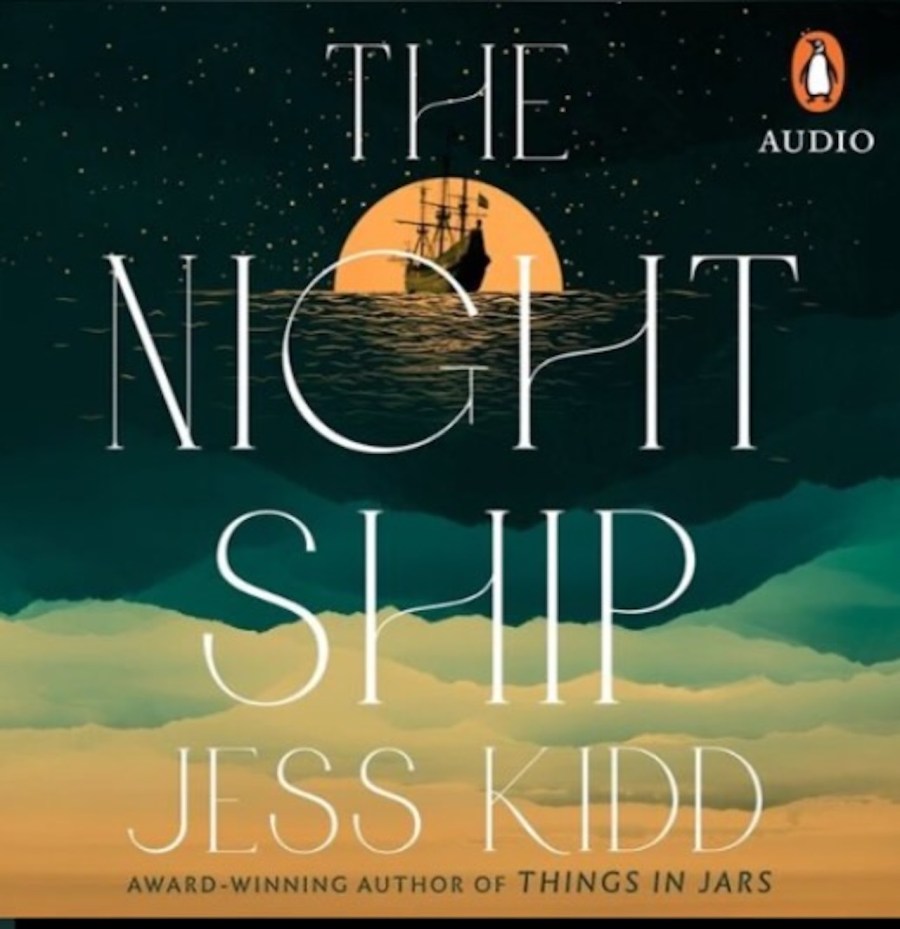
The Victorian era gothic crime fiction novel Things in Jars by Jess Kidd is a great read. Set in London, the atmosphere is vivid, there’s plenty of magical realism, and Kidd’s grasp of creative language is enviable as well as witty.
London is awash with the freshly murdered. Bodies appear hourly, blooming in doorways with their throats cut, prone in alleyways with the head knocked in. Half-burnt in hearths and garroted in garrets, folded into trunks or bobbing about in the Thames, great bloated shoals of them.
Bridie Devine, former surgeons apprentice, is a pipe smoking detective. She has a dagger strapped to her thigh and sometimes cross dresses to gain access into male only spaces. She also sees things, ghosts mainly. She chats to them, in particular a recently deceased boxer called Ruby Doyle who has the hots for her. She is not interested, but still he stays as her protector.
The raven turns in her element and the world turns too, confirming what she already knew: she is the centre of everything.
Bridie takes on a case to find Sir Edmund Berwick’s missing child called Christabel. For some reason Sir Edmond has kept the child in hiding her whole life. It turns out Charitable is no ordinary child.
Sir Edmund’s home is an architectural grotesque, the ornate facade the unlikely union of a warship and a wedding cake. A riot of musket loops, carved shells, liquorice-twist chimneys, mock battlements, a first-floor prow, and an exuberance of portholes. On the carved stone pediment above the wide front door Neptune cavorts with sea nymphs. The lower-floor windows are festooned with theatrical swags of stone starfish and scallop shells. For all this, the house looks unlived in.
Things in Jars is a dark, strange, whimsical, and compelling novel. I’ll be reading more of Jess Kidd’s work – I’m hooked.
Graft by Maggie Mackellar is beautifully written memoir about life on the land. The story carries us through an annual cycle of seasons on a Merino sheep farm in Tasmania. Maggie reflects on the land on which she lives and her life in a year of drought.
My older brother had pebbles in his mouth instead of words. His tongue is thick. It sticks out when it shouldn’t. At this time I am remembering, he smashed and grabbed and pinched and pulled and broke the world every day, over and again.
Maggie’s youngest child is on the cusp of adulthood and heading out into the world. As her son’s world opens up, Maggie must come to terms with his loss to the world and recraft her identity as an empty nester.
I am hollowed by his going. By my children’s passage through me and out into the world. With their birth I put on the cloak of motherhood and now it’s time to take it off. I feel naked without it, a person I don’t recognise.
Anyone who has experienced farming life knows it is both beautiful and brutal because it brings us into an intimate relationship with nature, birth and death and how they interplay with the seasons and climate. These elements are rendered strikingly.
In my mind I walk over the land. I run my hands through the grass as if it were the hair on my head. I dig my fingers into the dirt as if the soil were the crust of my skin.
Lambing season inevitably results in the lambs of some sheep dying and the mothers of some lambs dying. Part of Maggie’s job is to try to match up the orphans with sheep whose lamb died, with the hope that both will thrive.
Today we found a ewe cast. Her lamb had come with both legs back. She’d managed to push his head out but now he was stuck fast.
Graft combines meditative nature writing and personal essay on themes including loss, mothering, identity and resilience. The memoir is the first of Maggie Mackellar’s books that I have read, but I will be adding more to my reading list.
Walking into the theatre to see Hello Mr Radio, on as part of Melbourne International Comedy Festival, is visually arresting. The stage has been turned into a radio studio using colour blocking. Three characters motionless stand on the stage, cleverly camouflaged. All have identical beards. There is a sign advising the audience to keep their mobile phones on for the duration of the show.
Tune into 98.5 1/2 every Tuesday for a dose of absurdist comedy. Fergus Mackerel, pony tail flying, delivers an hour of absurdist comedy, along with a string of wacky guests, including a spellcaster, and audience members who call-in to talk about road haulage and their mums chopping boards. Think 1970s fashion and style – around the time of the introduction of colour TV.
The show has an off-beat nostalgic feel. It’s like getting in an old car that only has one radio station and a slightly dodgy aerial, and going for a drive you weren’t expecting on a sunny day. Hello Mr Radio is dry, character driven, humour, with clever language play and great timing.
Hello Mr Radio is created and performed by Handful of Bugs with Alex Donnelly, Ayesha Harris-Westman and James Colbourn-Keogh on stage. The show is produced by SKINT with music and sound design by Thomas Bradford.
Hello Mr Radio is on at The Malthouse Playbox until 19th April.
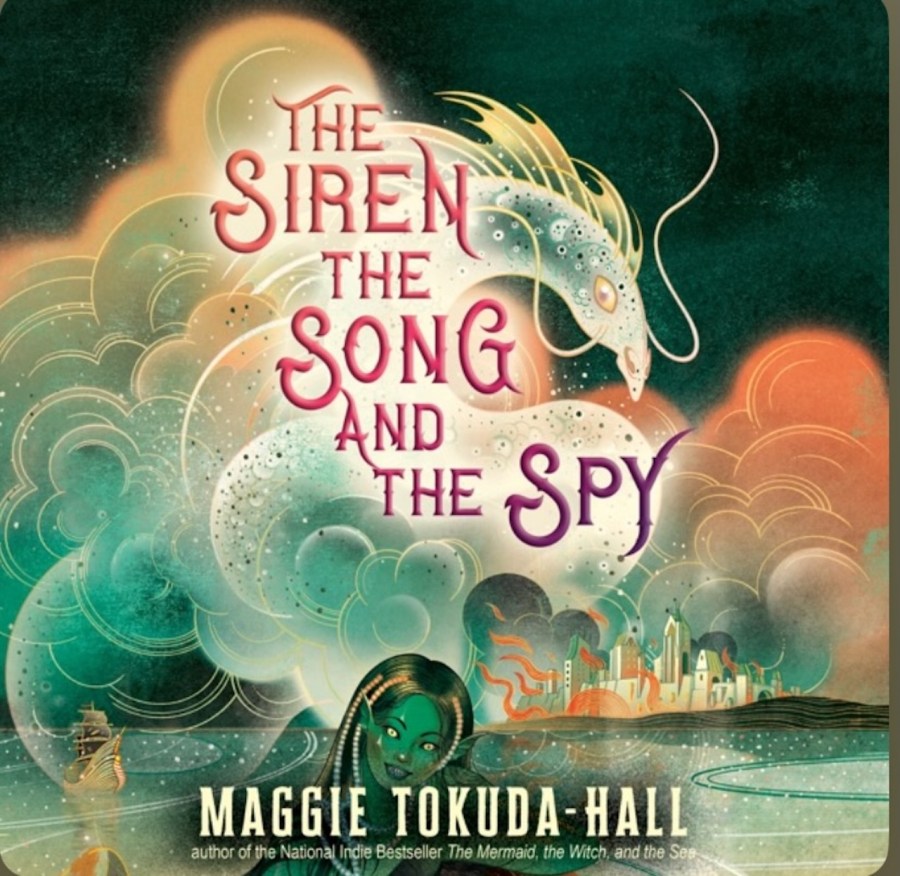
I read The Mermaid, the Witch, and the Sea by Maggie Tokuda-Hall with my book group and loved it. Queer + Pirates, what more could you want?
There’s freedom in stories, you know. We read them and we become something else. We imagine different lives, and while we turn the pages, we get to live them. To escape the lot we’re given.
The story is a young adult swashbuckling, fantastical, sapphic, girls own adventure. There are pirates, mermaids, greed driven, despotic overlords, hero’s and villains. Not that different to the real world really…colonialism, imperialism, misogyny.
Corsets are stupid
Flora and her brother became pirate crew in order to have a place to live and food in their bellies. Gender fluid and black, Flora disguises herself as a man called Florian (think Pope Joan?) and falls in love with one of the passengers – Lady Evelyn Hasegawa.
If Florian was the wall that guarded Flora, then Evelyn had scaled his heights.
Evelyn is on board supposedly to be wed in an arranged marriage at their destination. In actual fact her parents had sold her to the highest bidder due to her difference (code for lesbian). There’s a catch as the wealthy passengers are about to be told they are to be sold as slaves. So of course Florian has to rescue Evelyn.
After that, she wondered, how improper was it — really — to slap a man in the face for staring?
The pair make a daring escape, rescuing a mermaid in the process, who then along with the sea (a character with thoughts and feelings) rescues them – spitting them out on an island shore where a witch revives them.
There’s nothing out there to punish evil, no one out there to reward the righteous. We’re all just adrift.
The Mermaid, the Witch, and the Sea is brimming with diversity, adventure, romance and a good lashing of the kind of violence, blood and guts colonialism is famous for. A fun read and other worldly adventure.
I spent the weekend at my dad’s place near the beach. It’s a locale not so far from Melbourne but Telstra has largely abandoned it. As a result, there was no internet and little phone coverage. Thus the late review. The few days were very relaxing in a beautiful spot. It was perfect for writing a review set in the Greek islands.
In the new quiet I heard the sea as if my ears were laid against the ocean floor. I could hear everything. The rumbling earthquake of a ship and spider crabs moving between weeds.
In Deborah Levy’s novel Hot Milk, a mother and daughter travel to Spain. They are seeking diagnosis of, and treatment for, the mother’s mysterious paralysis illness.
She had no God to plead to for mercy or luck. It would be true to say she depended instead on human kindness and painkillers.
Twenty-five year old almost anthropologist turned waitress, Sofia is her mother’s primary carer. They remortgage the house to pay for treatment by an alternative medicine specialist called Dr Gomez in his Spanish clinic. The doctor, who works with his daughter, is obsessed with a pregnant white cat that lives in his office. It is unclear whether Gomez is legitimate or a quack.
I am my mother’s burden. She is my creditor and I pay her with my legs. They are always running around for her.
Rose frequently uses a wheelchair due to a mysterious intermittent paralysis of her legs and feet. As the story evolves it becomes apparent that Dr Gomez suspects hypochondria rather than a physical illness. He thinks both women are complicit in the illness – Rose for attention and love, and Sophia to avoid making a life of her own. He makes it his mission to try and help both the woman. For Sophia this includes setting a task to steal a fish from the market to build her courage.
Sometimes, I find myself limping. It’s as if my body remembers the way I walk with my mother. Memory is not always reliable. It is not the whole truth. Even I know that.
While in Spain Sofia takes on lovers and explores her sexuality and identity. She meets local Juan when he treats her for Medusa stings after swimming in jellyfish infested waters. She also has a passionate love affair with a German woman called Ingrid.
Empathy is more painful than medusa stings
Sophia’s relationship with her Greek father is also complex. We discover this when she goes to meet him in Athens. It is their first meeting in eleven years. She wants his help but is unable to ask for it, and her father equally unable to offer.
It would take a while for me not to think of the Greek language as the father who walked out on me
Hot Milk is an exquisite character study of ineffectual parenting. An exploration of the inner world of Sophia and her search for individuation, personal and sexual identity.
My love for my mother is like an axe. It cuts very deep
Hot Milk is a beautifully set, fragmented, quirky and strange story. It is lyrical, haunting and a little depressed. The story is almost dream-like and brimming with poetic metaphors. Sophia strives to become bolder. In doing so, she define herself and her life. Hot Milk was short listed for the 2016 Booker Prize.
The audience is seated for Melbourne International Comedy Festival show Happy Birthday Taylah Whelan, and it’s a full house. The entry door opens. A woman walks in. She scans the crowd looking surprised. Then she thanks us for coming to her birthday party. She’s turning 26.
Right from the start Whelan spills snappy one liners that have the audience in fits of laughter.
Whelan grabs a drink from under a nearby audience member’s chair and takes a swig. Then she looks at the label. It’s called A Drink that makes you Reminisce. At first she resists, then gives into it and climbs on the stage. And we are introduced to to the world of Taylah Whelan.
Whelan has great energy and comedic timing. She is smart and dynamic, with a self-effacing frank honesty in her delivery.
It’s Taylah Whelan’s fifth birthday. She’s growing up in Palmerston, a suburb of Darwin. ‘A Place for People’. It soon becomes apparent that it’s probably not a place for Taylah though. Her Irish mother has got her a friend – a talking cat she names Elvis. Dad is an awkward bloke who doesn’t know how to effectively communicate with his kid.
Each time she has a sip of A Drink that makes you Reminisce, we travel to Taylah at a different milestone birthday. She is twelve, fifteen, eighteen, twenty-one, and twenty-six. Along the way we discover a little more about Whelan. We learn about the formation of her identity through theatrical self-deprecating and insightful delivery. Happy Birthday Taylah Whelan is a laugh out loud show. And did I mention the talking cat?
Happy Birthday Taylah Whelan is crated and performed by the title’s namesake. The show is directed by Kaite Head and produced by SKINT. Set and quirky cat design are by Max Arnold, and voice work by Elliot Wood, Ayesha Harris-Westman and Alex Donnelly
Dust off your party frock and get along to Happy Birthday Taylah Whelan for a cracking good laugh. The show is playing at the Motley Bauhaus in The Cellar till 1st of April. Tickets from Melbourne International Comedy Festival.
Cabin Pressure, on as part of Melbourne International Comedy festival, is a laugh out loud high altitude romp. Climb onboard Bijoux airlines for a flight to nowhere or somewhere…choose your own adventure.
This is a show that is totally relatable for anyone who has been on an airplane. What do you do when you find yourself in a bullet shaped steel tube with a bunch of people you’ve never met, being served by a trolley dolly with a mandate to please? Kick back and enjoy the ride of course. One lucky person will be upgraded to business class.
The show has optional audience participation. I can say hand on heart this element is no pressure and low key. At the performance I went to, those who started with no participation eye masks on (their heads) took them off half way through the show. Several looked like they hoped to be asked to join in the hilarity.
Cabin Pressure is a mix of clowning and immersive theatre. The show has the timing and pacing to give you edge of your seat belly laughs. Go along for gags that will remind you of the absurdity of airline travel. Next time you board a plane you will have a bigger smile on your face.
The show is created and performed by Sunny Youngsmith. Their previous shows include Ned Kelly The Big Gay Musical and Meaty Sue’s Big Farma.
Cabin Pressure is on at the Motley Wherehaus at 430 Queen Street, Melbourne until 5th April. The venue is conveniently located across the road from Queen Victoria Market parking and near a range of public transport routes.
Queer, atmospheric, and lyrical, The Unbecoming of Margaret Wolf by Isa Arsén is a noirish drama.
Only two things have come with me all the way to New York City from south of the Mason-Dixon Line: a bottle of Wild Turkey from what I once called home and an orange telephone.
In 1950’s New York, two Shakespearean actors marry for convenience. Margaret Shoard, who struggles with her mental health, marries her best friend Wesley. He is trying to avoid the scrutiny of the House Un-American Activities Committee for his relations with men. The two are asexual soul mates.
We were all of us strays, blacklisted or rich enough yet stymied by arrest records, the city’s shiniest if unpalatable dross.
Margaret plays Lady Macbeth on opening night. She identifies a little too much with her character which leads to a mental breakdown. She can’t work so wanders the streets of New York and takes prescription medication to get through her aimless days. After Wesley is hired to perform at Shakespeare’s Globe Theatre in the New Mexico desert over the summer, Margaret thinks this opportunity might be just what she needs. It could help her get her mojo back.
Every day of mine is a gift
What unfolds is drug fueled months of complicated arrangements with another theatre employee. The threesome results in a pregnancy, visitations from Lady Macbeth, and abuse.
Her gaze was bright and glittering with drink. She was the sort who held her liquor by way of deepened elegance and wit rather than sloppy dissolution.
Love, betrayal, female rage, self-discovery, theatre mobsters, and plenty of nods to the Bard can be found in The Unbecoming of Margaret Wolf. Content warning the story includes sexual assault, self-harm, murder and substance abuse.
Judith Mackrell dives into the early lives of artist siblings Gwen and Augustus (Gus) John in her biography Artists, Sibling, Visionaries. It’s a wild ride. Set in early 20th century Britain, the artists are both socially awkward but John lived a notoriously bohemian life. He was an adulterer and bigamist who fathered a large number of children with multiple women. There were so many he seemed to lose track of them himself. In contrast, Gwen was an introvert. She was bisexual, fiercely independent, quiet and deeply private.
People are like shadows to me and I am like a shadow.
Growing up in Wales, the siblings had an inner turbulence in common. They attended the Slade School of Fine Art in London in the 1890s, the first art school to admit women. Later, Gus lived in England while Gwen settled in Paris.
Gwen and Gus had once thought that money was irrelevant. As students, they’d believed that all they needed was a roof over their heads, materials with which to paint—and their freedom.
Initially Augustus appeared to be the rising star. This was possibly in large part because he was an outgoing and handsome young man in a man’s world. However, his life became so complex that art often took a back seat. It was the shy introverted Gwen who was (posthumously) recognised as the greater painter of the two.
Even now, at twenty-one, Gwen had no control of her own money; as an unmarried woman, she was barred from opening a bank account.
Gwen was the muse and lover of Rodin, 36 years her senior. The relationship was a source of both pain and joy for Gwen and the most significant of her life. It was only after converting to Catholicism she was able to break free of the hold Rodin had over her. Her subsequent, largely solitary, existence in life was marked by a fierce loyalty to her art.
In 50 years’ time I will be known as the brother of Gwen John.
The creative struggle and its tension with commerce are alive throughout Artists, Siblings, Visionaries. The bond and rivalry of siblings pursuing the same profession was also a strong theme. The book focuses centrally on Gwen’s struggle to live a creative life, often relying on her brother for financial support. It highlights how constrained the world was for women of the times. This created tension throughout the book. In Artists, Siblings, Visionaries, Mackrell makes the humans behind the artwork visible with all their dreams, fears, and flaws. It was wonderful to read.