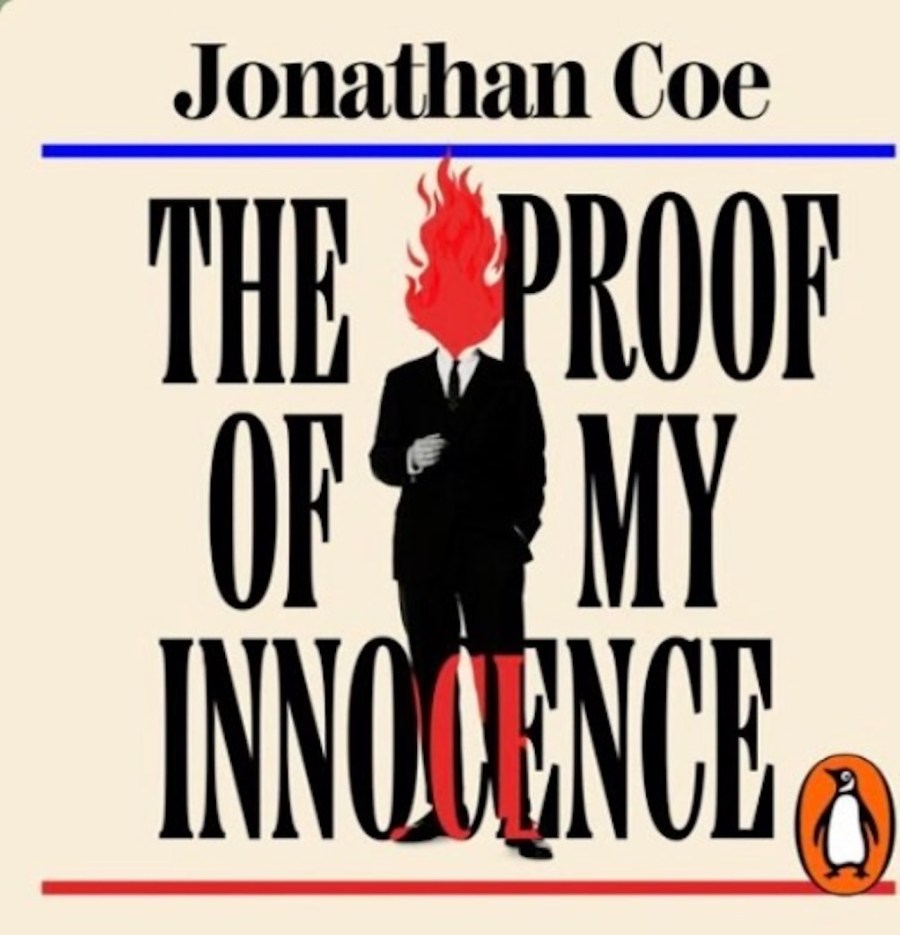
The Proof of My Innocence by Jonathan Coe is primarily a cosy crime mystery. There is also an element of political auto-fiction. Part of the story is set as Queen Elizabeth II dies. It also incorporates Liz Truss’s 45-day reign as British Prime Minister and explores why things fell apart.
Any act of writing must also, by definition, be an act of selection; therefore distortion; and therefore invention.
After university Phyl finds herself back living with her parents and working in a Japanese food cafe at Heathrow, Terminal 5. Her ambitions to become a writer are not taking shape. That is until Chris, a political blogger and old university friend of her mother’s, comes to stay. Chris sparks an interest in cosy mysteries and auto-fiction for Phyl.
How is someone like me supposed to survive in a world like this? Everything that defines me is unsuited for it. My passivity. My idealism. My innocence. I just don’t have what it takes
Chris is planning to attend a far-right conference as he is looking into a think tank hellbent on privatising the National Health Service. He is concerned about his personal safety. And has reason to be.
See it. Say it. Sorted
The conference is being held in a country house in the Cotswolds. It is complete with secret passages and a cast of extreme and eccentric characters who become murder suspects. Chris is murdered, leaving behind a cryptic note.
The presumption of innocence is now the presumption of guilt. The burden of proof is a travesty because the proof is often lies
Detective Inspector Pru Freeborne, on the cusp of retirement, investigates. Meanwhile Phyl is convinced that Chris’s death is linked to dead author Peter Cockerill. Phyl and Chris’s adopted daughter, Rashida, start their own investigation into his death.
You murdered a man to get what you wanted. You murdered another man in order to keep your secret safe. And yet the good fortune that it’s brought you still isn’t enough. You remind me of the people at that conference. Remaking the world in their own image and still not liking what they see.
The Proof of My Innocence is a complex story. Political plotting, a complicated whodunnit, gender and intergenerational issues. Even the title is constructed from homonyms. Proof as in an early copy of a publication and evidence. And innocence as both naivety and a lack of guilt.
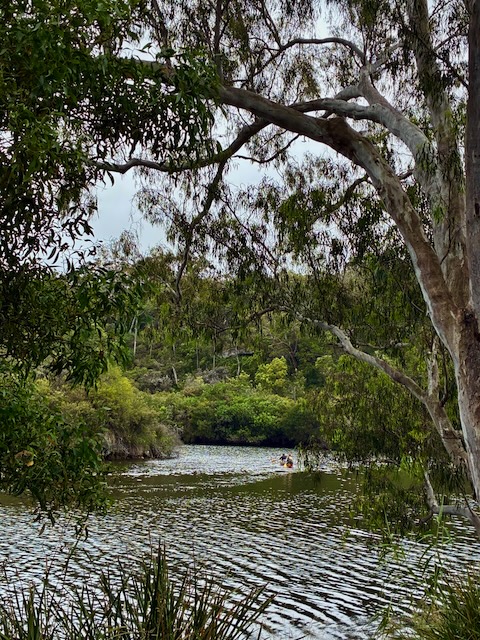
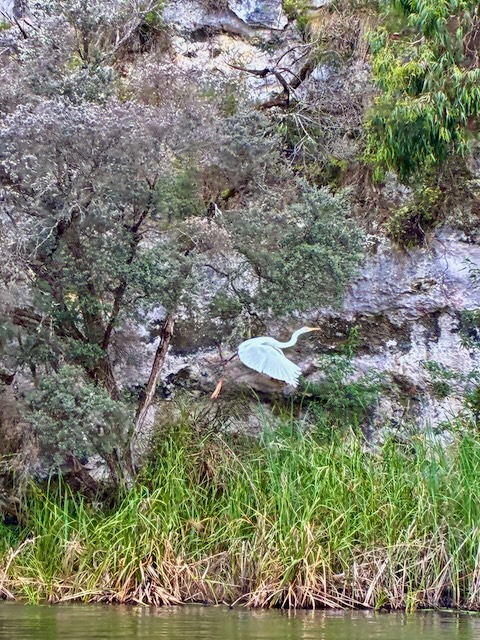
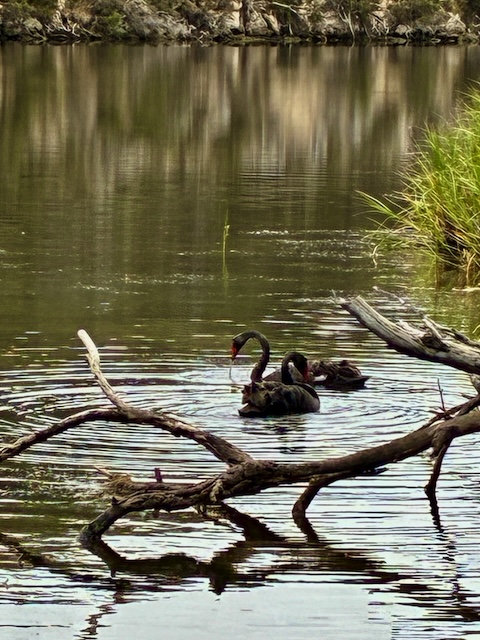
I spent four days over new year canoeing around 50km of the Lower Glenelg River. It’s a wide, deep, slow-flowing tidal river. The Glenelg originates in the Grampians National Park in Victoria and snakes through Balmoral and Casterton. Then, it flows through the Glenelg National Park before doing a sweeping bend through South Australia. It returns to Victoria to join the ocean at Nelson. The river is lined by an impressive layer of Pliocene age limestone and ferricrete gorges. It also features national park inhabited by an abundance of wildlife, particularly birds and koalas.
The most challenging part of an expedition is committing to do it—accepting the unknown changes that will inevitably occur in you and around you. – Hudson Bay Bound
Upon returning home, I attended to some overdue maintenance around the house and bushfire season preparations. That season then arrived with a vengeance last week. Due to the extreme conditions and already active fires to the north, I cleared out on Friday. I don’t currently have animals to care for and I had somewhere to go so it was an easy decision. I did not return home until quite late after the cool change. Thus the late publication of this blog.
We need to give rivers room to breathe, to protect and improve not only the water but the land surrounding the river, too. – Hudson Bay Bound
Our forested town on the banks of the Yarra River was spared again this time. My heart goes out to those communities that were, and still are, being impacted by the fires. I also feel very sad for all the animals and beautiful Australian landscapes ravaged by the fires. It’s going to be a long summer.
When in doubt, don’t think too much, and walk around the block in your hiking boots. – Hudson Bay Bound
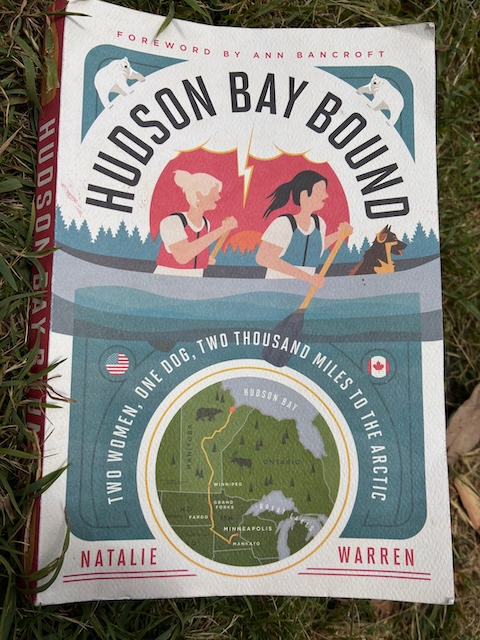
Circling back to my canoe adventure. I have said before that when I travel I like to read something that has some reference to my journey. At the campsites on the Glenelg I dove into the memoir Hudson Bay Bound by Natalie Warren. Hudson Bay Bound tells the story of two young college graduate friends. They became the first women to canoe the 2,000 miles from Minneapolis to Hudson Bay, completing the journey over eighty-five days in 2011.
Anything that wasn’t a basic need or a life-threatening issue wasn’t worth a worried thought. – Hudson Bay Bound
Hudson Bay Bound narrates the trials and tribulations of this journey. It describes the people the girls meet and explains what they learned about the population’s connections to the river. Hudson Bay Bound also touches on some of the social and environmental issues along the river. Their quest was inspired by Eric Sevareid and Walter C. Port’s wilderness voyage portrayed in the 1935 Canoeing With the Cree. A quick, easy read for those who like an outdoor adventure.
Sputnik Sweetheart by Haruki Murakami is a story about friendship, unrequited love and loneliness. The story revolves around three characters.
Why do people have to be this lonely? What’s the point of it all? Millions of people in this world, all of them yearning, looking to others to satisfy them, yet isolating themselves. Why? Was the earth put here just to nourish human loneliness?
The narrator, K, is in love with his best friend Sumire. The protagonist, Sumire is in love with Mia, a woman 17 years her senior who is also her boss.
We’re both looking at the same moon, in the same world. We’re connected to reality by the same line. All I have to do is quietly draw it towards me.
K and Sumire spend hours on the phones in deep conversation about life, desire, sexuality and writing. Sumire is an unconventional aspiring novelist. K is a solitary intelligent primary school teacher. K’s unrequited love roots a deep longing and loneliness in him.
Don’t pointless things have a place, too, in this far-from-perfect world?
The exotic Mui employs Sumire in her wine company despite her limited skills or qualifications. Mui has no idea Sumire is infatuated with her.
In the spring of her twenty-second year, Sumire fell in love for the first time in her life.
Sumire and Mui go on a business trip. They end up on a Greek Island for a holiday after a house is offered to them over the summer by a couple of gay men they meet.
A story is not something of this world. A real story requires a kind of magical baptism to link the world on this side with the world on the other side.
One night K receives a distressing call from Mui imploring him to get on a plane immediately and go to the island. It is something to do with Sumire so he goes without question.
Who can really distinguish between the sea and what’s reflected in it? Or tell the difference between the falling rain and loneliness?
This is where the novel turns into a mystery. Sumire has disappeared without a trace from the island. It seems impossible without anyone noticing anything. Enter magical realism.
Understanding is but the sum of misunderstandings.
Sputnik Sweetheart is a short, cleanly crafted, story about existence, identity, what is real and what is hidden. As is common in Japanese literature Sputnik Sweetheart is a simple story with plenty of depth.
Arundahti Roy’s memoir Mother Mary Comes To Me now ranks as one of the best memoirs I have read.
She was my shelter and my storm.
Arundhati’s exceptional writing and story telling skills bring India alive on the page. And the story will resonate with anyone who grew up with a formidable mercurial mother whom they experienced simultaneously as confusing, hateful, loving and overbearing.
As I grew older, my very existence seemed to be enough to enrage her.
Mary Roy, a Christian from Kerala, was not a woman of her time. She married Micky to escape her parents, then left him when she found him to be an uninspired alcoholic. She calls him ‘a Nothing Man’ (he does return later in the story as a funny, lovable rogue). Mary Roy had a vision – big dreams, big energy, and she was a fighter.
When it came to me, Mrs Roy taught me how to think, then raged against my thoughts. She taught me to be free and raged against my freedom. She taught me to write and resented the author I became
Mary settled with her two children, Arundhati and brother LKC, in Aymanam, a village in Kerala. Here she set up a school that would grow a reputation as large as the woman herself. Arundhati and LKC began to refer to their mother as Mrs Roy like all the school children.
Until the day she died, she never stopped learning, never stagnated, never feared change, never lost her curiosity.
The first part of the book contains Arundhati’s life before she became a famous author. It also contains the world that inspired The God of Small Things, the novel that made her a household name.
I left my mother not because I didn’t love her, but in order to be able to continue to love her.”
Arundhati’s mother escaped her parents by marrying. Arundhati escaped her mother by going to study in Delhi at the School of Planning and Architecture. This part of the memoir follows the author into adulthood and a creative life. It provides insightful descriptions of the socio-political environment of the day and Arundhati’s confrontations with the nation-state.
I began to refer to myself as the Hooker who won the Booker.
As an adult Arundhati rises to become both a literary star and an activist. She rages against the status quo (not entirely unlike her mother) and is charged with obscenity and corrupting public morality. She loves India, but it has a love-hate relationship with her because she will not conform.
While countries were being invaded and rivers were being dammed, while the earth was spinning faster than it should and I was on trial for not behaving like a reasonable man, Micky Roy went missing.
In Mother Mary Comes To Me, Arundhati sours between capturing the minute idiosyncratic detail of those in her life and insightful political observations. Mother Mary Comes To Me is a memoir that reads like a novel. A beautiful, passionate, funny and insightful tribute to a force of nature.
If protesting against having a nuclear bomb implanted in my brain is anti-Hindu and antinational, then I secede. I hereby declare myself an independent, mobile republic. I own no territory. I have no flag.
I was out to lunch the other day and a friend spoke about their robot vacuum as if it were a new housemate. It had a character of its own and was not ‘just a machine’. As humans become more isolated and individualistic, our lives become more computerised. Do we impose greater meaning on this human-robot interface?
In the morning when the Sun returns. It’s possible for us to hope.
Klara and the Sun by Kazuo Ishiguro tells the story of the human-machine relationship. The story is from the perspective of an almost human android called Klara. Klara is a solar powered artificial friend. After a long time as a display in an android shop, she is purchased as a companion for Josie. Josie is a 14 year old girl with an unnamed illness and a dead sister. Josie warns Klara that there is something strange in her household. This comment sets up a creeping anxiety in the story. Hints are dropped about the nature of the strangeness but it doesn’t become apparent for some time what it is. The tension is heightened by the narrators limited and slightly naive perspective.
Yes. Until recently, I didn’t think that humans could choose loneliness. That there were sometimes forces more powerful than the wish to avoid loneliness.
Klara is designed to observe, learn, understand and serve her human. She is more than a friend – loyal, good and selfless. Klara also has the ability to learn about the emotional contradictions of humans. Yet, she also believes the sun has special powers that provide life giving nourishment. When Klara becomes increasingly concerned about Josie’s deteriorating health she seeks the suns help to heal her friend.
At the same time, what was becoming clear to me was the extent to which humans, in their wish to escape loneliness, made maneuvers that were very complex and hard to fathom.
The constructed world in which Klara lives is a hierarchical society of the ‘lifted’ and ‘uplifted’. The former have access to special privileges. And as one would expect, they are prone to be entitled brats. Klara’s charge Josie is lifted and more compassionate than her other lifted friends, perhaps due to her illness. Josie’s best friend and neighbour, Rick, is ‘unlifted’ and their relationship becomes something that Klara also protects and nurtures.
As I say, these were helpful lessons for me. Not only had I learnt that changes were a part of Josie, and that I should be ready to accommodate them, I’d begun to understand also, that this wasn’t a trait peculiar just to Josie, that people often felt the need to prepare a side of themselves to display to passersby – as they might in a store window, and that such display needn’t be taken so seriously once the moment had passed.”
As Klara learns to understand humans more and more, she seems to become more human herself. However fully grasping them always remains just out of reach. Though her observations do enable the reader to fully experience what she cannot. Klara observes, analyses and reports but the reader overlays meaning to connect the dots.
The heart you speak of,’ I said. ‘It might indeed be the hardest part of Josie to learn. It might be like a house with many rooms. Even so, a devoted AF, given time, could walk through each of those rooms, studying them carefully in turn, until they became like her own home
Klara and the Sun is a speculative fiction novel that explores what it means to be human, loneliness and love. Beautifully written with an eloquent subtlety that expresses complexity through simplicity.
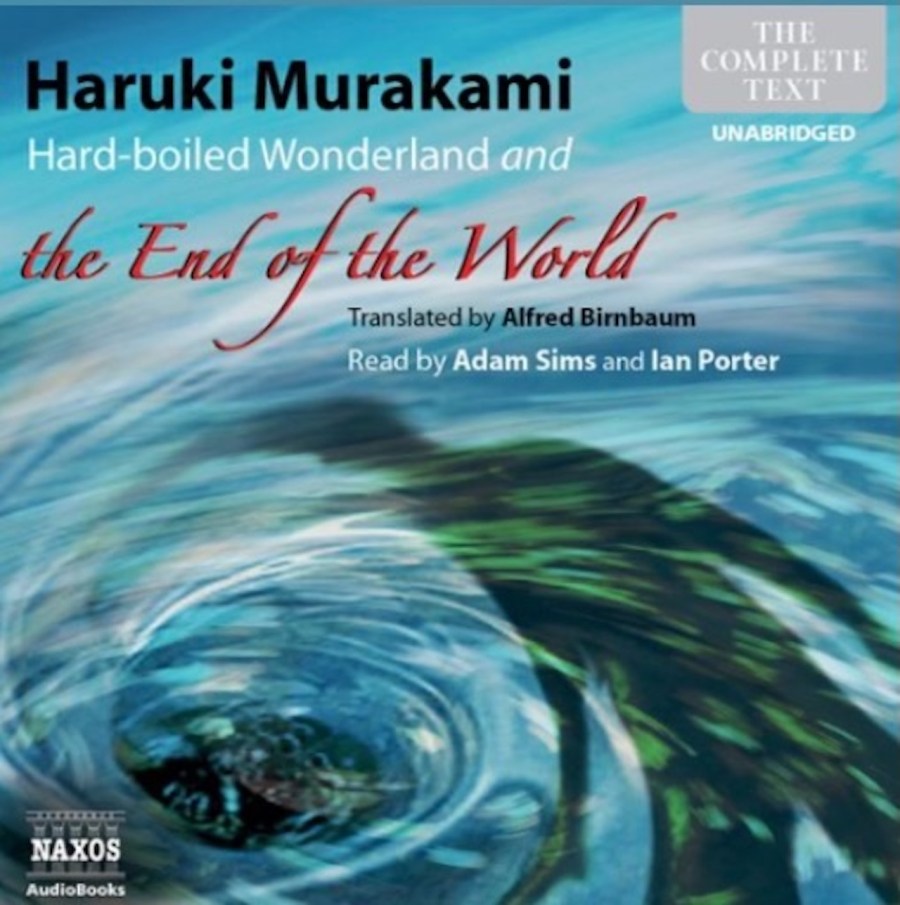
Hard-boiled Wonderland and the End of the World by Haruki Murakami has two narratives. The hard-boiled narrative involves an unnamed Tokyo data processor who works for an entity called the System. He becomes involved with a scientist and his granddaughter after the scientist hires the narrator to launder and shuffle his research data.
I never trust people with no appetite. It’s like they’re always holding something back on you.
The parallel end of the world narrative is set in a walled city where people are separated from their shadows and lose their minds. In this world the narrator is hired as a Dreamreader. The two narrators are linked by the Tokyo protagonists mind being shuffled into the end of the world.
I wasn’t particularly afraid of death itself. As Shakespeare said, die this year and you don’t have to die the next.
The story is as weird and layered as the title, but also totally engaging (despite a little sexism and cringe worthy fatphobic language at times, though it was first published in 1985). Speculative fiction and magical realism meets hard-boiled detective story. There’s even unicorns.
Huge organizations and me don’t get along. They’re too inflexible, waste too much time, and have too many stupid people.
Hard-boiled Wonderland and the End of the World explores subconsciousness and consciousness, how identity and memory are formed by the stories we tell ourselves, and fate and free will. There’s a whiff of Kafkaesque and Orwellian existential meditations…
My Japan trip with two long term friends is a logistical extravaganza with 20 stops in 36 days using every means of transport available. Our first week was made up of several days in Tokyo then a night in Narai-juka before walking part of the Nakasendo postal route then heading to Kyoto for a few days. What follows are the moments that stuck with me. I have also added a book review at the end
TOKYO
We had a soft landing in Tokyo. It was a Saturday night yet the airport felt empty and we glided through customs and onto a Shinkansen (bullet rain) to Tokyo with Japanese efficiency. The train systems are a labyrinth of efficiency, logically organised if you can understand the colour coded system and extraordinary feats of engineering. Getting lost in subways is standard for tourists (and some locals) and we did spend sometime wandering the underground in Tokyo and Kyoto until we got our bearings.
Tips: download the Suica app before you leave and load some funds on it for easy train ticketing, to book on Shinkansen and the Narita AirPort Express. You can also use it in some convenience stores. Download google maps – it uses the subway colour coding and is invaluable to find the right subway entries and train connections, and always allow time to find your platform – it can take a while. Try and avoid catching trains at peak hour as they can be extremely crowded and stuffy (one of my friends actually fainted).
We visited Oedo Antique Market overflowing with treasures including ornaments, tea ceremony bowls, kimonos, clothing made from beautiful hand sewn silks, indigo dyed denim and assorted nick-nacks. The Japanese are generally quite reserved so I was surprised when an elderly lady stopped us and wanted to chat about what we had purchased and show us her items, but I had a sense she was lonely and saw us as a safe way to connect.
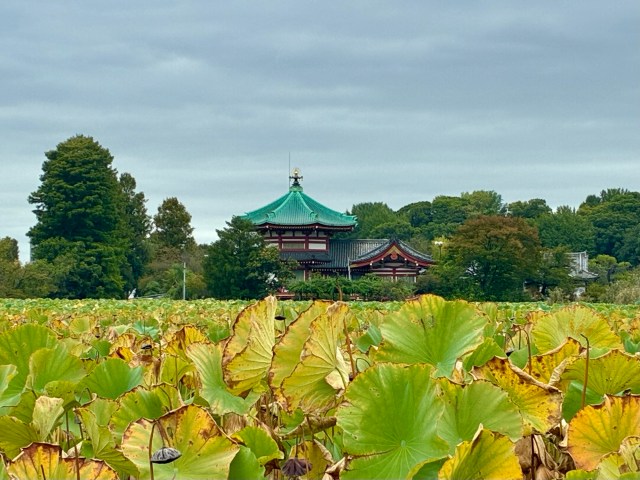
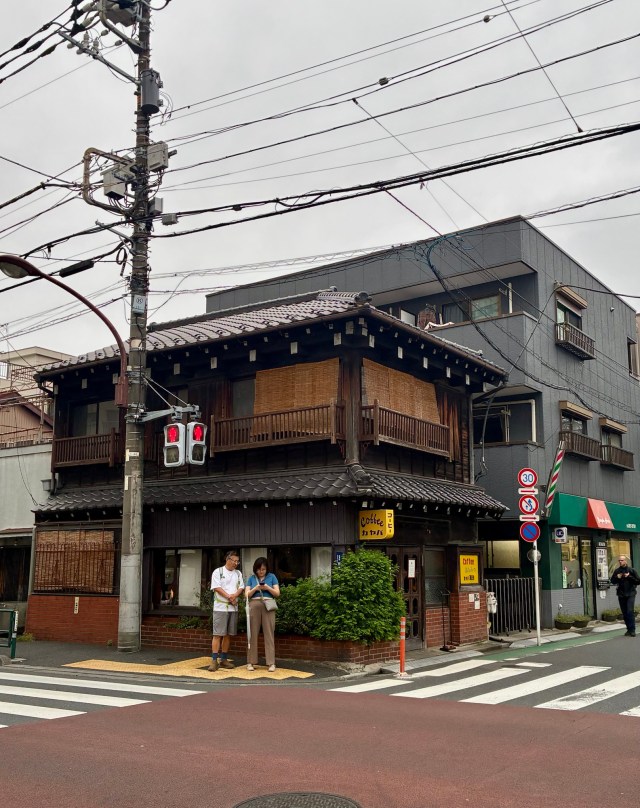
Later that day we walked around Ueno Park which had a lovely community feel with musicians and young creatives selling their wares, a massive lotus pond, the Kaneiji Temple and several museums. Then we wandered around the old neighbourhood of Yanaka, one of the few areas still containing traditional buildings as it was spared from bombing during WWII.
We stayed in the quiet residential neighbourhood of Arakawa at TokyoNEST Nippori hotel near the train station, and conveniently across the road from the Saito onsen, a public bath. At the end of a long day’s walking we crossed for a soak. The bath was fabulous but we did experience our first real cross cultural challenges. Understanding the towel vending machine was confusing, we didn’t have enough coins for the lockers (a kind old lady lent us one) and I had to be shown how to make the hairdryer work. Luckily the local ladies were extremely gracious with us clumsy foreigners though I am pretty sure there was an undisclosed inner dialogue behind those polite facades.
Oedo Antique Market
Ueno Park
Yanaka
Sky Garden, Nakameguro
Rikugien garden, Nagaracho
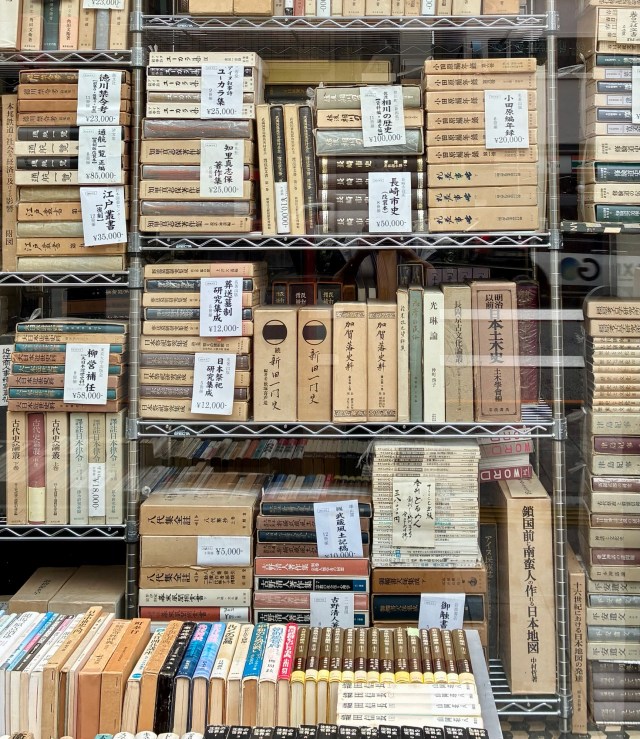
Jumbocho Book town
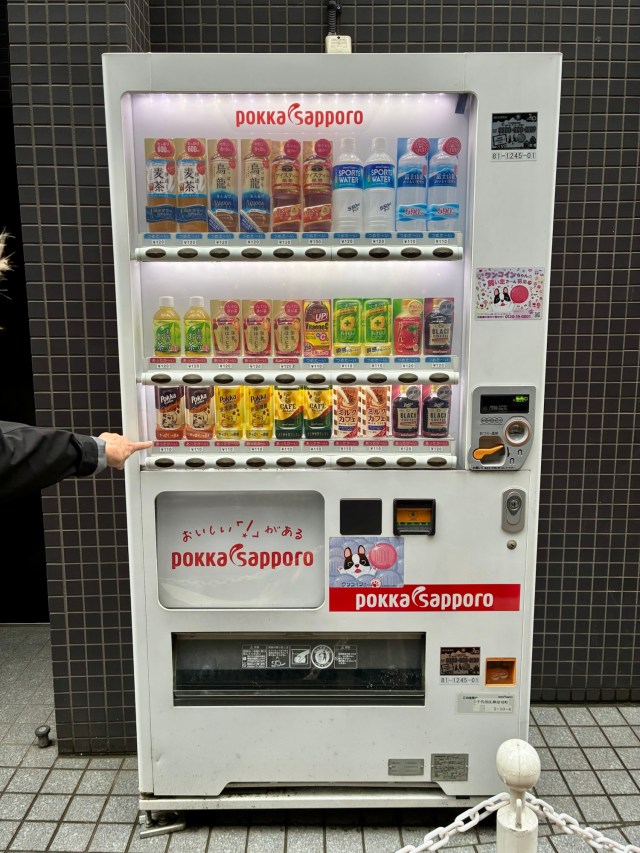
Hot and cold vending machines
Tips: the public baths are generally tattoo friendly, while many private ones are not. Arrive with a good handful of 100 yen coins to hire towels and use lockers and hairdryers.
Other Tokyo highlights included Jumbocho book town and the cherry blossom tree lined Meguro river in Nakameguro, the centre of cool and Japanese hipsters where we had lunch at a funky Thai restaurant called Krung Siam. This area also has a large Sky Garden – a massive colosseum type structure with vines growing up the outside and an entire garden in the roof overlooking the city. It’s a great spot to escape for a quiet moment. A short train ride will take you to the poetic Rikugien garden in Nagaracho which is lovely to walk around too.
Tip: If you are there during spring cherry blossoms or autumn foliage time, the Rikugien gardens are lit up and kept open until 9 p.m
KISO VALLEY
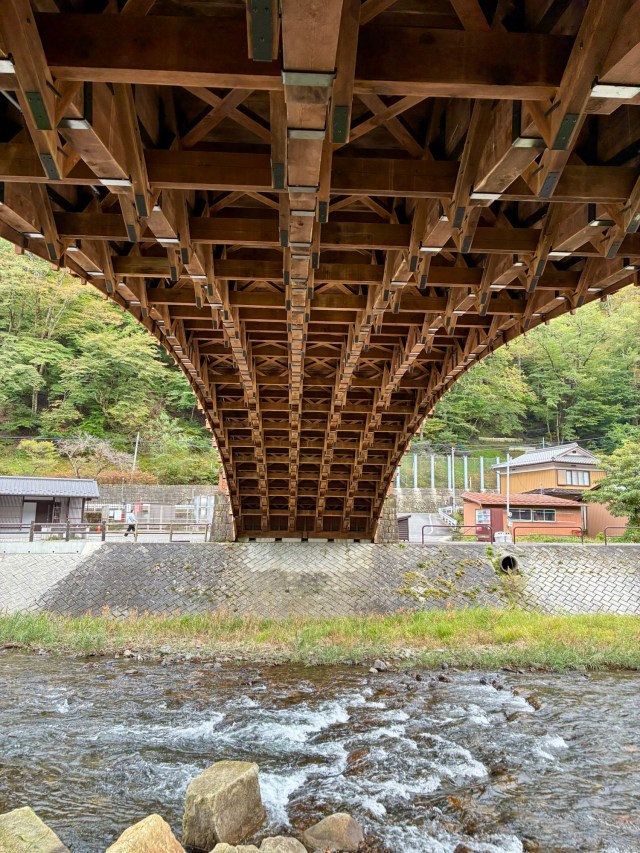
We made our way via three trains to Narai-juka past narrow pointy mountain peaks covered in dense green jungle pushing up from the earth to reach into the clouds. We passed valleys dotted with villages and cemeteries and farmlets growing vegetables, the outbuildings being consumed by the forest. Narai-juka is a beautifully preserved post town on the old walking route that connected Edo (modern-day Tokyo) with Kyoto during the Edo period (1600 – 1868). The trail is 540 km long and has post towns dotted along the way for travelers to rest and recover. Walking around Narai to check out the historical buildings, shrines, and a beautiful wooden bridge was around 7km all up.
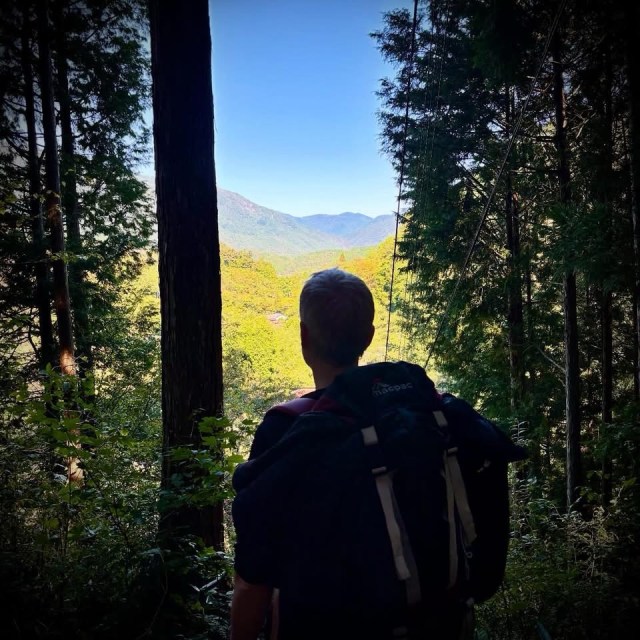
We planned to walk a couple of sections of the trail from Narai to Yabuhara Station over the Torii Pass, then from Nagiso to Tsumago and Magome. Most people walk south to north, we did the opposite and set out early. This meant we did not get caught up with other walkers much and mainly encountered them toward the end of each day – most importantly going in the opposite direction so we didn’t get stuck with the constant chatter of other walkers.
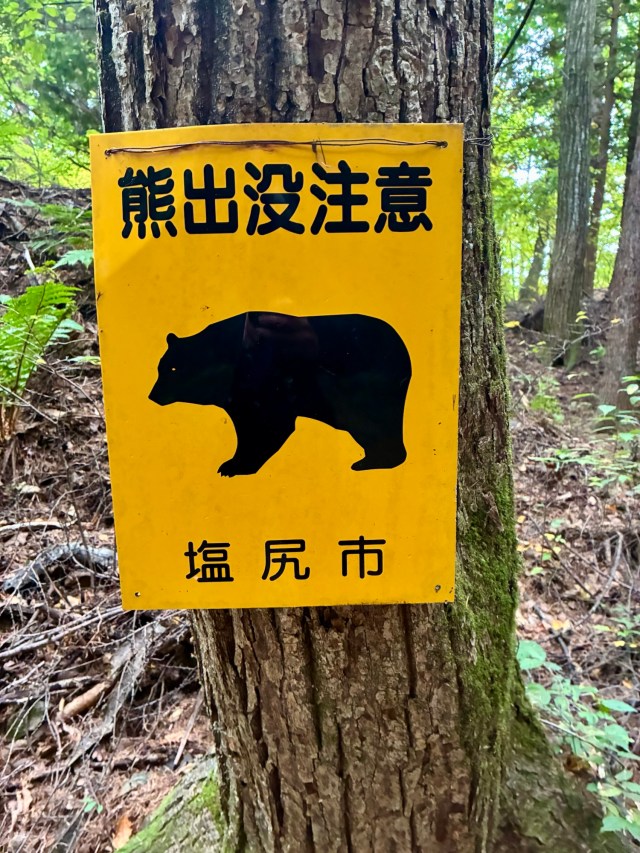
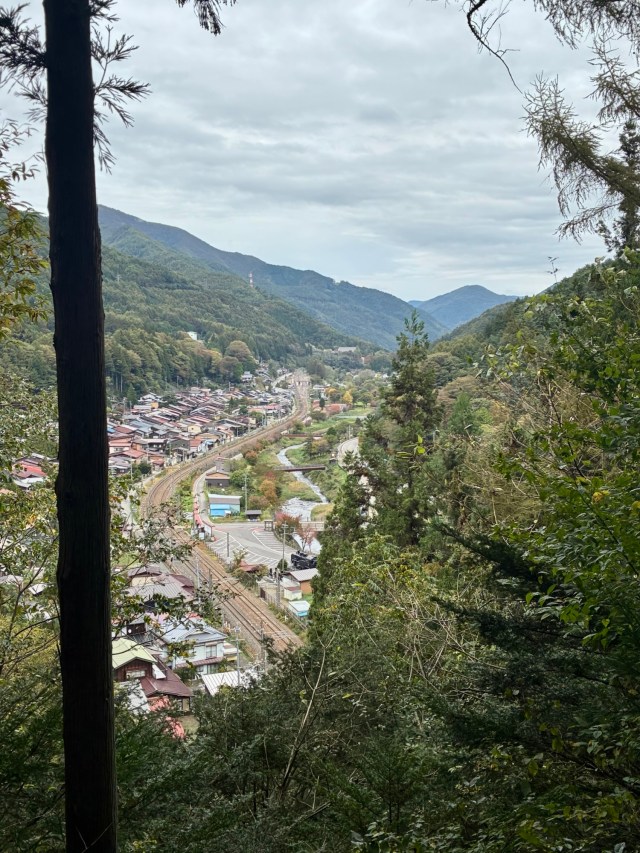
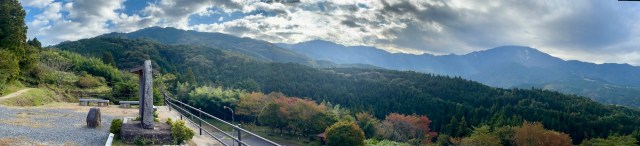
In Narai-juka we stayed at the Iya Kankou Ryokan situated in a 200 year old building with an internal garden where we had delicious traditional Japanese meals. We headed out early on the Torii Pass which has and some magnificent views and we caught the first signs of autumn colours (no bears). This part of the walk is only about 7km but it’s an uphill and downhill and took about 3 hours.
Narai-juka main street
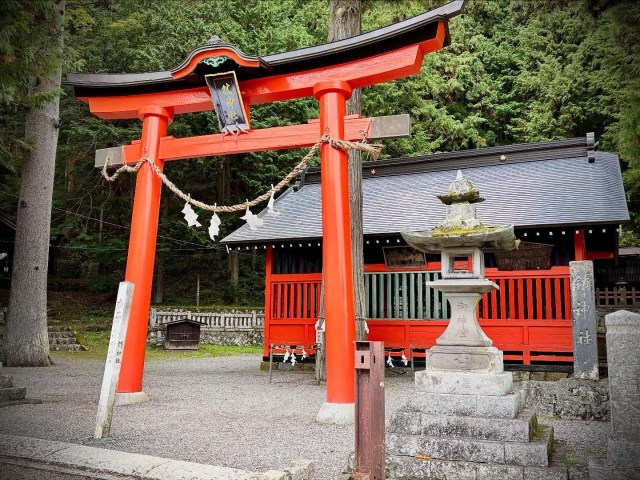
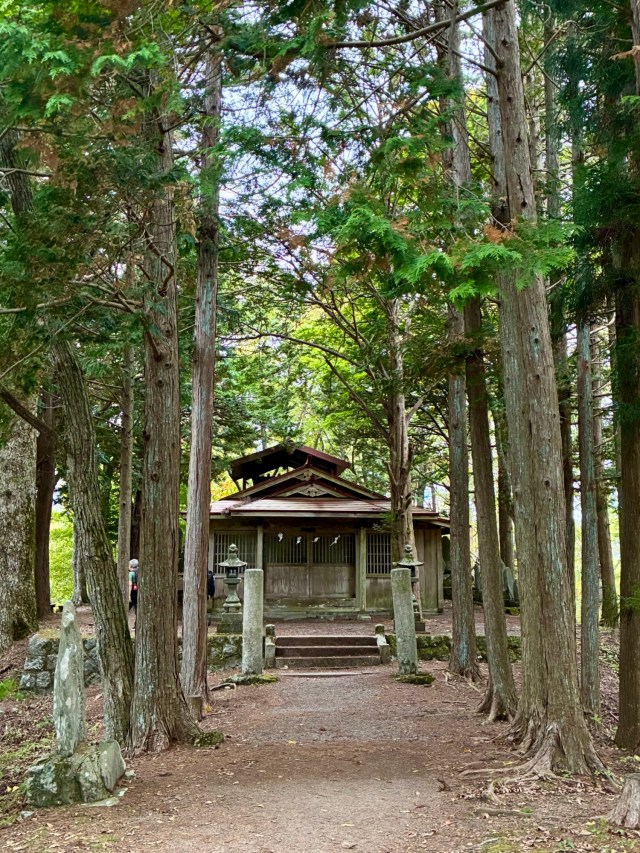
Shizume Shrine, Narai-juku
Kiso-no-Ohashi Bridge, Narai-juka
Narai-juka
Torii Pass
Ontake Shrine
View toward Yabuhara
From Yabuhara we caught a train to Nagiso and had lunch at Cocono Cafe. It was run by very elderly women and had a vibe of Japan fused with an English tea house. I can recommend the soba and yam soup, a local specialty. After lunch we walked on to our next stopover just past Tsumago along narrow winding roads through old villages. Our total walk that day was around 15km.
Tip: if staying around Tsumago order dinner and breakfast with your accommodation as other options are limited.
The next morning we ended up having a hamburger from a vending machine heated in a microwave for breakfast which was surprisingly palatable and fortifying. On vending machines – they are everywhere. Particularly good to get a coffee – hot or cold.
Tsumago
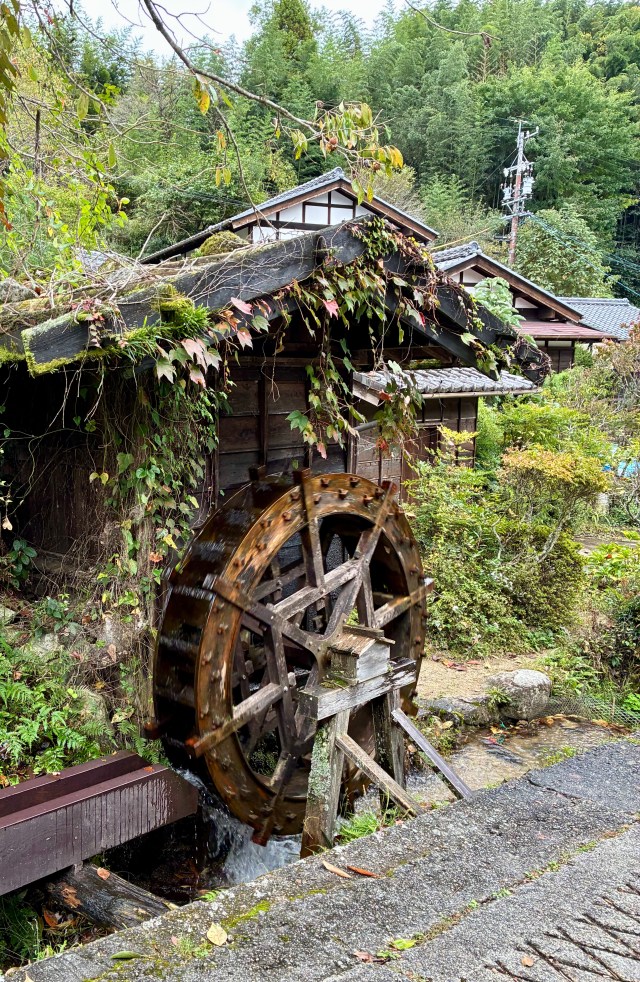
Waterwheel, Tsumago
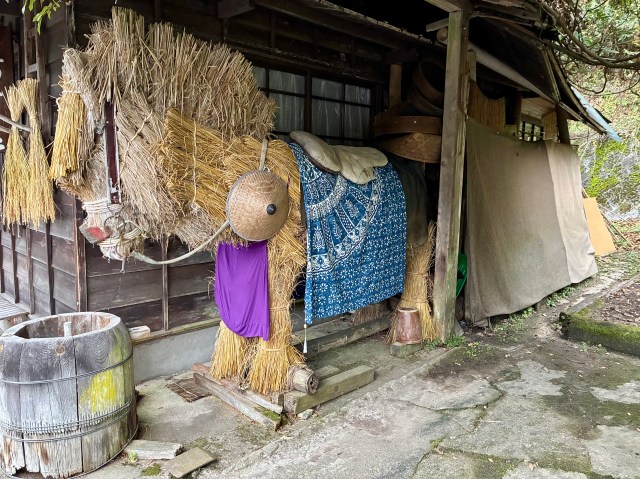
Grass horse, Tsumago
Araragi River
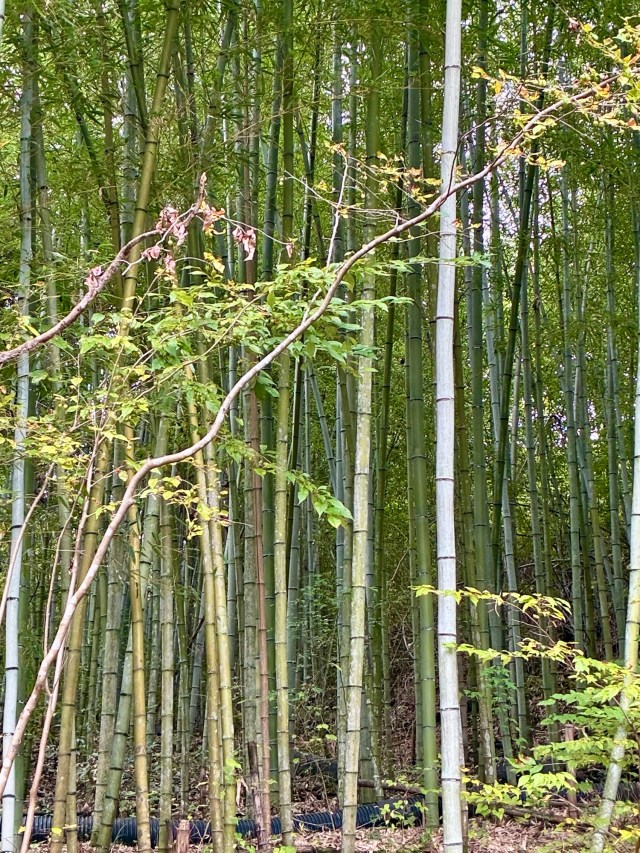
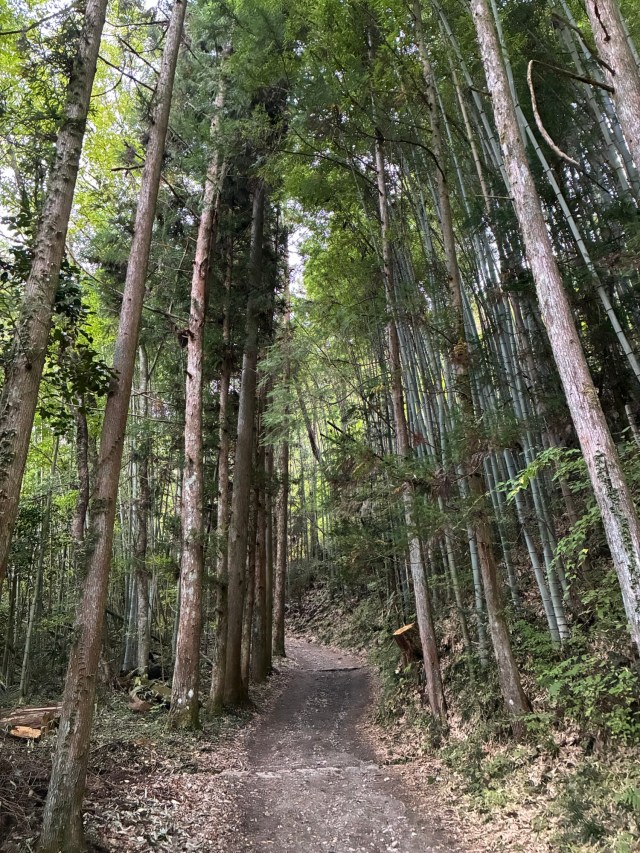
Bamboo forest on the road to Tsumago
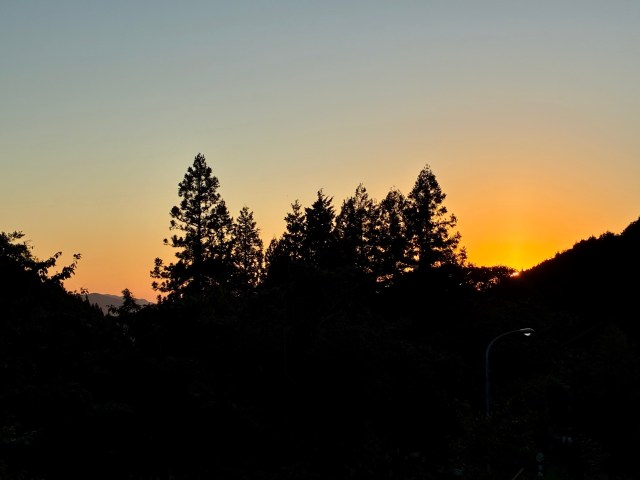
The final leg of our walk to Magome was around 12km along cobbled paths and dirt trails, past waterfalls, through cedar forests and bamboo copses alongside the ghosts of Samarai. We stayed at the beautifully restored and generously provisioned Magome guesthouse with an outdoor hot tub and plenty of hammocks to relax in while we watched the sun set and ate a meal ordered in by our host.
On the road to Magome
On the road to Magome
On the road to Magome
Magome sunset
Tanuki statue for luck and prosperity
Magome-juku is a pretty mountainous historic town. Streets are lined with traditional buildings and there are a number of places to eat – I can recommend the oyaki (steamed dumplings) filled with pickled vegetables or marinated eggplant or sweet chestnut and steamed in what looked like a system of 19th century hinoki cedar drawers.
After a fond farewell to our very generous host we boarded a bullet train that took us to the big smoke of Kyoto at 275km/h where we had a sunset wander along the Kamogawa river and a picnic from 7-11 at the close of our first week.
Tip: you can get a really good take away meal from a 7-11 in Japan for when you can’t be bothered looking for a restaurant.
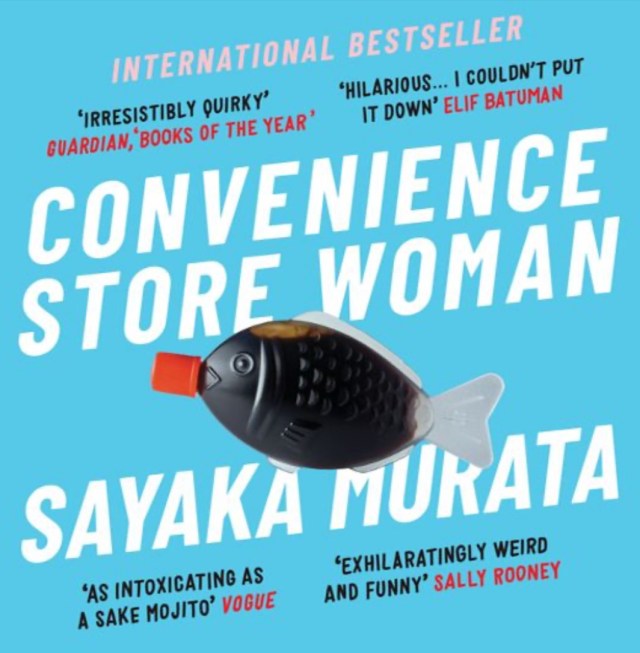
Book review: Convenience Store Woman by Sayaka Murata
After marvelling at the 7-11’s in Tokyo and Kyoto it was fitting that I read Convenience Store Woman by Sayaka Murata during our many train journeys in between gazing out the window. This is a story about a woman called Keiko who does not fit into Japanese societal expectations as she does not get the strict social mores and says and does things she should not.
The normal world has no room for exceptions and always quietly eliminates foreign objects. Anyone who is lacking is disposed of.
As a child Keiko kept getting into trouble for her literal approach to life – on one occasion pulling the teachers skit and pants down as her shouting was disturbing the children and she’d seen it done on TV and make women quiet. Her family worry about her and she does not have friends and when she tires of always getting into trouble she decides to stop talking outside the home.
At eighteen she gets a job in a local convenience store. Here she finds a place where she fits as they provide extensive training and a manual on how to behave and what to say – it’s the first time she feels like she understands how to be human. The job provides a sense of being a useful member of society.
So the manual for life already existed. It was just that it was already ingrained in everyone’s heads, and there wasn’t any need to put it in writing. The specific form of what is considered an “ordinary person” had been there all along, unchanged since prehistoric times I finally realised.
But Kaikos family still worry, she is now 36, childless, and never had a boyfriend. Her family still want to fix her. Enter Shiraha, a hopeless unlikeable man who wants a wife to support him so he can just stay home and breathe. Keiko sees an opportunity and asks him to move in – she will provide what he wants, keeping him like a pet, and his presence will make her appear more normal.
I am one of those cogs, going round and round. I have become a functioning part of the world, rotating in the time of day called morning.
Convenience Store Woman is a story about an autistic woman in a society that has strict conformist social rules that do not make any sense to her. Keiko tells her story in a classic pragmatic, deadpan way, explaining how she learns to be just to fit in as it makes life easier, not because she cares.
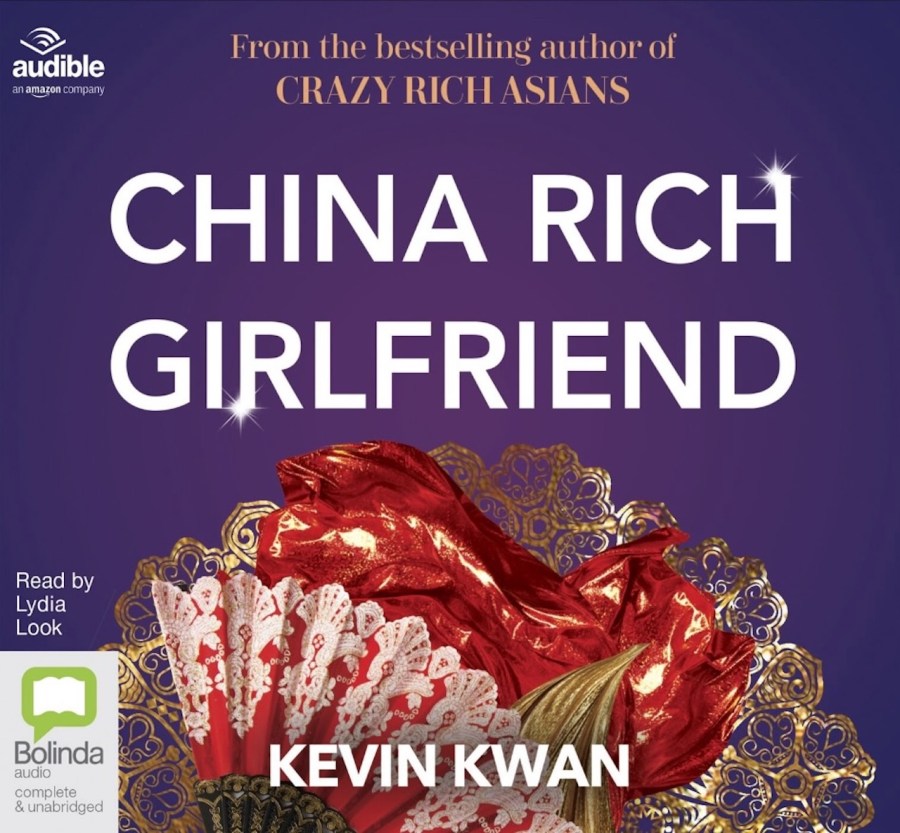
China Rich Girlfriend is Kevin Kwan’s sequel to Crazy Rich Asians where old money meets new in the jet setting, excessive consumerist wild lives of Hong Kong and Shanghai’s elite.
People are messy. Life gets messy. Things are not always going to work out perfectly just because you want them to.
Just when you start to tire of the tantrums and shopping trips to buy clothing worth more than the average persons house, there’s a plot twist and a mystery, intrigue, drama and romance.
I’m so glad I can always count on you to have some sort of ulterior motive that involves money.
Nick Young and Rachel Chu are on the cusp of getting married when Rachel discovers her unknown father is Bao Shaoyen, a wealthy and influential politician from mainland China. The couple fly to Shanghai to meet her family including her half brother Carlton and his socialite girlfriend Colette Bing and find themselves caught up in the highlife.
I don’t understand. How can a credit card ever be rejected? It’s not like it’s a kidney!
Other characters include Kitty Pony, former sex-tape star trying to break into A list, tech entrepreneur and social climbing, mean spirited Michael Teo, his wife, Astrid, and Charlie who is keen on Astrid, all of whom crave a spot in the social pages while being careful to appear as if they don’t care.
Beauty fades, but wit will keep you on the invitation lists to all the most exclusive parties.
China Rich Girlfriend is like an over the top Chinese soap opera. A silly fun quick read.
Note: I am off on holidays to Japan tomorrow for five weeks – yeah! I will do my best to continue my weekly posts, but it may turn into a travel blog for a few weeks.
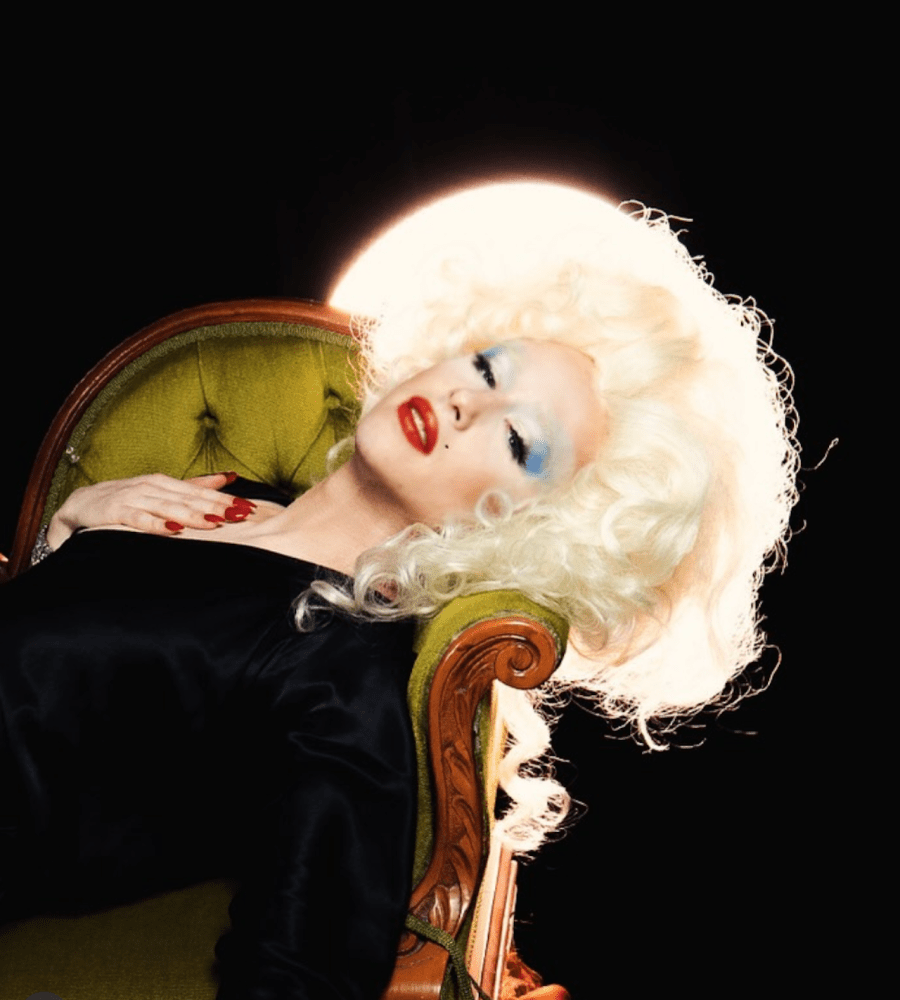
I love a good drag cabaret show and ACTRESS, performed by Murdoch Keane, is up there with a unique concept and persona and great visual artistry combined with artistic talent. The audience went off.
As the patrons enter Griselda von Fistenberg dances around a collection of cardboard boxes and other props under a red glow light. Her mass of golden hair sparkles and her opening lines are poetic.
There’s one catch. She’s dead. Has been for five days after falling down the stairs. Her pool boy found her there. So are we seeing an old actress come back from the dead or has her besotted queer pool boy stolen her identity and put on a show?
This is Hollywood ghosts on steroids – think Judy, Marilyn, Joan, Bette, Liz T, Liza, Ethel and King Kong – bought back to life by Keane’s exceptionally good voice and high energy charisma. It’s queer cabaret delivered with ghoulish glamour.
ACTRESS, created in collaboration with Ozzy Breen-Carr and directed by Brandon Armstrong, is Keane’s debut solo show developed through a La Mama residency. I am confident we will see a lot more of Keane.
ACTRESS is showing at Melbourne Fringe Festival Hub, Trades Hall in the Meeting Room until 19th October. If you’re looking for a wild ride with some old stars and new themes, grab a ticket for this Fringe show now.
The Art of Racing in the Rain by Garth Stein was a totally random pick for me. I did not expect reading it to leave me in tears! The story is written from the view point a dog called Enzo.
I’ve always felt almost human. I’ve always known that there’s something about me that’s different than other dogs.
Enzo is sensitive, introspective and funny and takes his role of looking after his humans very seriously. He learns a lot by watching the television when his humans are at work, but his lack of thumbs is frustrating and he plans to come back in his next life as a human.
People are always worried about what’s happening next. They often find it difficult to stand still, to occupy the now without worrying about the future. People are generally not satisfied with what they have; they are very concerned with what they are going to have.
Enzo was picked out from a litter of puppies by his human, Denny. Denny is a race car driver who works in a Seattle car-repair shop to fund his racing. Enzo soon discovers he loves car racing as well. The tale takes us Enzo and Denny’s single life together through to the adjustment to a human woman called Eve who comes into Denny’s life. Enzo isn’t sure about Eve to begin with but they do bond. Then the humans have a baby called Zoe and Enzo is smitten.
Somewhere, the zebra is dancing.
Things take a turn when Eve becomes unwell and Denny’s life spirals through a sequence of bad luck, well meaning but misplaced intentions, and nastiness. Enzo sticks by his man as his life unravels, but has to contend with a demon zebra.
He died that day because his body had served its purpose. His soul had done what it came to do, learned what it came to learn, and then was free to leave.
The Art of Racing in the Rain is a tale about family, love, loyalty and hope. It’s a bit cheesy at times, but I’m a total sucker for a dog story.






















 R L Smith