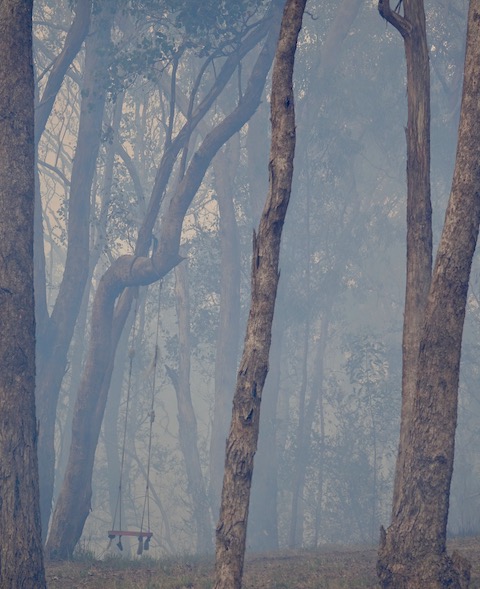
I see their ghosts running through the forest that consumes the evidence of their passing as mines and sheds and steel succumb to natures endeavours
In the late 70’s, around fifteen year after the Monument mine closed, I used to ride my horse through the bushland around Fourth Hill and swim bareback in the Yarra at Warrandyte. I would often tether my horse at the front of a shop so I could go in and buy ice cream to eat sitting in the shade of the willows by the running waters of the river.
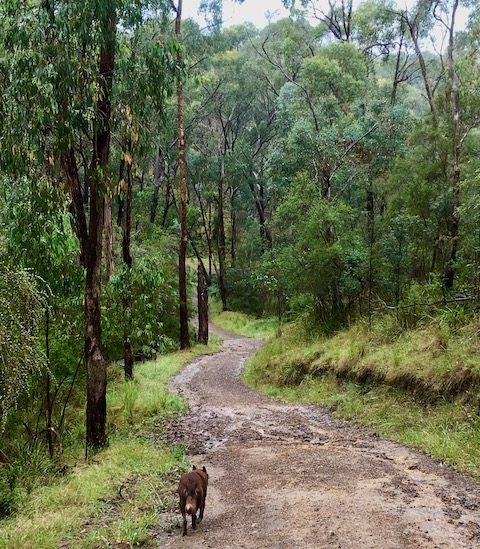
About twenty years ago I moved to Warrandyte. Now I go jogging through the forest on the trails I used to gallop along.
The earth’s wounds of the past have grown over with grasses, creepers, orchids and wildflowers that spread their carpet beneath the eucalypts and wattles. The kangaroos, wallabies, wombats, echidnas and lizards that scurry around are warned of my approach by the kookaburras, cockatoos and rainbow lorikeets squawking at my intrusion.
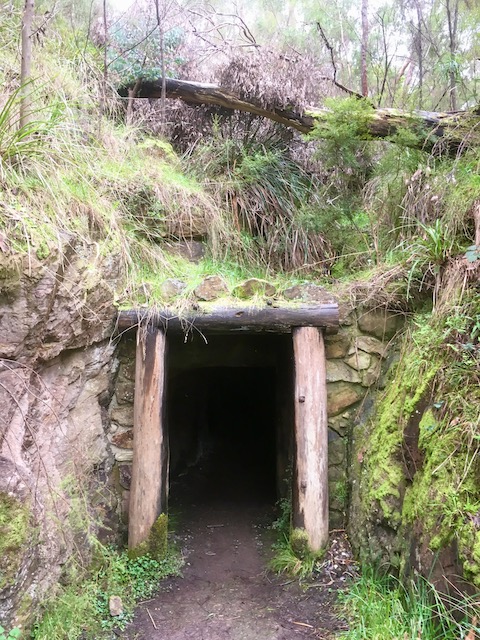
I pass abandoned mine shafts sprouting native grasses and the rusted corrugate dwellings falling back into natures embrace. The miners abandoned mullock heaps are cloaked in lichen and mosses and riddled with ant colonies.
I imagine the heart break of the Wurundjeri who cared for this country that sustained them, their culture and language, when their land was taken by those whose eyes only saw land as a commodity. An asset to profit from.
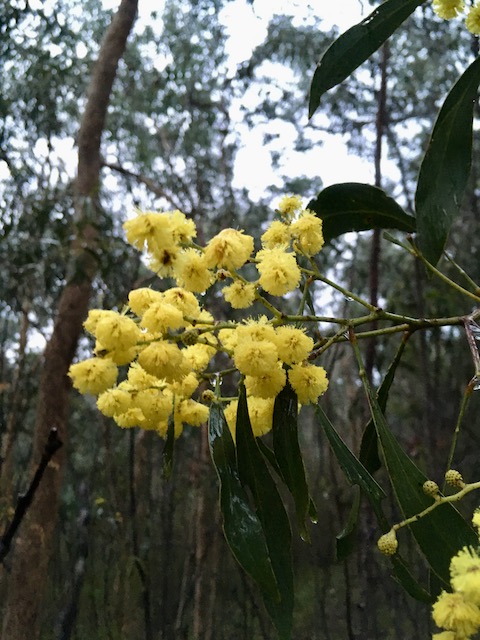
As my feet carry me through the bushland the only gold I see now are the golden wattles that brighten my winter run. Their yellow blooms under the stringybark trees dust the river’s surface with pollen.
Sometimes I think I catch a glimpse of the ghosts of those who went before me on the shady banks of the river and around the the deserted mine shafts. I am enamored by how this ancient land has taken back its birthright under Bunjil’s watchful gaze.
gold bought them in and broke them the micks, the chinks, the poms
In early 1851 Victorians’ started leaving the colony to seek their fortune in the new gold fields near Bathurst in New South Wales. The Melbourne Mayor and local business owners formed the Gold Committee because they feared a mass exodus interstate. They offered a two hundred guinea reward for payable gold found within 100 miles of Melbourne.
Melbourne publican of the Rainbow Hotel in Swanston Street, Louis Michel, despairing at the loss of his customers to the northern goldfields went in search of gold with his companion William Habberlin. In the depths of winter in June 1851 the men found ten pieces in the bed of Andersons Creek at Warrandyte and a fever of gold erupted.
By August the gold epidemic had attracted one hundred and fifty miners. They swarmed around Andersons Creek scouring the gullies for alluvial gold, slipping and slid through the steep surrounding hills of stingy bark searching for finds. The sounds of the men as they dug and washed, dug and washed, would have echoed through the bush as they sifted for the precious metal.
The activity resulted in a series of proclamations being issued that established Victoria’s first ever goldfields regulations. By the end of the year many prospectors had left due to floods, or were lured by the whisper of rich gold deposits at Clunes and Ballarat.
The Wurundjerri were no longer free to move around their ancestral lands. They wanted to have a place that gave them access to their traditional country and managed to gain a reserve of about 782 hectares on the Yarra near what is now known as Pound Bend.
Alluvial miners took a renewed interest in the Andersons Creek area in 1854. A sense of adventure, dreams of prosperity and being your own boss led to a new search for gold. Stories of gold nuggets that promised a quick fortune were plentiful.
Before the introduction of big machinery, prospecting was one of the few pursuits that offered an equal chance of success to both rich and poor. By September 1854, around two hundred people lived in tents and crude shacks, and dug at Andersons Creek using the water in the Yarra for their sluicing and puddling operations.
In 1855 quartz reefs were discovered in the area around Fourth Hill, one of the highest points in Warrandyte. The mining population swelled to around six hundred and the river was soon lined by tents.
A miners life was tough with long hours of physical labour in harsh conditions, often with only damper and mutton to sustain them. The camp-followers who sold food, drink and stores at inflated prices arrived in the wake of the miners, and Victoria’s first goldfield, and the town of Warrandyte was born.
The area would be poked and prodded and pillaged over the next one hundred and sixteen years. Fourth Hill was denuded of tree cover for structural timber and firewood to drive steam engines that worked the mines pockmarking the hill.
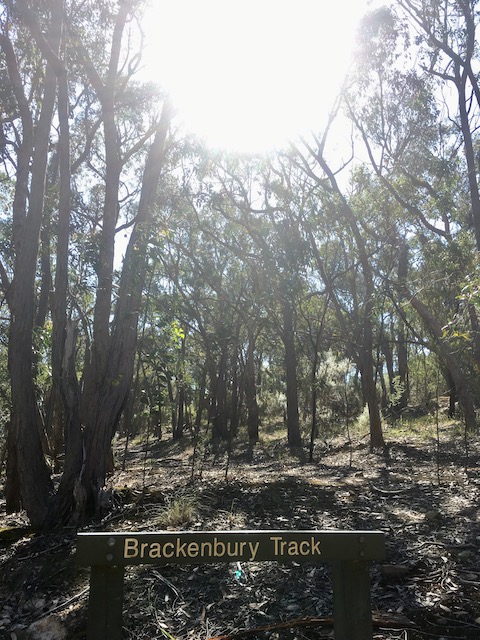
In 1856 it became apparent that the area needed policing and the first police magistrate and goldfields warden, W.C. Brackenbury, after whom the street I live in was named, was appointed to resolve mining disputes and other problems. The same year the first school was opened for the miners children, and a year later a postal service commenced.
The remaining Wurundjeri became an annoyance to prospectors who wanted to work Pound Bend. New resident Gold Warden and magistrate, Warburton Carr, was appointed in 1858. His attitude toward the presence of the declining Wurundjeri was that they were a problem, evidenced by the fact that his judicial decisions towards whites were more lenient when Aboriginals were involved.
The acceleration of gold mining hastened the demise of the Warrandyte Aboriginal Reserve at Pound Bend as prospecting claims intruded. By 1859 the Aboriginal population had fallen by an estimated eighty-three percent from 1836. The remaining twenty-two members of the Wurundjeri clan were eventually moved to Coranderrk, established by the government as an Aboriginal reserve on Badgers Creek at Healesville in 1863.
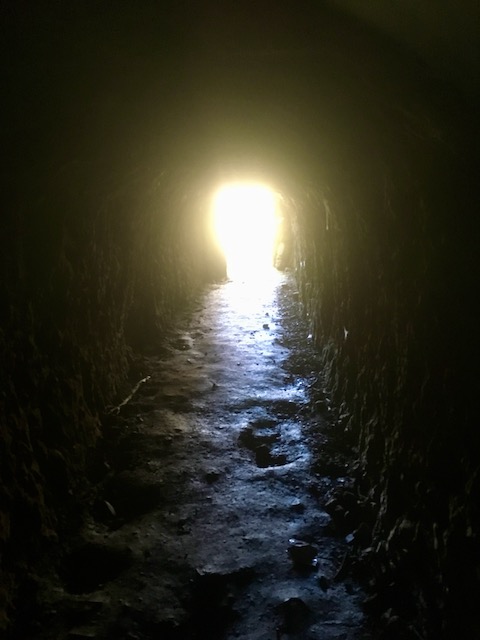
Over a period of about seven months from mid 1859, Patrick Geraghty, the local innkeeper began an ambitious project with William Moore to dig a tunnel into Fourth to intersect the gold veins believed to be hidden there. They built a tramway to carry rock away and dug one hundred and twenty-two metres into the hill through solid rock. It would have been back-breaking, monotonous work digging and lifting heavy loads in the confined space of the mine. The pursuit of what was believed to be a line-of-reef in the hill proved frustrating and elusive for the miners and when they failed to find what they was looking for, the endeavor was abandoned.
Large-scale machinery gradually took over from individual prospectors. Massive earthworks were undertaken to manipulate and dominate the environment in search of the elusive, precious yellow metal.
A sluicing company set out to divert the Yarra River and create an island to enable the bed of the main course to be dried out and worked for alluvial gold. It was one of the biggest engineering feats attempted in gold mining.
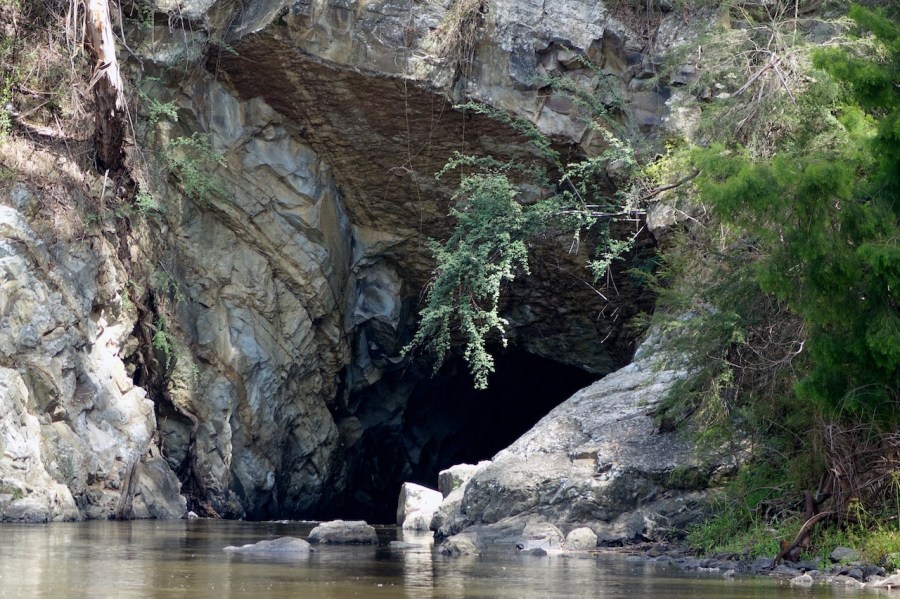
Another significant engineering project was tackled by the Evelyn Tunnel Gold Mining Company in 1870. It involved blasting a tunnel 195 metres through the isthmus where the Yarra completes a hairpin bend at Pound Bend near where the Wurundjeri used to live. This enabled about five kilometres of the riverbed to be dried and dredged for alluvial gold. The tunnel was completed but a plethora of setbacks and poor yields resulted in the company being wound up in 1872.
The discovery of gold in the late 1890’s near Blacks Flat, and the Victory mine which penetrated Third and Fourth Hills, led to the brightest spot in the history of Warrandyte’s goldfields. Both mines achieving sizable yields.
Mining activity started to decline after 1910. The last mines to be sunk between 1953 and 1965 were the Monument shafts on Fourth Hill. The lessees of lease number 9188 who dug the shafts laboured whilst they lived in a tin shed built using a stringy bark tree for support. They found no gold and the dig closed in 1965. The shed and mine slowly being reclaimed by nature can still be seen on a walk along a steep narrow goat track.
The output from the Warrandyte goldfields was modest compared to larger fields, but the cost to the Wurundjerri, the local landscape and many of those who came seeking their fortune was high. With perseverance, some got lucky, but many succumbed to poverty, illness, violence or despair.
I often go jogging or cycling through the state parks scattered around the area where I live and encounter remnants of history in one form or another. A year or so ago I did a research project to discover more about the local history and ended up writing an essay. I used a poem I wrote a few years earlier after one of my soujourns as inspiration. Over the next six weeks I am going to share this piece with you through my blog. I have divided up using the verse called Fourth Hill. Here is part 1.
Bunjil created this dreaming.
A crash of thunder and a hurling star
threw a landscape of beauty and plenty
that would stand for millions of years
Bunjil, the all-powerful great eagle hawk carved images of people out of bark and breathed life into the Wurundjeri. He shaped the surface of the land and the waterways that run through it and made it bountiful with animals, birds, and trees. Bunjil gave the people a code for living and he gave them tools, fishing sticks and spears, and taught them how to hunt and gather.
The spirits of the dreamtime have dwelt in this place since the earth began. The name Wurundjeri comes from the Woiwurrung language. ‘Wurun’ means manna gum, the Eucalyptus viminalis, which grows along the Yarra River, and ‘djeri’, the grub found in or near the tree. The Wurundjeri are the ‘Witchetty Grub People’.
I am a mere speck in the passing of time.
The river has always been beautiful to me, but when I step onto the land at Pound Bend, a peninsular created where the Yarra River turns back on itself at Warrandyte, I am on country steeped in the rich culture and spirits of the Wurundjeri. They held ceremonies there and welcomed visitors through smoke made by smothering a fire with young manna gum leaves. The river of mist, the Birrarung, now the Yarra River, was the centre of Wurundjeri Country and fell along the Yarra Valley songline route.
I close my eyes and try to imagine their sounds as they hunted and danced and cared for this place before Europeans came. The river was wider then and prone to flood after heavy rain. The Wurundjeri’s interaction with it ebbed and flowed with its rhythms. Children cascaded through the scrub beneath the manna gums to drink directly from the river. Bush tucker and medicine were abundant in the orchids, lilies, shrubs ferns and trees, and the Wurundjeri’s scars on the trees were fresh, before the scars on their culture were made.
Europeans arrived with seductive food and artefacts, invisible viruses and bacteria, and a lust for land and settled in Victoria in the 1830’s. As settlers claimed large tracts of land around Melbourne, Aboriginal people must have struggled to explain the intensifying changes. Soon, despite efforts at resistance, traditional Aboriginal culture was forced into decline.
Now a million people have stomped on this ground. Soils have been turned, waters churned, and the landscape changed to bend to our will.
Men re-shaped Bunjil’s creation with fences, roads and buildings. They bought animals that trampled the Wurundjeri’s native plant foods and guns that stripped the forests of wildlife.
I wonder how many tears must have fallen as the first people’s lives were changed irrevocably by the white ghosts who spoke in tongues they did not understand. I imagine the sadness that must have lingered when the last inter-clan Gayip (corroboree) lasting fourteen days and nights was held by the Wurundjeri in Warrandyte in 1851.
Soon after, those who did not succumb to disease were driven from this place.
In 1839, James Anderson was the first white settler with hungry eyes to come to Warrandyte . He erected a hut and stockyard near where Andersons Creek joins the Yarra river and established a cattle station just west of the current township. The name Andersons Creek was given to the district in his honour. James Dawson soon followed in 1841 and set up east of where the township now stands. In the same year the area south of the river was surveyed and divided up into parcels and named the ‘Parish of Warran-Dyte, County of Bourke’.
It is thought that the name Warrandyte translates into ‘that which is thrown.’ One dreamtime story says that a long time ago Bunjil gazed down upon his people from the bright star Altair and saw that they neglected his creations and were in conflict. For their misdeeds, with a crash of thunder, Bunjil hurled down a star to destroy them. The star struck the earth and created the gorge which was later called Warrandyte.
Gone are the days of commuting ninety minutes in the dark through windswept, rain battered streets. No more standing in a grey Docklands tower, clickety-clack for eight hours on a keyboard, as the winter daylight waxes and wanes, only to emerge back into darkened streets to climb upon a crowded bus of weary damp strangers to make the ninety minute trip home again.
If I block out the reality of the silent scourge, it’s tiny puffball droplets wreaking havoc on humanity, the sight of a weary premier, grey creeping up his temples from the news he must deliver day in, day out. News that catches in his throat, of illness, death, and the ever increasing curtailments he must impose on a public divided by understanding and castigation.
If I don’t focus on the struggle of those without jobs to make money to put food on the table for their loved ones and a roof over their heads, whilst their masters are holed up safely in their mansions. Or those with a roof but not the solace of its safety, crammed into tiny boxes like battery farmed hens pecking at one other to relieve the distress of their confinement.
If I forget about the elderly and the sick who are ending their lives in a lonely drowning, and the fears of the health workers risking themselves to make their passing as painless as it can be. If I don’t worry about the young people who’s futures have become suspended in the uncertainty of the unknown.
If I ignore the statistics that tell me about the 19 million infections, over half a million deaths, and the science that says we still know little about the long term effects, or our ability to find a vaccine that works.
If I don’t think about how I miss the embraces and shared tables with my nearest and dearest, or how long it will be before I see them again. Only then can I say lockdown isn’t so bad.
I am one of the lucky ones after all, with a roof over my head, a loving relationship to sustain me, and a secure work from home job that doesn’t require me to put my health on the line – a fact I have been reminded of every time I see my neighbours – a policeman, a nurse, and a school teacher – head out to work.
A pandemic resulting from human encroachment in nature is not a surprise. The likelihood this could happen has been known, and planned for to some degree for years in the form of medical stockpiles and land set aside for mass graves, and many eastern counties had pandemic plans in place. Only the loony fringe of 5G conspiracy theorists, anti-vaxxers, and flat earthers who found a common cause in COVID-19 denied its existence.
The weaknesses in the capitalist ideal, and the consequence of failing to care for the environment have been exposed. The pandemic has triggered the sharpest and deepest economic contraction in the history of capitalism, reversed globalism, collapsed supply chains, cut international travel, put millions out of work and pushed business to bankruptcy.
The most uncompromising neoliberal economies were hit the hardest as our insatiable appetite for consumption petered out in the face of supermarket shelves emptied of toilet paper. Neoliberal ideologues suddenly stopped preaching fiscal austerity and free market determinism and came over all Keynesian, begging for government spending to prop up the economy.
Many people in our highly individualised society ignored pleas to stay home and distance, and the precarious casualised workforce desperate to keep their families from poverty continued to go to work. Both groups became perfect vectors for spreading the virus. It has demonstrated that we are a collective society and that when one is vulnerable, we all are.
My hope post pandemic is that unfettered capitalism cannot shake off the faults that have been exposed, and that we find a new, more compassionate way to run economies that are considerate of the environment and benefit society collectively, rather than simply deifying markets and profits.
I went to the woods because I wished to live deliberately, to front only the essential facts of life, and see if I could not learn what it had to teach, and not, when I came to die, discover that I had not lived. I did not wish to live what was not life, living is so dear; nor did I wish to practice resignation, unless it was quite necessary. I wanted to live deep and suck out all the marrow of life, to live so sturdily and Spartan-like as to put to rout all that was not life, to cut a broad swath and shave close, to drive life into a corner, and reduce it to its lowest terms, and, if it proved to be mean, why then to get the whole and genuine meanness of it, and publish its meanness to the world; or if it were sublime, to know it by experience, and be able to give a true account of it in my next excursion.
Henry David Thoreau
On a typical day, I roll out of bed at 6am to work on my book, or ride my bike in the winter forest with its early sprinkling of wattle dust. When I stop for a moment, I notice midges swarming in a patch of sunlight, and the music of birds as the gentle hand of the wind sweeps through the leaves of the eucalyptus trees. The noticing reminds me why I chose to live in this beautiful place some distance from the city.
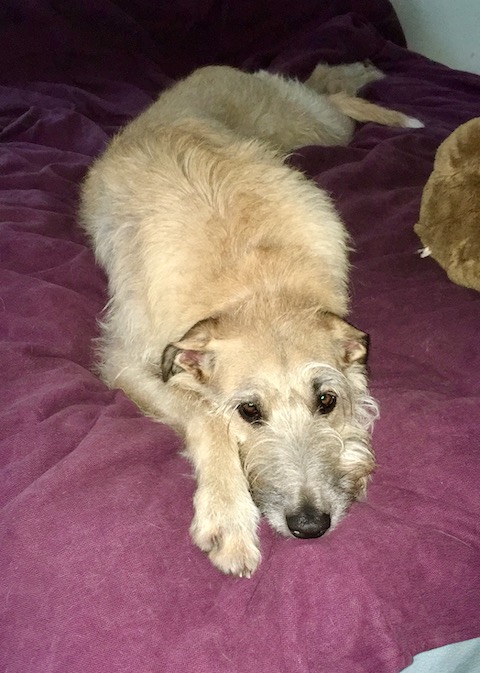
My commute has been replaced by a short stroll to the spare room with its views of a forest, expansive crisp winter skies, and a grass tree that grows at a pace in keeping with this new pared back existence. My work is interrupted only by the sounds of bird calls and a giant yellow hound pleading to come in and loll on the bed behind me.
At night I eat home cooked meals and read a book. I watch a lazy moon pass across a blanket of stars, and listen to the silent streets reclaimed by creatures of the night no longer afraid because their greatest predator is safely locked up after dark.
Dinner parties and dates have been replaced by WhatsApp chats and the occasional Zoomed hello with friends I have known for more years than I can remember. We still laugh across the airwaves, compare notes on our small lives, share gossip, or reflect on our collective crush on Victoria’s Chief Health Officer Brett Sutton like giggly teens.
I have taken a week off work to toil in my garden and pluck weeds from the damp earth between rain showers. The meditative solitude leads me to contemplate this change, what it means for the way we live and what I believe to be important. The small 5km world in which I now exist contains most of what I need. Like Henry Thoreau at Waldon, I am living simply. I have entered my own social experiment.
The reflection reminds me of the many people in rural areas for whom all life is like this, and that it is not very different from the life I lived many years ago in my late teens in the east of the state, 5km up a lonely dirt road at the foot of the great dividing range. I find that despite the lingering guilt for feeling so, I am content with it.
A part of me hopes that when the virus is gone, life will not return entirely to what it was. Whilst I do not imagine we will collectively embrace the kind of ideas Thoreau espoused, perhaps it might do us good to move a little closer to them.
There are seminal moments in life – those experiences that leave indelible impressions on our psyche. They can be positive or negative but they impact us in ways that mobilise us emotionally, spiritually or physically, cause us to sit up and take notice, inject a sense of urgency, and they can reverberate throughout our lives. Such experiences can pop up unexpectedly and may provide inspiration for our writing practice. Recently I was reminded of a couple of such moments from many years ago. This time of isolation lends itself to a bit of reflection, so I thought I’d write them down…
When you’re eighteen, with all the attitude that the age embodies – you’ve just finished high school, the thing you love most is horses, you find people perplexing, you’re itchin’ to move out of home and someone you know calls you and offers the opportunity of a lifetime, you jump right? Right. So I did.
I packed up all my stuff and moved. Two hundred and thirty kilometres from Melbourne, the last five up a deserted dirt road into the foothills of the Avon Wilderness. Our electricity was generated by the sun, or an old diesel generator that often needed to be started by winding an oily crank handle until your shoulders ached. Warmth was throw from wood fires glowing with timber you chopped yourself. Cooking relied on a wood heated slow combustion oven that meant if you wanted a roast you had to put it on at two in the afternoon to be ready for dinner. When water ran out – it ran out.
Autumn Sunrise
At the time, the place was considered so isolated that when we kept having trouble with the phone line, the Telstra repair guy showed us how to fix the problem ourselves and left us spare parts so he didn’t have to come back again. When an intruder came in the night banging on windows we got the rifle out and fired into the night to frighten them off.
We were two teenage women with drive, a can do outlook, a protective guard dog, and an endless wilderness to play in. It was magical, spectacular, dangerous country that offered boundless adventures that we embraced it with the zest of youth. I learnt to wrangle cattle, fix fences, shoe horses, run a business, farm, fight fires and engage with people from all walks of life.
The property was my friends family farm, in one of the most beautiful places in the country, with mountains as far as you could see. We ran a business taking tourists trekking on horseback though the mountains. Our guests were all sorts – from over confident schools kids, to families, to an unusual wealthy men’s group who left their wives at home and came away with their sons and one lone woman in a caravan, who they referred to as the ‘company secretary’. Her secretarial duties seemed to be in demand at all times of day and night.
My girls own adventure gave me a love of the Australian bush and carried me into young adulthood. I fell in love with the place where I now live, and have done for twenty years because something about it reminded me of that farm. The location provided inspiration for my second manuscript, which I’m about 15,000 words into now. Here’s the logline:
In denial that her past is holding her back, a private investigator goes to a closed small-town community to investigate the death of an environmental activist in a logging coup. She uncovers more than she bargained for and is forced to confront her own long buried grief to uncover the truth about what really happened.
Curiously living in this remote place in eastern Victoria provided the launching pad for an early career as a horse trainer and after a couple of years in the bush I ended up on the other side of the world in Portugal as a student of one of the worlds greatest horse trainers in the art of classical dressage, but more on that another time…
Where to begin when you sit down to write for the first time in three weeks and the world is a completely different place to what it was last time you faced a blank page? And how does one reclaim a creative space embattled by a mountain of work priorities driven by a virus taking an extraordinary toll on humanity?
In the grand scheme of things I am incredibly fortunate in these uncertain times – I have a stable job and I can now work from home, I am holed up in a comfortable house surrounded by hilltops, forests and the constant chatter of bird life, I have a garden to potter in and grow a lot of my own food, and a person and a dog who I am happy to be locked up with. I am also a natural introvert, so am not overly distressed by the idea of staying home for six months, after all I voluntarily did exactly that for 12 months only a little over a year ago when I took time off to write.
So what is it that leaves me a little discombobulated? There is of course the great sadness experienced when reading the news about the toll the virus is taking on the world, the shock at how this situation exposes the fragility of our globally interconnected economic and social systems, the fear that this even event will not be enough for us to find a different way to live in relation to nature, and for the well-being of people I care about. It is perfectly normal to feel a little shell shocked in the early period of a crisis of this scale, regardless of how well protected from it you might feel individually.
A situation such as this requires a significant mental shift as well as a physical reorganisation, and a willingness to embrace a new normal. The last three weeks have been a work whirlwind – we had 100 people we needed to try to reorganise to be able to work from home. This took a mammoth effort from myself and colleagues. We also have thousands of stakeholders we needed to provide urgent information to – to help them understand the changes to our workplace, and to connect them with information to help them weather the storm.
Prioritising taking care of the work team has been important, and I have been happy to do so, but at the same time I lament the intrusion into my personal space, particularly my creative space, and how the separation between this and work demands have become blurred. I need to trust that on the other side of this shift I will find my creative, resilient brain waiting for me. It made me realise how much routine plays a part in making time for ourselves – I used to use the time commuting to and from work as my creative writing time, with that gone, I need to create a new routine that allows time for writing.
It is clear the current situation is going to last for a long time, at least until a vaccine is found – conservative estimates suggest at least six months, if not years,. The situation demands finding a new routine that allows for as much of the fullness of our lives as can be managed within the restrictions we must live with out of compassion and care for our fellow human beings, as well as our own. My frustration of recent weeks led me to think about what a new structure might look like…here are some of my thoughts.
On the intrusion of work
The voice of work can be loud voice and demanding. We need to take the time to set up a comfortable workspace and make it as private as circumstances allow. Find new ways using technology to stay connected to staff and colleagues now you can’t lob up at their desk. Build in regular welfare checks to make sure they are ok. Carve out time blocks for different categories of your work – do the easy things when stress levels are high and the more challenging jobs when your concentration is at its best. Don’t expect your productivity to be what it was – at least not immediately.
Take regular breaks – make a cuppa, drink water, pat the dog/cat, talk to the houseplant, walk around the garden or gaze out the window. Even better open all the windows and blast out the house with fresh air.
Keep time sheets to help yourself contain your day job to reasonable hours the loss of a commute removes the natural boundary of home time.
Personal Wellness
Create a routine. Keep getting up and going to bed at a reasonable time. Move your body in a way that makes you energised at the start of the day. My go to exercise is running or walking with the hound, yoga by YouTube or a bike ride. I will also make time for the solace of gardening. Last weekend I spent time in the veggie patch, weeding and planting seeds – my own version of hoarding whilst others were madly buying toilet paper and cleaning products.
Do some of those jobs you’ve been putting off forever because you were too busy – tidy those cupboards, paint a room, finish the landscape project, organise your bookshelf – control the things you can it can ground us when things are a little chaotic.
Eat well – if you weren’t a cook before, maybe now is a good time to learn the skill, and to appreciate the comfort in it – a couple of the my favourite places to go for tasty recipes are Arthur Street Kitchen and Ottolenghi. Identify things you can do to you bring you peace or joy – take a bath, sort your holiday photos, paint or journal, find a place you can retreat to. What things would you put in your self care toolkit? Keep them close and turn to when needed.
It is important to stay up to date with what’s happening in your world, but it’s also easy to be sucked into obsessing about it. Place limits on your engagement with news and social media about the COVID conversation and remember the media is often sensationalist, so acquire your information from trusted reliable sources. Don’t lose sight of what is good in the world. Look for things to laugh at each day – your pet being amusing, silly memes online, and when it all seems too much – reach out for assistance.
Creativity
Carve out time for creativity and make sure you use that time for something connected to your creative interests. Now is the time to start that long term project you’ve been thinking about on and off. My plan is to set aside a block of time each day to write, perhaps I will finish my second book sooner than I thought. On the days I don’t actually write I will use my creative time for a connected activity like reading or online learning on writing. The Australian Writers Centre delivers some great online courses for writers and Writers Victoria are moving a lot of their workshops online, one of which I am doing tomorrow.
Your creative thing might be painting, knitting, sewing, or learning an instrument. Don’t limit yourself to things you already know how to do – get online and find someone who’s moved their teaching practice online – you could learn a new craft and support another creative at the same time.
Social connectivity
The political narrative about needing to keep our distance from people to contain the spread of COVID-19 uses the term social distancing. For many, the term spells isolation and loneliness. I wish the policy-makers had considered this and referred to physical distancing instead, as at times of stress, social connection is even more important than usual. It provides ballast and helps to keep people mentally well. Find ways to connect with friends and loved ones that keeps everyone safe, whether its Snapchat, video catch ups or long phone conversations. The time for hanging out in coffee shops and hugs will return eventually. We tried our first digital dinner party last week, and I was pleasantly surprised at how well it can work. Some tips:
Keep up communication as you cook so you can time your dial in to get everyone eating together
Set your laptop up at least arms length from where you sit (a bit further away than where you lay the table) so everyone can be seen in the picture together
Sit the laptop up on some books – it works better if the camera is slightly above your eye level
Bring your best self to these occasions, people are dealing with the changed world in different ways, and we need to bring compassion for those we care about – it can bring out both the best and worst in people. If you want to hang out online because that’s the only option while you are in isolation there are loads of apps for that – Zoom, Skype, House party, Google hangouts.
This weekend we’re going to try one where everyone taking part cooks the same meal.
Community
Continue to greet neighbours from a respectable distance when you pass them in the street, when you can – support local businesses that are staying open to service your needs or donate to your favourite creative organisation. When businesses set up rules to help keep customers safe and trade fairly in response to some individuals being overtaken by individual greed – follow them without griping – it’s a time to loosen our grip on control and individualism and think more collectively. In Australia there is still plenty to go around – toilet paper, food and cleaning products included.Hoarding is really not necessary and probably tells us more about our mental health than it does about supply and demand – so if you are doing it perhaps consider spending the money on a therapist instead.
This new world order is going to be a marathon, not a sprint so railing against it will not help, now is the time for radical acceptance and innovating to make your life as full as it can be within the circumstances in which we find ourselves, with much lower expectations than you may have had previously. Chunk your days into bite sized manageable segments to avoid the existential dread of the unknown taking over and when you notice the current situation enabling injustices that make your blood boil – channel that energy into writing to your local MP, or the newspaper to call them out so the annoyance doesn’t fester.
If you wear yourself out at the beginning you may not make the distance in one piece, so take the time to find a way to be that offers you the best change of wellness, serenity and productivity for the long haul. And for those of us who take solace from creative pursuits, we must make room for them.
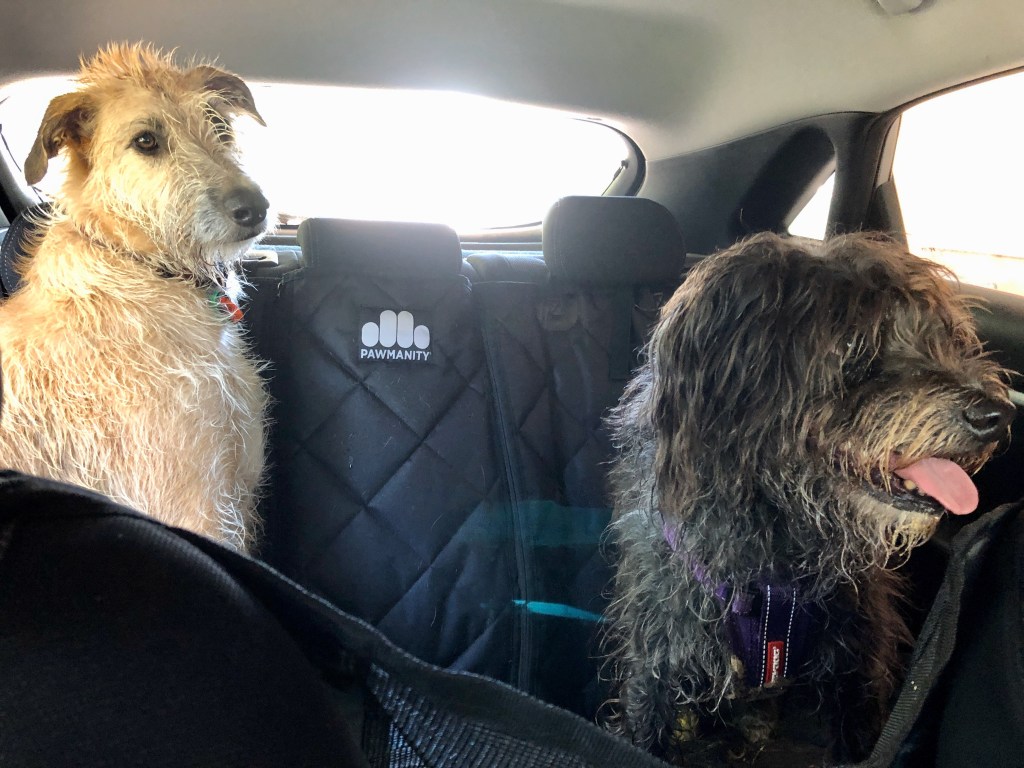
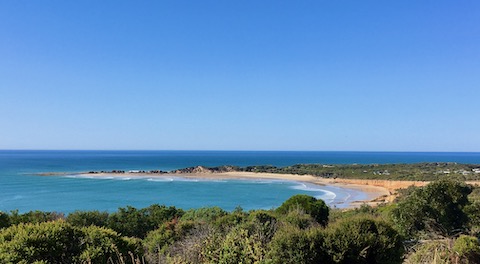
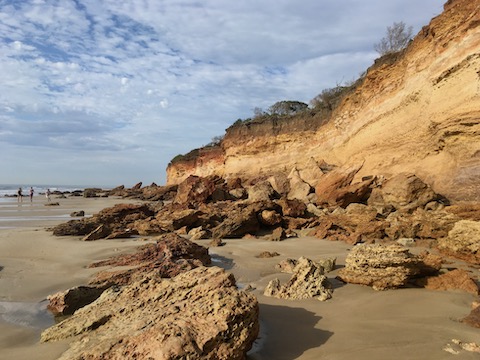
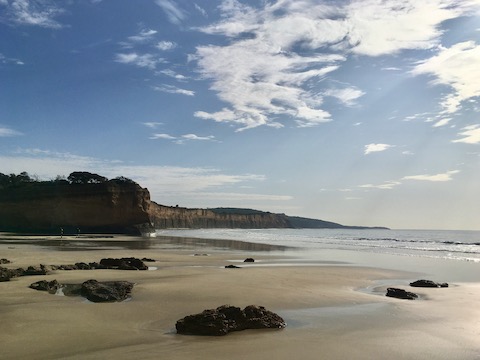
I had a week off last week and went surfing with some friends and a couple of hounds. It was also an intentional week off from writing, so I prepared last weeks blog post in advance and wrote this one after I got home. Having subscribed to a ‘write every day,’ or at lease most days philosophy for the last four years, it was an interesting exercise.
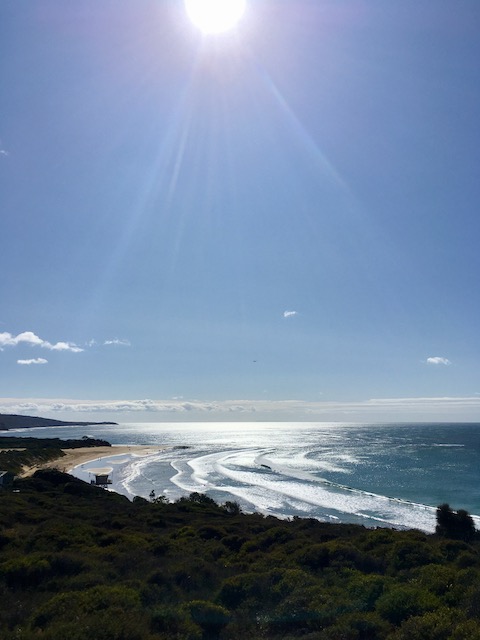
Point Roadknight
Of course there is a good reason for writing every day. The practice, like developing an exercise routine, drives momentum, improves your writing technique and keeps you connected to the story you are working on. The flip side is that stopping (like stopping exercise) makes me worry I may lose my writing muscle and struggle to get back into it. It’s a bizarre bind. When I’m writing I often worry about the other things, like domestic chores, that I should be doing, yet when I’m not writing I worry that I’m not – in case I lose momentum. Despite my contrary feelings, the week off was refreshing and fun.
Main beach
Main beach
Anglesea is about 115 kilometres west of Melbourne at the northern end of the Great Ocean Road on the Anglesea River. It has a resident population of about 2,500 people and retains the feel of a sleepy village. We stayed at a house close to a bushland reserve and the local golf course which is home to a mob of kangaroos. It was quite lovely to hear the thud of kangaroos hopping through the garden in the night and to be woken by early morning bird calls each day.
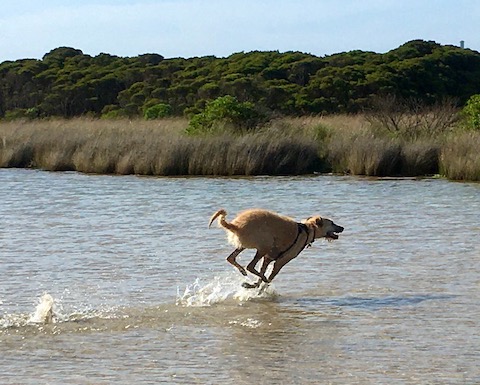
Who’s got the ball?
The locale is a great spot to get away and relax, walk parts of the 44km coastal walk or through the beautiful wetlands at the head of the river, surf the long rolling waves, eat fresh fish and produce from one of the many local farmers markets, or simply read a book and gaze out over the bushland. And I did all of those things.
Yippee!
One day a friend who is the chef at a local cafe dropped by with fresh caught tuna which was delicious barbequed and served with fresh salads and overcooked potatoe chips. On another night we ate at Captain Moonlite, an eatery jutting out over the main beach in the surf lifesaving club restaurant that serves up coastal views and a fresh modern seaside inspired menu that is updated daily. A must for a night out in Anglesea.
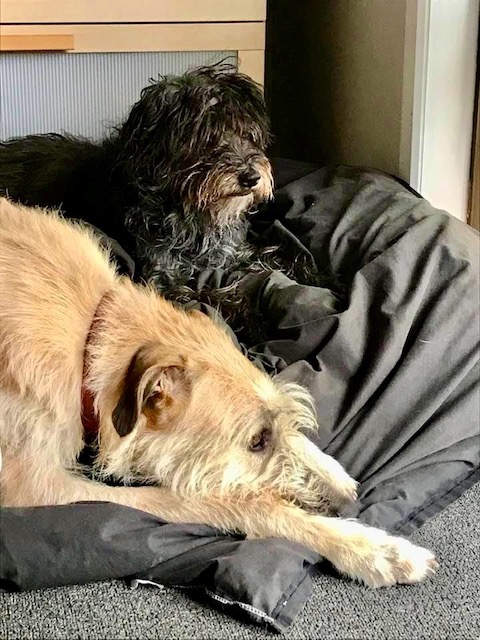
Rest time
One afternoon we made the half hour drive to Lorne along the Great Ocean Road. It’s a drive that makes you realise just how beautiful the Australian coastline is – who needs Greece! Lorne is home to an old Art Deco theatre built in 1937 to cater to tourism after the completion of the Great Ocean Road. The cinema has terrazzo floors and is one of the few single screen theatres left in Australia. We saw the movie Little Women, which I enjoyed but found a bit long. The theatre is worth a visit, just remember to take cash as there’s no credit card facilities.
Raining Roo
The complete change of scenery felt much longer than a week and I feel quite refreshed. I’ll start to get back into the swing of writing this week and expect to get my manuscript assessment back soon so I can make what changes I need to, start querying in earnest and get on with my next book, which cogitated quietly in the background while I was away.
Deep down in our bones we must know – we must know that nothing we do is done in isolation. Cause and effect: how did it get so noisy in between?
Into the Woods
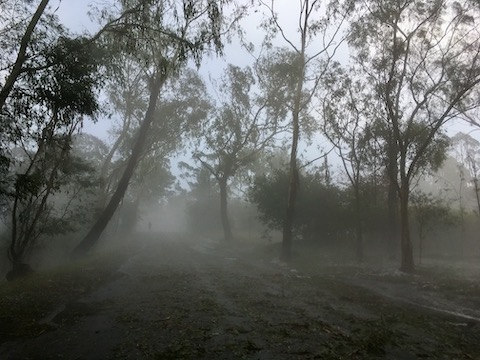
It’s hard not to talk about the climate and weather when it’s so in your face, and you spend a significant amount of your spare time cleaning up after it. We had a hailstorm with the ferocity of a tempest last weekend. One moment I was in the vegetable garden doing a bit of weeding, the next I was running for cover as hailstones the size of golf balls were hurled from the sky. Water tanks overflowed, gutters strained under the weight of the ice, paths washed away and torrents of water formed creeks where none had run before.
It was another of those moments, increasing in their frequency, where I marvelled at the awe inspiring ferocity of nature as she strives to demonstrate for humanity that climate change is real. Meanwhile many of our political leaders still grasp desperately to denial and the power bestowed on them by lobbyists, the powerful elites in the mining industry, and the likes of the Murdoch Press.
…those that have the power to change the situation are too scared to do anything in case they lose that power.
Into the Woods
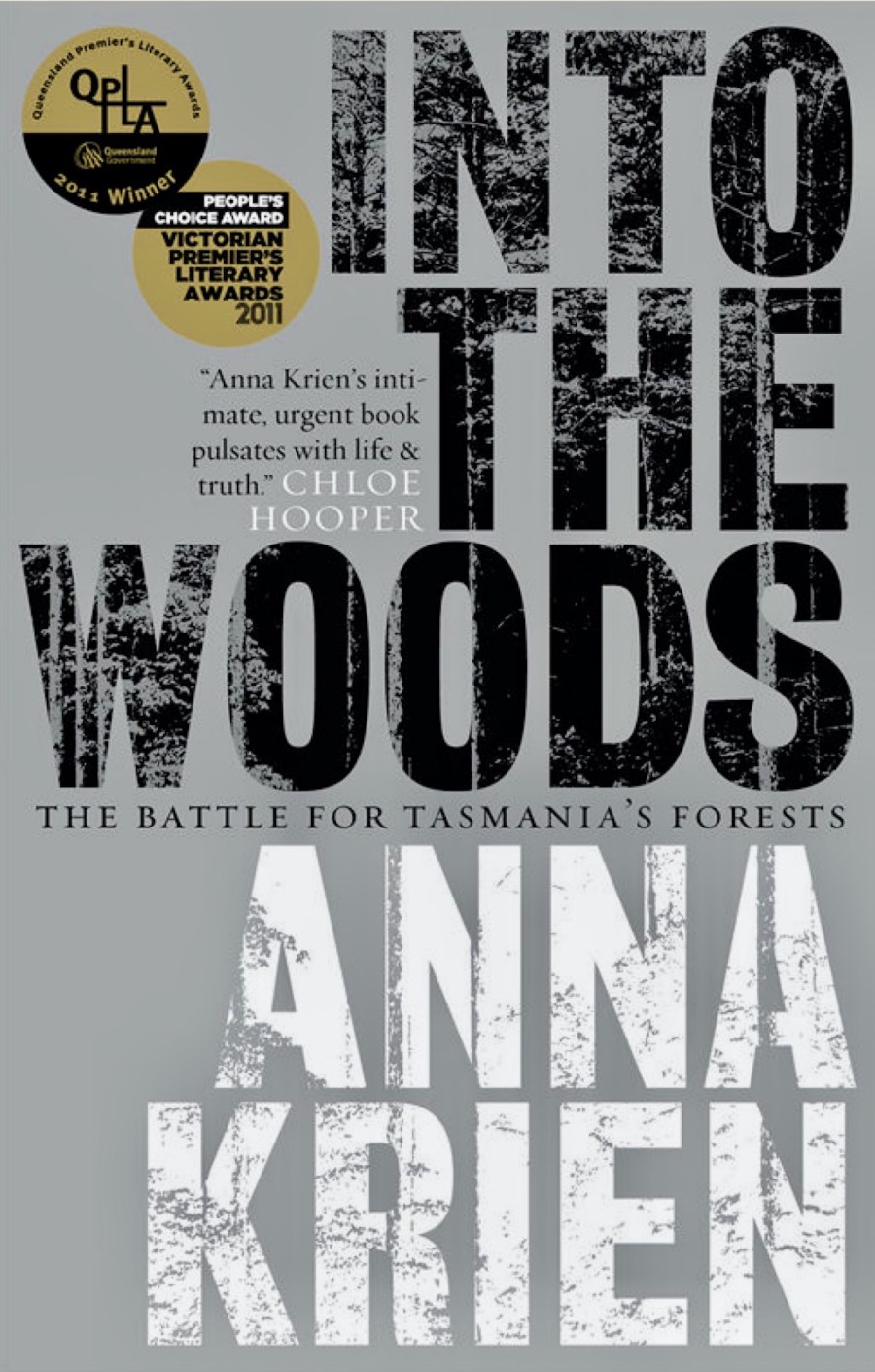
I am half way through reading Anna Krien’s beautifully written narrative non-fiction book Into the Woods about the struggle over Tasmania’s wilderness areas, the people who exploit them and the people who try and protect them. Krien’s work is an exploration of the polarised and conflicting convictions, motives, emotions, power dynamics and allegiances of those involved in the struggles over the forests.
On the rear window of almost half the cars I see, there are stickers in eternal argument with on another. ‘Tasmania: The Corrupt State’ and ’Save the Styx’ versus ‘Greens tell lies,’ ‘Greens Cost Jobs’ or simply ‘Green Scum’ – slightly tamer versions of older stickers that read ‘Keep Warm This Winter: Burn a Greenie.’ It is said each glut of car stickers in Tasmania signals a new chapter in this intense and deeply personal debate that has been going for forty years.
Into the Woods
Krien speaks to everyone on her investigative search for information and understanding: activists, greenies, loggers, politicians, resident citizens. The only obviously absent voice, because they refused to speak to her, is Gunns who hold the economic monopoly over the logging and wood chipping industry in the state.
The UN’s Intergovernmental Panel on Climate Change estimates that deforestation and forest degradation contribute 17% of the worlds greenhouse gas emissions
Into the Woods
Reading Into the Woods has echoes of the debates that happen all over the world in places where natural heritage and human greed come into conflict. Big companies chasing profits by selling products for humanities insatiable appetite for consumption of oil, coal, gas, timber, minerals, and land. Big public companies motivated by shareholder profits that have significant influence over the politicians they lobby and fund, stand in opposition to the passionate defence of forests and rivers and oceans by activists and environmentalists, with politicians riling the camps to maintain conflict in order to further their own agendas. Because conflict demands taking sides and creating allegiances, and allegiance translates into votes.
The activists tread a fine line between drawing attention to threatened areas and provoking resentment that can ultimately backfire against the forest.
Into the Woods
We are all complicit in the supply chain that leads to the destruction of our environment. We influence it in the day to day decisions we make about consumption, by how we vote, what we will tolerate, and what actions we are prepared to take to preserve the natural environment that sustains us. Krien’s work meditates on the world we have made and the complexity of the choices we must make. Into the Woods has astonishing resonance for the current re-ignition of the climate change debate in Australia as bushfires continue to rage across the country.
Most people travelling through Tasmania will never know of the long-running game of hide-and-seek taking place in the labyrinth of logging roads beyond the bitumen.
Into the Woods
It is often not until something impacts us in a direct and personal way that we take notice. This summer it seems that Australia is getting a taste of the future. It is an experience that has bought the issue of climate change into the fore again, while politicians of the day continue to try and smooth the way for them to get back to doing very little about it.
If anything there appears to be an indignant kind of mateship here, a loyalty that precludes empathy
Into the Woods
As I have been reading Into the Woods and Krien’s struggle to understand Tasmania’s relationship with the wilderness I had been pondering our current governments stance on climate change. Is it some kind of misinformed ideology? Religious beliefs? Naivety? Ignorance? Shape-shifting party power dynamics that mean being bold would result in loss of power, possibly being knifed by your own colleagues with the help of the Murdoch Press?
It doesn’t matter if you’re a logger or a greenie,’ she says, ‘it’s the fact that our government thinks its electorate are a bunch of dimwits.’
Into the Woods
The rhetoric about maintaining the coal industry is about jobs, but I am reminded of a section in Into the Woods where Krien notes the primary argument for logging in Tasmania was jobs. Then she goes on to write that in reality machines may be a bigger threat to timber jobs than ‘any greenie’. I suspect the same applies to the coal industry, which is increasingly automated. Then I saw a piece of Michael West’s investigative journalism called Dirty Power made for Greenpeace. It’s a social network analysis of connections between the Coalition and the Coal Industry, and is fascinating viewing. After seeing it I concluded the primary motivations to maintain the status quo must be a particular blend of allegiances, greed and power.
Standing on a lookout with the maps spread out around us, I can imagine how easily deals might be done in boardrooms, where wilderness is reduced to abstract numbers of hectares and its fate sealed with a handshake.
Into the Woods
While Krien was writing her book, I was studying climate change at university; reading Thoreau, studying bushfire behaviour with Kevin Tolhorst, and reading documents like the Intergovernmental Panels on Climate Change reports predicting would happen without action to reduce greenhouse emissions. I am sad to say it all appears to be starting to come to fruition in a much more obvious way.
Why Tasmania?’ Barry Chipman once asked me. He’s right–in the greater scheme of things, the island is nothing but a drop in the ocean. But its story is universal–and what goes on in Tasmania goes on in the mainland, goes on in the Pacific islands, in other continents, until it comes straight back over the ice to Tasmania again. You can follow its story like a ball of wool, get tangled in it and unravel it.
Into the Woods
Once the summer is over and the fires are out, when the smoke has cleared and the first green shoots start to appear in the charred remains of Australia’s forests I can’t help wonder what will happen. Will we all breathe out a sigh and go back to doing what we’ve always done as our memory of what happened fades? Or will our collective shock at what we have done to our planet, and its consequences maintain enough rage to motivate citizens to drive our coal loving, climate change denying political leaders and their allies to take steps to make the changes we need to at least try to get a different outcome?
Some scientists are beginning to describe the modern geological era as the Anthropocene, the sixth in a series of mass extinctions, all said to be caused by extreme phenomena, in this case the harmful activities of humans. Perhaps even more poignant is biologist Edward O. Wilson’s description of the period that will follow. Wilson says it will be ‘the Age of Loneliness’–a planet inhabited by us and not much else. In his version of the future there is no apocalypse, no doom, no gates of hell, no wrath of god or mass hysteria, only sadness. I wonder if perhaps the Age of Loneliness has already begun, its effects far more complicated than we realise.
Into the Woods
I highly recommend reading Into the Woods, for its insights into Tasmania, the politics of forestry, its resonance with the global debate about climate change and for the beauty of its writing.
Happy New Year! This is not a writing post. It is another rant about some of the things I thought about whilst enjoying a beautiful evening in a bushland setting on the Yarra River on new year’s eve. Feel free to turn away, normal writing programming will resume next week.
I had mixed feelings about celebrating new year’s eve when catastrophic bushfires were raging across the country destroying some of Australia’s most precious bushland, decimating wildlife populations and ravaging human communities in their path. Despite the valiant efforts of underfunded volunteer fire fighters, Australia’s east coast has been burning since September 2019. Many of the fires remain out of control and will likely continue that way throughout the summer unless significant rain falls on the fire grounds.
Canberra was rated to have the worst air quality in the world on Wednesday due to smoke, killing one elderly woman on Thursday. Meanwhile Scotty from Marketing (aka PM Scott Morrison) kept up his ‘nothing new to see here’ stance over champagne at Kirribilli house and entertaining the Australian and New Zealand cricket teams. On Thursday he delivered a press conference, and was on the back foot.
Of course Scotty from Marketing’s claims that climate change doesn’t cause bushfires, and Australia has always had droughts are technically correct, but incomplete and misleading. Suggesting the best way to respond to natural disasters is by ‘doing what we’ve always done’ sounds like a commitment to kick back and allow the problem to perpetuate. And saying Australia cutting emissions will make no difference globally is shirking responsibility. I bet he’s thanking his lucky stars that the millions of tonnes of carbon dioxide released by the current fires don’t count toward the countries emissions footprint or he’d have to do a lot more creative accounting than he is already to meet our Paris targets..
Climate variability does influence fire and the changes we are experiencing will make fire management more complicated because it alters ecosystems function. Fire is a physiochemical process that can be represented by a simple equation: fuel + oxygen + heat. Remove one from the equation and fire cannot take hold, turn up the volume of the elements and the frequency and intensity of bushfires increases.
Climate change contributes to creating the perfect weather conditions for dangerous bushfires. CO2 concentration impacts the amount and composition of fuel loads because it alters the growth rate of plants, and thus the frequency and intensity of fires when they occur. Increased and more extreme temperatures reduce humidity and moisture content, compounding drought conditions caused by diminished rainfall. Drier conditions bring vegetation closer to its ignition point and ensures it burns hotter and faster once ignited. Extended drought reduces fires intervals and the wild winds caused by changes in air pressure create perfect conditions to drive wildfires to their most dangerous conflations. Wildfires themselves then contribute to perpetuating climate change because they release a lot of greenhouse gas.
We are fast heading toward a new normal of longer, hotter, drier fire seasons and more intense fires. In Gippsland, rainforest that has never burnt are being engulfed. It’s likely that some plant and animal species may not recover because available habitats for some organisms will be diminished and shorter fire intervals may not allow time for even fire adapted plant species to mature. The result could be local extinctions due to an absence of seeds.
Contemplate an entangled bank, clothed with many plants of many kinds, with birds singing on the bushes, with various insects flitting about, and with worms crawling through the damp earth…reflect that these elaborately constructed forms, so different from each other, and dependent on each other in so complex a manner, have all been produced by laws acting around us.
Darwin, The Origin of Species
We do not survive in isolation from our environment. We are like the frog, who when placed in a pan of tepid water that is slowly bought to boil, does not perceive the danger of its situation, does not attempt to jump out and gets cooked. We are blind to our own growing vulnerability. Despite the scientific evidence, the Australian government has no credible policies to address climate change – either to reduce our greenhouse gas pollution and transition to clean energy, or to invest in disaster management and adaptation to build resilience to cope with the new normal. Thoughts and prayers and patience will not solve this wicked problem and I suspect history will reflect poorly on many of the current world leaders.
In the absence of political leadership we place our hopes in the likes of Swedish teenager Greta Thunberg to remind us of our collective failings and inspire action by uniting young and old to tackle contemporary environmental issue. Scott called for patience on Thursday, but it’s time to stop being patient and force the hand of the global political elite who prefer denial and maintenance of their ties with fossil fuel industries to carefully considered policies to a more sustainable way of living. My hope is that this bushfire season will spur more citizens into action. That we demand our governments take climate change seriously, start to think long term about minimising our contribution to emissions and begin to make the structural adjustments we need to build climate resilient communities.
I was going to do a bookish Christmas post, but have concluded that Christmas is a bit overrated. Besides, a few things have got my goat this week, so a pre-Christmas rant is in order.
On a day of 44 degrees in Melbourne, when half the coastline of the country is ablaze, and NSW is in a state of emergency, my dystopian fantasy of our future world is right on my doorstep and plastered all over the media. Meanwhile, our political leaders continue to bury their heads in the sand about climate change and the environment. I use the term leader loosely as it’s an attribute I feel is sorely lacking among our current political class. The best Scott Morrison seems prepared to offer is thoughts and prayers in its place.
You may be wondering why a fiction writer is having a rant about politics on a blog about writing? As it happens the crime fiction manuscript that I will start querying in the new year has political hypocrisy as one of its central themes, and it is something I am both fascinated and repelled by in the real world as well.
Morrison has gone to some lengths to avoid engaging in discussion about climate change and has pushed his perverse nothing to see here stance while communities are raised, flora and fauna are decimated, and city populations choke on the smoke. Earlier this month the man determined holding a press conference about his controversial Religious Freedoms Bills was more important than showing leadership about the bushfires. The first version of the bills had been heavily criticised by faith and secular groups alike, and I can tell you the second version is no better.
While Sydneysiders were gasping on smoke, Morrison was touting a package of legislation with potential to significantly change Australia. It may prevent many individuals accessing services such as medical, education, employment, aged care, and some commercial services on the basis of their otherness. Not to mention the Isreal Falau clause about how we can interact on social media. It is the most hateful piece of legislation to be tabled in some time.
I find it curious that institutions that were called out on poor governance, lack of transparency, and accountability in the Royal Commission into Institutional Responses to Child Sexual Abuse should now be deemed in need of the types of protections that will enable them to be even more closed and secretive by excluding anyone they view as other from their ranks. It strikes me as a recipe for more festering problems and institutional failure.
The religious freedoms debate started as a knee-jerk reaction to a small group of ultra conservatives railing against a secular state and afraid that allowing gays to marry would cause the sky to fall. After years of preventing progress in this area these conservatives were over ruled by the Australian public who voted in favour of same sex marriage. The religious right were offered a review to assess the state of religious liberty in Australia by the government as a consolation prize for the postal vote on same sex marriage to keep them sweet. Phillip Ruddock was tasked with overseeing the review. The first airing of the reviews outcomes was in the form of leaks of key findings around the time of Malcolm Turnbull’s demise. The leaks exposed the fact existing law already exempted religious groups from discrimination laws and enabled them to discriminate against teachers and students. They could sack teachers and expel students of diverse sexualities already if they chose to – it caused a moment of outrage, that many may have forgotten.
Subsequently Attorney-General Christian Porter was tasked with turning Ruddock’s review into legislation. It took an extraordinarily long time because ultra conservatives did not just want anti-discrimination laws for religious groups, they wanted a positive right to discriminate. Any reasonable person would agree that an individual should not be discriminated against on the basis of their faith, but what the religious right wanted was a weapon to strike out at people they deemed unworthy, like the LGBTI community, not just a shield to protect their faith. The laws are not about freedom to speak ones religion, but freedom for institutions to hire, fire, deny service, insult and humiliate based on an individuals personal characteristics. The cynic in me can’t help thinking Morrison may have chosen that moment on 10th December to announce the bills, with Australia burning in the background, to invoke some kind of symbolic fire and brimstone moment. But in reality who knows what Morrison really thinks about anything (he abstained from voting on same sex marriage)? He appears to be a man who will go wherever the favourable winds of power blow.
On the same day as focussing on a bill few deemed necessary, Morrison insulted volunteer firefighters by downplaying their work. Two CFA volunteers died fighting fires yesterday, and three more were injured. I wonder if Scott still thinks they really want to be doing this job?
…they’re tired, but they also want to be out there defending their communities…
Scott Morrison
All the volunteers were, foregoing income and time with their families to risk their lives fighting fires with often substandard equipment, yet Morrison was more interested in announcing legislation that has never been needed, and has the potential to create great divisions in society.
The wife of a firefighter wrote a heartfelt response to Morrison’s insensitive comments about our volunteer fire fighters that touched on another of Morrison’s blind spots – climate change. The blog has had over 80,000 views in a week. Remember Morrison is the guy who loves coal so much, he took a piece (which had been cleaned) into parliamentin order to demonstrate his committment to a carbon-intensive economy and mock those concerned about climate change.
In November Morrison declared the bushfires had nothing to do with climate change and has been actively and publicly trying to shut down climate protesters because he doesn’t like their message, and clearly struggles to understand the science. He’s since made some concessional comments that climate change may be a factor, though I suspect that’s because he’s afraid of losing public support, he must have felt the winds changing. One wonders if he is confusing his own beliefs with science. He’s a Pentecostal. The evangelic religion emphasises the idea of the Rapture – that when it arrives, the chosen will ascend to heaven while the rest of us suffer the Tribulation – fires, floods and famines that will kill most of us, while he and his fellow chosen believers wait for the Second Coming.
Meanwhile, Scott has packed up his family and gone off on holidays. I don’t actually resent Scott having a holiday, we all need one now and then after all, but the act does expose a nasty element in his makeup and a big hypocritical black hole in the mans psyche. You might think that comment a bit harsh, but let me take you back to the Black Saturday fires that started on 7 February 2009 in Victoria.
I remember the day well as I was at home and could see the red orb thrown by the fires over the King Lake Ranges from my house. Apparently my town was spared by ten minutes and a wind change, my cousin wasn’t so lucky – her place burnt to the ground. In the aftermath, when people were looking for answers, and perhaps a few scapegoats, an ambitious young politician called Scott Morrison made an appearance on the ABC’s Q&A program and had a few things to say about the fact that Police Chief Christine Nixon left the incident room and went out to dinner that night.
“She’s clearly made a bad judgement call. That happens to people from time to time, but this was a very serious issue…I think there are very serious concerns in the community about exercising judgement, and it’s incumbent on all of us in public life to make decisions following that in the best interests of the ongoing nature of the program.”
Scott Morrison, Q&A 2010
Christine Nixon ultimately lost her job over the dinner decision. The comments then, and Morrison’s actions now, are an indication of the shallowness of the mans convictions. Ultimately he’s simply playing the politician, but his actions in recent weeks also call his judgement into questions based on his own benchmark. The image I have of Morrison lands somewhere between a crazed religious zealot determined to impose his beliefs on all of us, and Nero fiddling while Rome burns. The BBC delivered an interesting summary on Australia’s leadership failure on climate this week.
He’s not my Prime Minister, never was, never will be. I just hope the rest of Australia wakes up to his disastrous Prime Ministership soon and vote someone in capable of real leadership on the big challenges of our time.












 R L Smith