Book review: Turncoat by Anthony J Quinn

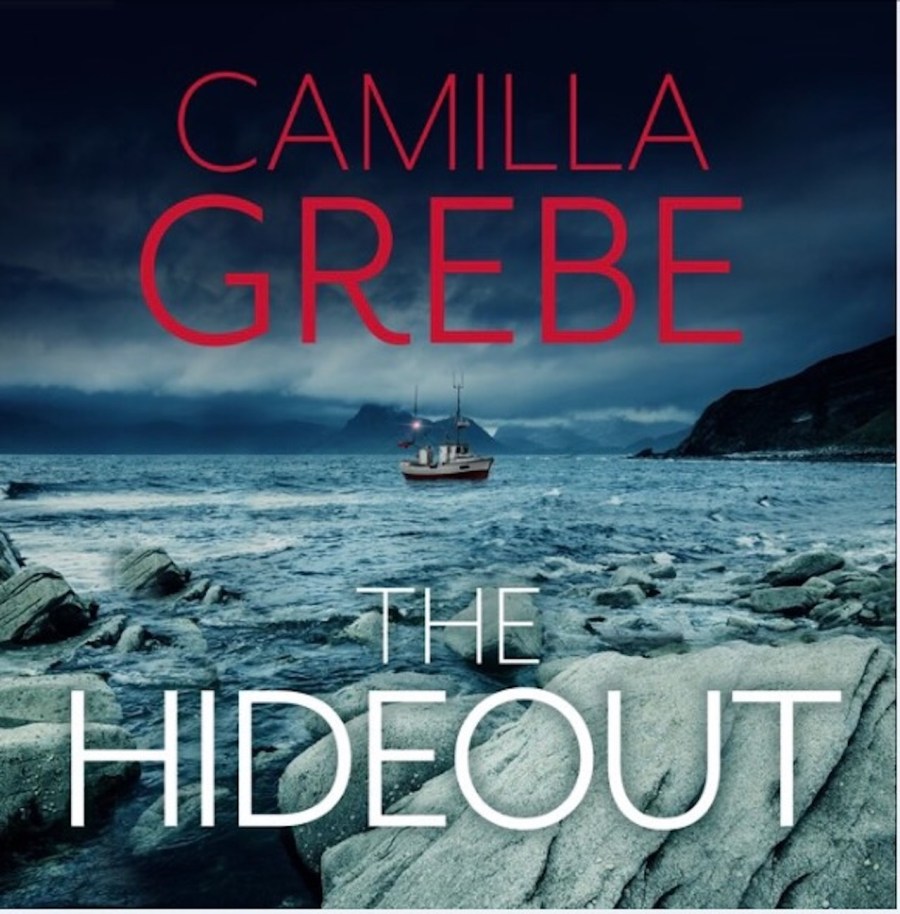
I’ve stayed in Ireland for another book with Anthony J Quinn’s novel Turncoat. Cold, dreary, claustrophobic — good ingredients for a thriller. Turncoat is set in the lead up to the Good Friday Agreement that ended most of the violence of the Troubles in Ireland, and was a major step forward in the peace process. Quinn plays with traditional crime fictions forms — the opening is like a shoot ‘em up James Bond adventure that morphs into a mind bending locked room mystery before spinning around again with a noir like twist.

He felt hollow inside, unsure of anything, least of all his own thoughts and feelings, stumbling over his shadow, the ghost of a lonely detective who had somehow escaped his own execution.

Desmond Maguire is a catholic detective in the Northern Ireland police force. When he is framed by either the IRA or the republicans his tenuous grip on control fractures, helped along by his tendency to drink way too much — personal conflict plus in this story. He is the sole survivor of an ambush and seen as a second class citizen by his police peers and a turncoat in his own community.

The guts of the novel has a surreal and almost locked room mystery feel to it. Maguire flees on an involuntary pilgrimage to Lough Derg in Donegal after receiving a postcard that inspires him to go there believing he will find the answer to who framed him. The traditional Lough Derg three day pilgrimage only allows participants one meal of black tea or coffee, dry toast, oat cakes and water, and deprives them of sleep and footwear as they walk around the island in prayer. The longer Maguire is on the island the more paranoid he becomes.

During the worst days of the Troubles, Belfast kept its traitors out of sight, like the homeless drunks who froze to death in back alleyways, or the suicides who thew themselves off bridges into the dank Lagan waters. The bodies of spies and informers were usually transported to the border and left in ditches or covered in bin bags where they no longer posed a risk to anyone, and their deaths might not seem so terrible or pitiable.

The island is analogous to a miserable, claustrophobic locked room. The story plays with reality, showing Maguire’s undoing facilitated by the deprivations of the pilgrimage, excessive consumption of illicit alcohol, the other pilgrims fascination with him, and his anxiety that someone on the island is after him. He can’t tell the difference between truth and fiction — even in his own mind.

Quinn does a great job of bringing to life the confusion and suspicions that must have existed during those times in Ireland. Themes include religion, corruption, mistrust and betrayal – it is not an easy or light read, but the discomfort is compelling and leaves residual long after it ends.

Book review: Snowflake by Louise Nealon

Snowflake is a coming of age story set in Ireland about a young woman called Debbie who is naive, vulnerable and determined. The novel is Louise Nealon’s debut.

Debbie lives on a dairy farm in Kildare with her mentally ill mother, Maeve, who writes down dreams and takes to her bed for long stretches of time. She tells Debbie she doesn’t know who Debbie’s father is. Her mother’s younger boyfriend, James, also lives with them.

When we fall asleep, we go to a place where words dissolve and become meaningless, like rain dropping into the ocean. As soon as rain hits the ocean it is no longer called rain. As soon as a dreamer enters a dream there is no longer the dreamer. There is only the dream.

Debbie’s uncle Billy lives in a caravan out the back of the farm house. He drinks too much but he is also the constant and stability in Debbie’s life. He wants her to have more from her life than the farm. He teaches her everything he knows and pushes her to go to college, which she does, commuting to university in Dublin.

We look at the sky as though it depends on us to hold it up there

At university Debbie is befriended by Xanthe, more sophisticated and worldly than Debbie and fascinated by Debbie’s farm life.

Told in first person, present tense the story rolls through Debbie’s first eyeopening year at university. We experience her relationships with those around her and her relationship with herself. She fears she may share her mothers illness — she dreams other people’s dreams. The exploration of mental illness is handled well and sensitively with humour.

Snowflake encompasses a strong sense of both place and character from which the well paced story emerges. The title of the novel is a nod to, and attempt to take ownership of the term sometimes used to describe millennials who are often seen as oversensitive and lacking resilience.

Book review: Borkmann’s Point by Hakan Nesser

Borkmann’s Point is a Nordic noir police procedural set in the early 90s by Swedish author Hakan Nesser. Think Raymond Chandler and Dashiell Hammett and you’ll get the gist of the style. The book is the second of the Van Veeteren series but can be easily read as a stand alone.

Two recent arrivals to the fishing village of Kaalbringen — an ex-con and a real estate tycoon — are murdered with an axe, and Chief inspector Van Veeteren is asked to cut short his holiday to help out on the murder investigation.

Beate Moerk sat down and put her briefcase on the sofa beside her. She was used to the question. Had expected it, in fact. People evidently had no difficulty in accepting policewomen in uniform, but coping with the fact that wearing a uniform was not a necessary part of the job seemed to be a different matter. How could a woman wear something fashionable and attractive and still carry out her police duties?

The local chief of police, Bausen is counting the days to his retirement and the rest of his team, bar one, are largely hopeless. Beate Moerk has a flair for police work, so when she disappears after a third murder, it’s down to Veeteren to solve the case.

The story is told in a steady, restrained, thoughtful pace and with a wry sense of humour. Reading Borkmann’s Point is like watching a quirky game of chess unfold.

If he’d had the ability to see into the future, if only for a few hours, it is possible that he’d have given lunch a miss without more ado. And set off for Kaalbringen as quickly as possible.

Borkmann’s Point is told through alternating points of view giving readers a deep insight into the main characters. Van Veeteren is a grouchy old cop with a predilection for doing some of his best thinking in the bath with a few bottles of brown ale and a bowl of olives. Beate is a beautiful investigator, ambivalent about her unmarried and childless state. The killer is cool and casual about stalking his victims and believes he is beyond reach and punishment — he’s just an ordinary man.

Nesser won the Swedish Crime Writers’ Academy Prize for Best Crime Novel in 2004 for Borkmann’s Point. After being translated and released in English, the book was also shortlisted for the Duncan Lawrie International Dagger.

Book review: How to Kill Your Family by Bella Mackie

I wrote this a week ago, but decided publishing a review of a book called How to Kill your Family on Christmas Eve was in poor taste, particularly as my dad reads this blog (for the record the thought has never crossed my mind).

Kelly decided that I was her new best friend, and worse, a trophy cellmate. At breakfast, she will bustle up to me, linking arms and whispering to me as if we are in the middle of a confidential discussion. I’ve heard her talking to the other prisoners, her voice dropping to a stage whisper, as she intimates that I’ve confessed all the details of my crime to her. She wants leverage and respect from the other girls, and if anyone can provider her with it, the Morton murderer can. It is immensely tiresome.

Grace Bernard is writing her memoir from a jail cell in Limehouse prison. She was locked up for a murder she did not commit. Her memoir confesses to murders that she did commit. By age 28 she had killed six members of her own family.

Helene was kind, but she was hardly a great intellect, and had a fairly basic level of insight. Her favourite shows were all on ITV, if that makes it at all clearer.

She was raised by a single mother who died of cancer and exhaustion when Grace was a teenager. Whilst her mother was dying Grace discovered that her father was a business tycoon and owner of a well known fashion label. He had abandoned her mother and wanted nothing to do with Grace. Grace spends her remaining teenage years plotting revenge.

How to Kill Your Family is a story of class, family, betrayal, rejection and retribution. Dark and at times brutal, yet told with a hilarious wry humour.

Kelly asks if I want to talk anything over, tilting her head in what I image she thinks is a sympathetic gesture. She knows my final appeal is due any day now, and her recent forays into group therapy seem to have convinced her that she has a bright future in counselling. I have to stifle the urge to explain that the vest therapy that Harley Street has to offer wouldn’t help me much, so I doubt that Kelly’s offer of trying to contact my inner child will suddenly fix whatever she imagines might be wrong with me. Besides the fact that Kelly is an undeniable moron, I think talking is overrated.

The character of Grace is a little reminiscent of Villanelle from Killing Eve. Grace is smart, sarcastic, cunning, meticulous, judgemental and conniving. Yet despite her psychopathic tendencies and twisted view of the world, you can’t help but like her.

A great read for when you a looking for some light-hearted dark humour.

Happy New Year, may 2022 be kind to you. See you out the other side.

The silly season and S.S. Metaphor

I decided it was time to stop shying away from the world last week and got out amongst it. I went out to lunch with work colleagues on Friday, to live music Saturday and to caught Ash Flanders latest stage show, S.S. Metaphor, on an outdoor stage at the Malthouse on Sunday.

It had been a bleak day of storms but the clouds parted and the boat sailed under a perfect sky. S.S. Metaphor was one of those performances you’re either going to love or hate. I could tell when I perused the crowd whilst belly laughing, because some of the audience members wore expressions that sat somewhere between a scowl and a grimace. Whilst my more serious friends sat at their tables looking tortured I immersed myself in the absurdity of the cabaret-comedy show.

The audience became the passengers on a boat stuck at sea for 365 days in order to avoid some unknown catastrophe onshore whilst also trying to dodge the Great Pacific Trash Vortex. We were entertained by cabaret singers vying for centre stage whilst jollying the audience along by repeatedly saying, ’We’re all in this together.’ Below decks, some of the crew who were sick of being at sea hijacked the ship. Then all hell broke loose.

S.S. Metaphor was perfect absurdity masking more serious themes such as man made environmental disasters, and of course the pandemic. Slapstick at its best. It was exactly what I needed – to shine a humorous light on the current world madness in which we live.

Back to semi hibernation now that Omicron is here…I trust you all have a peaceful and pleasant festive season.

Review: @darby_hudson

I first came across Darby Hudson outside the local real estate agent. After that first encounter I started running into him all over town. Each meeting was like a gift – sometimes amusing, sometimes joyful or heart-wrenchingly sad. Occasionally he elicited disbelief, but always awe at his sublime observations on life. Each utterance was food for the soul.

Over the following weeks Darby kept appearing by stealth, at bus stops, outside the Bendigo Bank, and leaning on a post out front of the opportunity shop. I’d see him when out walking my dog at all times of day and night, always stopping to absorb his words. Such beautiful, authentic examinations of life. Snippets of simple, crystal clear observation made by a guy leaning so casually on a post or a wall.

I imagined him slouching like that, one knee bent, foot against the wall, fag hanging from the corner of his mouth, fedora tipped slightly downward. And as the world rushed by in a spin, he was stillness, scribbling on a tiny note pad.

I was changed by each encounter. As if when I noticed him, he had gently peeled back his chest to reveal his heart. His repose imploring me to pay more attention to the world around me. I started looking for Darby everywhere. It was like a treasure hunt.

Eventually Darby disappeared from my town. I suppose he had moved on to observe other places and other people. So I bought his collection of poems Falling Upward to keep him close and remind me of him.

When I dip into his work, the chaos of the world falls away and everything makes sense. Darby’s words were like an elixir, I could not get enough. So of course I had to have his other works – 100 Points of ID and Walk. I sense I may be buying more to give away to friends who would also enjoy his pearls.

Images: @darby_hudson around Warrandyte

Book review: The Airways by Jennifer Mills

The first thing that struck me about The Airways is that it was beautiful to read (or listen to in my case). The first time I listened to this book I was so taken by its mellifluousness that I had to visit it a second time for the story. The melody and rhythm of the prose adds to the unsettling, immersive and discombobulating story that explores boundaries, consent, survival, trauma and violence.

I had a body once before. I didn’t always love it. I knew the skins my limit, and there were times I longed to leave it. Days I wanted to claw my way out of the earth, out of this shell. To become something else, something as yet unseen, untethered. To take flight.
I knew better than to wish for this.

Non-binary Yun is murdered just outside their Sydney share house. Their presence leaves their body and inhabits the living by entering their airways. Yun’s ex-housemate, Adam, is socially awkward and creepy. He has a compulsion. He likes to watch people whilst they sleep, he used to watch Yun. Adam goes to Beijing to escape his past, convincing himself he is a good guy and has done nothing wrong. He picks something up on the subway.

Minds are illegible; they read the body. Wet cold prickles under the back, the shirt too thin. Bacteria hitches a ride in the air, clings to a hair in the nostril. They move, are moved, into these discomforts, go where there are openings. (Do they open things?) The body coughs, its whole length poised and racking. The eyes leave the stars and return; the body sits up, relaxes. The joint held aloft. They are in the fingers where the burn will meet the skin. In sweet smoke.

The stories of Yun and Adam swirl around each other shifting between Sydney in a share house of young people in the mid 2000, and Beijing a few years later where Adam has moved to reinvent his life. The story is told from the point of view of Yun’s consciousness or ghost that has the ability to move between bodies as if inhabiting them. They are seeking revenge.

Book review: How Decent Folk Behave by Maxine Beneba Clarke

Maxine Beneba Clarke’s latest poetry collection, How Decent Folk Behave, arrived in the post recently. The book is a thought provoking collection of contemporary poems ranging across topics including climate change, domestic violence, parenting, feminism, Black Lives Matter and the pandemic.

Her words are clean, clear, simple, provocative and powerful as you’d expect from someone who comes from slam poetry roots. In How Decent Folk Behave, she reflects on the intersectionality of feminism, race, class and violence, shines a light on refugee detention, as well as young people in the age of digitisation and climate woes.

hannah and them kids died brutal
we don’t know ’em all from soap
but it aches my soul to muse on it
so babe, your mama needs to know
that a good man
exactly the man you’ll be
will lead a bad man home.

Beneba Clarke’s work is wide ranging and offers a fresh perspective on recent world events. Her short stories Foreign Soil won the 2013 Victorian Premier’s Unpublished Manuscript Award amongst others, her memoir The Hate Race (2016) won the NSW Premier’s Literary Award, and her first poetry collection Carrying the World won the 2018 Victorian Premiers Prize for Poetry. How Decent Folk Behave earns its place amongst her award winning works.

Grab a copy. How Decent Folk Behave is a great book to open at random and read out loud at your next soiree.

Grand Dames of Crime: Patricia Wentworth

Patricia Wentworth wrote 66 books. 32 of them featured Miss Maud Silver, a former governess turned private investigator who liked to quote Tennyson and the Bible, and had a keen eye for understanding human frailties. Wentworth was born Dora Amy Elles in India in 1877 and educated in London.

I told you she had an inconsequent mind. That’s putting it much too mildly. When it comes to anything like evidence, she hasn’t really got a mind at all – she just dives into a sort of lumber-room and brings out odds and ends.

The Case of William Smith

Wentworth married young in 1906 and had a daughter, then whilst she was still in her twenties her husband died and she moved to Surrey and lived there till her own death in 1961. Her first book was published under the pseudonym Patricia Wentworth in 1910, a historical fiction romance novel called A Marriage Under the Terror, a tale of love blossoming in the ashes of betrayal that won the Melrose Prize for best first novel. She wrote fifteen more romance novels and a book of verse for children, but her true talent lay in cosy mysteries.

‘I think it is right that you should know I am here in the capacity of a private enquiry agent.’
If she had announced that she was there in the capacity of a Fairy Godmother or of First Murderer, she could hardly have surprised him more. In fact, the Fairy Godmother would have seemed quite appropriate by comparison.

The Silent Pool

She met her second husband, George Oliver Turnbull, and remarried in 1920, producing another daughter. George became her scribe, writing Wentworth’s stories as she dictated them.

Fancy going out into the world under the impression that you can always have your own way! Would anything be more likely to lead to disaster?

Death at the Deep End

Miss Maud Silver’s first appearance was in 1928 in a whodunit called Grey Mask. In this novel Charles turns to Miss Silver for help after he is jilted at the alter and discovers his fiancé was mixed up in a kidnapping plot with a shadowy figure in a grey mask. Miss Silver went on many adventures in the subsequent 31 novels, working with Scotland Yard, knitting garments for her nieces and nephews, scribbling in her notebooks – a new one for each case.

Obstinacy is an impediment to the free exercise of thought. It paralyses the intelligence. Conclusions based upon preconceived ideas are valueless

Latter End

Along with the Miss Silver Series, Wentworth wrote three more series. Frank Garrett (a two book series) is the official face of the Foreign Office. Benbow Smith (a four book series) is the behind the scenes man, a spymaster with the British Foreign Office, a kind of James Bond. The series focusses on political intrigue and industrial espionage. Ernest Lamb (a three book series) is a Scotland Yard Inspector who investigates the most perplexing crimes, those embroiled in dark family histories.

The best thing that can happen to anyone who is doing wrong is to be found out. If he is not found out he will do more wrong and earn a heavier punishment.

Lonesome Road

Biliography:

Miss Silver series
• Grey Mask, 1928
• The Case Is Closed, 1937
• Lonesome Road, 1939
• Danger Point (USA: In the Balance), 1941
• The Chinese Shawl, 1943
• Miss Silver Intervenes (USA: Miss Silver Deals with Death), 1943
• The Clock Strikes Twelve, 1944
• The Key, 1944
• The Traveller Returns (USA: She Came Back), 1945
• Pilgrim’s Rest (or: Dark Threat), 1946
• Latter End, 1947
• Spotlight (USA: Wicked Uncle), 1947
• The Case of William Smith, 1948
• Eternity Ring, 1948
• The Catherine Wheel, 1949
• Miss Silver Comes to Stay, 1949
• The Brading Collection (or: Mr Brading’s Collection), 1950
• The Ivory Dagger, 1951
• Through the Wall, 1950
• Anna, Where Are You? (or: Death At Deep End), 1951
• The Watersplash, 1951
• Ladies’ Bane, 1952
• Out of the Past, 1953
• The Silent Pool, 1954
• Vanishing Point, 1953
• The Benevent Treasure, 1953
• The Gazebo (or: The Summerhouse), 1955
• The Listening Eye, 1955
• Poison in the Pen, 1955
• The Fingerprint, 1956
• The Alington Inheritance, 1958
• The Girl in the Cellar, 1961
Frank Garrett series
• Dead or Alive, 1936
• Rolling Stone, 1940
Ernest Lamb series
• The Blind Side, 1939
• Who Pays the Piper? (USA: Account Rendered), 1940
• Pursuit of a Parcel, 1942
Benbow Smith
• Fool Errant, 1929
• Danger Calling, 1931
• Walk with Care, 1933
• Down Under, 1937
Standalone
• A Marriage under the Terror, 1910
• A Child’s Rhyme Book, 1910
• A Little More Than Kin (or: More Than Kin), 1911
• The Devil’s Wind, 1912
• The Fire Within, 1913
• Simon Heriot, 1914
• Queen Anne Is Dead, 1915
• Earl or Chieftain?, 1919
• The Astonishing Adventure of Jane Smith, 1923. Serialised, Baltimore Evening Sun, 1925
• The Red Lacquer Case, 1924. Serialised, Leicester Mail, 1926
• The Annam Jewel, 1924
• The Black Cabinet, 1925
• The Dower House Mystery, 1925
• The Amazing Chance, 1926. Serialised, Dundee Evening Telegraph, 1927
• Hue and Cry, 1927
• Anne Belinda, 1927
• Will-o’-the-Wisp, 1928
• Beggar’s Choice, 1930
• The Coldstone, 1930
• Kingdom Lost, 1931
• Nothing Venture, 1932. Serialised, Dundee Courier, 1932
• What Became of Anne, 1926. Serialised, Dundee Courier, 1932
• Red Danger (USA: Red Shadow), 1932
• Seven Green Stones (USA: Outrageous Fortune), 1933
• Devil-in-the-Dark (USA: Touch And Go), 1934
• Fear by Night, 1934
• Red Stefan, 1935
• Blindfold, 1935
• Hole and Corner, 1936
• Mr Zero, 1938
• Afraid to Love, 1938. Serialised, Dundee Courier, 1932
• Run!, 1938
• Unlawful Occasions (USA: Weekend with Death), 1941
• Beneath the Hunter’s Moon, 1945
• Silence in Court, 1947
• The Pool of Dreams: Poems, 1953

Good weather for ducks and writing

I have long admired Cate Kennedy. I first met her when she went to Mexico as a volunteer with Australian Volunteers International in the 90s. I worked for the organisation and met all the volunteers both before they left and after they returned. Australian Volunteers were a unique breed – adventurous, generous and curious – driven to explore others, live as they lived, and share skills and knowledge.

Last weekend I experienced this generosity in Cate again when I attended a Writers Victoria workshop she facilitated called Avoiding Conflict Avoidance: Jump-Starting Stalled Stories.

A soggy Saturday was perfect weather for a writing workshop dedicated to investigating the avoidance and procrastination that can plague writers. I had an ‘ah ha’ moment quite early in the workshop when Cate pointed out that we procrastinate to avoid the feelings of a story and the creative process because both require conflict. Story telling revolves around a point of crisis, but as humans we tend not to like conflict and fear wading into the very material that makes the best stories.

We did a great personal writing exercise that was exposing and informative. Cate asked us to write one sentence about a secret or regret in our lives. The instructions for the exercise are below if you’d like to give it a go. Whenever we got stuck, we had to ask ourselves the question why? to facilitate continuation of the writing. The exercise drew me deeper and deeper into the topic and associated feelings and I will use it again in the future as it was a great way to tap into those deeply held emotions.

We explored the fears that stop us from doing the things we want most to do – to document our fascination with the carnival of human foley and make people uncomfortable, to feel emotions, to react and transform. Writing calls us to face our hidden preoccupations and expose ourselves by facing our inner demons and creating characters that have agency, face disruption, and doubt their own capacity.

Cate Kennedy is the author of two short story collections, a novel, three poetry collections and a memoir. She was an engaging and knowledgeable facilitator and I highly recommend any courses led by her if you get an opportunity.