Against the Loveless World by Susan Abulhawa is a historical fiction work about trauma (trigger warning). It is a tense, emotional and absorbing read. The story is narrated by a Palestine woman, Nahr, from solitary confinement. She has spent years in a small cement prison cell as a political prisoner. After a sympathetic guard provides her with pencils and a notebook Nahr begins to fill the pages with an account of her life.
I colonized the colonizer’s space of authority. I made myself free in chains and held that courtroom captive to my freedom.
Nahr and her family had been displaced many times. From Kuwait, her country of birth, Iraq, Jordan, and Palestine, her ancestral homeland. Nahr was subject to an arranged marriage at a young age to a Palestinian man who subsequently abandoned her. She was then tricked and blackmailed into becoming a sex worker by a women called Um Buraq. The exploitation gave her financial independence, but she also lost faith in love and men.
This was what it meant to be exiled and disinherited—to straddle closed borders, never whole anywhere.
Eventually Nahr traveled to Palestine to seek a divorce. Through her husbands brother she got involved with a group of young resistance fighters. This is how she ended up being locked in the concrete cube accused of being a terrorist.
To act is to be committed, and to be committed is to be in danger.
Against the Loveless World is much more than a story about personal trauma and the violence of conflict and war. It is a novel about politics, displacement, the desire for belonging, gender, survival and love. A very powerful read.
The Proof of My Innocence by Jonathan Coe is primarily a cosy crime mystery. There is also an element of political auto-fiction. Part of the story is set as Queen Elizabeth II dies. It also incorporates Liz Truss’s 45-day reign as British Prime Minister and explores why things fell apart.
Any act of writing must also, by definition, be an act of selection; therefore distortion; and therefore invention.
After university Phyl finds herself back living with her parents and working in a Japanese food cafe at Heathrow, Terminal 5. Her ambitions to become a writer are not taking shape. That is until Chris, a political blogger and old university friend of her mother’s, comes to stay. Chris sparks an interest in cosy mysteries and auto-fiction for Phyl.
How is someone like me supposed to survive in a world like this? Everything that defines me is unsuited for it. My passivity. My idealism. My innocence. I just don’t have what it takes
Chris is planning to attend a far-right conference as he is looking into a think tank hellbent on privatising the National Health Service. He is concerned about his personal safety. And has reason to be.
See it. Say it. Sorted
The conference is being held in a country house in the Cotswolds. It is complete with secret passages and a cast of extreme and eccentric characters who become murder suspects. Chris is murdered, leaving behind a cryptic note.
The presumption of innocence is now the presumption of guilt. The burden of proof is a travesty because the proof is often lies
Detective Inspector Pru Freeborne, on the cusp of retirement, investigates. Meanwhile Phyl is convinced that Chris’s death is linked to dead author Peter Cockerill. Phyl and Chris’s adopted daughter, Rashida, start their own investigation into his death.
You murdered a man to get what you wanted. You murdered another man in order to keep your secret safe. And yet the good fortune that it’s brought you still isn’t enough. You remind me of the people at that conference. Remaking the world in their own image and still not liking what they see.
The Proof of My Innocence is a complex story. Political plotting, a complicated whodunnit, gender and intergenerational issues. Even the title is constructed from homonyms. Proof as in an early copy of a publication and evidence. And innocence as both naivety and a lack of guilt.
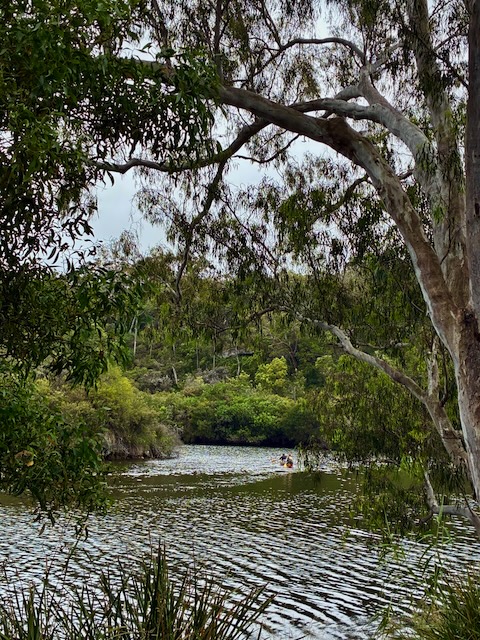
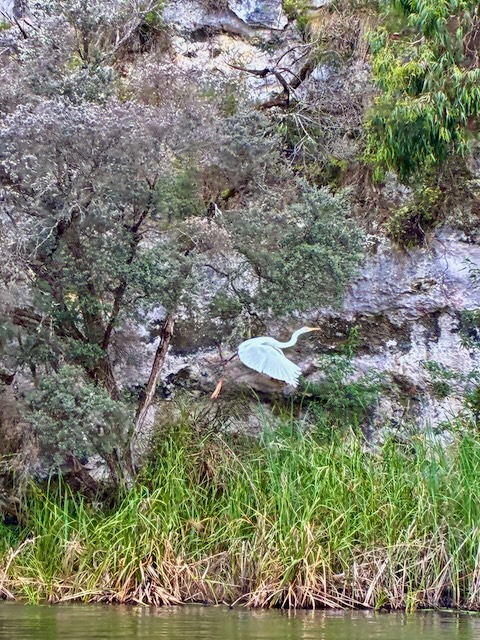
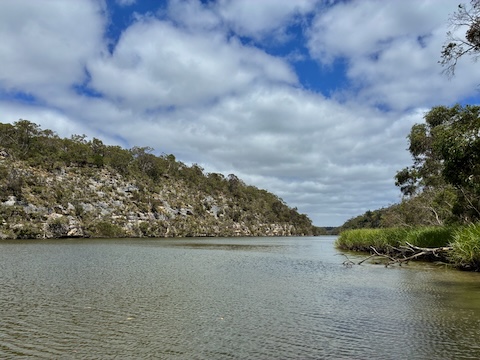
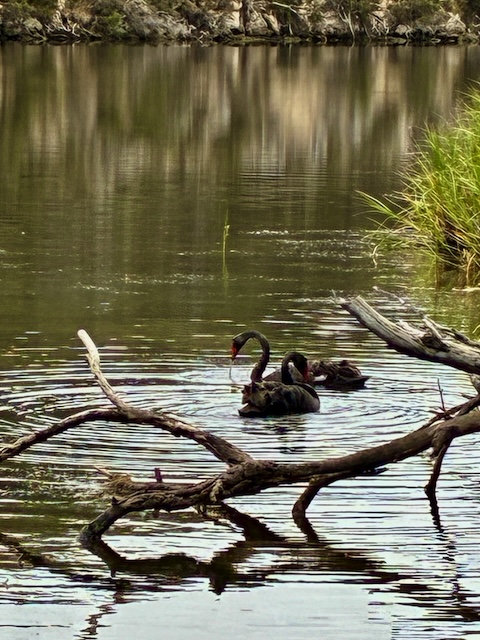
I spent four days over new year canoeing around 50km of the Lower Glenelg River. It’s a wide, deep, slow-flowing tidal river. The Glenelg originates in the Grampians National Park in Victoria and snakes through Balmoral and Casterton. Then, it flows through the Glenelg National Park before doing a sweeping bend through South Australia. It returns to Victoria to join the ocean at Nelson. The river is lined by an impressive layer of Pliocene age limestone and ferricrete gorges. It also features national park inhabited by an abundance of wildlife, particularly birds and koalas.
The most challenging part of an expedition is committing to do it—accepting the unknown changes that will inevitably occur in you and around you. – Hudson Bay Bound
Upon returning home, I attended to some overdue maintenance around the house and bushfire season preparations. That season then arrived with a vengeance last week. Due to the extreme conditions and already active fires to the north, I cleared out on Friday. I don’t currently have animals to care for and I had somewhere to go so it was an easy decision. I did not return home until quite late after the cool change. Thus the late publication of this blog.
We need to give rivers room to breathe, to protect and improve not only the water but the land surrounding the river, too. – Hudson Bay Bound
Our forested town on the banks of the Yarra River was spared again this time. My heart goes out to those communities that were, and still are, being impacted by the fires. I also feel very sad for all the animals and beautiful Australian landscapes ravaged by the fires. It’s going to be a long summer.
When in doubt, don’t think too much, and walk around the block in your hiking boots. – Hudson Bay Bound
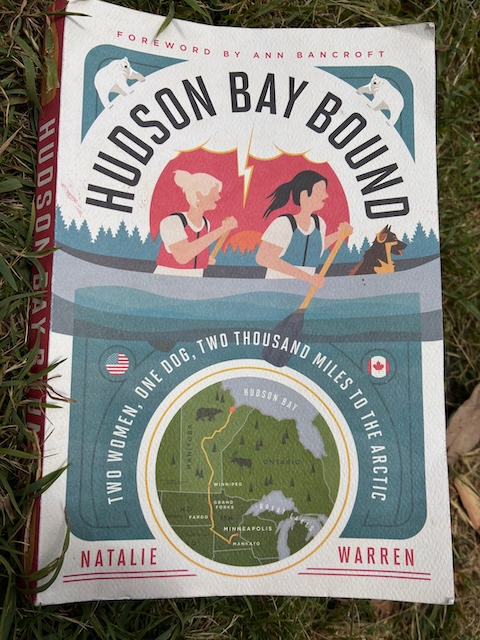
Circling back to my canoe adventure. I have said before that when I travel I like to read something that has some reference to my journey. At the campsites on the Glenelg I dove into the memoir Hudson Bay Bound by Natalie Warren. Hudson Bay Bound tells the story of two young college graduate friends. They became the first women to canoe the 2,000 miles from Minneapolis to Hudson Bay, completing the journey over eighty-five days in 2011.
Anything that wasn’t a basic need or a life-threatening issue wasn’t worth a worried thought. – Hudson Bay Bound
Hudson Bay Bound narrates the trials and tribulations of this journey. It describes the people the girls meet and explains what they learned about the population’s connections to the river. Hudson Bay Bound also touches on some of the social and environmental issues along the river. Their quest was inspired by Eric Sevareid and Walter C. Port’s wilderness voyage portrayed in the 1935 Canoeing With the Cree. A quick, easy read for those who like an outdoor adventure.
Sputnik Sweetheart by Haruki Murakami is a story about friendship, unrequited love and loneliness. The story revolves around three characters.
Why do people have to be this lonely? What’s the point of it all? Millions of people in this world, all of them yearning, looking to others to satisfy them, yet isolating themselves. Why? Was the earth put here just to nourish human loneliness?
The narrator, K, is in love with his best friend Sumire. The protagonist, Sumire is in love with Mia, a woman 17 years her senior who is also her boss.
We’re both looking at the same moon, in the same world. We’re connected to reality by the same line. All I have to do is quietly draw it towards me.
K and Sumire spend hours on the phones in deep conversation about life, desire, sexuality and writing. Sumire is an unconventional aspiring novelist. K is a solitary intelligent primary school teacher. K’s unrequited love roots a deep longing and loneliness in him.
Don’t pointless things have a place, too, in this far-from-perfect world?
The exotic Mui employs Sumire in her wine company despite her limited skills or qualifications. Mui has no idea Sumire is infatuated with her.
In the spring of her twenty-second year, Sumire fell in love for the first time in her life.
Sumire and Mui go on a business trip. They end up on a Greek Island for a holiday after a house is offered to them over the summer by a couple of gay men they meet.
A story is not something of this world. A real story requires a kind of magical baptism to link the world on this side with the world on the other side.
One night K receives a distressing call from Mui imploring him to get on a plane immediately and go to the island. It is something to do with Sumire so he goes without question.
Who can really distinguish between the sea and what’s reflected in it? Or tell the difference between the falling rain and loneliness?
This is where the novel turns into a mystery. Sumire has disappeared without a trace from the island. It seems impossible without anyone noticing anything. Enter magical realism.
Understanding is but the sum of misunderstandings.
Sputnik Sweetheart is a short, cleanly crafted, story about existence, identity, what is real and what is hidden. As is common in Japanese literature Sputnik Sweetheart is a simple story with plenty of depth.
Arundahti Roy’s memoir Mother Mary Comes To Me now ranks as one of the best memoirs I have read.
She was my shelter and my storm.
Arundhati’s exceptional writing and story telling skills bring India alive on the page. And the story will resonate with anyone who grew up with a formidable mercurial mother whom they experienced simultaneously as confusing, hateful, loving and overbearing.
As I grew older, my very existence seemed to be enough to enrage her.
Mary Roy, a Christian from Kerala, was not a woman of her time. She married Micky to escape her parents, then left him when she found him to be an uninspired alcoholic. She calls him ‘a Nothing Man’ (he does return later in the story as a funny, lovable rogue). Mary Roy had a vision – big dreams, big energy, and she was a fighter.
When it came to me, Mrs Roy taught me how to think, then raged against my thoughts. She taught me to be free and raged against my freedom. She taught me to write and resented the author I became
Mary settled with her two children, Arundhati and brother LKC, in Aymanam, a village in Kerala. Here she set up a school that would grow a reputation as large as the woman herself. Arundhati and LKC began to refer to their mother as Mrs Roy like all the school children.
Until the day she died, she never stopped learning, never stagnated, never feared change, never lost her curiosity.
The first part of the book contains Arundhati’s life before she became a famous author. It also contains the world that inspired The God of Small Things, the novel that made her a household name.
I left my mother not because I didn’t love her, but in order to be able to continue to love her.”
Arundhati’s mother escaped her parents by marrying. Arundhati escaped her mother by going to study in Delhi at the School of Planning and Architecture. This part of the memoir follows the author into adulthood and a creative life. It provides insightful descriptions of the socio-political environment of the day and Arundhati’s confrontations with the nation-state.
I began to refer to myself as the Hooker who won the Booker.
As an adult Arundhati rises to become both a literary star and an activist. She rages against the status quo (not entirely unlike her mother) and is charged with obscenity and corrupting public morality. She loves India, but it has a love-hate relationship with her because she will not conform.
While countries were being invaded and rivers were being dammed, while the earth was spinning faster than it should and I was on trial for not behaving like a reasonable man, Micky Roy went missing.
In Mother Mary Comes To Me, Arundhati sours between capturing the minute idiosyncratic detail of those in her life and insightful political observations. Mother Mary Comes To Me is a memoir that reads like a novel. A beautiful, passionate, funny and insightful tribute to a force of nature.
If protesting against having a nuclear bomb implanted in my brain is anti-Hindu and antinational, then I secede. I hereby declare myself an independent, mobile republic. I own no territory. I have no flag.
I was out to lunch the other day and a friend spoke about their robot vacuum as if it were a new housemate. It had a character of its own and was not ‘just a machine’. As humans become more isolated and individualistic, our lives become more computerised. Do we impose greater meaning on this human-robot interface?
In the morning when the Sun returns. It’s possible for us to hope.
Klara and the Sun by Kazuo Ishiguro tells the story of the human-machine relationship. The story is from the perspective of an almost human android called Klara. Klara is a solar powered artificial friend. After a long time as a display in an android shop, she is purchased as a companion for Josie. Josie is a 14 year old girl with an unnamed illness and a dead sister. Josie warns Klara that there is something strange in her household. This comment sets up a creeping anxiety in the story. Hints are dropped about the nature of the strangeness but it doesn’t become apparent for some time what it is. The tension is heightened by the narrators limited and slightly naive perspective.
Yes. Until recently, I didn’t think that humans could choose loneliness. That there were sometimes forces more powerful than the wish to avoid loneliness.
Klara is designed to observe, learn, understand and serve her human. She is more than a friend – loyal, good and selfless. Klara also has the ability to learn about the emotional contradictions of humans. Yet, she also believes the sun has special powers that provide life giving nourishment. When Klara becomes increasingly concerned about Josie’s deteriorating health she seeks the suns help to heal her friend.
At the same time, what was becoming clear to me was the extent to which humans, in their wish to escape loneliness, made maneuvers that were very complex and hard to fathom.
The constructed world in which Klara lives is a hierarchical society of the ‘lifted’ and ‘uplifted’. The former have access to special privileges. And as one would expect, they are prone to be entitled brats. Klara’s charge Josie is lifted and more compassionate than her other lifted friends, perhaps due to her illness. Josie’s best friend and neighbour, Rick, is ‘unlifted’ and their relationship becomes something that Klara also protects and nurtures.
As I say, these were helpful lessons for me. Not only had I learnt that changes were a part of Josie, and that I should be ready to accommodate them, I’d begun to understand also, that this wasn’t a trait peculiar just to Josie, that people often felt the need to prepare a side of themselves to display to passersby – as they might in a store window, and that such display needn’t be taken so seriously once the moment had passed.”
As Klara learns to understand humans more and more, she seems to become more human herself. However fully grasping them always remains just out of reach. Though her observations do enable the reader to fully experience what she cannot. Klara observes, analyses and reports but the reader overlays meaning to connect the dots.
The heart you speak of,’ I said. ‘It might indeed be the hardest part of Josie to learn. It might be like a house with many rooms. Even so, a devoted AF, given time, could walk through each of those rooms, studying them carefully in turn, until they became like her own home
Klara and the Sun is a speculative fiction novel that explores what it means to be human, loneliness and love. Beautifully written with an eloquent subtlety that expresses complexity through simplicity.
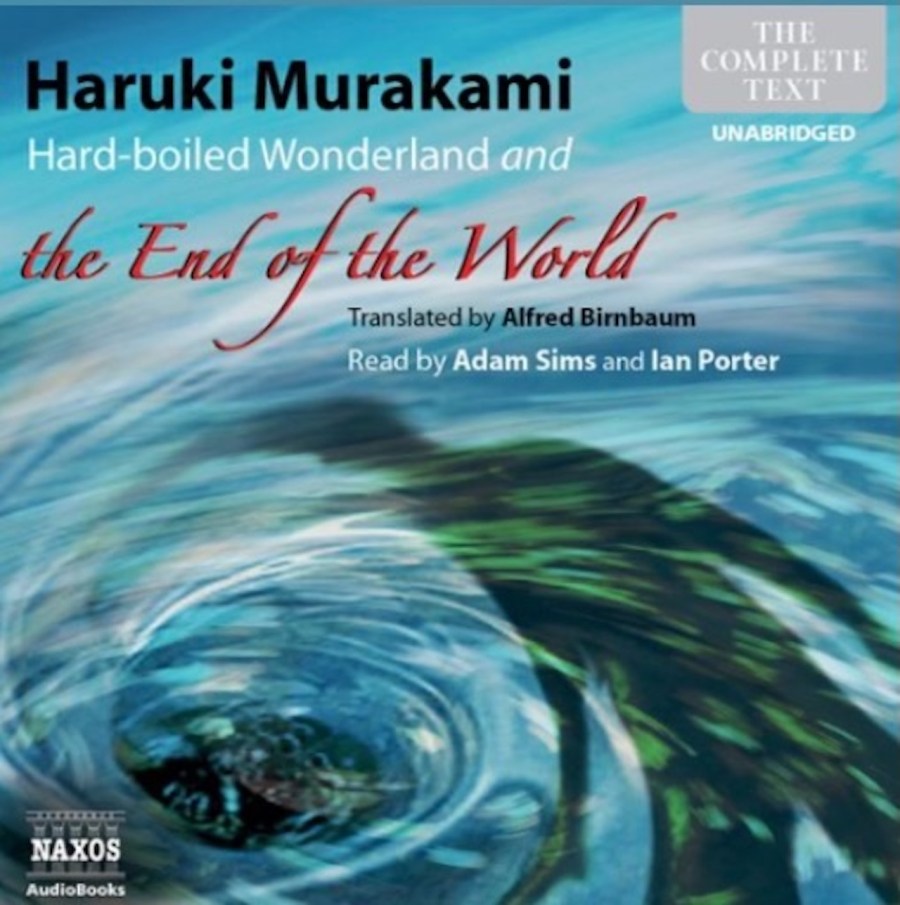
Hard-boiled Wonderland and the End of the World by Haruki Murakami has two narratives. The hard-boiled narrative involves an unnamed Tokyo data processor who works for an entity called the System. He becomes involved with a scientist and his granddaughter after the scientist hires the narrator to launder and shuffle his research data.
I never trust people with no appetite. It’s like they’re always holding something back on you.
The parallel end of the world narrative is set in a walled city where people are separated from their shadows and lose their minds. In this world the narrator is hired as a Dreamreader. The two narrators are linked by the Tokyo protagonists mind being shuffled into the end of the world.
I wasn’t particularly afraid of death itself. As Shakespeare said, die this year and you don’t have to die the next.
The story is as weird and layered as the title, but also totally engaging (despite a little sexism and cringe worthy fatphobic language at times, though it was first published in 1985). Speculative fiction and magical realism meets hard-boiled detective story. There’s even unicorns.
Huge organizations and me don’t get along. They’re too inflexible, waste too much time, and have too many stupid people.
Hard-boiled Wonderland and the End of the World explores subconsciousness and consciousness, how identity and memory are formed by the stories we tell ourselves, and fate and free will. There’s a whiff of Kafkaesque and Orwellian existential meditations…
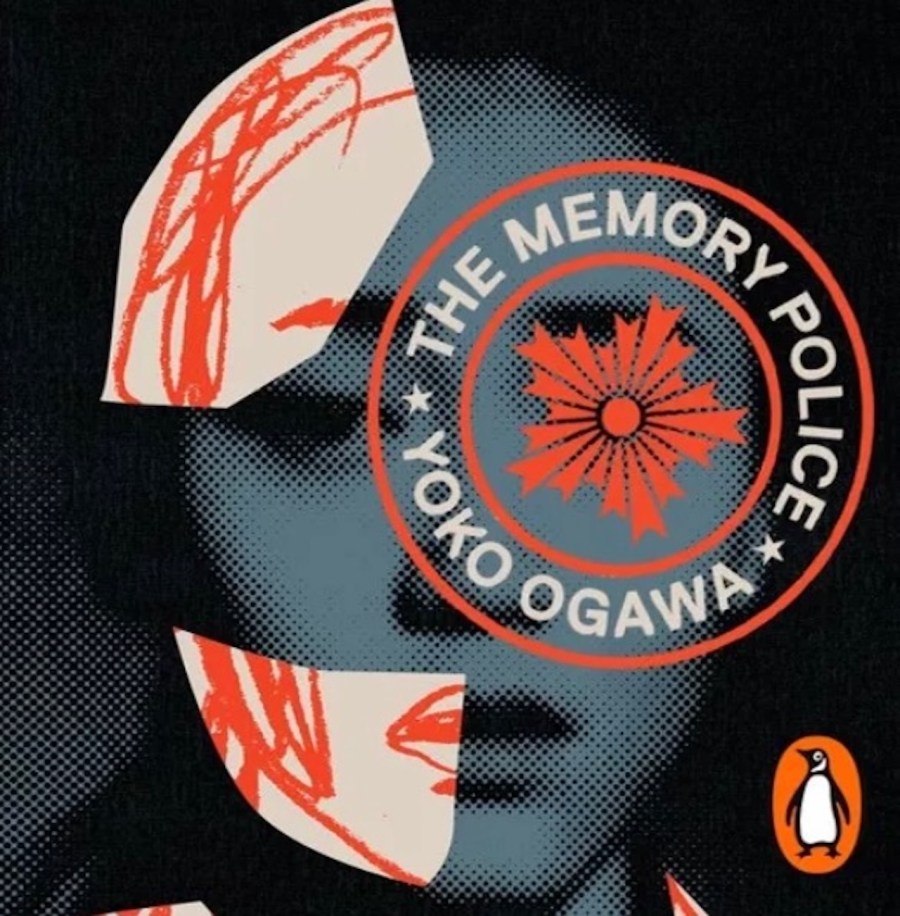
The Memory Police by Yoko Ogawa is a dystopian novel set on a remote island off the coast of Japan where objects – hats, roses, birds, boats – disappear at the hand of an unknown power. The disappearances are reinforced by the Memory Police, and the island population’s memories of the objects fade until they can’t remember their existence at all. Disappearances escalate, and one morning people wake up and their left legs have disappeared – their very essence is thinning. Even nature submits and seasons disappears. The world of the island inhabitants gradually shrinks and loses meaning, but there are a small number of people who retain memories. The Memory Police seek them out, round them up, and take them away.
People—and I’m no exception—seem capable of forgetting almost anything, much as if our island were unable to float in anything but an expanse of totally empty sea.
The characters are unnamed. The narrator is an author, and she and an old man who is a family friend decide to hide the author’s friend and editor, R, beneath her floorboards in a hidden room when they realise he has memories and is at risk. The room also accumulates what can be salvaged of the things that are disappearing.
I suppose memories live here and there in the body. But they’re invisible, aren’t they? And no matter how wonderful the memory, it vanishes if you leave it alone. If no one pays attention to it. They leave no trace, no evidence that they ever existed.
There is also a story with the story – excerpts from a manuscript that the narrator has been writing about a typist who can only communicate through typing as she has lost her voice. She’s held hostage by her typing teacher and lover in a tower. When novels disappear, R encourages the author to keep writing as a means of preservation.
Men who start by burning books end by burning other men
Beautifully written in quiet poetic prose with the slow creep of tension, the novel explores memory and its role in identity, connection, loss and isolation, as well as the perils of authoritarianism and the power of art and storytelling as a vehicle for resistance. The story asks us to consider our identity and our relationship to the world around us. It also made me consider mortality as the novel reminded me a little of what happens when we start to die and parts of our bodies succumb to illness or old age, memories fade and friends disappear.
The further away from the main tourist spots we’ve travelled, the more I’m enjoying this trip. After the Hiroshima area we headed to the port town of Onomichi.
ONOMICHI and TOMONOURA
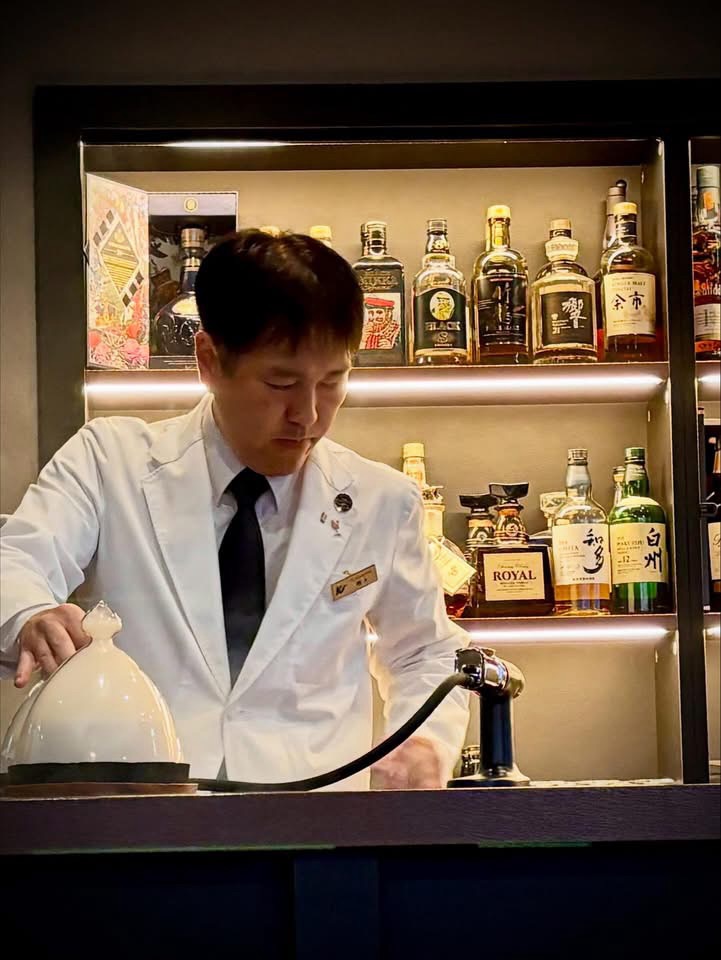
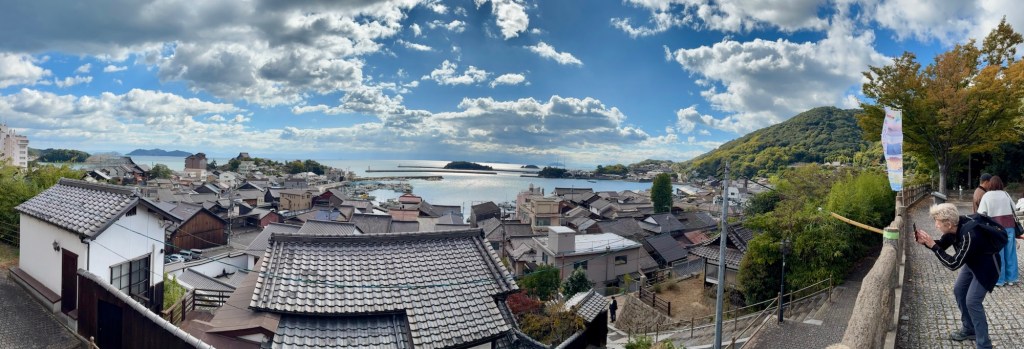
Onomichi is a small seaside port that spreads up the surrounding hillsides where temples (25 in total) and shrines are dotted between houses along steep narrow streets. The view from the top is magnificent and the town reminded me a little bit of Hobart before it was gentrified. Our hotel had a rooftop bar that served chips that the barman smoked by attaching a hose to a transparent dome secured over the bowl and pumping smoke onto them!
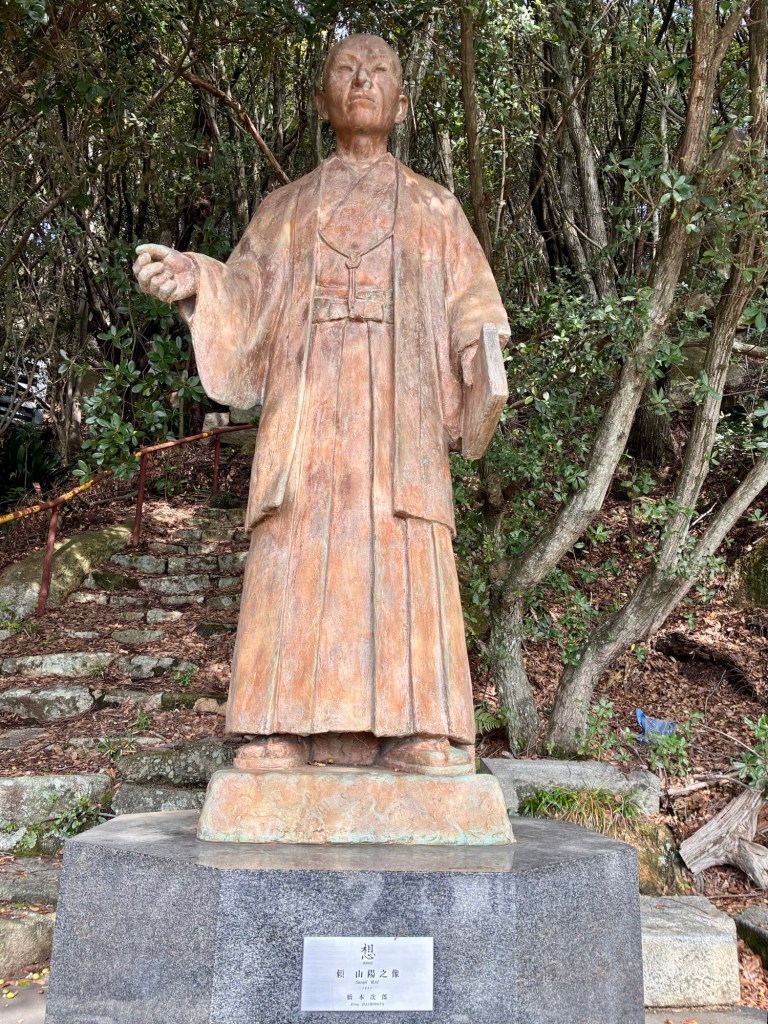
Onomichi is a town that draws artists and creators and has featured in a number of films including Yasujiro Ozu’s classic Tokyo Story. The town also has a strong association with literature and poetry with 25 literary monuments along the Literature Path.
the artist’s job is to grasp the simplicity, precision, and simple individuality of single materials and assemble them into a work of art
– scholar Rai Sanyo
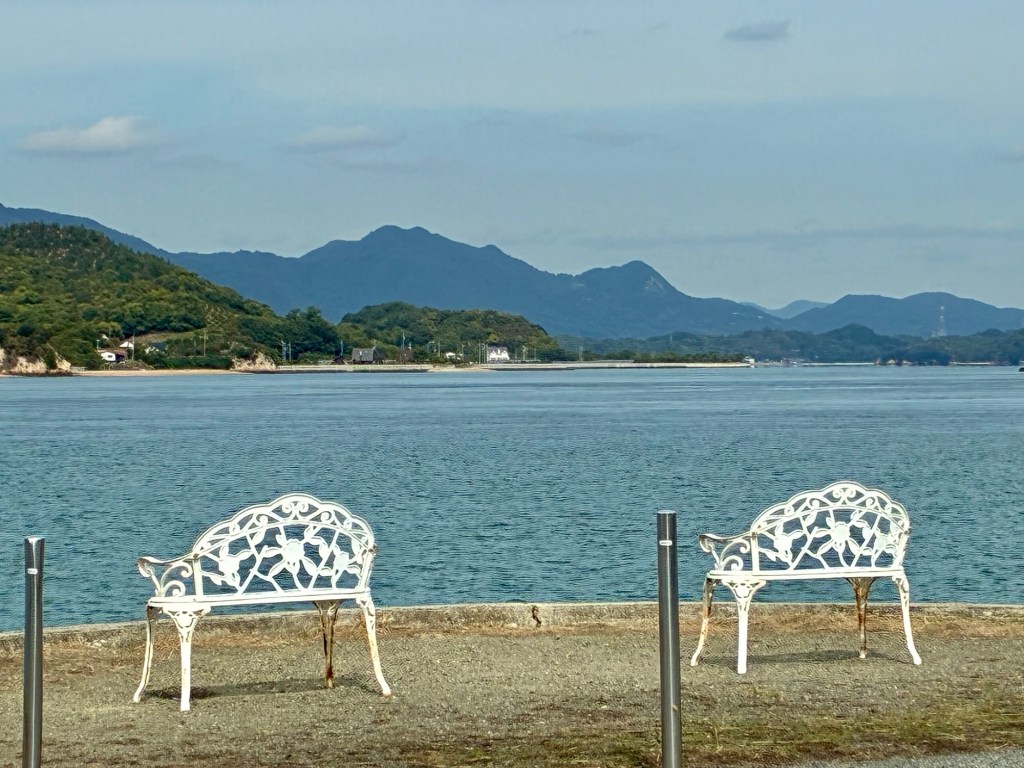
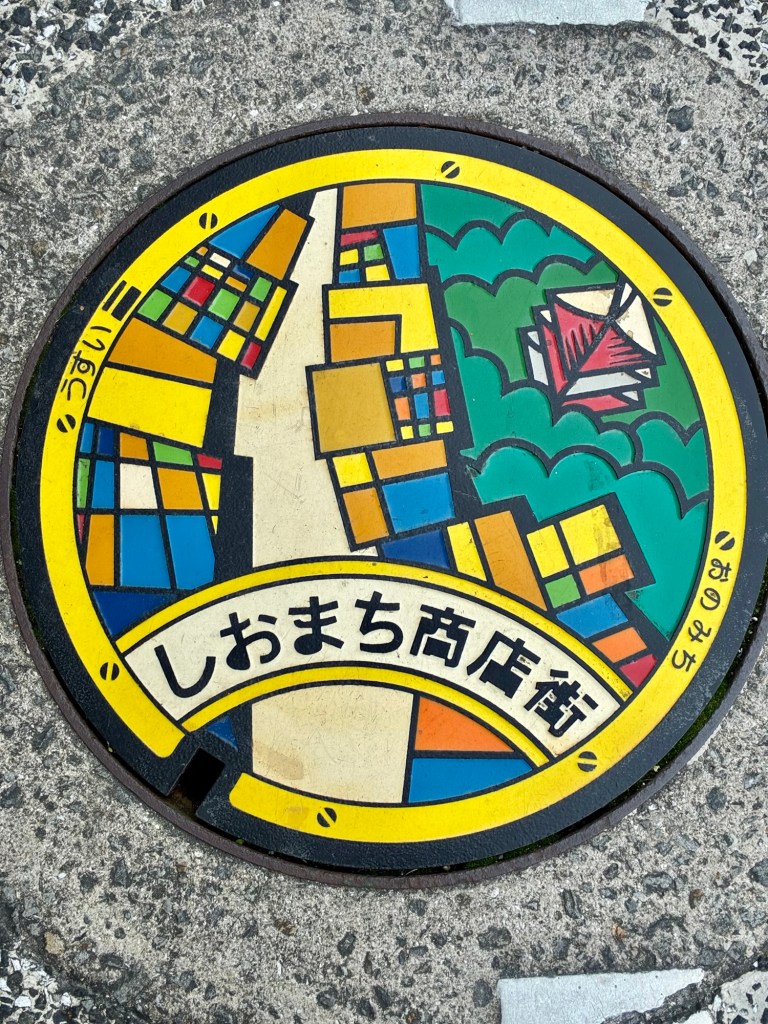
We spent a day exploring the town – making our way up the hillside, checking out the temples and monuments on the way to the museum of art, and exclaiming at the magnificent views over the Seto island sea, and then caught the ropeway back down the hill. In the flat part of the town there is a thriving undercover shopping arcade with a variety of shops and eateries and street performers.
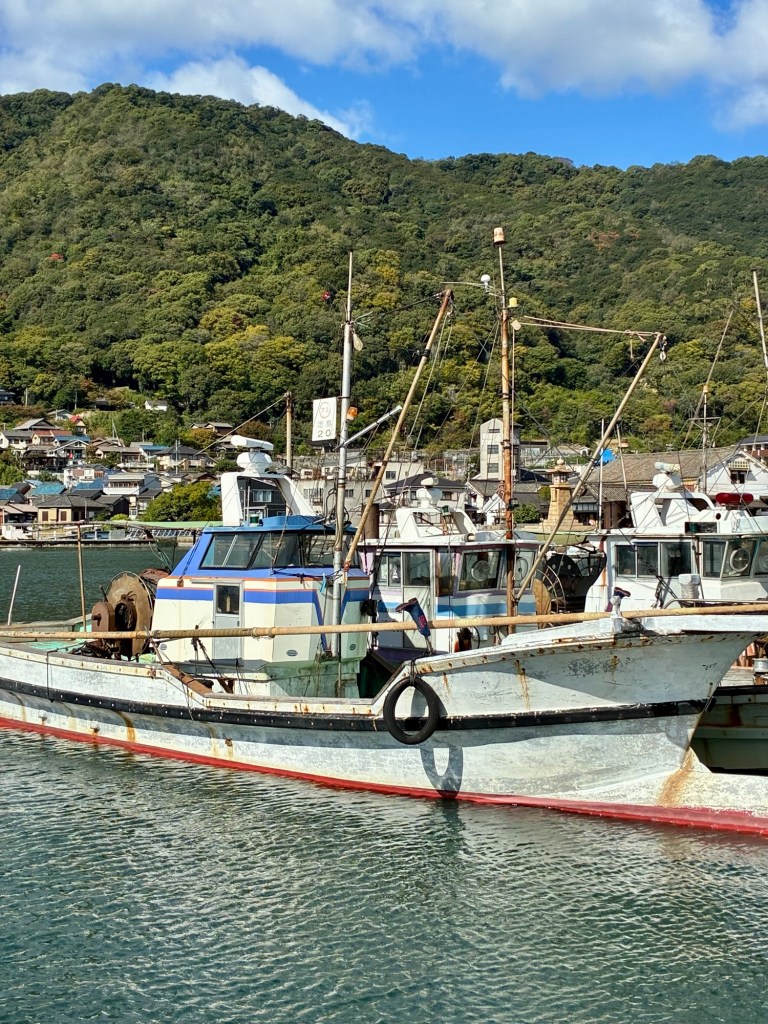
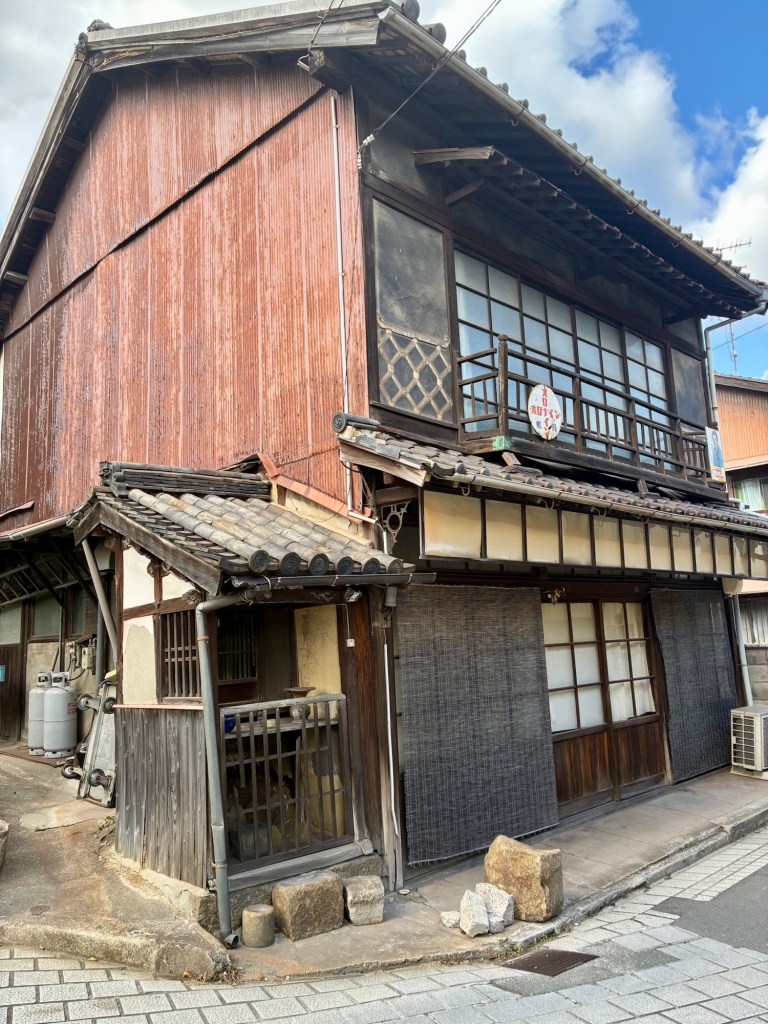
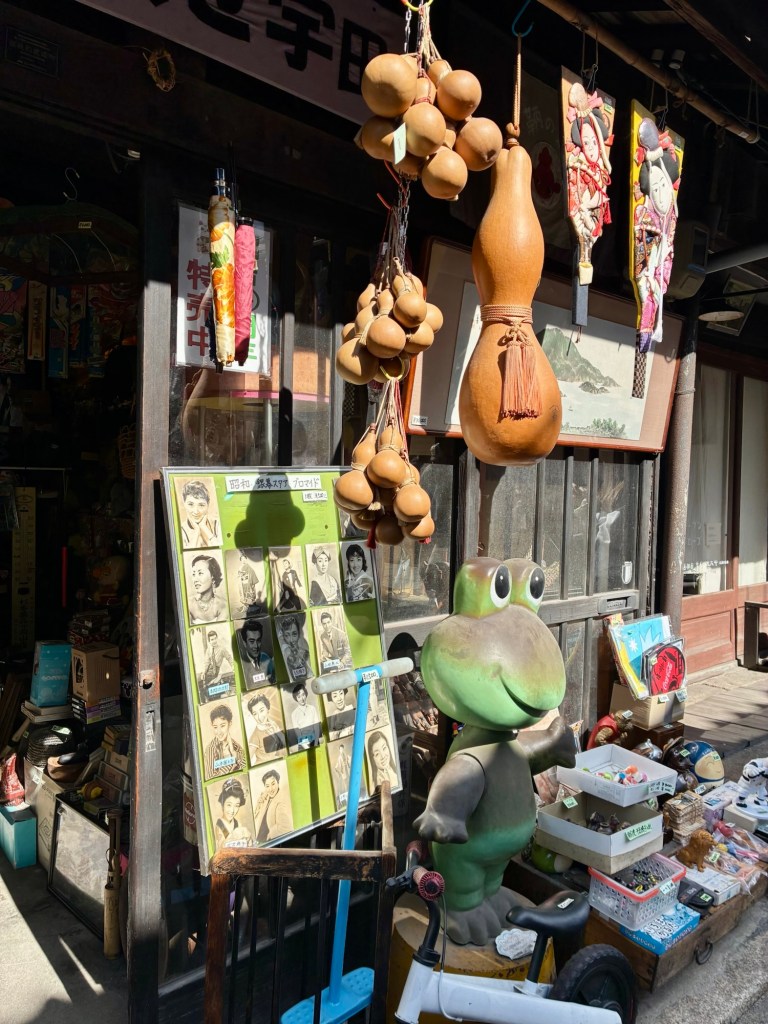
On our second day we caught an old yellow ferry under towering bridges, past ship building yards to the sleepy port fishing town of Tomonoura. It was a perfect sunny day to explore the tiny winding streets lined by dilapidated buildings, junk shops, medicinal alcohol traders, excellent Italian lunch fare and a bakery advertising the
Japanese take on Monte Blanc. Tomonoura has also been used for filming countless movies and TV dramas including The Wolverine staring Hugh Jackman, and is the setting for the amine Ponyo by Director Hayao Miyazaki.
SHIMANAMI KAIDO
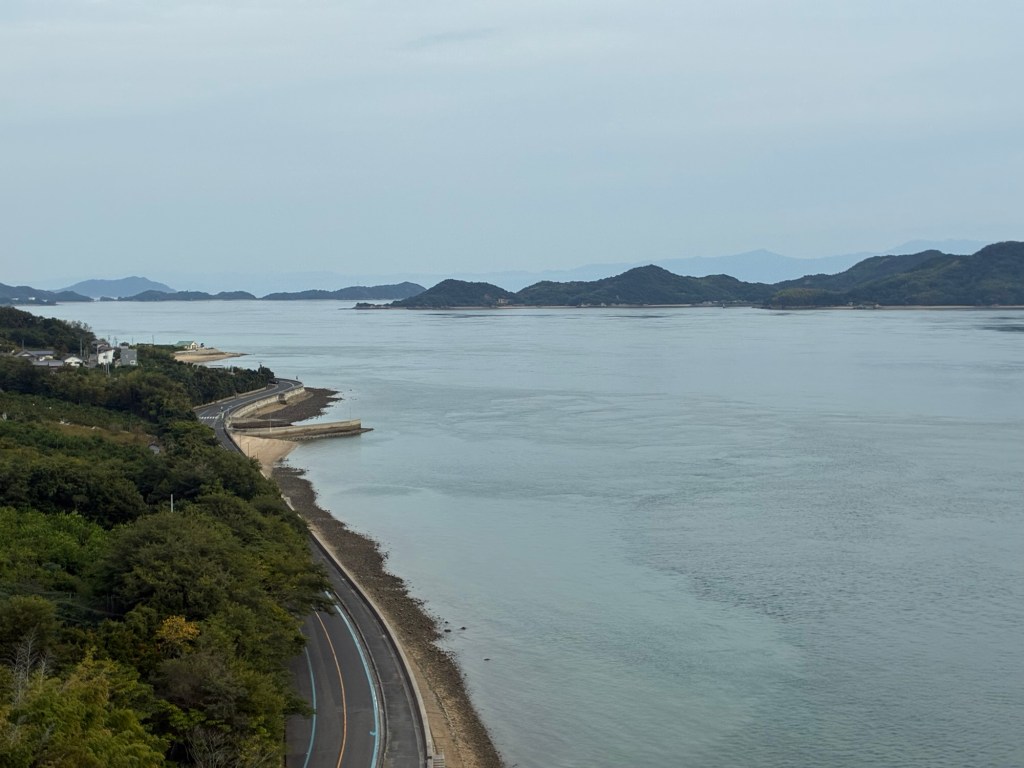
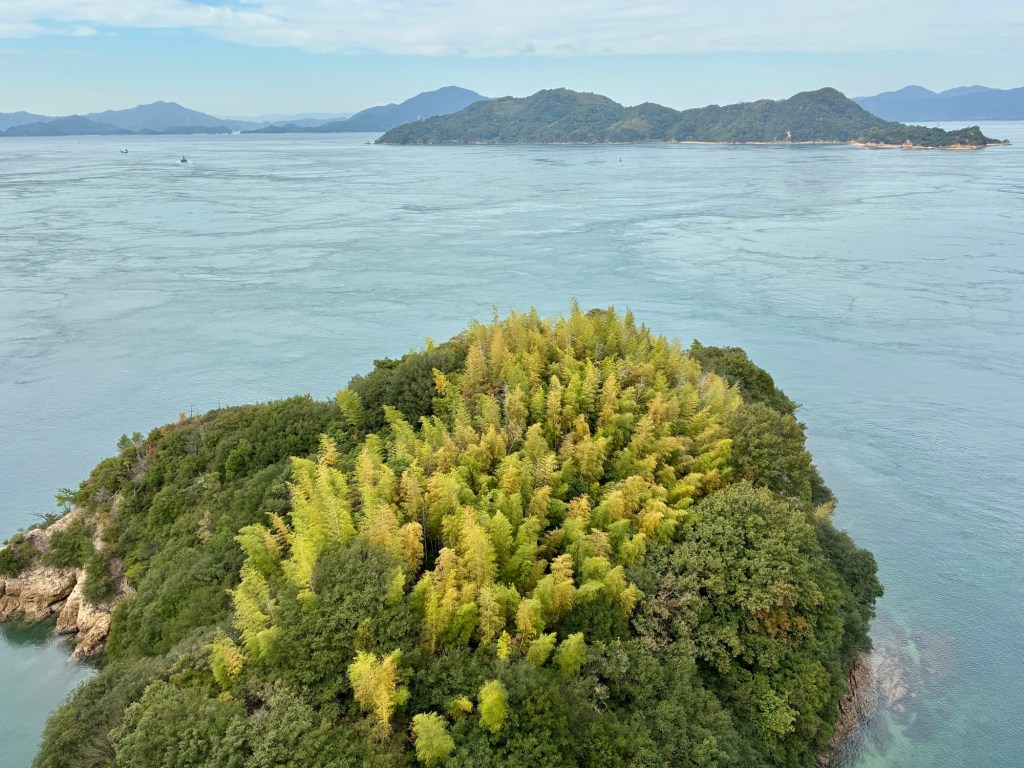
Onomichi is the starting point for the Shimanami Kaido cycling trail that connects Japan’s main island of Honshu with Shikoku via bridges across six islands in the Seto Sea. The bridges all have seperate bike lanes and the entire route is marked by a blue line painted on the road. The ride takes in the spectacular scenery of the islands and winds through local villages.
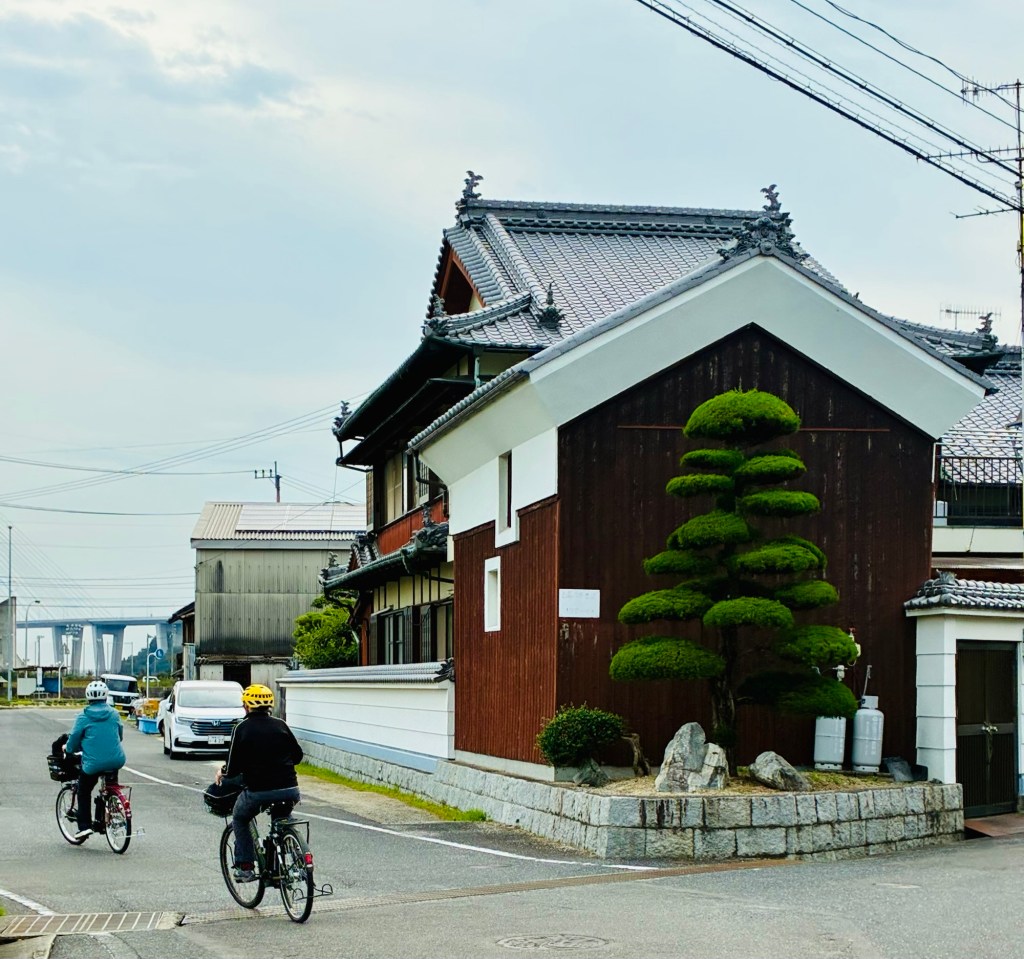
We set off on hired e-assist bikes and rode the section of the Shimanami Kaido cycling route from Onomichi to Omishima Island – mile after mile of beautiful island views. I find the forests really interesting here as the diversity of vegetation gives it a beautiful texture, the likes of which I have not seen in Australia.
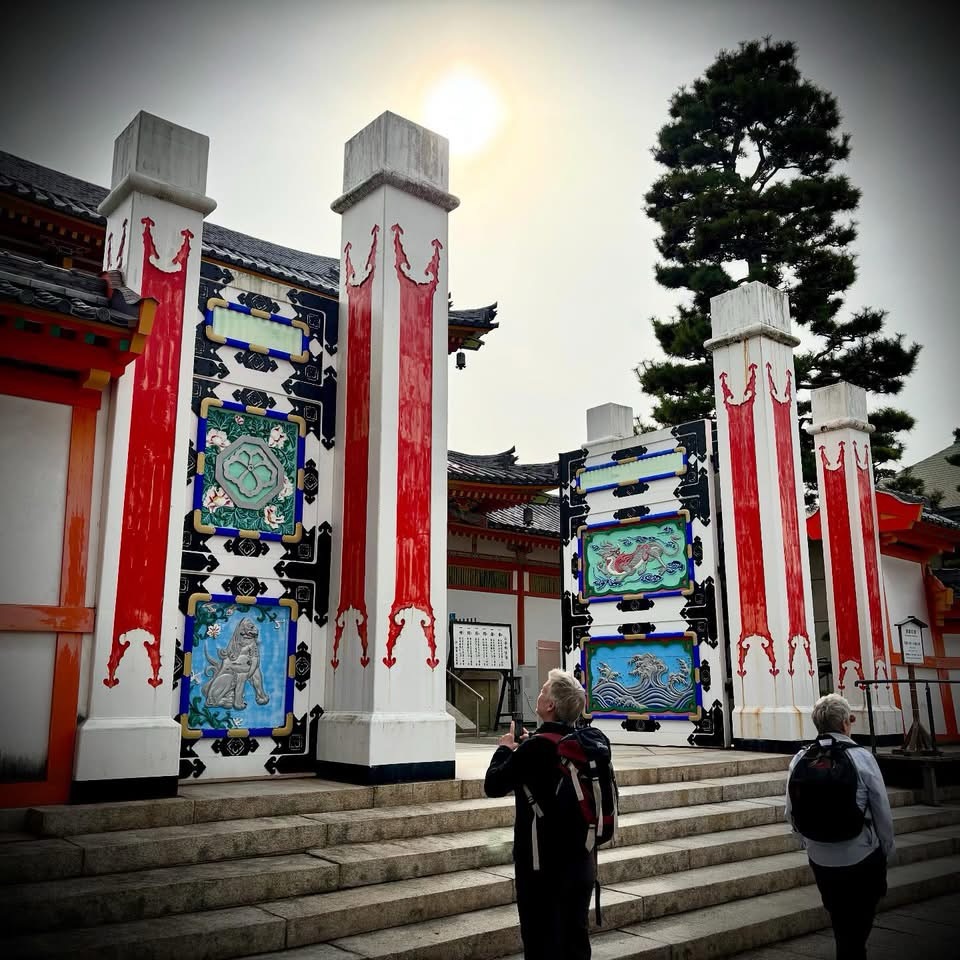
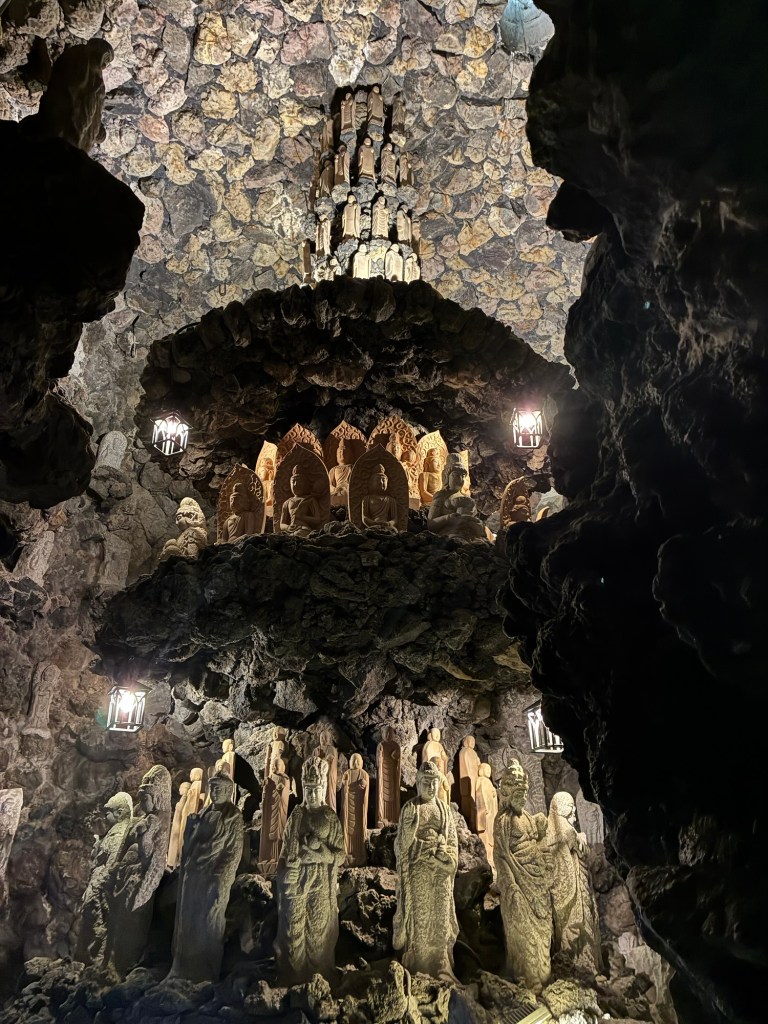
We stopped for lunch and to check out the very unusual and colourful Kosanji Temple on Ikuchijima Island. The temple belongs to the Honganji Sect of the Jodo Shinshu School of Pure Land Buddhism and was founded in 1936 by the industrialist Kozo Kosanji. He built the complex over a 30 year period in dedication to his late mother.
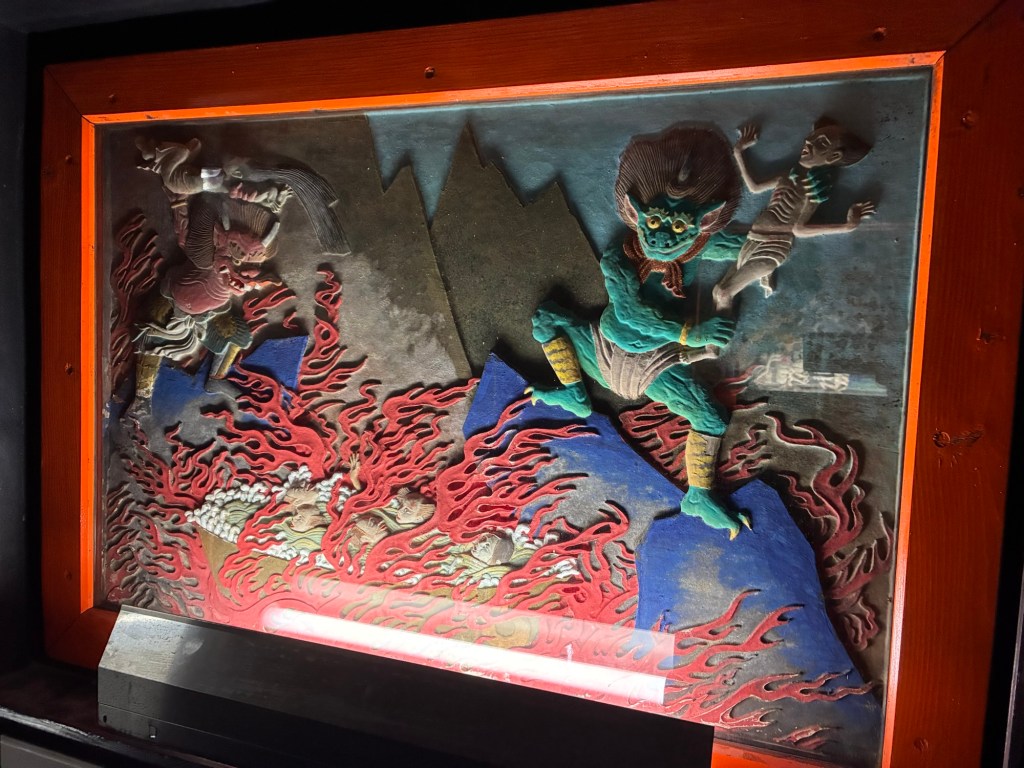
Kosanji was a bizarre place with underground tunnels filled with macabre depictions to illustrate the tortures of Buddhist hell from which you emerge to a massive Buddhist statue. At the top is the Hill of Hope – a marble garden construction using 3,000 tons of Cararra marble. I was gobsmacked by the whole dedication and am pretty sure Freud would have something to say about Kosanji’s relationship with his mother!
On Omashima Island we stayed with an older lady in her house (Guesthouse Farmor). She drove us to a local onsen (Mare Grassia) overlooking the water. The Japanese love their baths and they are great at the end of a long days walking or cycling. This was the best one I’ve been to yet with hot/cold indoor/outdoor baths, a sauna and a salt bath. We ate at a tiny ten seater very cool Japanese restaurant called Gagaku.
The ride to Imabari the next day took in more magical views and the longest bridge I’ve ever crossed at 4.1km. I would rate this as the best bike ride I’ve ever done and highly recommend it regardless of your cycling fitness. The e-bikes make it easy.
MATSUYAMA
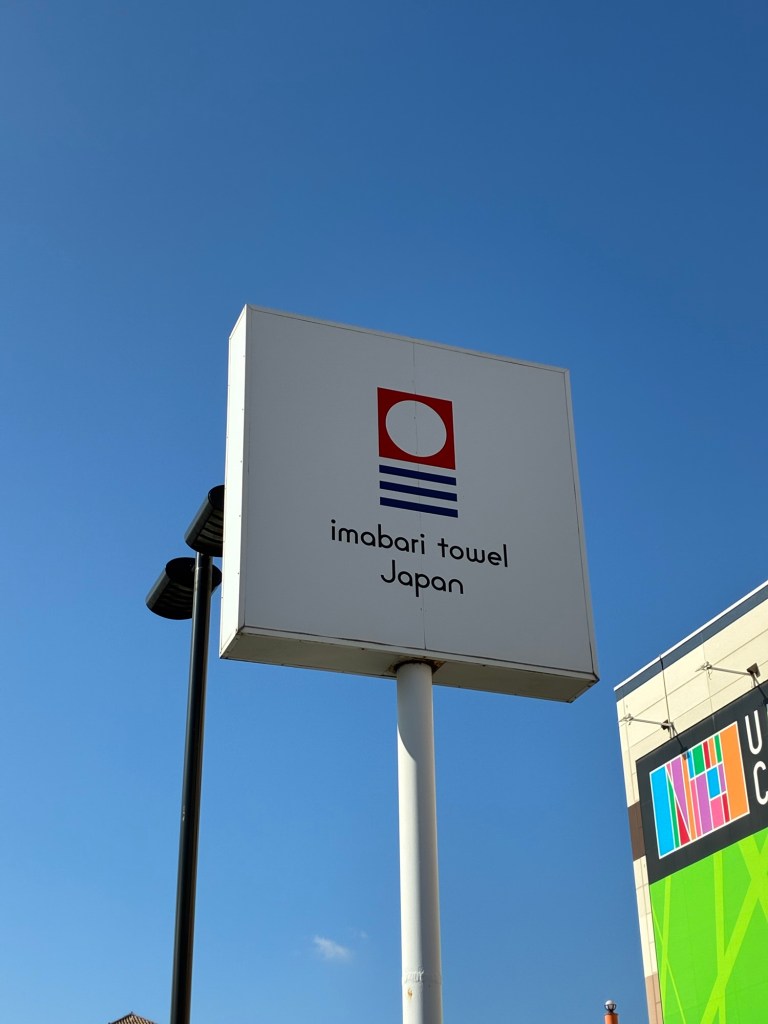
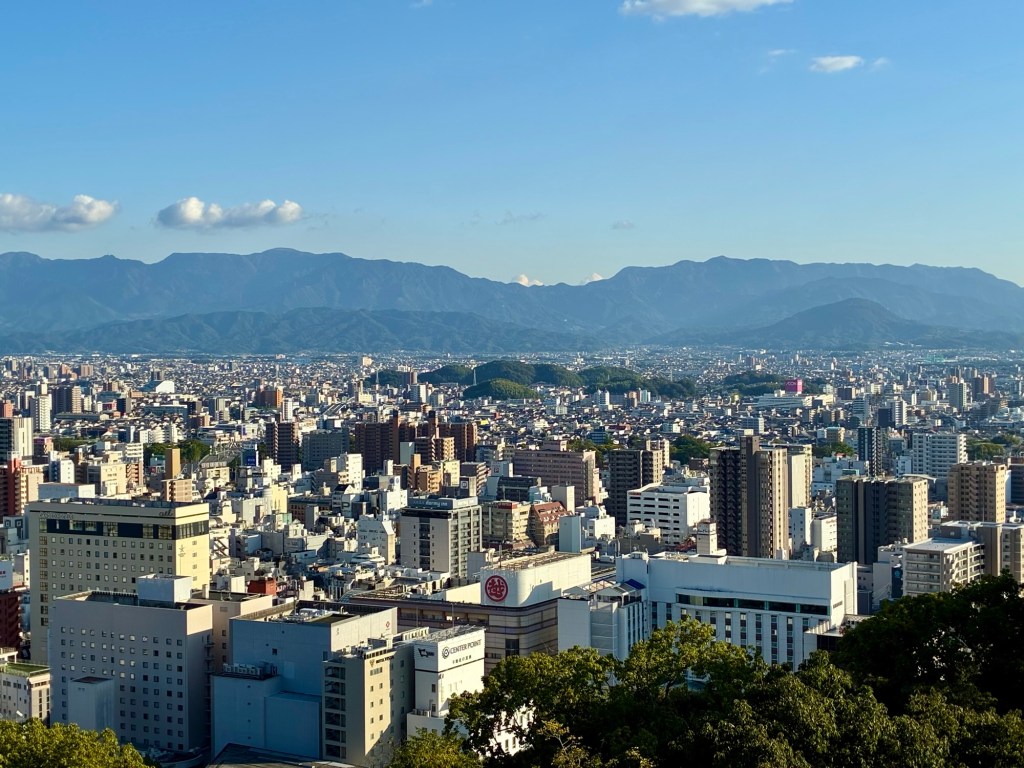
The next couple of days were largely transitionary. There was a visit to the Imabari towel lab, home of the best fluffy towels in the world, then a train journey to Matsuyama to pick up a rental car. Matsuyama wins the best castle prize so far with the most impressive dry stone walling I’ve ever seen. There is a unique chairlift to get to it, more spectacular views from the hill made literally of plastic chairs attached to a post.
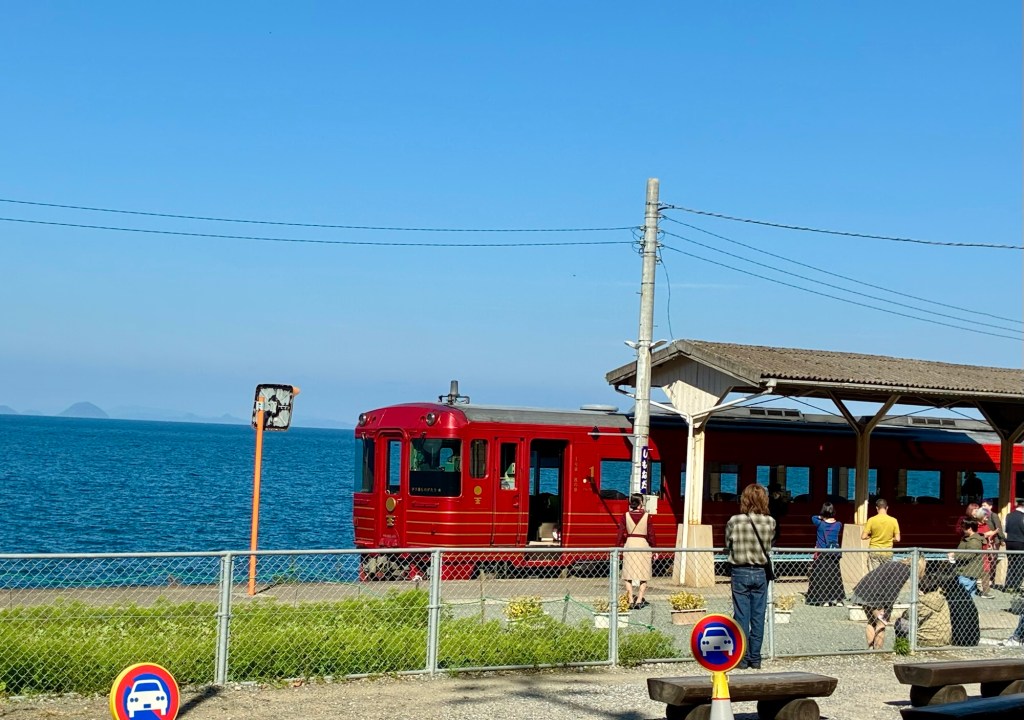
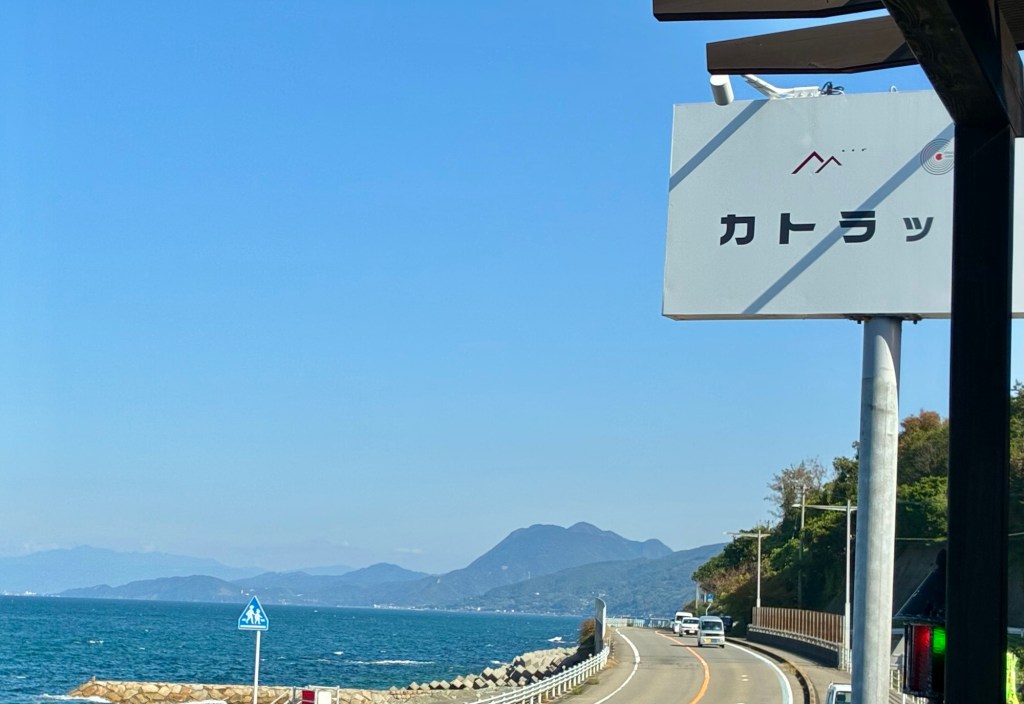
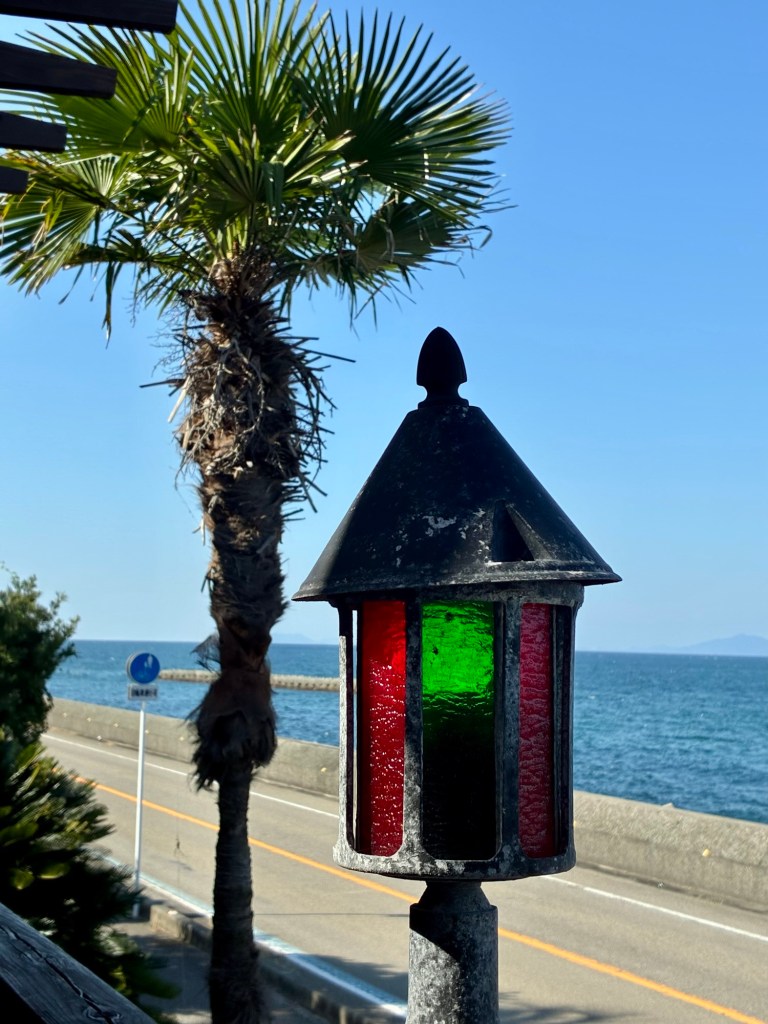
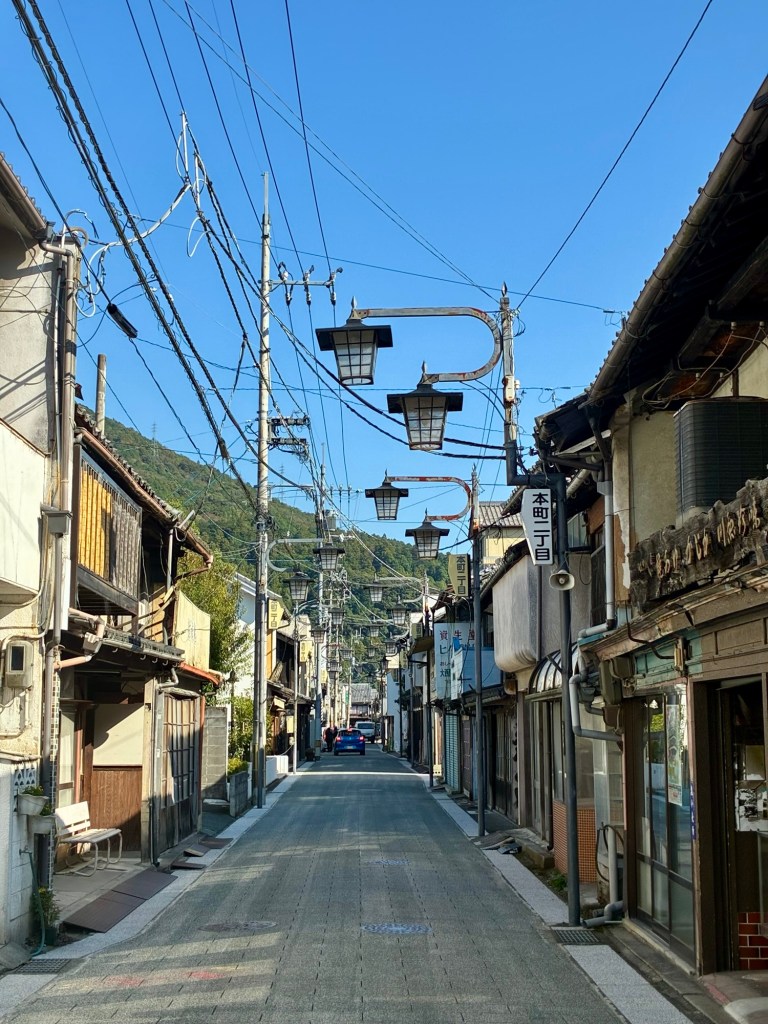
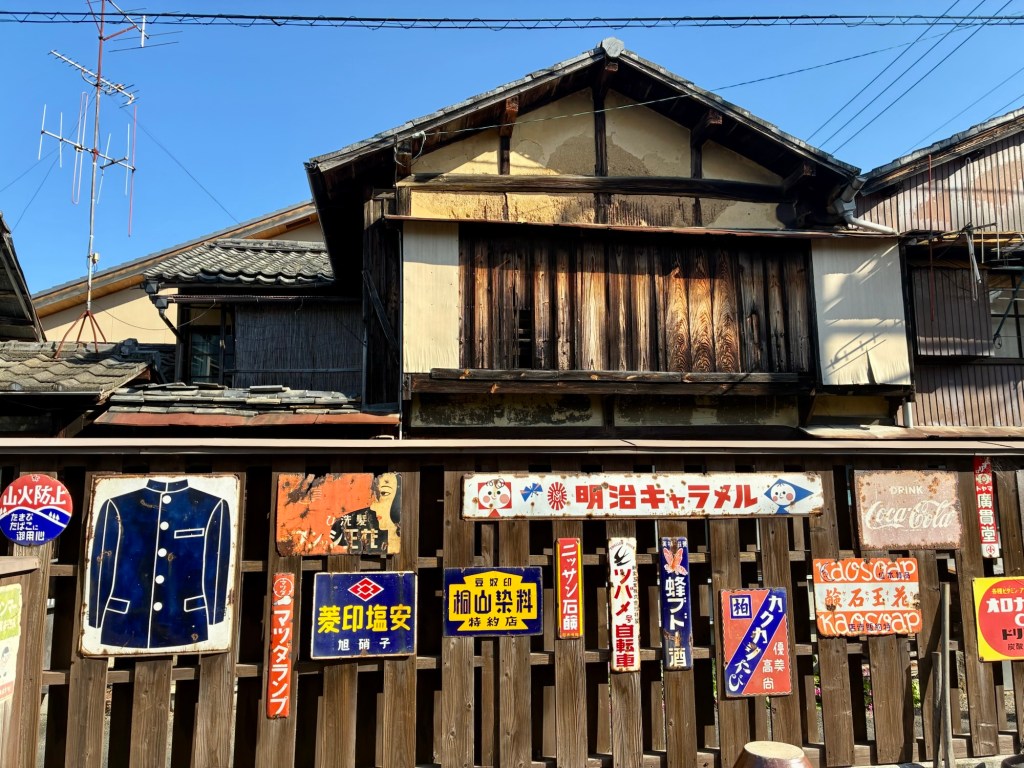
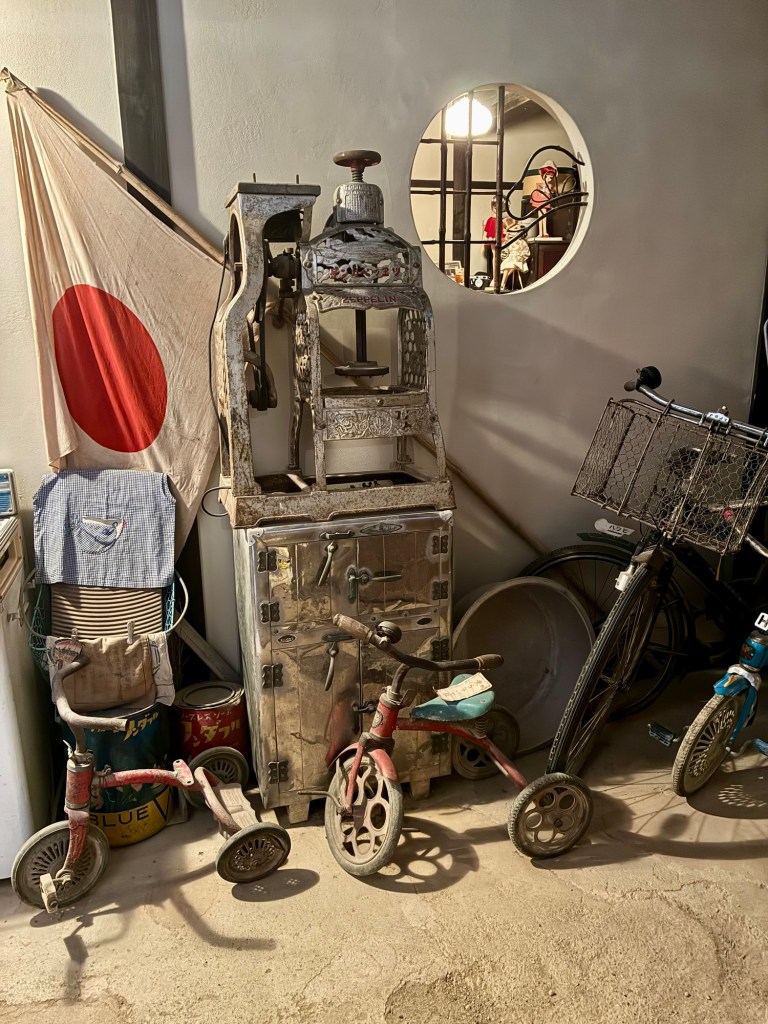
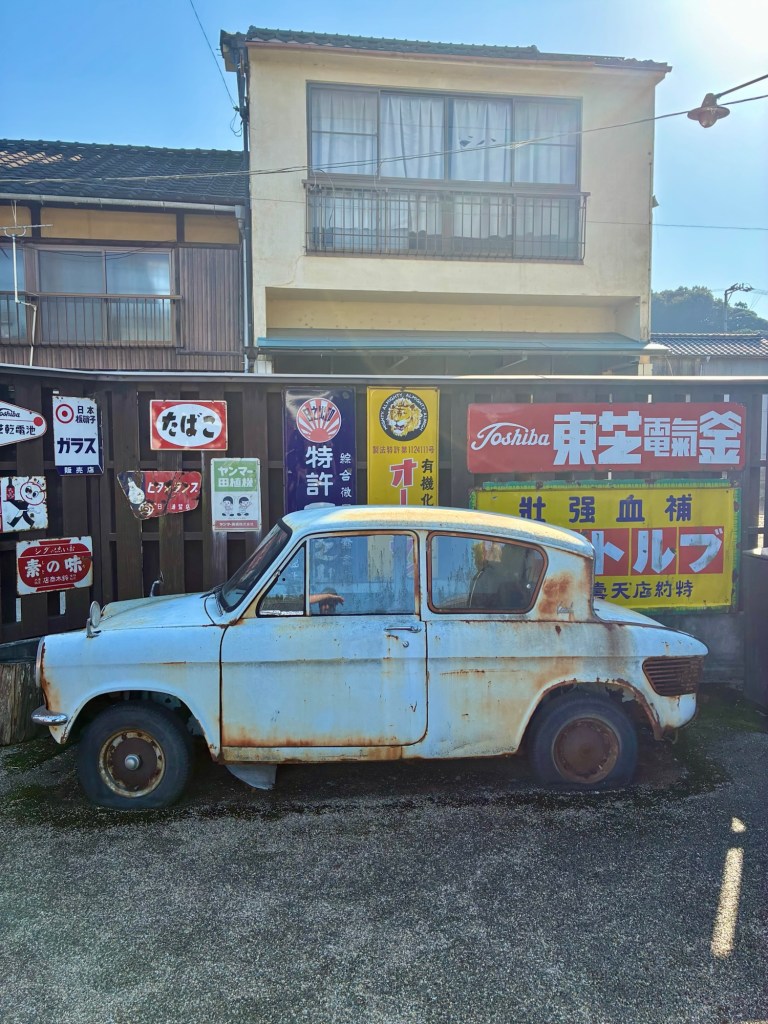
After picking up the car we took a spin down the coast past the most scenic train station in Japan, to the sleepy little town of Ozu also known as the Little Kyoto of Iyo. The Hiji River runs through the town and the place has a frozen in time vibe with fabulous 1960’s signage and paraphernalia.
We have found ourselves in a part of Japan that has a Mediterranean feel and a relaxed vibe. I am also happy to say our itinerary is taking a slower pace also!
Kyoto is a beautiful city but it is suffering from a bad case of overtourism. The issue left me feeling sad for the locals (they must resent it) and because of this I would not go back unless tourism dropped off. Having said that we did have a lovely couple of days by avoiding the most popular tourist spots and getting up very early to avoid the crowds.
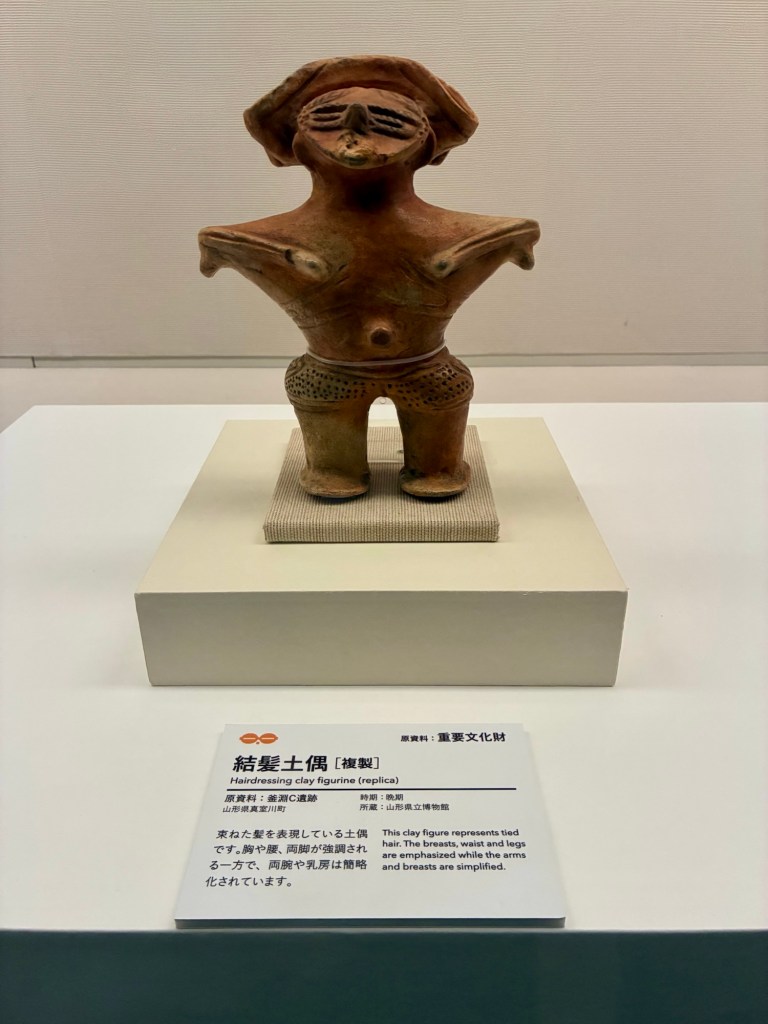
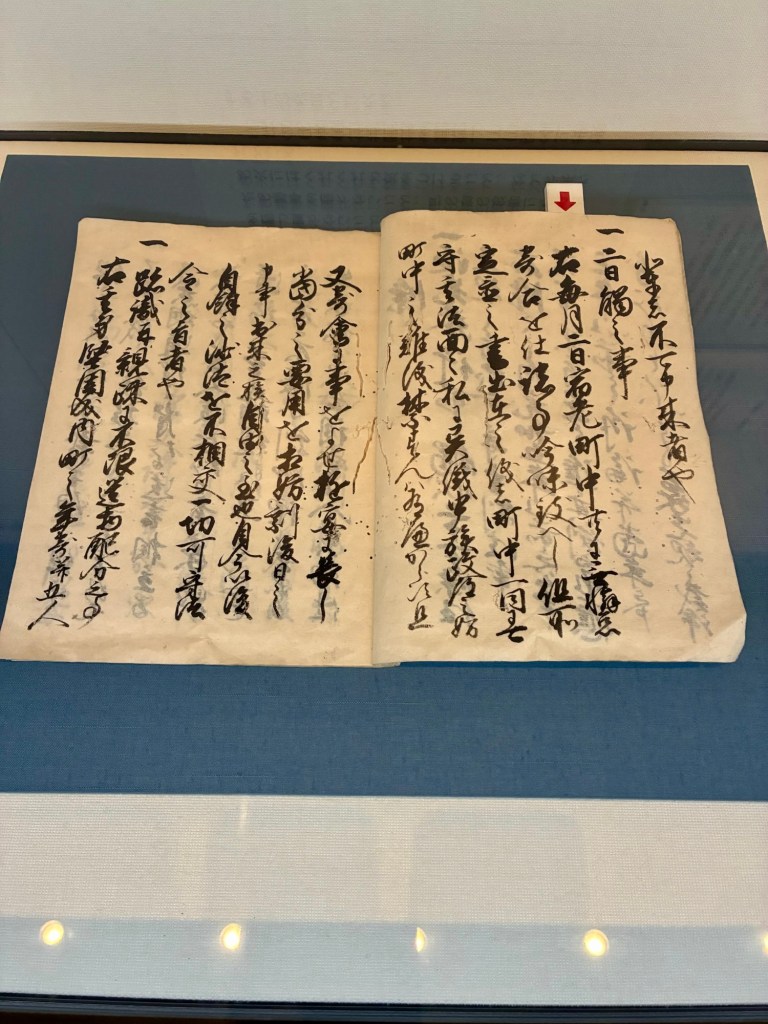
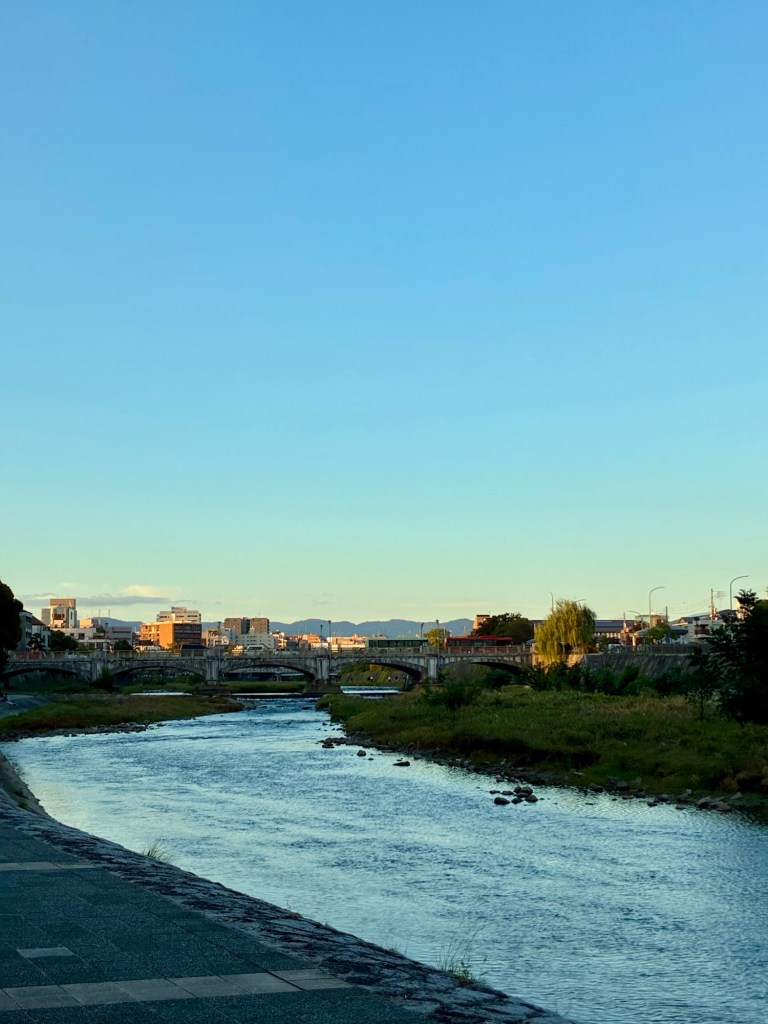
The moss gardens at Gio-ji temple were a green oasis and Kyoto station is a wonder of engineering and worth some exploration including to see the spectacular views across the city from the sky garden. The Museum of Kyoto is worth a visit. We learned about the Jōmon hunter-gatherer peoples, a Japanese First Nations group and saw the History of Kyoto Exhibition that included several volumes of the Lotus Sutra scrolls from the 11th century. We also had a beautiful meal at Kiyamachi tofu restaurant near the Kamo River waterfront – it requires pre booking.
Tip: Google translate is invaluable, don’t leave home without it.
Kamogawa RiverTourist trainMoss gardenKyoto stationKyoto stationKyoto stationMuseum of KyotoMuseum of KyotoMuseum of KyotoMuseum of KyotoKamogawa River
KOYASAN
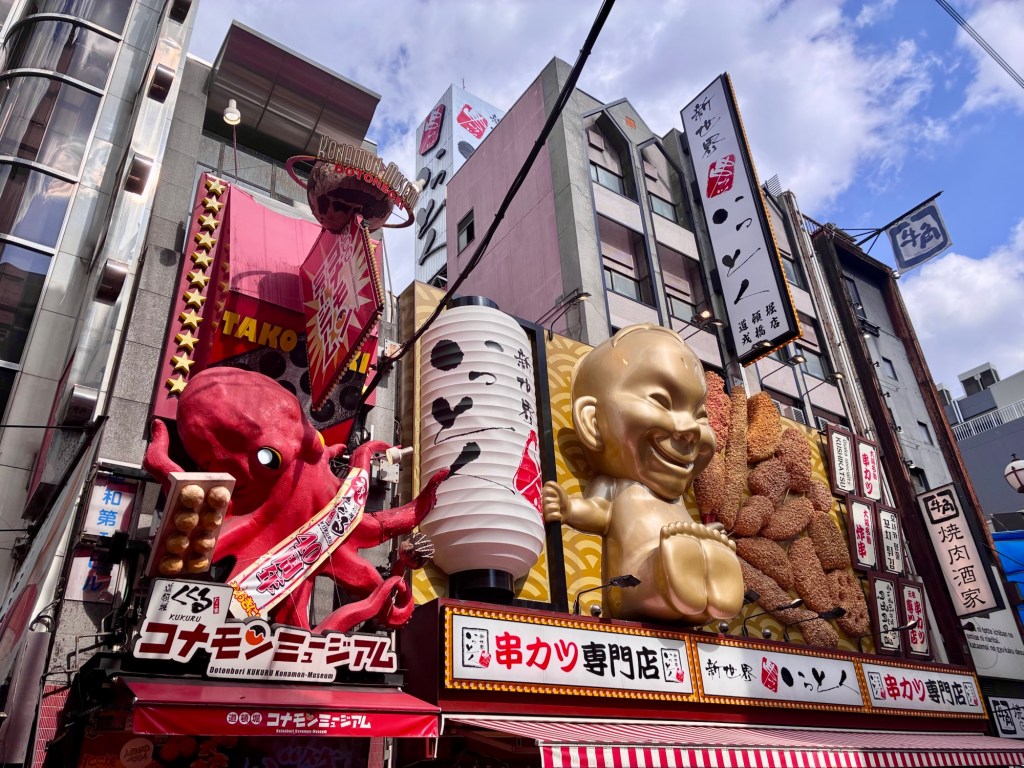
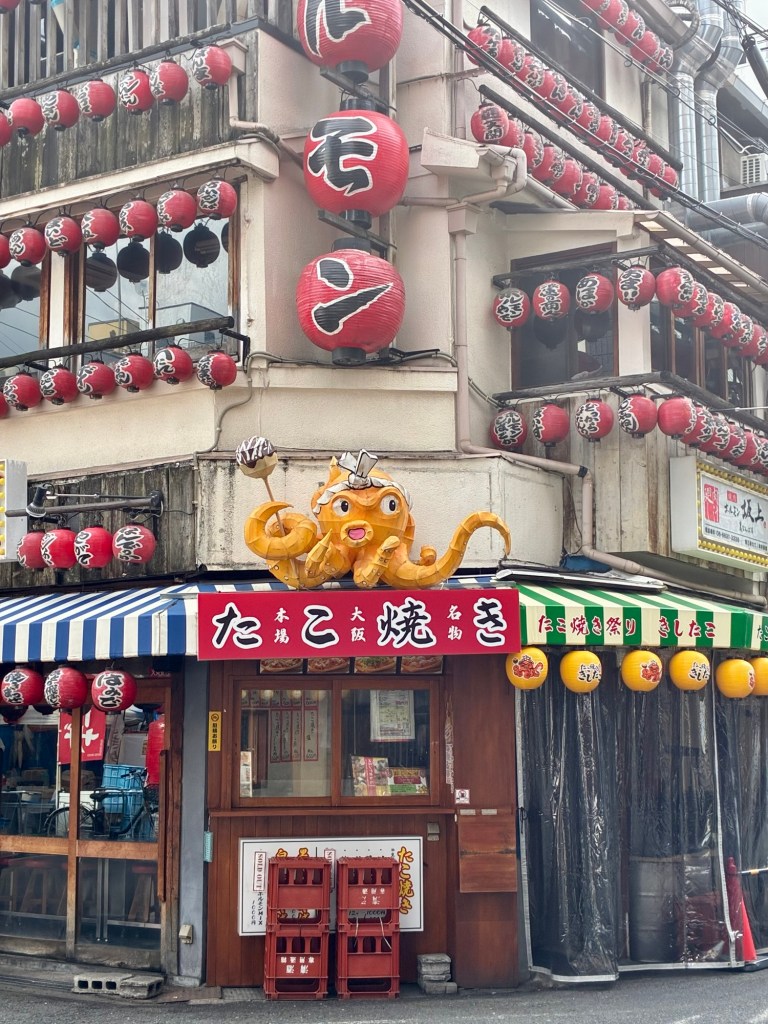
Our next destination was Koyasan. The train journey is via Osaka where we walked down Doutonbori street which is a a smorgasbord of neon and noise with a carnival atmosphere. I noticed at the train station locals were much more interested in engaging with us than in Kyoto, likely an indication that tourism is not overwhelming the city.
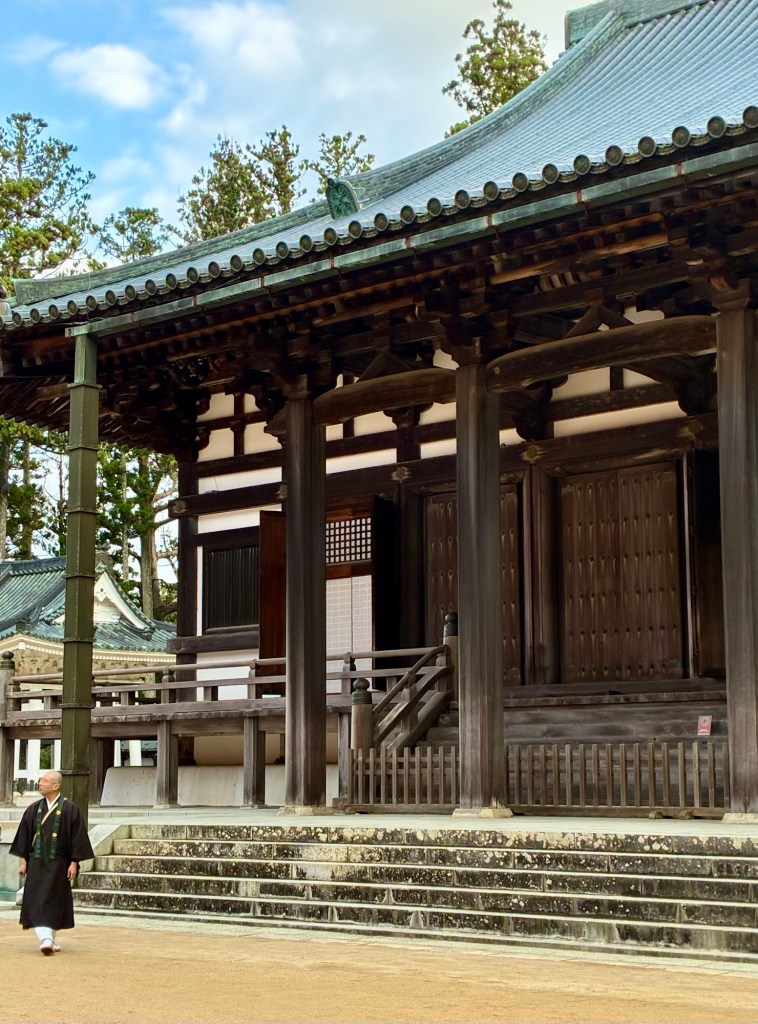
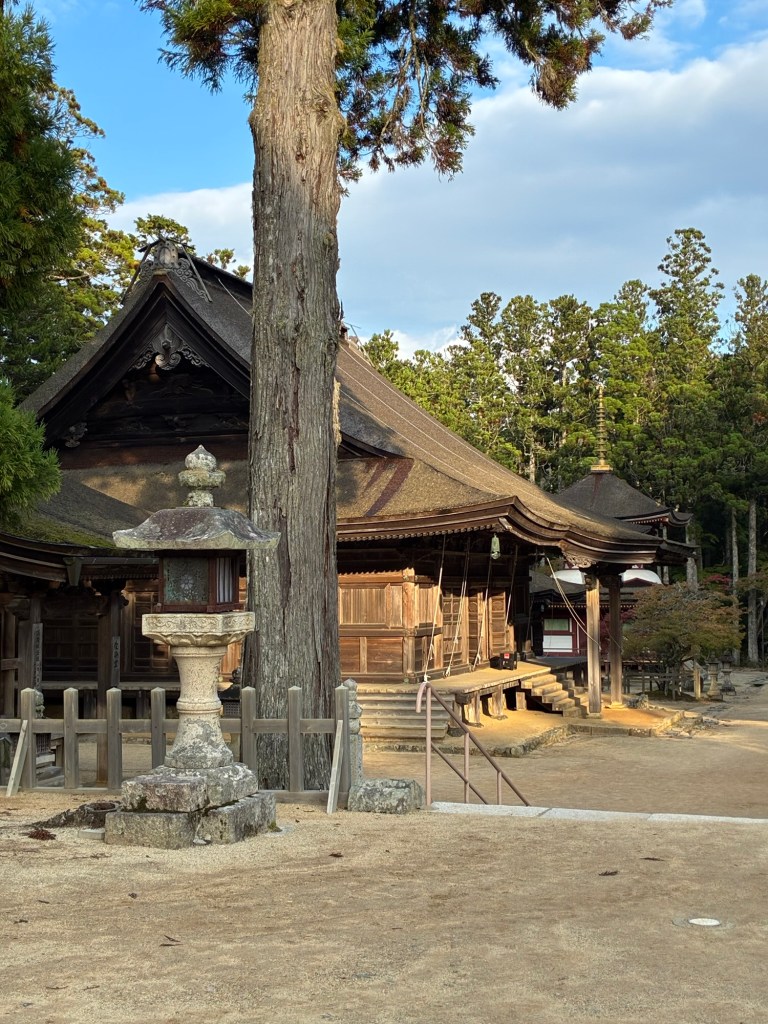
From Osaka we caught a train, a cable car and a bus for a slow ride into the mountains and the centre of Shingon Buddhism, first introduced to Japan in 805 by Kobo Daishi. The Koyasan area has a number of World Heritage Sites including the Garan temple complex.
I felt my nervous system relax immediately after the amusement park like atmosphere of Osaka. Koyasan is a very beautiful mountainous area with pilgrimage walks, monks singing in the early morning and not too many tourists. We stayed at the Saizen-in temple lodgings which was well located and comfortable and provided tasty vegetarian meals.
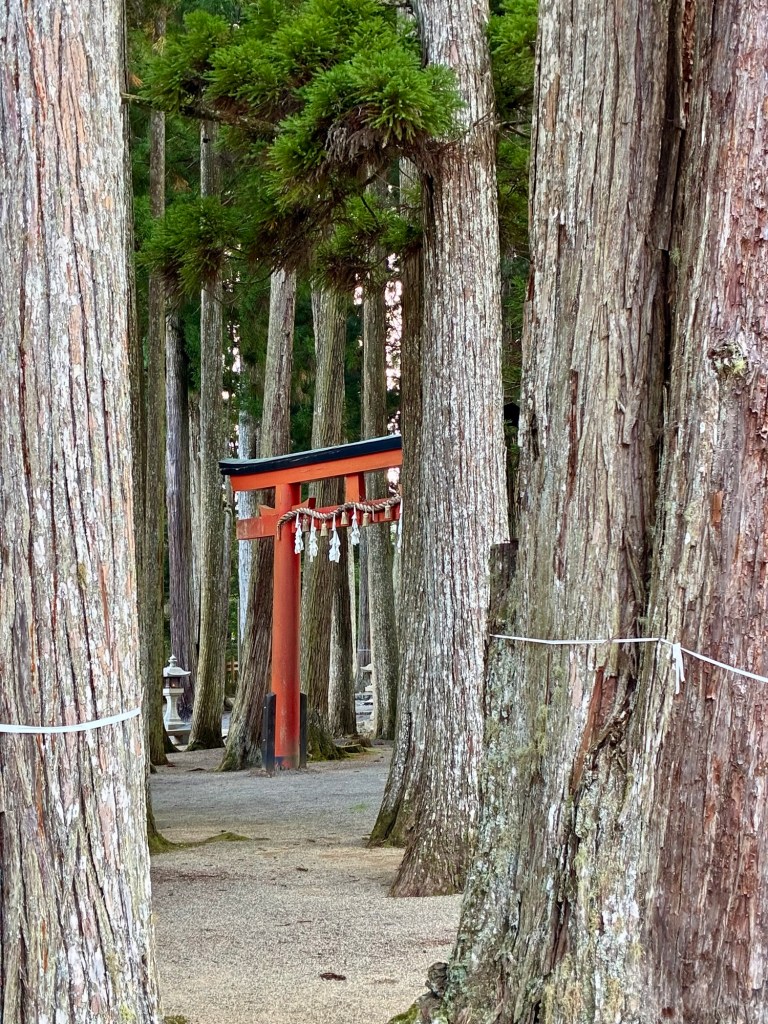
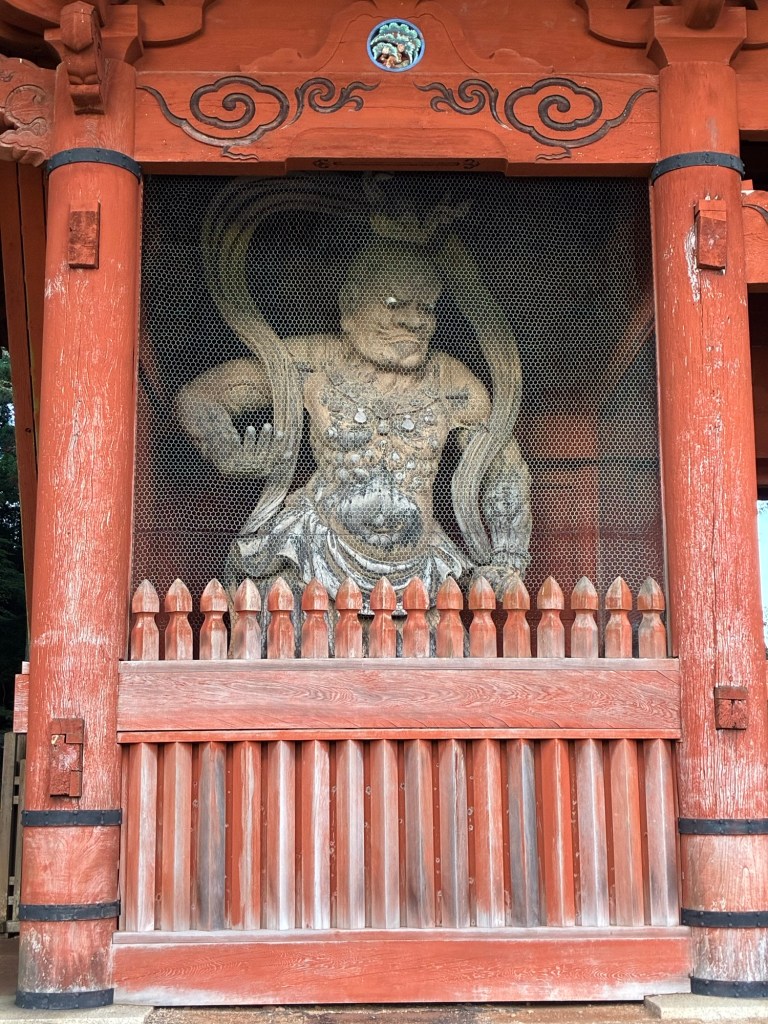
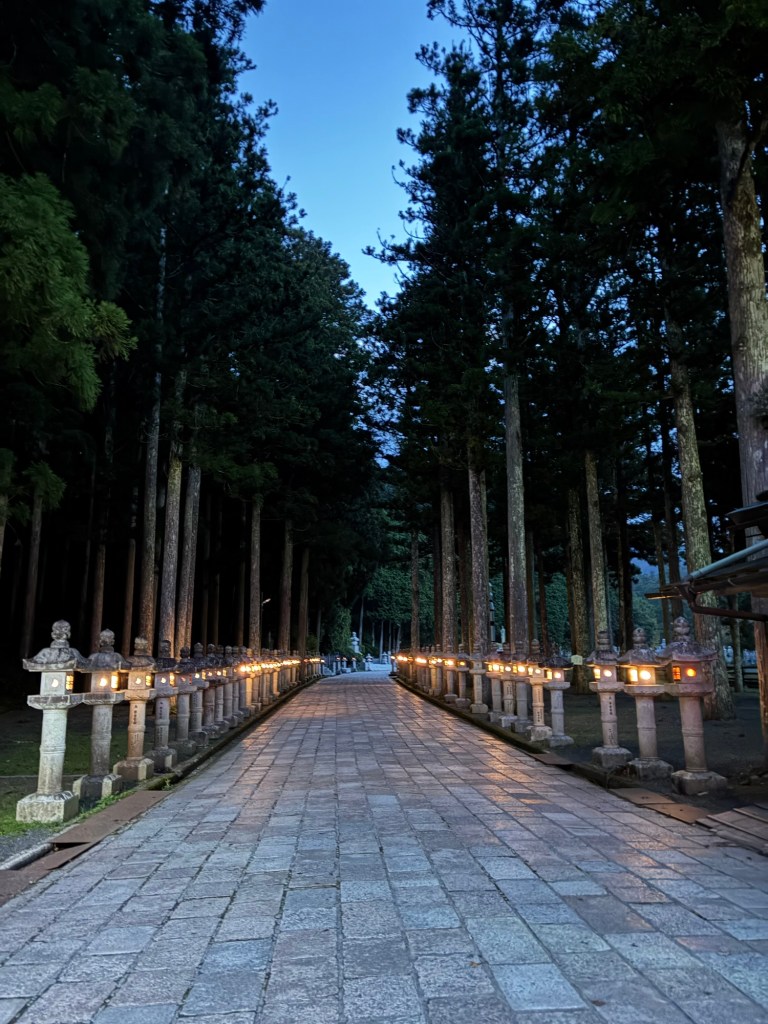
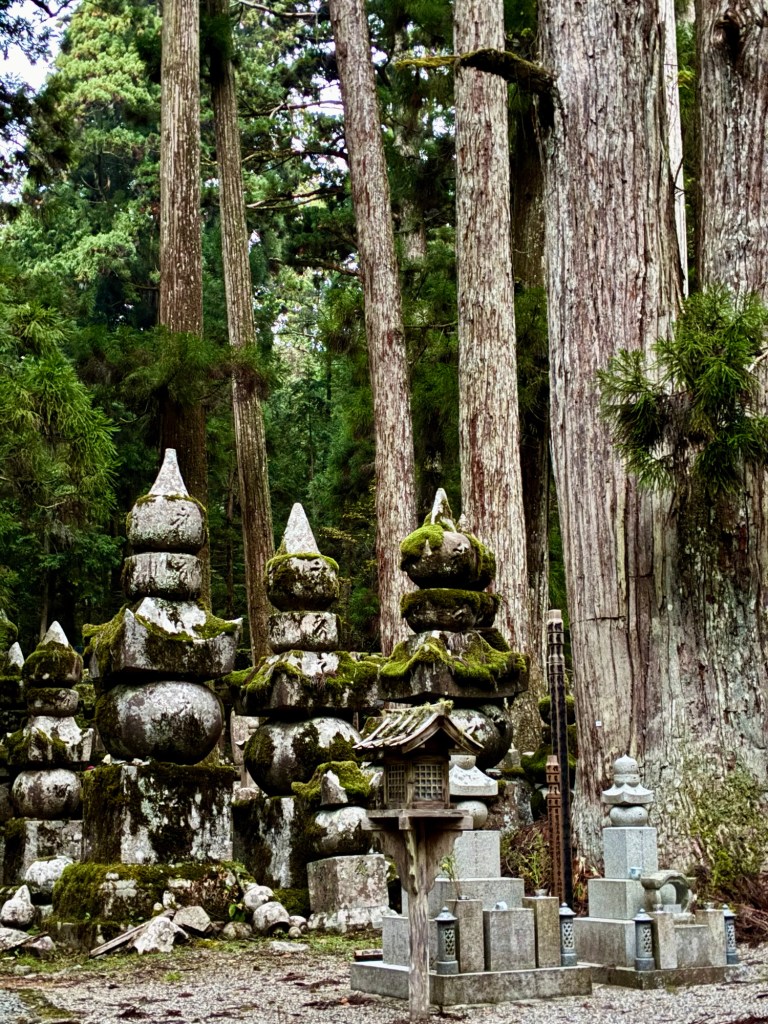
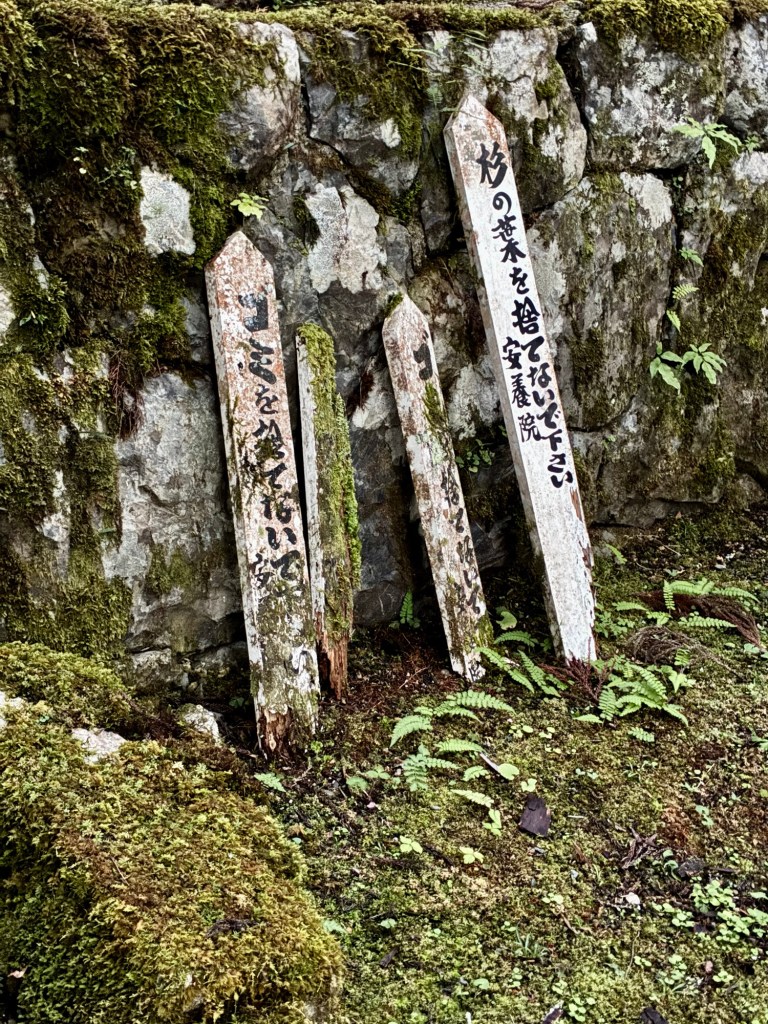
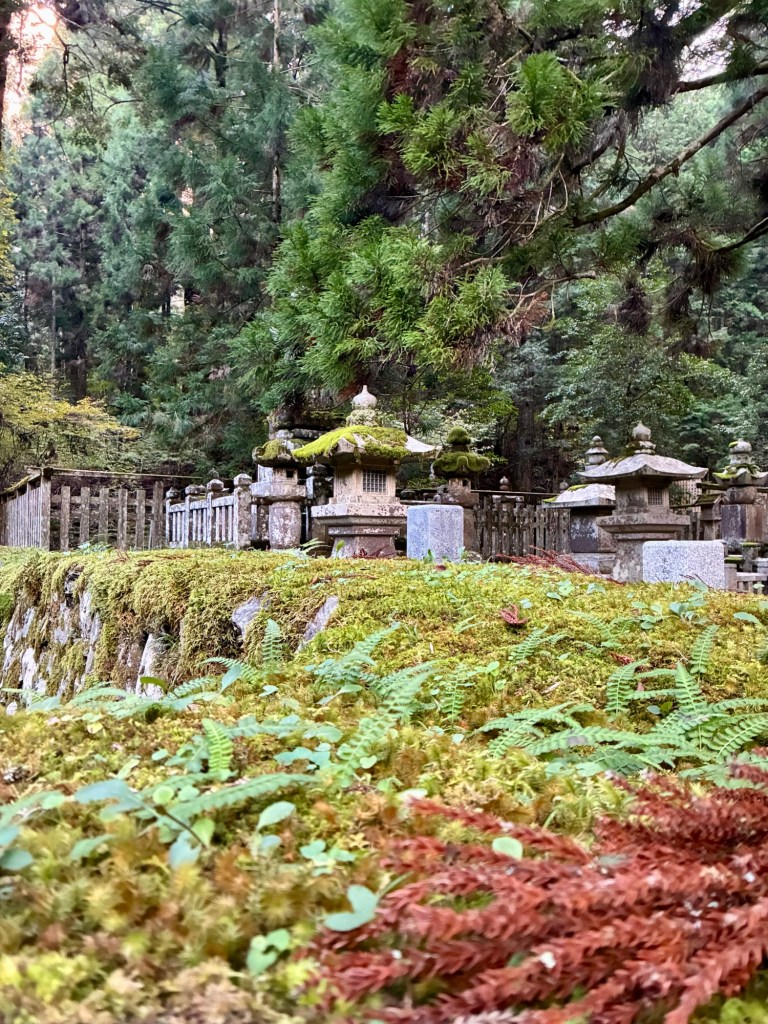
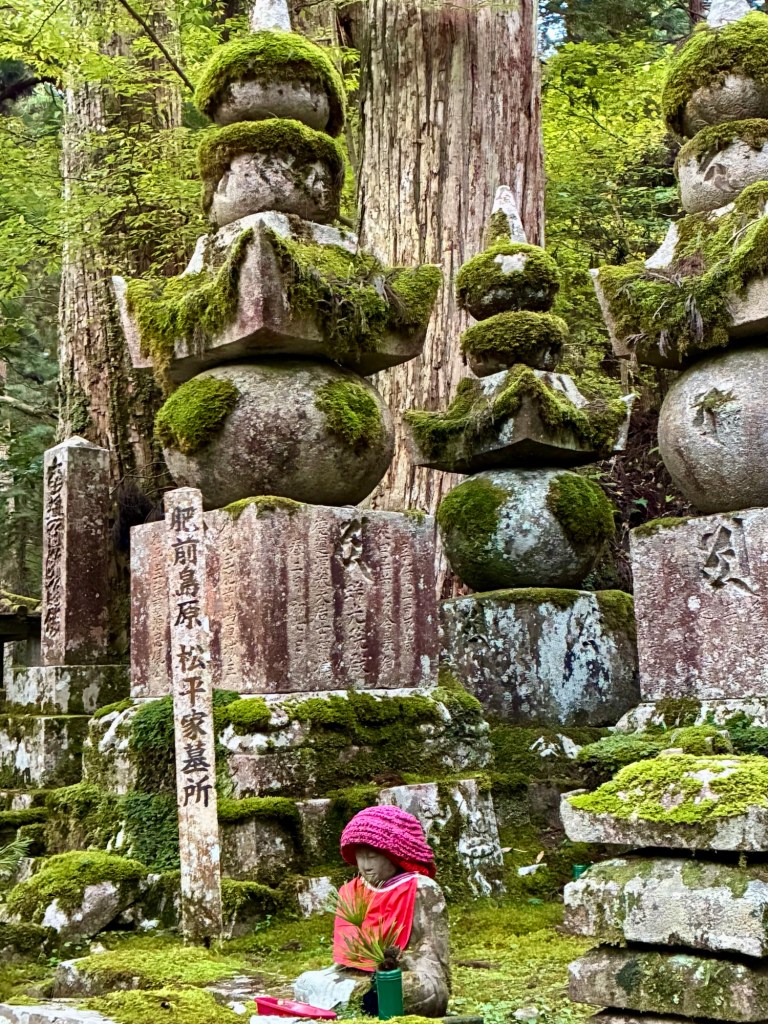
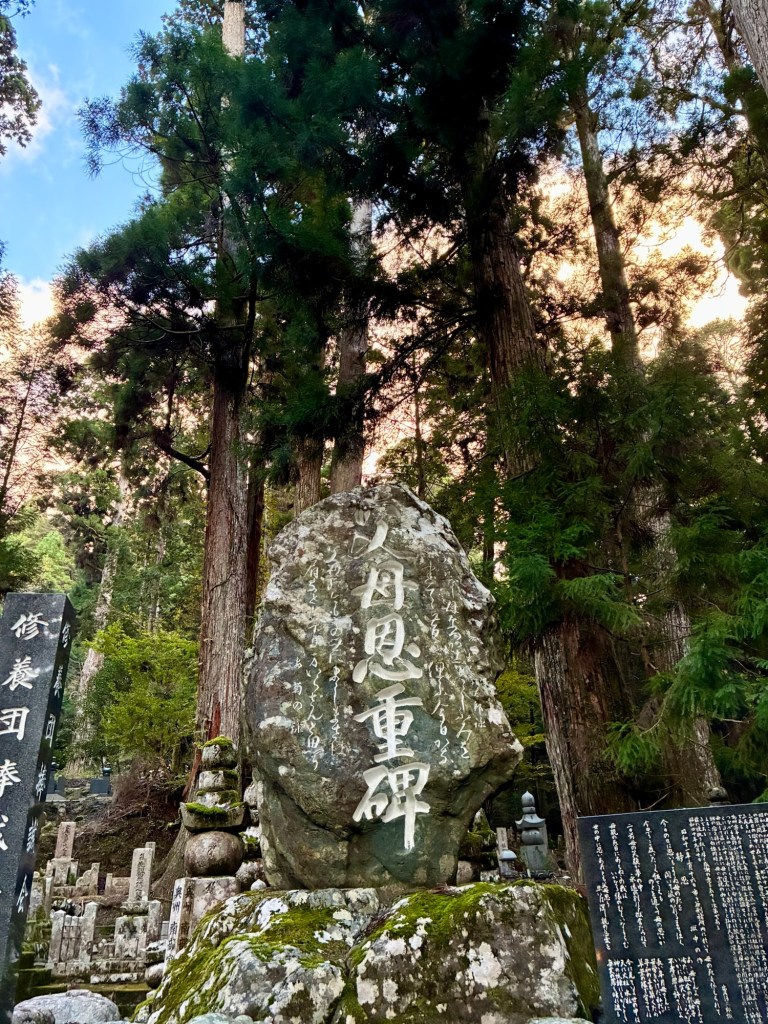
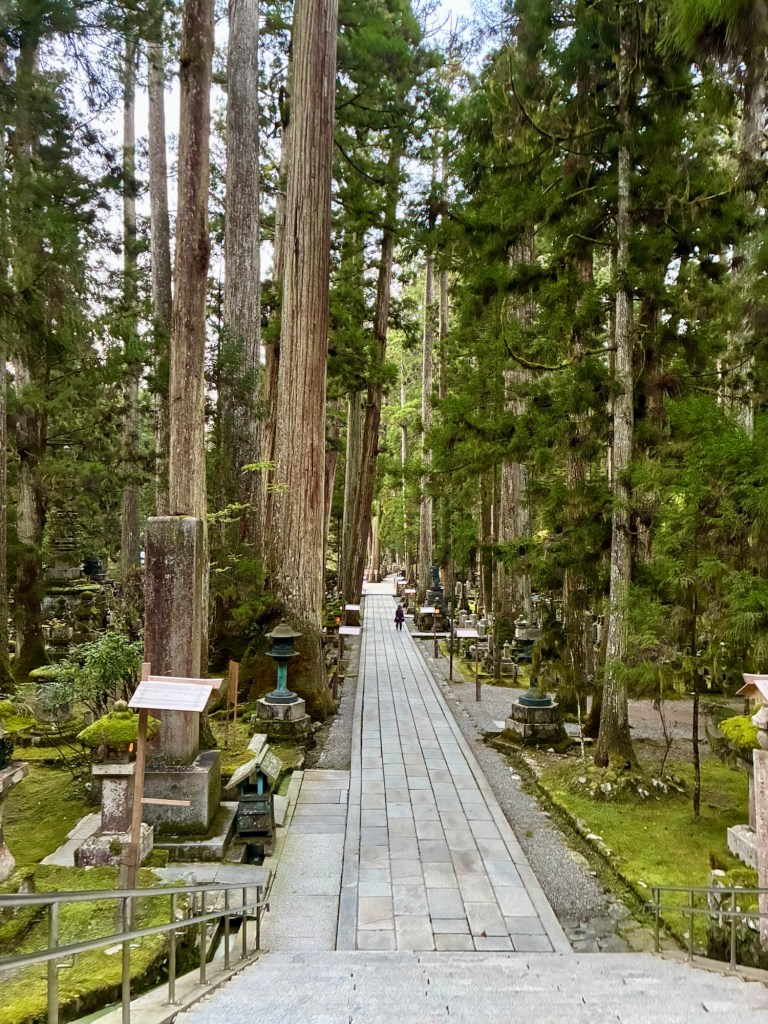
Koyasan is also home to Okunoin Cemetery established in 835 in a beautiful conifer forest. It’s worth getting up very early and arriving at the cemetary at first light when it has a special atmosphere.
I could easily have stayed in Koyasan for longer and would like to go back there one day, perhaps for a retreat and to do some of the pilgrimage walks.
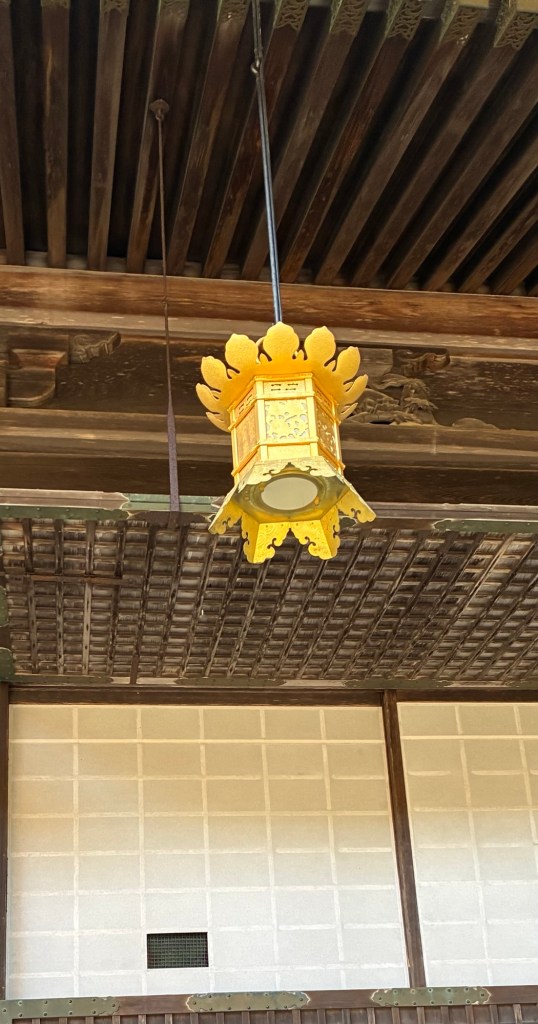
Doutonbori streetDoutonbori streetDoutonbori streetCable car to KoyasanGaran temple complexGaran temple complexGaran temple complexGaran temple complexGaran temple complexGaran temple complexGaran temple complexGreat Daimon GateSunset near Great Daimon GateGreat Daimon GateOkunoin CemeteryOkunoin CemeteryOkunoin CemeteryOkunoin CemeteryOkunoin CemeteryOkunoin CemeteryOkunoin CemeteryOkunoin Cemetery
HIROSHIMA
From Koyasan we transited to Hiroshima. Of the major cities we have visited, Hiroshima had the most relaxed feel and was not overrun by tourists in the way Kyoto is. You can smell the sea and there are multiple big rivers running through the city which is easy to get around on foot or via the tram, train or bus if you have a Suica card.
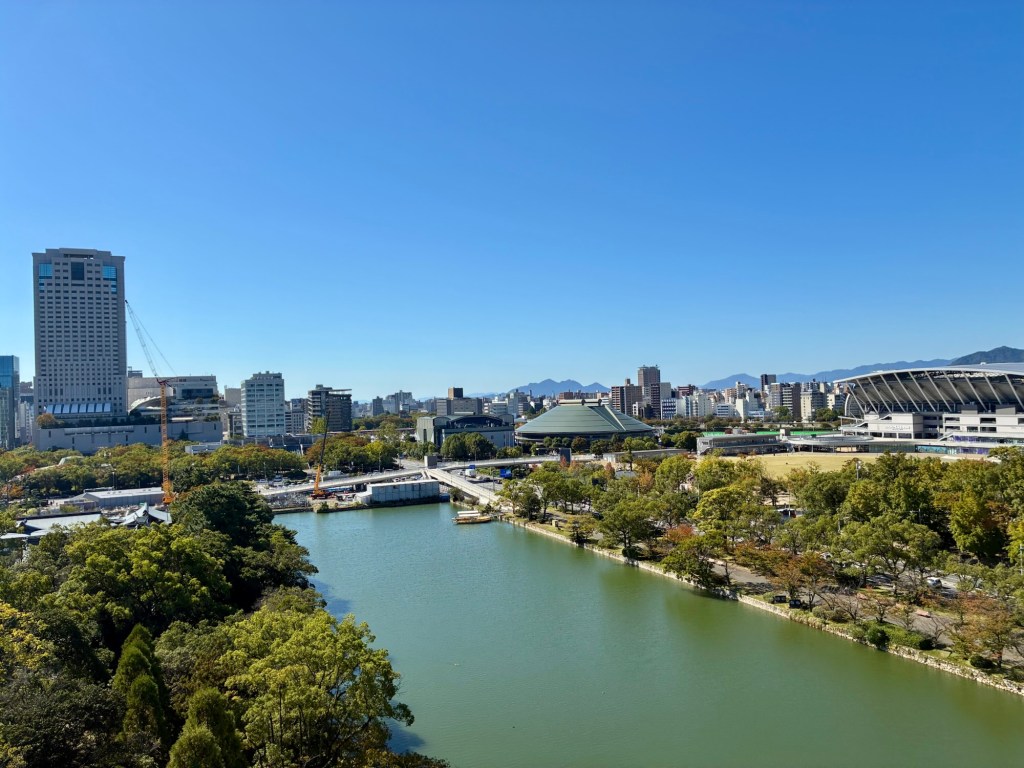
We visited the castle (reconstructed after the 1945 atomic bomb) which is five stories high and surrounded by a moat. The castle contains a museum about the history of the castle and the and has panoramic views of Hiroshima from the top. Walking through the grounds containing ruins provided the first sense of the 1945 atomic bomb destruction. There is a tree in the grounds that survived the nuclear bomb – a eucalyptus melliodora – mind blowing when you consider the destruction caused by that event.
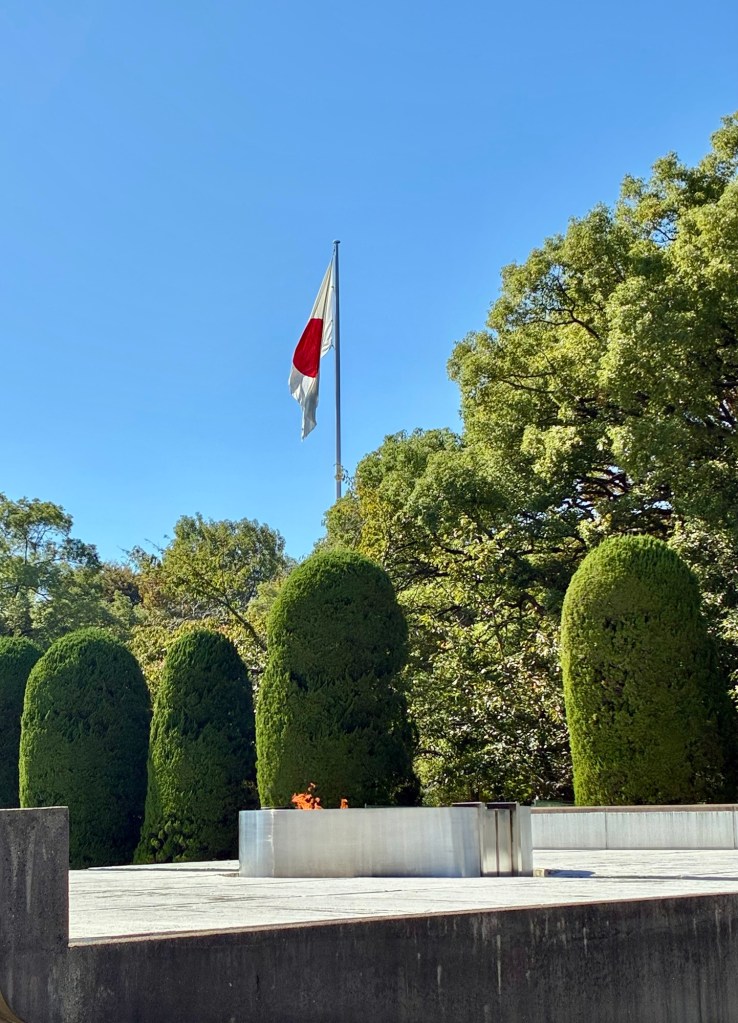
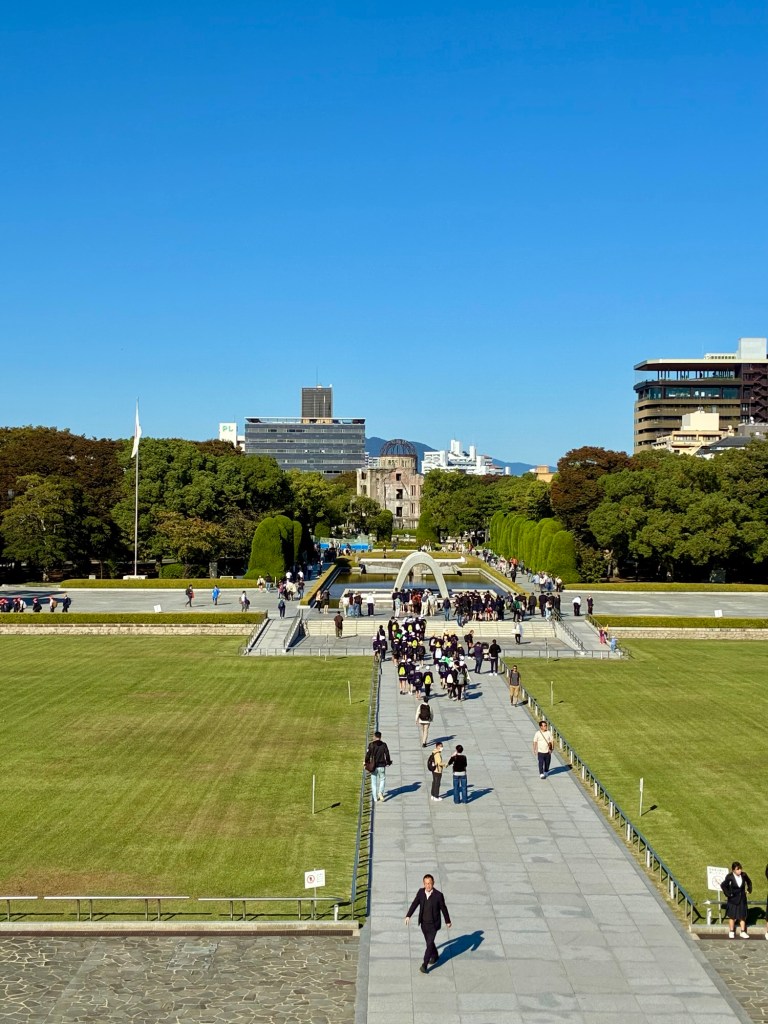
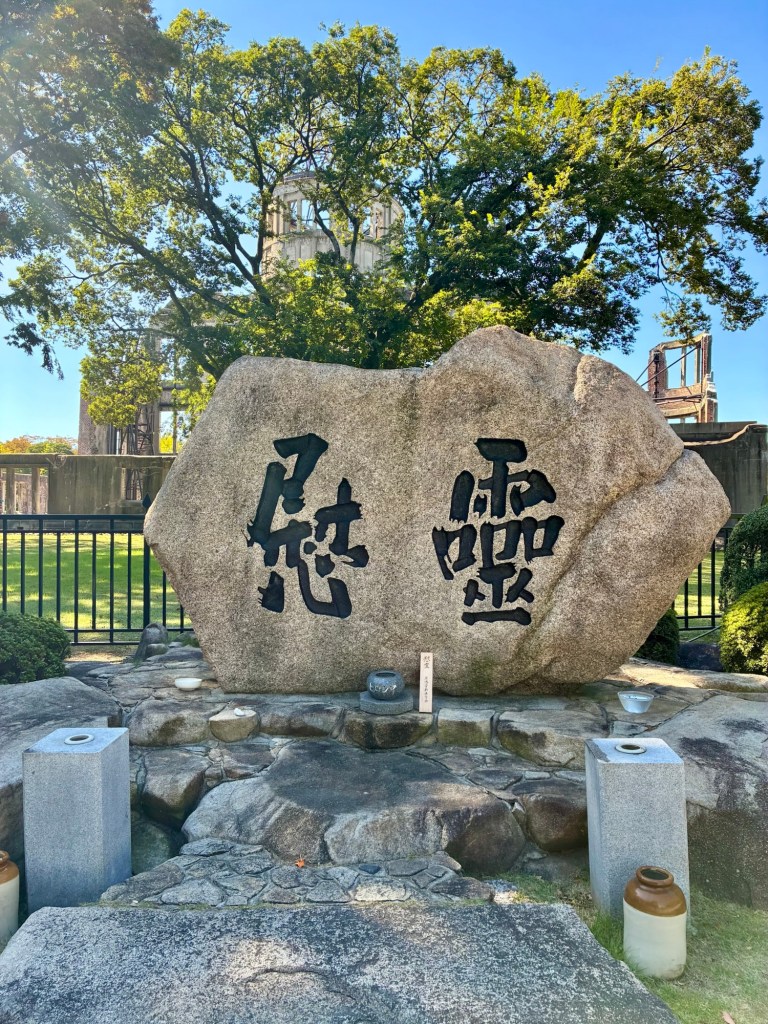
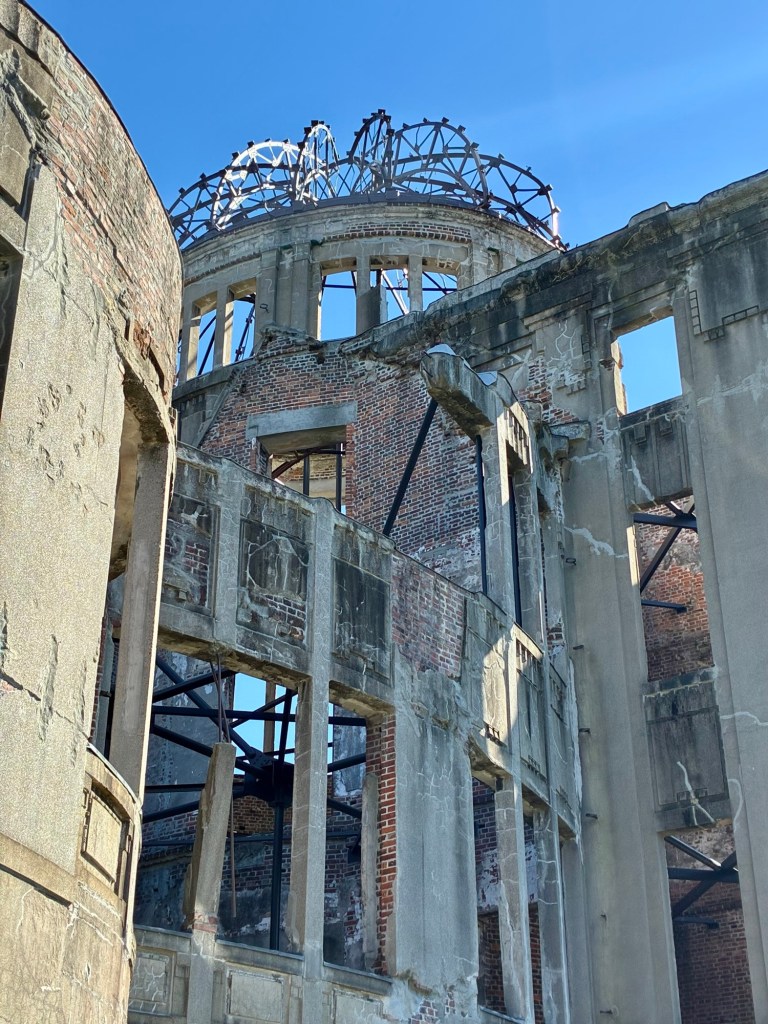
Within walking distance from the castle are the A-Bomb Dome (a building destroyed but left standing as a peace memorial), the Peace Memorial Park, and the Peace Museum. The remembrances to victims of the nuclear bomb dropped by the USA on 6 August 1945 were very moving and made even more so by the large number of school children visiting the sites. Groups of children sang to the Children’s Peace monument and surrounded us as we walked through the museum. To collect our thoughts and reflect on the Peace Museum we sought out the Social Book Cafe Hummingbird, a cafe established for people to gather, connect and discuss social issues. They serve nice herbal teas and sweets and are very welcoming and friendly.
CastleCastle viewPeace ParkPeace parkPeace parkA-Bomb DomeA-Bomb Dome
SANDANKYO
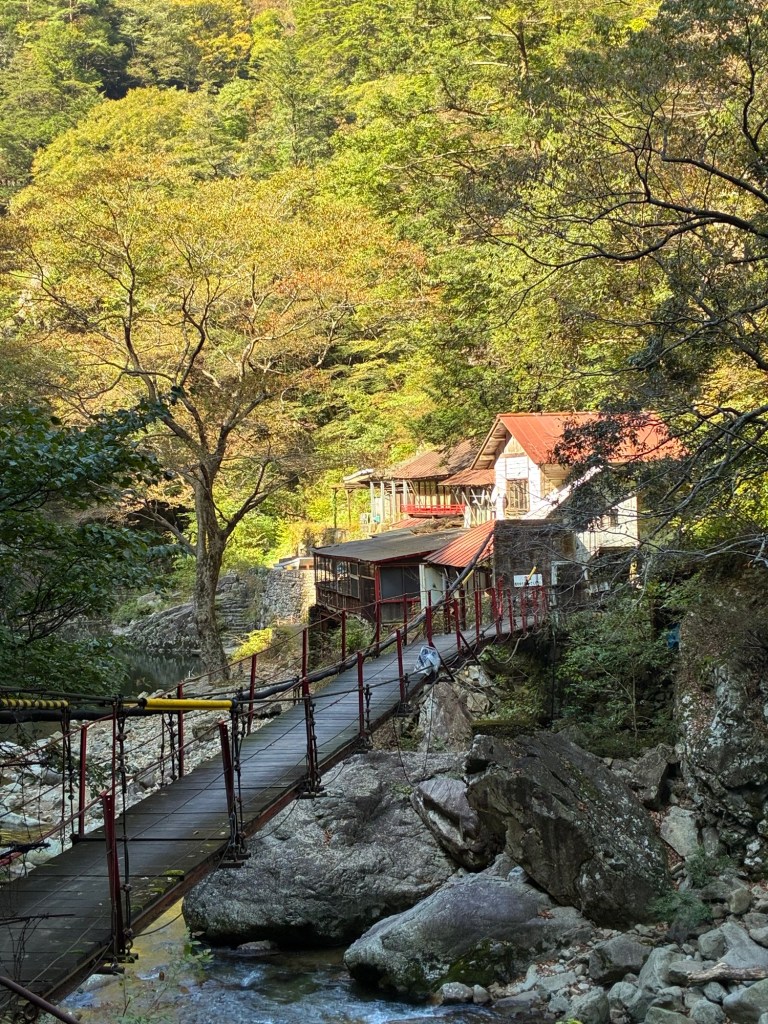
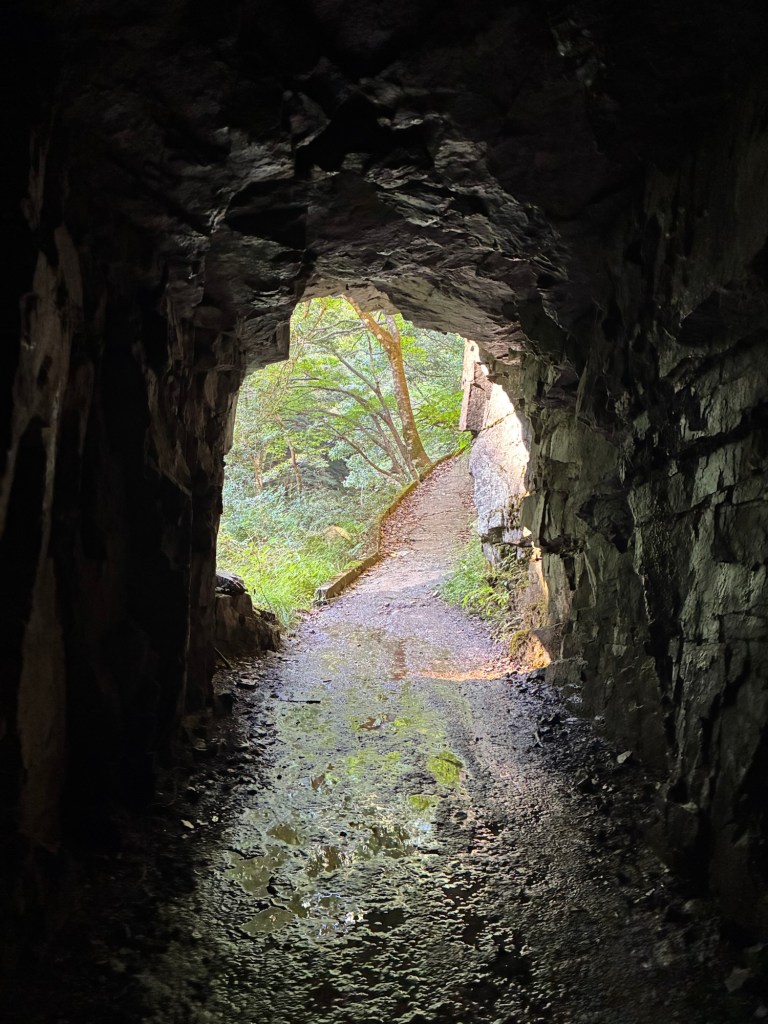
About an hour by bus from Hiroshima is Sandankyo. The town is small and has a very remote feel (think north west Tasmania), and is the gateway to Sandankyo Gorge. The gorge runs 16 kilometers along the Shibaki River through thick cedar forests, jade coloured pools, steep moss covered cliffs and waterfalls, and is part of the Nishi-Chugoku Sanchi Quasi-National Park. A walking track hugs the gorge and we followed it about 8.5 km to Sandandaki Falls, a three tiered, 130m waterfall. We had perfect weather conditions for walking and finished the day with tired legs but full bellies after a beautiful meal proved by a couple of the local ladies at the Kawamoto Ryokan where we stayed. It was convenient, basic and comfortable.
Tip: if you go to Sandankyo make sure you check the bus routes and timetables as they can change and it’s not a place you want to get stuck without a place to stay.
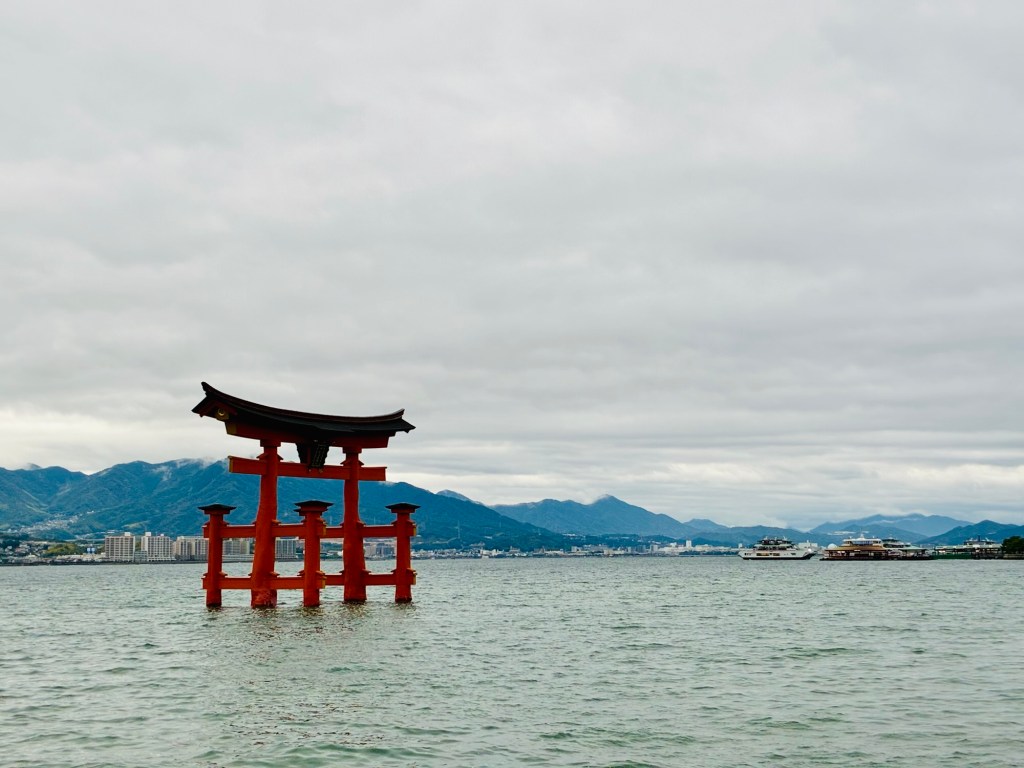
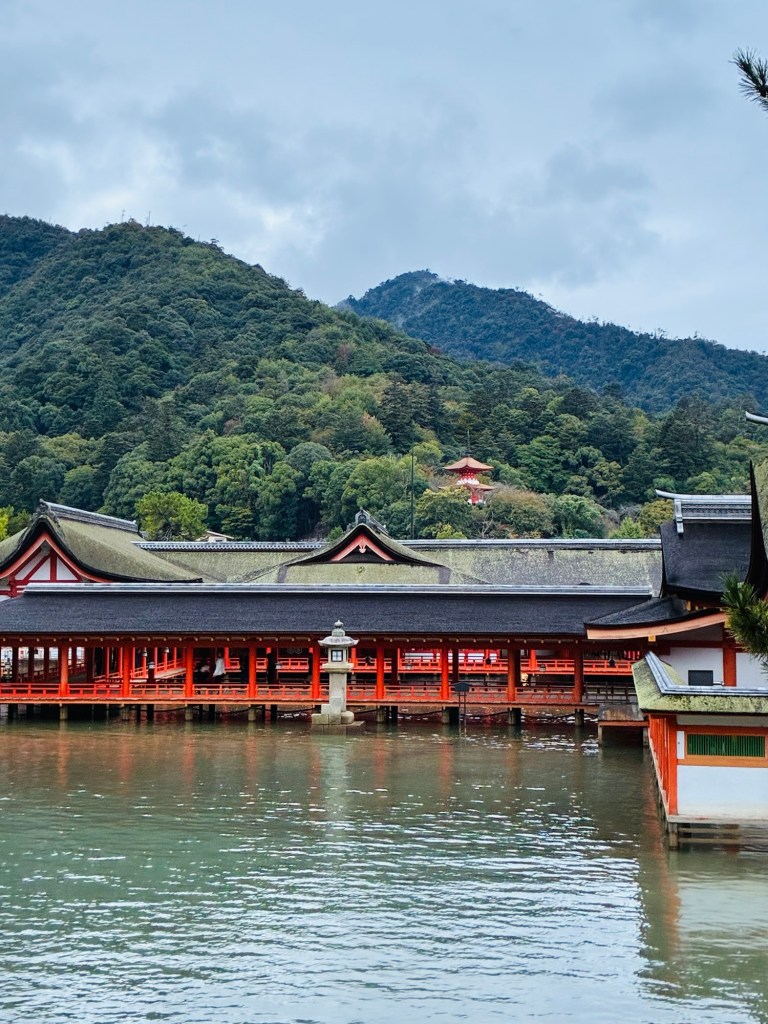
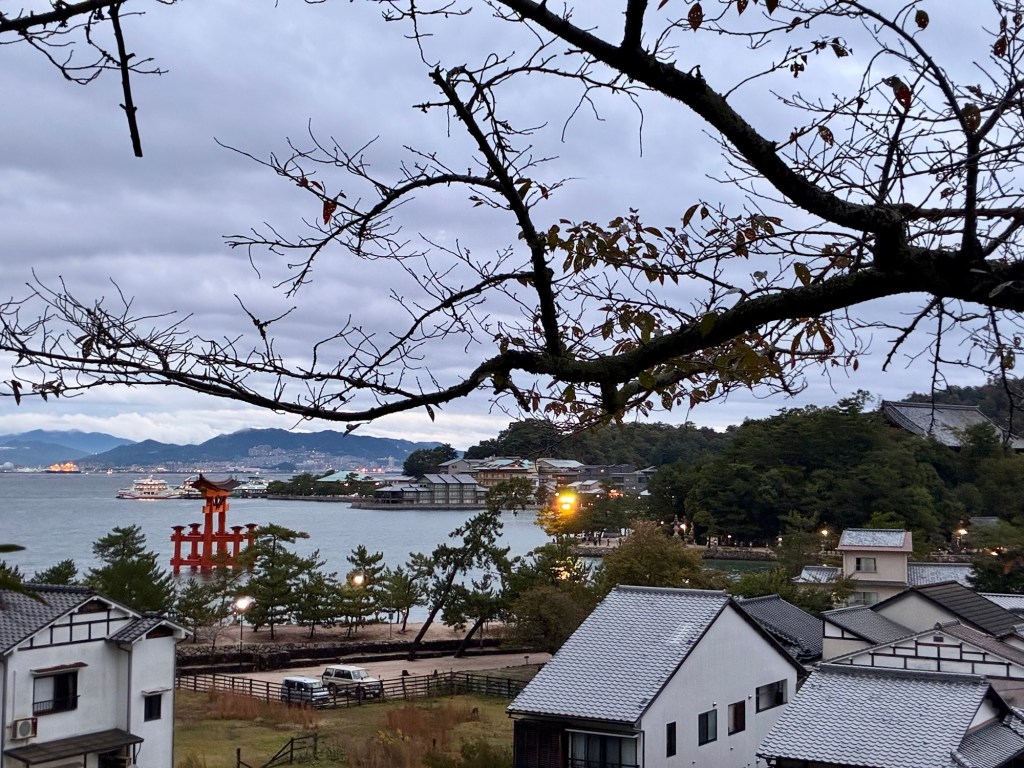
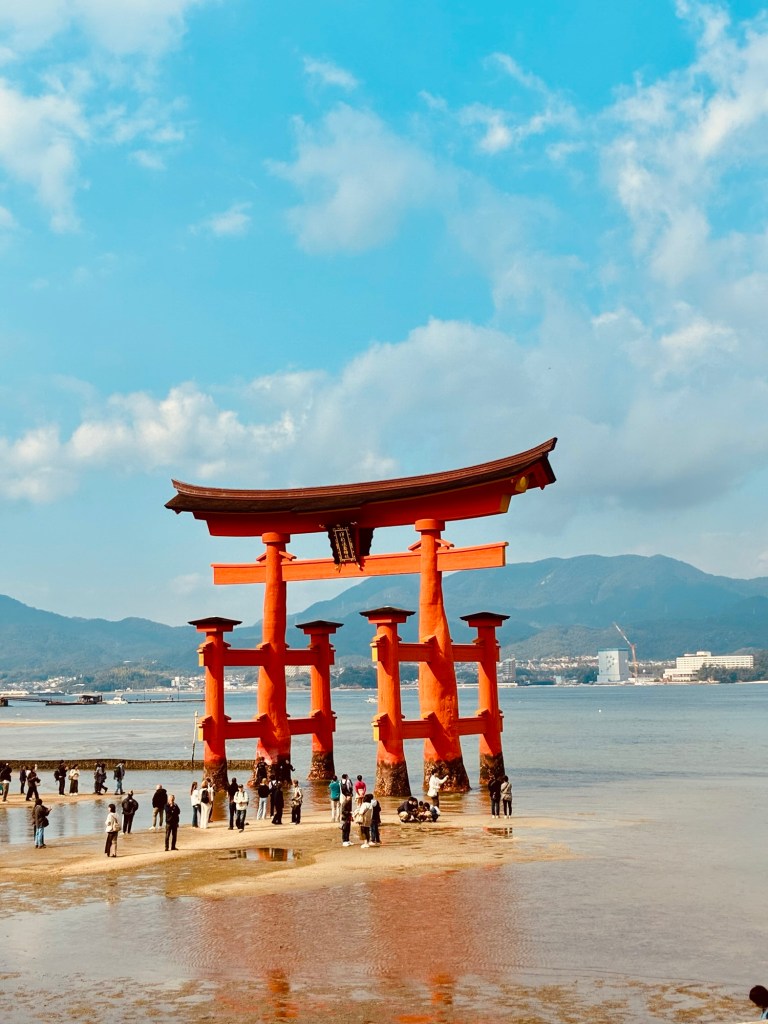
We woke up to rain at Sandankyo and hopped on a bus – train – ferry to Miyajima (Itsukushima). Miyajima is a popular tourist island not far from Hiroshima with the well known Itsukushima Shrine built over the water with a massive orange torii gate in front. It is said that the Shrine was built on the coast because the entire island is a deity to revere. Historically it was taboo to die or give birth on the island and there are still no cemeteries or hospitals as it is believed they would damage the islands purity.
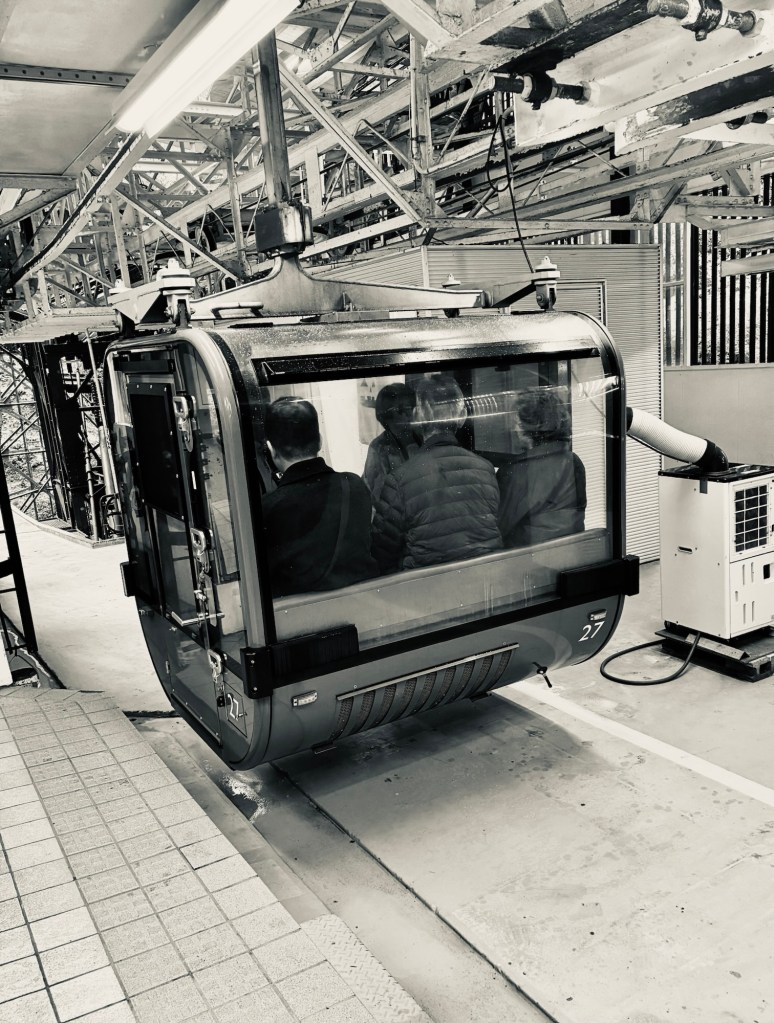
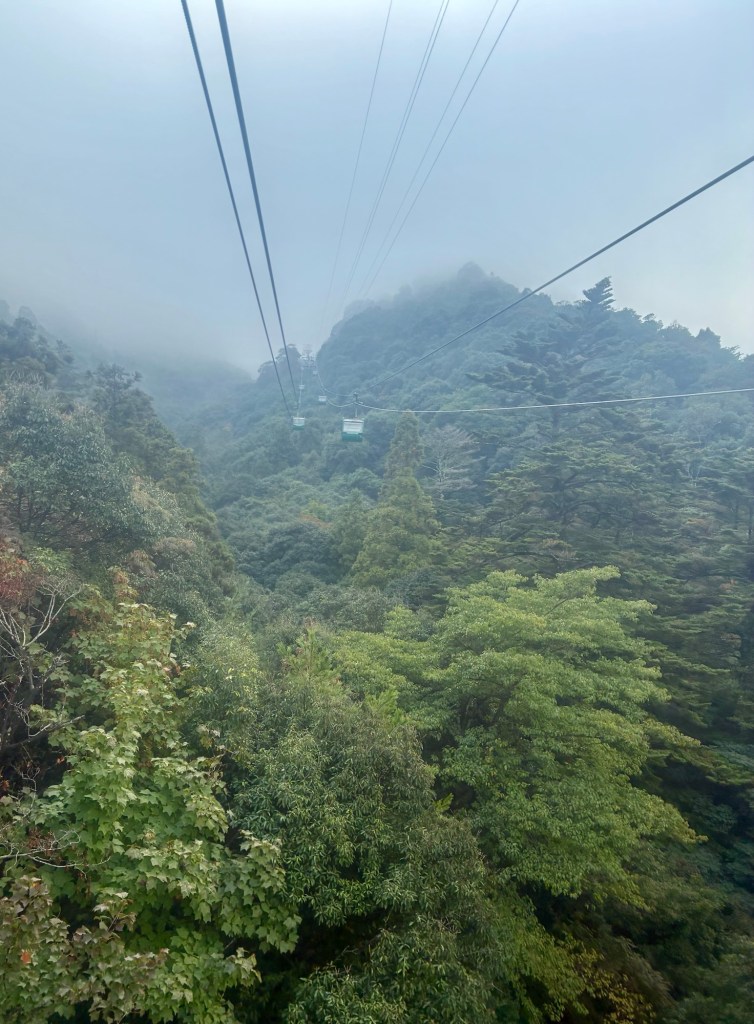
Walking the streets alongside the wild deer after most of the tourists have left is beautiful and it’s worth staying the night to avoid the crowds. In the morning we took the ropeway cable car to the top of Mount Misen which has a fantastic view, though there was low cloud when we went so we couldn’t see much, the ropeway is a great experience in itself though. We stayed at Mizuha-so near the aquarium, which I would happily recommend.
Tip: Miyajima gets loads of tourist traffic. The best times to be there are late afternoon and early morning, so if you’re thinking of going it’s worth staying overnight to dodge the worst of the crowds.
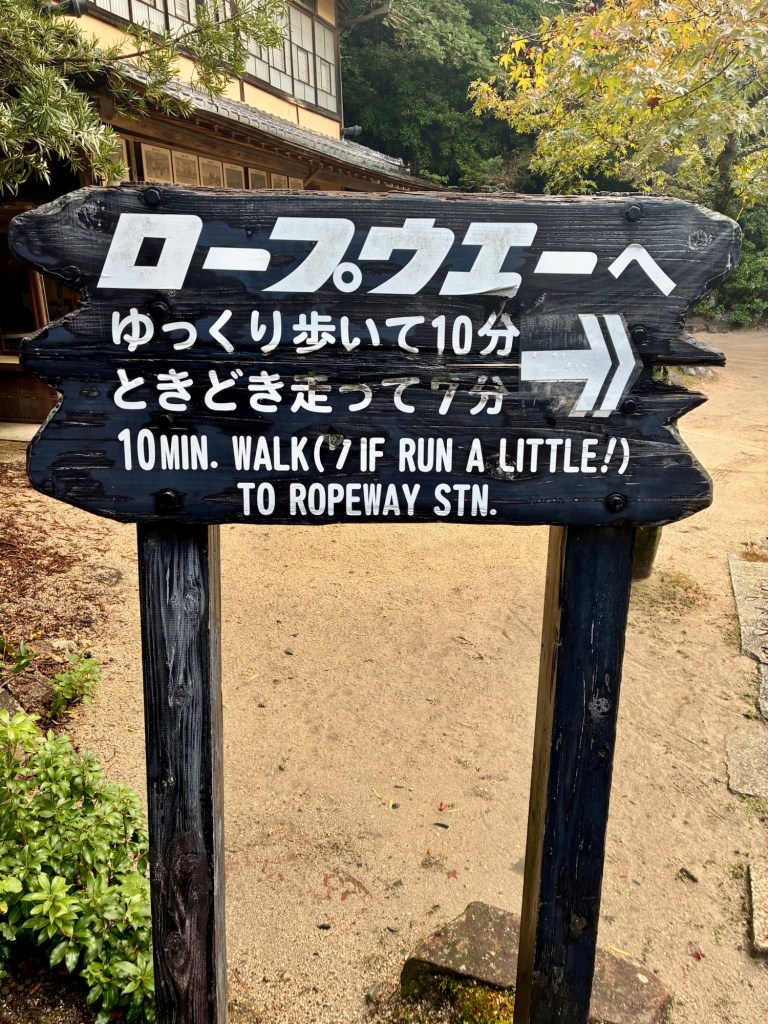
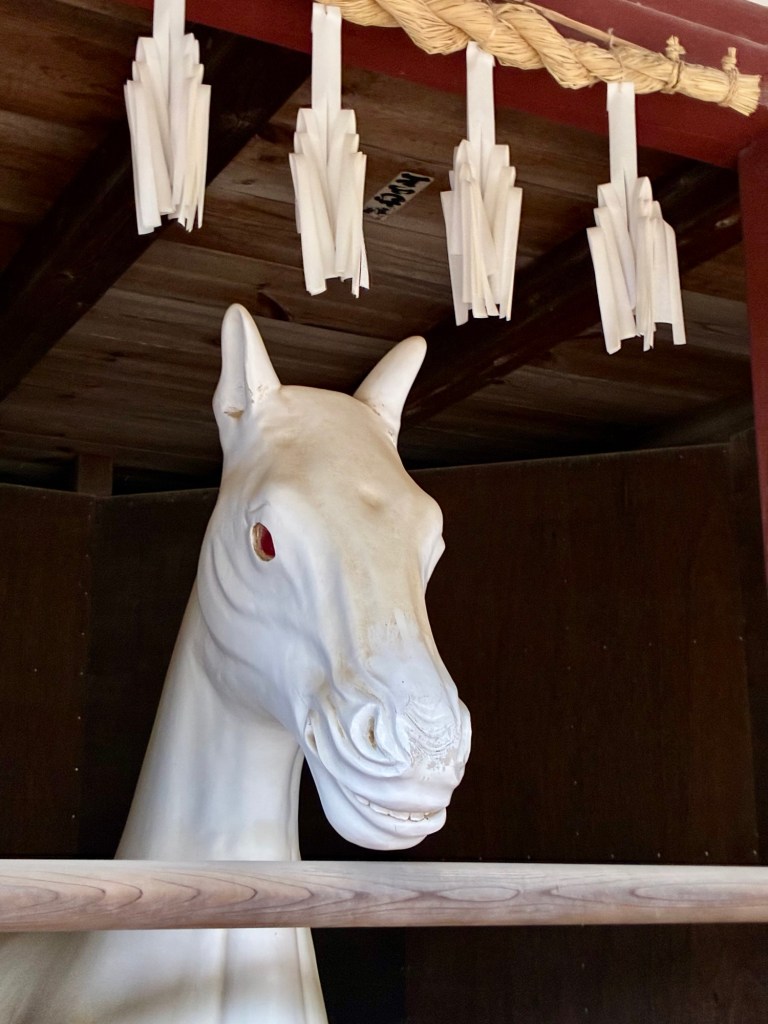
Ferry to MiyajimaTorii gateItsukushima ShrineDeer and templeMiyajimaDeerWalk or run to the ropewayRopewayRopewayRopeway viewRopeway viewSacred horseTorii gate








































 R L Smith