Fringe review: De-Tours of Melbourne

I love going on walking tours when I travel – It’s such a great way to really see a city, discover its nooks and crannies, learn about its culture, and get the lay of the land.

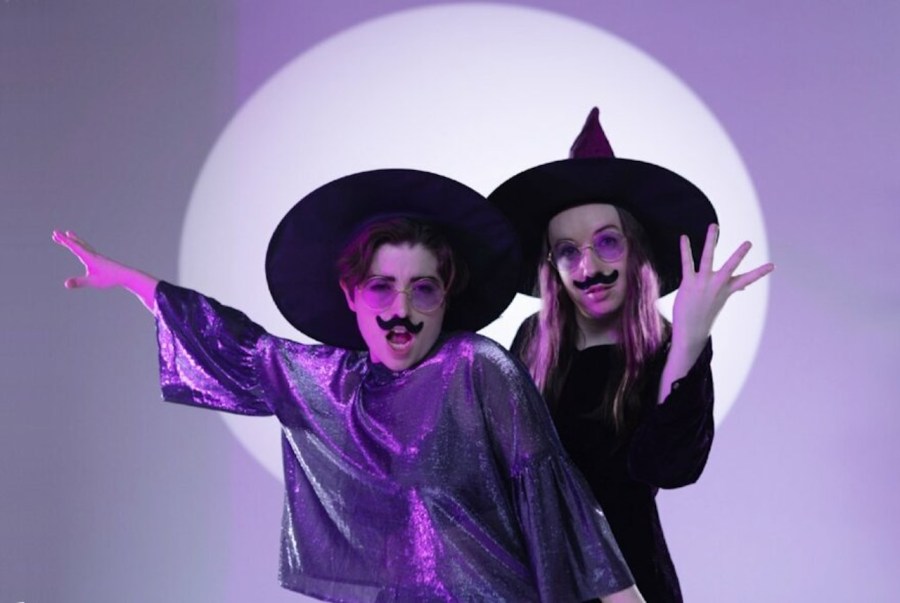
De-Tours of Melbourne, part of Melbourne Fringe, turns this idea on its head. Imagine trailing Seraphine (comedian Jenna Schroder), a French detective brandishing a baguette and marching around the CBD trying to solve the mystery of who controls the city. And she was pretty impressive – saved the Amazon rain forest with only one anaconda apparently.

You’ll debate what’s going on behind some of Melbourne’s secret walls, strut down hidden alleyways, visit some of the CBD’s oldest buildings and boutique businesses, pick locks and find out what your comrades favourite TV shows are.

De-Tours of Melbourne is a wacky romp through the laneways and history of the city we love – exercise, fresh air and a good belly laugh. There’s a big dose of clever improvisation in this ‘show’ and it’s just plain old fashioned fun. Plus you’ll get your 10,000 steps in.

So go on, shake off a day at the office by choosing your own adventure and seeing our city through different eyes. I did the mystery tour, but you can also go on a rom-com or spooky stories adventure – and there’s a discount for your second and third outings! But you have to go on your first trip to find out how that works.

De-Tours of Melbourne runs till Saturday 21st October. Tickets at Melbourne Fringe.

Theatre review: Night Sweat

Over our lifetime we spend about six years in a night time dream state, but we rarely pay it much attention. As Foucault said, ‘every act of imagination points implicitly to the dream’, so it is little wonder that the sleep state is a fascination to artists. And sleepwalking takes the night time subconscious meanderings to a whole different level – remember Lady Macbeth exposing her murderous intentions while walking the castle in her sleep?

Night Sweat, on as part of Melbourne Fringe, is a playful, hypnotic exploration of night wanderings, boundaries and states of transition. A perfect place to abandon control and be taken on a journey.

The audience enters an intimate space and takes their seats around a figure clad in a boiler suit, face down asleep on the floor. The experience of entering the performance space is itself like entering a dream state. The stage technician and musical director (Kyle Muir) is leading an audience meditation and as people take their chairs, they close their eyes and slip into his rhythm.

Michelle McCowage’s performance blends physical theatre, poetry, song and humour, and has the distinct feel of improvisation. It is a little discombobulating in the way that waking in the middle of the night mid dream or somewhere other than your bed can be.

Moments of seriousness are interrupted by comedic delivery so you cannot remain in one state for too long. We meet various characters from the performers subconscious including an angel, a child, a fuck boy and Hugo Weaving playing explorer Ernest Henry Shackleton on an Antarctic expedition. On occasion the stage technician steps forward and becomes part of the performance just to throw the audience of kilter a little more.

Night Sweat is written and performed by Michelle McCowage and produced by Liv Bell. Michelle is an exceptional, engaging and versatile performer who keeps the audience captivated for the duration. Original music by Kyle Muir accompanies the performance.

Night Sweat is on at Trades Hall, which has a great little Bar, the Loading Dock, if you feel like a spot to chat before or after the show. The show runs till 8th October so grab a ticket and go along for an evening of suspended reality. You will not be disappointed.

Photographs by Ainsley Halbmeijer

Book review: The Paris Apartment by Lucy Foley

The Paris Apartment is a slow burn psychological thriller by Lucy Foley told from multiple points of view. The novel is set (you guessed it) in Paris while riots are breaking out in the city.

It’s not about where you came from. What kind of shit might have happened to you in the past. It’s about who you are. What you do with the opportunities life presents to you.

Jess leaves London after an altercation with her boss and goes to stay with her brother in his Paris apartment. When she gets there brother Ben is no where to be found. At first she thinks he’s just gone away briefly, but then she finds blood on his cats fur, a bleach stain on the floor near the front door, his necklace that he never took off, and his motorbike with shredded tyres in the basement.

You know, I read somewhere that sixty percent of us can’t go more than ten minutes without lying. Little slippages: to make ourselves sound better, more attractive, to others. White lies to avoid causing offence. So it’s not like I’ve done anything out of the ordinary. It’s only human.

The cast of characters that live in the apartment block include an old friend of her brothers, a Parisienne socialite, a troubled teenager, an angry alcoholic and a concierge who sees all but says little. The building itself also develops a creepy character of its own as the story progresses. Jess soon discovers that the disperate residents and the apartment block itself are not what they first seemed.

It’s a beautiful building, but there’s something rotten at its heart. Now he’s discovered it he can smell the stench of it everywhere.

The Paris Apartment is an easy read with interesting character development and some unexpected twists. Themes include class, wealth, corruption, betrayal, unrequited love and inner demons.

Book review: The Cutting Room by Louise Welsh

If you like well crafted detective fiction with a bit of gruesome content, The Cutting Room, debut novel by Luise Welsh, could be for you.

Rilke works in a Glasgow auction house that sells the contents of deceased estates. Business is tight so he jumps at the chance to clear out Miss McKindless’s deceased brothers house, unperturbed by her need for haste and instruction that he alone must deal with the items in the attic and destroy them. The house has some good stuff that will sell well, he thinks.

John had said McKindless would be revealed through his library, but John was a bookseller; he formed his opinion of everyone through their books.

When Rilke ascends the stairs to the attic he finds a stash of rare pornographic books and old black and white photos in an envelope. The photos portray the sexual torture and murder of a young woman many years earlier in a room with French looking furniture. Rilke isn’t sure if the photos are real or staged, but is disturbed by the images and decides to turn detective.

We, the readers, are drawn into Rilke’s life as he cruises for men and hangs out with a caste of interesting and dubious characters – drug dealers, transvestites, shady book dealers, pornographers, bent cops, and his Merlot swilling boss Rose who colludes with him on a plan to skim off the profits of the sale.

People have died for love, they have lied and cheated and parted from those who loved them in turn. Love has slammed doors on fortunes, made bad man from heroes and heroes from libertines. Love has corrupted, cured, depraved and perverted. It is the remedy, the melody, the poison and the pain. The appetite, the antidote, the fever and the flavour. Love Kills. Love Cures. Love is a bloody menace. Oh, but it’s fun while it lasts.

Originally published in 2002, there are exquisite details and plenty of fascinating characters with dubious morals in The Cutting Room. It’s a grisly, creepy crime novel written with a literary flair.

Book review: Before the Coffee Gets Cold by Toshikazu Kawaguchi

Who hasn’t asked the question, what if I could go back and say something different, at some point in their life?

It takes courage to say what has to be said.

Before the Coffee Gets Cold is a gentle story about human frailty, relationships, loss, regret, empathy, containment and time travel. It is the debut novel of playwright Toshikazu Kawaguchi, and would make a great stage play. The story is set entirely in a quaint tiny basement cafe called Finiculi Funicula in a back alley in Tokyo that has been serving brewed coffee for over one hundred years.

But Kazu still goes on believing that, no matter what difficulties people face, they will always have the strength to overcome them. It just takes heart. And if the chair can change someone’s heart, it clearly has its purpose.

Customers who come to the cafe have something to say to a person in their life to whom they cannot speak – the boyfriend who left, the husband with Alzheimer’s, the sister who died, the daughter never met. Each chapter focuses on one person’s desire to revisit a different time to say what they failed to, in order to create a connection with a loved one after a missed opportunity.

The present hadn’t changed—but those two people had. Both Kohtake and Hirai returned to the present with a changed heart.

There are strict protocols in the cafe’s time travel offering, and nothing you say or do will change the present. You must sit, and stay seated, in a particular seat (occupied most of the time by a ghost you cannot force to move) and you must return to the present before the coffee gets cold or risk being trapped evermore as a ghost yourself.

Just remember. Drink the coffee before it goes cold.

Each character who visits the cafe to sit in the chair is troubled by a regret about what they failed to say to a loved one. The time travel offers them the opportunity to remedy their mistakes, hurts and losses and the sweet relief of closure.

If I return to the past, I might be able to set things right..

Before the Coffee Gets Cold is a gentle journey of sadness, second chances, facing reality, and relief through the vehicle of magical realism. The story is a quick and easy read, though I recommend listening to the audio book as I think this format suits it better.

Book review: Wifedom by Anna Funder

Who hasn’t read, or at least heard of George Orwell’s Animal Farm or Nineteen Eighty-Four? I still have images in my head of Old Major calling his friends together to overthrow the humans, and of Winston being tortured by the thought police. I can sense you all nodding, but do you know who Eileen O’Shaughnessy was? I didn’t.

Orwell’s work was essential in this task. It was a joy, even, revisiting his writing on the systems of tyranny ‘with theft as their aim’, and the ‘vast system of mental cheating’ that is doublethink. It was his insight… that allowed me to see how men can imagine themselves innocent in a system that benefits them, at others’ cost… But his insight into the rapacity of power… never extended to relations between the sexes. Orwell stayed blind to the position of women, though he’d been buying girls for a few rupees a time.

Eileen, Oxford graduate, the woman who gave up her own ambitions to enable Orwell’s work was almost erased from history, that is until Anna Funder discovered her and wrote Wifedom. Orwell biographers barely make a reference to Eileen. And while Orwell referred to his ‘wife’ on occasion in his writing (37 times to be precise according to Funder), it was never by name, and he never mentioned her feats of bravery or her contributions – perhaps because they might have outshone his own.

Eric had decided that he mustn’t let his work be interrupted & complained bitterly when we’d been married a week that he’s only done two good days’ work out of seven.

Eileen ran their farm and raised their adopted child so he could write, cared for him when wounded and sick, visited Orwell on the front, worked at the headquarters of the Independent Labour party in Barcelona during the war, protected him from arrest, and typed up and saved his manuscripts all whilst under the gaze of communist spies.

Eileen knows her life is riddled with spies but feels she can manage it.

Memoir, fiction and fact swirl through the pages of Wifedom, as Eileen is pieced together and rescued from patriarchal erasure by Funder through fragments of facts and six letters written by Eileen to her friend Norah Myles. I found Wifedom to be a compelling read and feel a need to revisit it already.

Theatre review: A Funny Thing Happened on the Way to the Forum

Even if you aren’t a big fan of musical comedy you will enjoy A Funny Thing Happened on the Way to the Forum. This farcical reimagining of Sondheim’s play set in Ancient Rome brings a modern twist to a classical story about mistaken identity. The show was inspired by playwright Plautus, and first performed on Broadway in 1962.

Packed full of slapstick satire and bawdy jokes, A Funny Thing Happened on the Way to the Forum is a breathe of fresh air delivered by theatre company Watch This. The all female-identifying caste are packed with talent, and Mel Hillman’s fast paced and upbeat direction delivers a flawless performance.

The House of Senex is occupied by a family and their slaves. When Senex and his wife go on a trip and leave their son Hero in the care of the house slaves, Hero’s personal slave, Pseudolus, makes a bargain with his young master. If he helps the Master win the heart of the girl next door, his Master will grant him freedom. There are two neighbouring houses. One belongs a buyer and seller of beautiful women, the other to an old man who spends his life coming and going in search of his children who were stolen by pirates as infants.

The object of Hero’s desire, Philia, has already been sold to a famous warrior called Miles, who is expected to arrive at any moment to claim her. Pseudolus needs to come up with a plan so that Philia and Hero can stay together and he can win his freedom.

The entire caste are exceptional, but there were a couple of standouts for me. Charmaine Gorman, is pitch perfect and energetic as Pseuolus, and Mel O’Brien, who has honed the facial expressions of the pouty virgin for sale, had me laughing before even opening her mouth.

I highly recommend A Funny Thing Happened on the Way to the Forum showing at the iconic Chapel off Chapel until 24th September.

Book review: After Story by Larissa Behrendt

In After Story by Larissa Behrendt, Jasmine, a city lawyer, takes her rural mother, Della, on a ten day literary tour of England six months after the funeral of her father. The two Indigenous women have a fraught relationship, primarily as a result of a family history of trauma. They both want to improve their connection.

Aunty Elaine would remind me that there is more than one way to tell a story; there can sometimes be more than one truth. ‘The silences are as important as the words,’ she’d often say. There is what’s not in the archive, not in the history books – those things that have been excluded hidden overlooked.

Soon after landing in London they hear a story about a young girl going missing on Hampstead Heath. The news irritates the long held grief from the abduction and death of Jasmine’s older sister Brittany twenty-five years earlier.

The great revelation perhaps never did come. Instead, there were little daily miracles, illuminations, matches struck unexpectedly in the dark.

The story is told from the two very distinct view points of the women. Della, who knows nothing about literature and has never traveled, compares what she sees and hears with her own experiences and that of her ancestors – absorbing, learning and critiquing. Jasmine reflects on the lives of the authors and how their experiences influenced their work, which leads her to consider the impact of past trauma on one of her clients in Australia, gradually extending her contemplation to her own mother’s history.

Suddenly I found the museum stuffy. When Aunty Elaine would talk about it, our culture felt alive – the sewing of possum cloaks … the gift of telling stories. They were living and breathing, not relics of the past, frozen in time. Looking at the artefacts surrounding me, I couldn’t help but feel I missed an opportunity with Aunty Elaine to capture her knowledge.

After Story is beautifully written with a rich caste of supporting characters and plenty of humour to balance the more serious content – and who doesn’t love a literary themed novel. Other themes include family relationships, the justice system and racism. Highly recommended.

Book review: Out of Breath by Anna Snoekstra

The Australian outback is a beautiful, bizarre and dangerous place – where lots of people go to get away from their lives or themselves, or to find themselves. Out of Breath by Anna Snoekstra is a cultish psychological thriller about naive foreign tourists who disappear in the outback.

Jo’s life in England turned upside down when she was very young – she was rejected by her mother and bought up by an ambivalent father. At twenty-seven she is looking for a place where she feels she belongs. She drops out of Art school and a toxic relationship in London and travels to Sydney, Australia to start afresh.When her relationship with Eric in Sydney fails as well and she needs to fulfill visa requirements and working remotely for a period, she heads to a mango farm in northwest Western Australia.

Things soon start to get creepy and weird – can you hear the foreboding music?

He holds his nose and she sees his mouth open, a huge breath, then he’s under. She sees the bobble of his bum, his feet splashing the surface. Then nothing. Silence. Jo finds she is holding her own breath. After a few seconds, she lets it out. Ho-jin doesn’t come up. She scans the water, looking at the heads, the people sitting on the sand bed. No one is moving.

I thought Snoekstra did a great job of capturing the beauty, isolation, eccentricity and slight creepiness of the outback. It’s not surprise that around 40 people lose their lives in it each year.

There were many moments in this novel where I cringed at the naivety and stupidity of the main character who either had no common sense about the perils of the Australian outback – or simply didn’t care enough about herself to worry about them. Either way I think Jo’s near death experience in the desert made the idyllic community she stumbled into seem or the more utopian…but I guess that’s the vibe cult leaders set out to create.

What do you do when you have joined an paradisal tight knit isolated community and discover it is not what it claims to be? You’ll have to read this psychological thriller to find out…

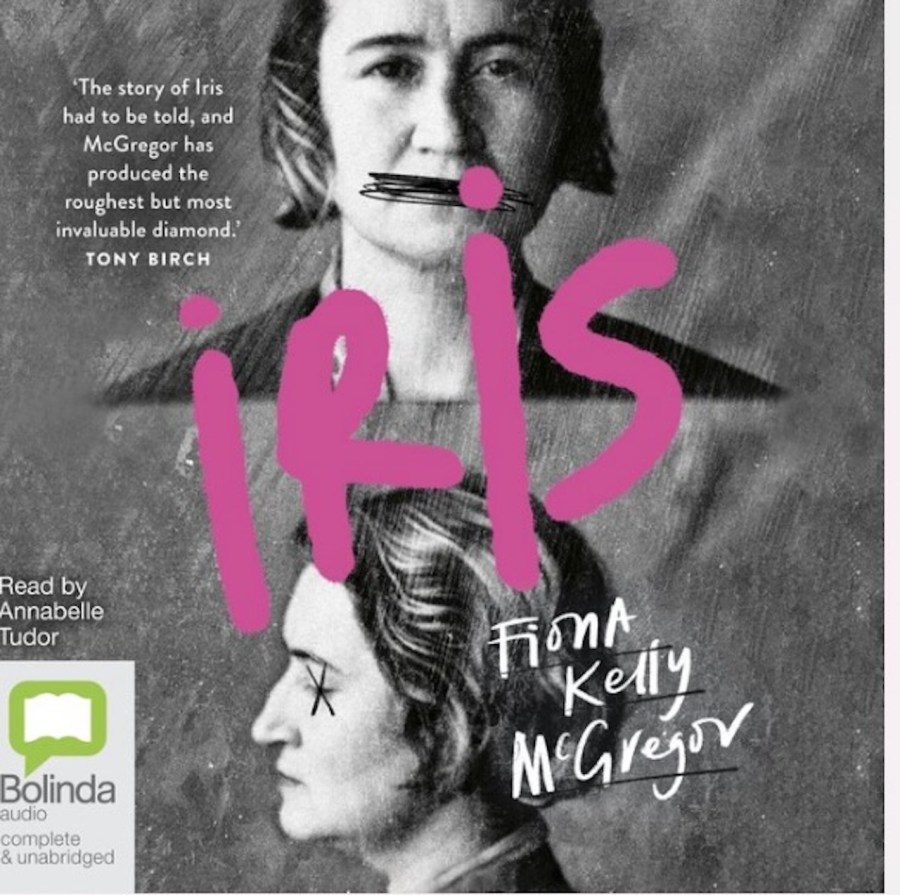
Book review: Rememberings by Sinéad O’Connor

It doesn’t take much to be considered a difficult woman. There’s a long history of non-conforming women being derided and derogatorily called out as bolshy, hysterical, crazy hags, bitches or sluts.

They broke my heart and they killed me, but I didn’t die. They tried to bury me, they didn’t realize I was a seed.

I grew up listening to Irish singer Sinéad O’Connor and saw her play live a few times when she toured Australia, her voice was intense and beautiful. After watching the documentary, Nothing Compares about Sinéad a couple of months ago I gained a much deeper understanding of what an extraordinary woman she was, and the appalling way she was treated for speaking out on issues on which she has since been proved right. She was ahead of her time and paid a heavy price for her outspokenness, but never faltered in her conviction.

If I hope for anything as an artist, it’s that I inspire certain people to be who they really are. My audiences seem to be people who have been given a hard time for being who they are.

I felt very saddened by her death recently and was motivated to read her memoir to find out more about her perspectiven on her life and musical career. Rememberings reads in much the same way as Sinéad spoke and sang – conversational, unapologetic and frank with a mixture of toughness, vulnerability and naivety. She says she never wanted to be famous, and was unprepared for it at such a young age. It is clear that music was a mixed blessing for her. It provided an outlet, but shot her to stardom and into the hands of a business that gave her an international platform to speak her truth, but also tried to exploit her. The music industry did not consider what she wanted and failed to protect the star it created when things became difficult.

There is no point setting out on a healing journey if you’re not going to find yourself healed.

She wrote openly about the good the bad and the ugly of the music industry and her private life. The abuse inflicted on her by her mother as a child, the joy of having her own children, her mental health struggles, an unwavering faith and devotion to god, confusion, rage and laughter through life.

“I couldn’t admit it was her I was angry at, so I took it out on the world,” O’Connor writes. “And burned nearly every bridge I ever crossed.”

Turning into a wild child, she was eventually sent to a home run by nuns for wayward girls. It was one of the nuns that introduced her to the guitar. Music saved her, but it also caste her into the world of fame, and that was a lonely frightening place, distanced from reality and filled with other people who’s best (Kris Kristofferson, Micheal Hutchence) and worst (Prince, Dr Phil) characteristics were amplified when she came into contact with them.

I define success by whether I keep the contract I made with the Holy Spirit before I made one with the music business,” she explains. “I never signed anything that said I would be a good girl.

Much like this review, Rememberings is fragmented and non-linear. O’Connors voice and integrity shine through clearly in the narrative. Rememberings is an intimate, emotional portrayal of a life lived authentically in full colour, and without regret.

Vale Sinéad. Nothing compared to you.