
Book review: Translations by Jumaana Abdu

I have been making my way through the books shortlisted for the Stella Prize and recently finished reading Jumaana Abdu’s debut Translations. It is a novel with a beautiful cover and a story that is rich and complex.

In the weeks before leaving the city, she had wished her father’s house would collapse on her to grant her some relief. In the last days of her marriage, she had sat on their penthouse balcony and watched planes fly low overhead, gripped by a superb terror when for a moment it seemed a plane might stoop so low as to crash into her building, low enough to crush her, suffocate her, obliterate everything.

Set during a summer of raging bushfires in NSW, Aliyah and her nine-year old daughter, Sakina, move to a rural town and buy and old house, shedding their previous lives as Moslem women. The house, we discover as the novel unfolds, has its own complicated history.

The violence of a settler colony pushed me out of my land, only for me to come here where the same violence is ongoing. I do to you what was done to me. And those who forced me to escape slaughter were once forced to do the same. Like a chain of loss and expulsion, only none of us get back what was ours. It takes a hypocrite to flee from occupied land to a land of the occupied, or maybe just a desperate man, but you can’t say that you don’t expect me to take responsibility when I say that I expect it from Israeli children who were born and raised on the land I consider my own, which is also the only land they have ever known. The two thoughts can’t be reconciled, and yet I live here, I want to plant my feet here, and I also hate that feet are planted where I lived before, so I’m ashamed. I know what’s yours.

Needing help to develop the property in her image of a permaculture farm, Aliyah hires a farmhand. Shep is an extremely private and mostly silent Palestinian man and the areas imam. Aliyah also works as a nurse in the local hospital a few days each week where she befriends the local midwife, Aboriginal woman Billie and her family.

Aliyah took the blow. She turned away and pressed her hand hard across her eyes. This crisis, which should have swept the two women together, had instead torn open an honesty that marooned them almost two decades apart. Perhaps the closest they had ever been was the moment they had first met, drawing blood, and every meeting thereafter had been an attempt to regain an irretrievable intimacy.

During a storm Alyiah encounters a childhood friend, Hana, who has escaped a difficult home situation.  Aliyah takes her in and the two women and Shep try to navigate a curious triangle.

They became uncitizens. Aliyah ran the idea over and over in her mind, all down the highway splitting the bush either side of her like an emerald sea. She thought it in the prophetic tense, to frame it as a future so certain it was as though it had already happened.

Themes explored include friendship, faith, race, identity, belonging, colonialism, trauma, and living with natural disasters. Translations is a beautiful layered philosophical read that, like a permaculture garden, works perfectly as a cohesive whole and invites reflection.

Book review: Still Life by Sarah Winman

Sarah Winman’s Still Live is a character driven historical fiction novel with a fascinating caste that spans the decades from WWII through to the 1960s. It speaks to a series of life moments and how art, music and food can move us emotionally.

There are moments in life, so monumental and still, that the memory can never be retrieved without a catch to the throat or an interruption to the beat of the heart. Can never be retrieved without the rumbling disquiet of how close that moment came to not having happened at all.

Twenty four year old English soldier Ulysses Temper finds himself in the wine cellar of a deserted Tuscany village during a bombing blitz in 1944. Sixty four year old Evelyn Skinner is a middle aged art historian visiting Italy to salvage paintings and reminisce about her youth. The two meet and connect by chance and the impression they make on one another is enduring. 

Art versus humanity is not the question, Ulysses. One doesn’t exist without the other. Art is the antidote.

Evelyn returns to London to teach. Ulysses returns home and reintegrates with his eclectic friends at The Stout and Parrot until a surprise inheritance from a man whose life he saved sends him back to Italy along with his ex-wife’s daughter, Alys and his friend Cress. Cress talks to trees and recites poetry, and has a parrot Claude who quotes Shakespeare.

So, time heals. Mostly. Sometimes carelessly. And in unsuspecting moments, the pain catches and reminds one of all that’s been missing. The fulcrum of what might have been. But then it passes. Winter moves into spring and swallows return. The proximity of new skin returns to the sheets. Beauty does what is required. Jobs fulfil and conversations inspire. Loneliness becomes a mere Sunday. Scattered clothes. Empty bowls. Rotting fruit. Passing time. But still life in all its beauty and complexity.

There is a beautiful section about the 1966 floods of Arno in Florence where neighbours looked out for one another communicating by candle light. The flood devastated the city displacing citizens and destroying millions of books and artworks.

And for two hours the wine was poured, the cheese cut, and the two men talked. Of what? Who knows? Of love, of war, of the past. And they listened with hearts instead of ears, and in the candle-lit kitchen three floors up in an old palazzo, death was put on hold.

Still Life is a story about what it means to be human, of the many ways we can love people, friendship and chosen family. Art, beauty and luck and how they can move and shape us thread through the narrative.

Book review: Love Objects by Emily Maguire

Love Objects by Emily Maguire is not an easy read. The novel shines a light on the dark side of class relations, the challenges of the mental health condition hoarding and what is means to care for family with mental illness.

As Nic said, second-hand clothes were like day drinking, government handouts and having a lawyer: classy if you’re rich, proof you’re trash if you’re poor.

Forty-five year old Nic, a childless department store check out chick living alone in her inherited childhood home collects random stuff. She falls after climbing onto piles of things to reach a hook to hang something she collected on the way home from work and injures herself badly. Unable to move she drifts in and out of consciousness. Childhood memories keep her company, triggered when she spies an old tiara under her bed.

People have died of sadness, Lena knew. Was this what it felt like, just before?

Lena is Nic’s niece. She lives hand to mouth at the Sydney university where she studies, hiding her economic disadvantage from her wealthy peers. She meets and has sex with rich boy Joshua not realising he is filming them. He posts the video on the internet and despite hiding Lena’s face, she is recognisable by a large scar on her arm.

No such thing as custody rights to your sister’s kid. No matter how destroyed you are by her absence.

Will is Nic’s nephew. After being released from jail for drug offences, he has a relationship with a woman who has children by someone else. He loves this life, but is cut adrift when the woman ends the relationship and he heads south to Sydney to see his sister and aunt. He is trying to deal with a rotten tooth that gives him a lot of pain but he cannot afford a dentist.

Will, she texted, how have we gone all these years and not known our aunty is completely and utterly batshit crazy?

Lena goes looking for Nic after she doesn’t turn up at a lunch date and finds her semi-concsious in her house so crammed with stuff that emergency services have to cut a path through the clutter to get her out. Nic is a hoarder. While Nic is in hospital the house is deemed a health hazard by a social worker and Lena agrees to deal with the contents so Nic can return home. Will arrives and helps Lena finish the job.

She puts today’s newspaper on the kitchen table, where it slips about for a few seconds before settling nicely. It would sit on the kitchen table until she had a chance to finish reading it, and if that hasn’t happened by bedtime she will put it with its colleagues in the hallway, waiting for a day when she has more time, better concentration.

Love Objects has a third person narrative divided between the three main characters – all of whom are dealing with their own losses, but the central focus is Nic’s hoarding disorder and how the three characters respond. Maguire offers great compassion to her characters through her compelling writing and this carries the reader through a difficult read.

Book review: The Last Devil to Die by Richard Osman

The Last Devil to Die is the final in Richard Osman’s Thursday Murderer Club mystery series. Book 1, The Thursday Murder Club and book 2, The Bullet that Missed are also reviewed on this blog. In The Last Devil to Die the four intrepid pensioners Joyce, Elizabeth, Ron, and Ibrahim from Coopers Chase retirement village look into the murder of antiques dealer Kuldesh Sharma after he is shot in the head and a package he was meant to be looking after disappears. 

We complain about life so endlessly and so bitterly, and yet we cling to it so dearly? Surely that makes no sense?

Additional plot lines are threaded in. Our investigative elders grow suspicious when new resident Mervyn Collins tells them about his online relationship with a Lithuanian called Tatiana. He keeps trying to help her out financially, but the money keeps disappearing and his girlfriend never materialises. They decide Mervyn needs to be saved from himself and what they believe to be a relationship scam. Meanwhile former spy and leader of the oldies gang Elizabeth and her husband Stephen grapple with his advancing dementia.

But, however much life teaches you that nothing lasts, it is still a shock when it disappears. When the man you love with every fibre starts returning to the stars, an atom at a time.

The Last Devil to Die true to style is packed with Osman’s cheeky humour. He manages to make fun of the human condition and aging while still covering difficult topics with sensitivity. Osman crafts Joyce, Elizabeth, Ron, and Ibrahim as pensioners to aspire to be – feisty, fearless and friended to the grave.

That’s the thing about Coopers Chase. You’d imagine it was quiet and sedate, like a village pond on a summer’s day. But in truth it never stops moving, it’s always in motion. And that motion is ageing, and death, and love, and grief, and final snatched moments and opportunities grasped. The urgency of old age. There’s nothing that makes you feel more alive than the certainty of death.

I have now read and thoroughly enjoyed the entire Thursday Murderer Club series and am inspired to develop some outrageous retirement goals myself. I would live at Coopers Chase any day.

Theatre review: De Profundis

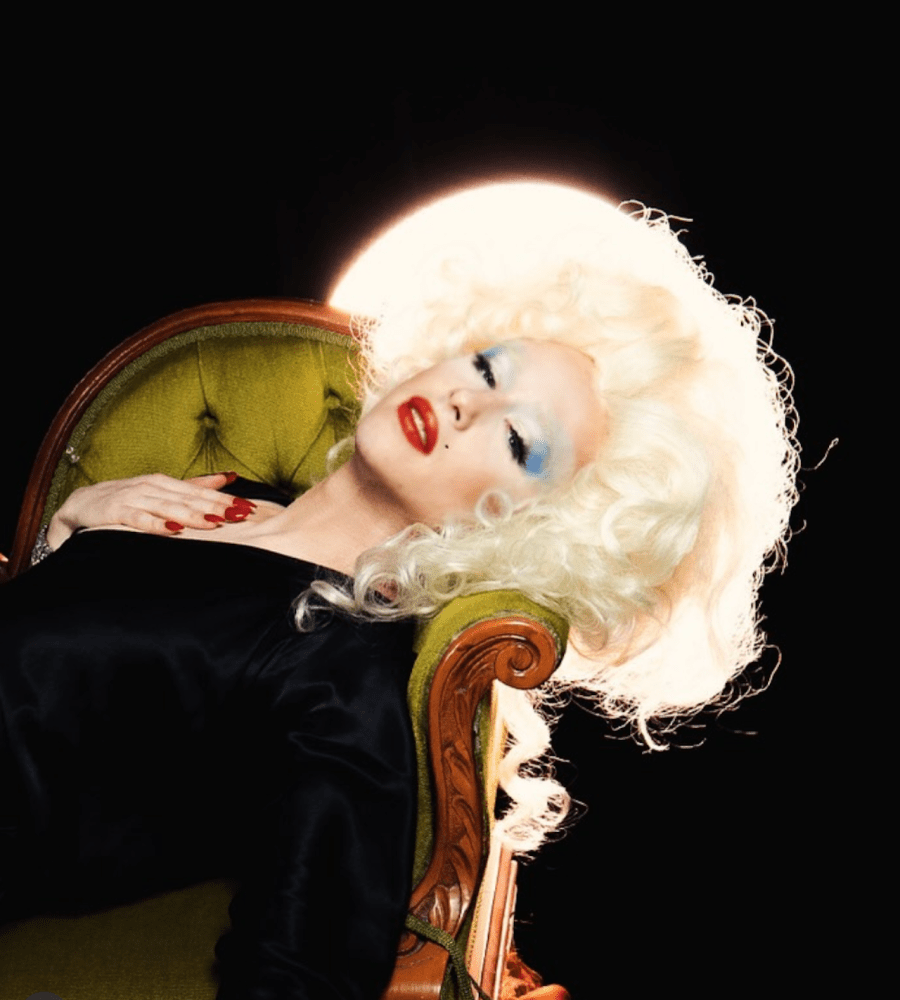
I was fortunate to attend to the opening night of De Profundis by Oscar Wilde, presented by fortyfive downstairs in association with Dino Dimitriadis and Paul Capsis.  Fortyfive downstairs is a beautifully, stark and intimate space, perfect for this performance. The full manuscript of De Profundis involves a three hour reading. For the fortyfive downstairs show, the work has been seamlessly re-crafted and curated for a captivating 85 minute performance. The show includes two well placed segments Capsis’s beautiful singing voice. 

To regret one’s own experiences is to arrest one’s own development. To deny one’s own experiences is to put a lie into the lips of one’s own life. It is no less than a denial of the soul.

De Profundis was written by Oscar Wilde to his lover, Lord Alfred ‘Bosie’ Douglas during Wilde’s imprisonment in Reading Goal in 1897. It was not published in full until 1949. The work is far more than a bitter, beautiful and measured love letter. It is a 50,000 word critique of the political system and society Wilde inhabited, and the validity of its laws. He used personification to grapple with themes including love, hate, vanity, humility and sorrow and turns his suffering into an art form.

I blame myself for allowing an unintellectual friendship, a friendship whose primary aim was not the creation and contemplation of beautiful things, to entirely dominate my life.

Wilde had been imprisoned for ‘gross indecency’ in 1895 after a lawsuit by his lover’s father, the Marquis of Queensberry. He was at the height of his fame at the time, but the experience of incarceration and hard labour broke him. Wilde wrote De Profundis in him final months of incarceration. He was released in 1897 and wrote a poem called The Ballad of Reading Gaol, but completed little other creative work. Instead he spent his time writing letters expressing his concerns about the state of British prisons and advocating for reforms. He died in France in 1900 from meningitis. In 2017, Wilde was among thousands of gay and bisexual men pardoned posthumously for engaging in consensual same-sex relationships.

The real fool, such as the gods mock or mar, is he who does not know himself. 

Cellist, Conrad Hamill accompanies Paul Capsis in this seductive performance of De Profundis, holding the audience captivated for its duration with the elegance of Wilde’s prose. The set was minimal – a writing desk, a glass of water and reading glasses. The warm, rich, and resonant melody of the cello provided a backdrop that evoked the emotions of Wilde’s experience.

We have forgotten that water can cleanse, and fire purify, and that the Earth is mother to us all. 

De Profundis runs from 30 April to 4 May at fortyfive downstairs in Flinders Lane. If you enjoy a beautiful and powerful monologue, this is a performance not to be missed.

Book review: Rapture by Emily Maguire

As a young person in my twenties I spent a couple of years performing acrobalance in a circus. One year we put on a show about the life of Pope Joan, a woman who disguised herself as a man and became pope during the Middle Ages. I became fascinated by that story. Emily Maguire’s historical fiction novel, Rapture, took inspiration from the story of Pope Jaon. 

She does not know it is odd for a girl to read until one of her father’s guests, a Benedictine from Fulda Abbey, spots her bent over a book by the fire and roars as though he’s spied a deer hunting a man.

Set in ninth century Mainz (Germany), Rapture is the story of Agnes whose mother died in childbirth and whose English father, a priest, educates her and raises her to be devout and curious about learning. Not surprisingly Agnes sees no future for herself as a wife and mother, so sheds her identity and dresses as a man to become John in order to have the freedom to follow her interests.

Her self is an illusion yet it is one beloved by most everyone who has heard her speak . . . She is thirty-three years old and there is no one else in the world who knows who she used to be.

Rapture follows Agnes journey from learning from the men in her father’s life while sitting under the dinner table as they talked, to becoming a man and a Benedictine monk so she can be privy to the teachings of god, then rising through the ranks to become a renowned scholar and the Bishop of Rome. Throughout her journey as a man she reflects on her duality as a women in hiding and subjugating her body so it does not betray her.

Thus she learns that great and wise men felt as she had as a child on the forest floor. She learns there are systems of morality based on reason rather than God’s will … She learns that the monks of Fulda can read most anything they like and call it Christian work.

The more I read, the more I was drawn into this meticulously researched story. Despite the subject matter, you do not need to have any interest in religion to read Rapture. It is a beautifully written, thought provoking and engaging story. 

Comedy review: BIGFOOT: In Plain Sight

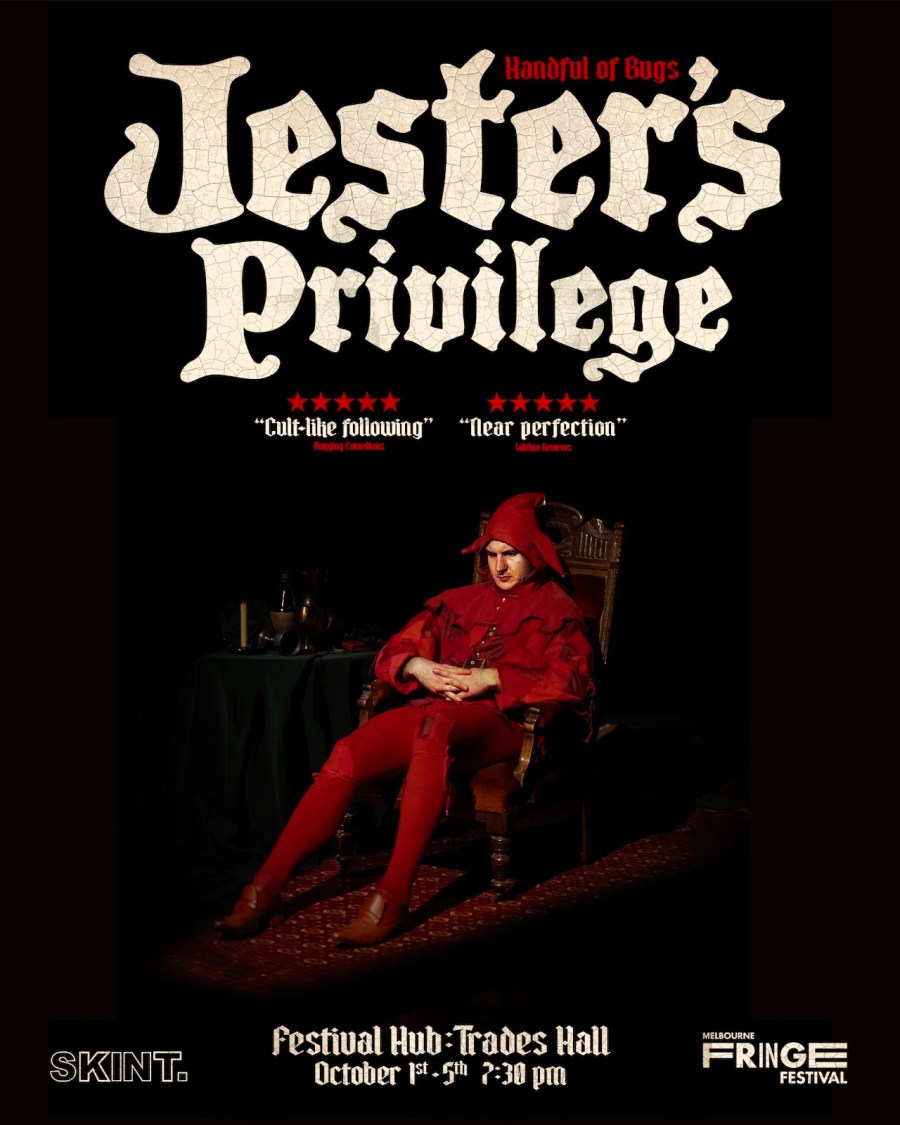
I saw Handful Of Bugs show (The John Wilkes Booth) at last years comedy festival, and it was great, but this years one person comedy, BIGFOOT: In Plain Sight, takes things to a whole new level.  I would describe this show as a blend of theatre (there’s a plot) with comedy and clowning (for laughs). And it’s a hoot.

Canadian Bigfoot researcher Robert H. McKinley self-published an autobiographical account of his lifelong relationships with Bigfoot. BIGFOOT: In Plain Sight is an interpretation of that work that also explores the ethics of adaptation. The setting is the freezing Canadian wilderness and tells the story of McKinley out there in his shorts, rucksack and hiking boots with his tent and sleeping bag and a big love for BIGFOOT. He wants to prove what he knows to be true – that BIGFOOT is real, and his dad who went missing long ago is still out there somewhere as well. 

And just as you start to wonder where the story is going, there is the most fabulous plot twist that will leave you in jaw dropping hysterics. What is fact, and what is fiction?

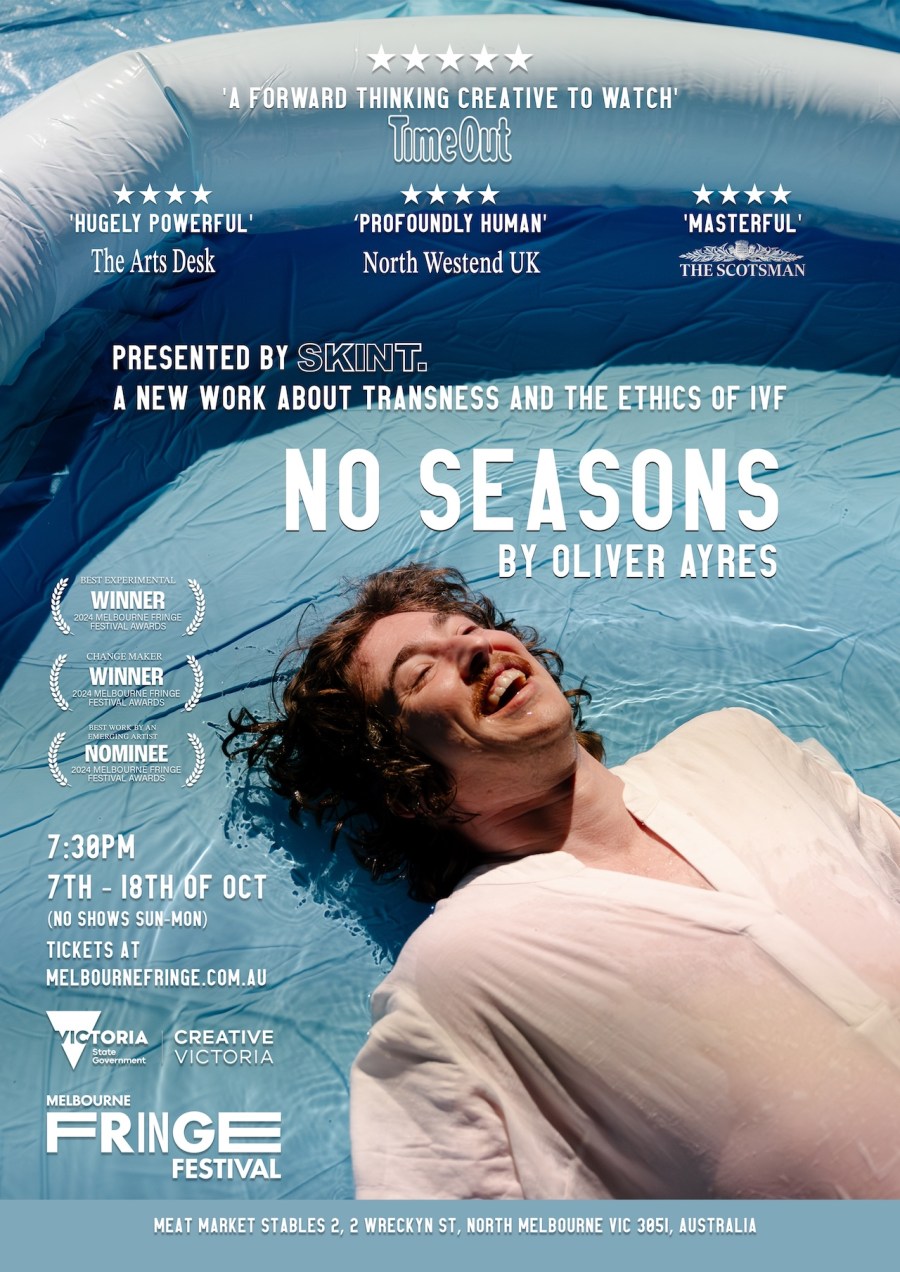
Handful Of Bugs theatre company is made up of Alex Donnelly, the performer in BIGFOOT, and his co-writer/conspirator Lachlan Gough who also Directed and did sound for this show. Donnelly led the set, props and costume design. SKINT produced it. Despite the origins of the mythical creature Bigfoot being well known, the show BIGFOOT: In Plain Sight is truly an original piece of comedic theatre, packed full of laughs as well as thought provoking content.

Donnelly is a dynamic and talented comedic actor, with an impressive capacity to switch characters with the flip of a hat (literally) and convey story and emotion through physical theatre. The show is professionally produced and Gough’s Direction ensures a cohesive and authentic work.

I highly recommend BIGFOOT: In Plain Sight. It is playing at the Malthouse Playbox theatre until 20th April, with showtimes at 8.30 pm or 7.30pm on Sundays. 

I highly recommend this trip into mid-20th century folklore and the cultural icon BIGFOOT.

Comedy review: Only If You Love Me

Only If You Love Me by Nic Davey-Greene, on at the 2025 Melbourne International Comedy Festival, is a clever, dynamic, acerbic musical comedy show.

Davey-Greene starts by challenging the audience – he doesn’t want cheap laughs and fake smiles, he wants authenticity. What follows is a broad ranging hour of original tunes – pop, jazz, county, crooners and ballads – interspersed with narrative satire. He mixes the serious with the absurd, and just a little audience participation (only if you’re in the front row) in a well crafted, dynamic show.

Davey-Greene is, he sings, dating Cameron Diaz – while she is seeing whoever she likes – including his friends and work colleagues. 

A man after my own heart Davey-Greene says he watches question time for fun and gives both Albo and Dutton a grilling – appropriate during an election campaign. He sings about the ‘WOKE’ mind virus and that he likes eating microplastics – they will give you a vasectomy for free, and he has a recipe for turning plastic bags into pesto. 

The pace and topics change frequently from politics to clay shooting, to the dangers of artificial intelligence, to leaving your wife after falling in love with a tractor – a song with visuals I particularly enjoyed. There is something about the performer and his style that is a little reminiscent of comedian Sammy J.

You can catch Only If You Love Me at The Grace Darling Hotel in Smith Street, Collingwood. Shows start at 6.15pm and the season runs 9-13 April and 15-20 April.

Pop in after work or add it to your weekend gigs for an hour of laughs. You can grab a burger at the Grace Darling before the show, or anything else you fancy at one of the great eateries along Smith Street, Collingwood. Get out there and have a laugh (authentic only), I know you want to.

Book review: Theory and Practice by Michelle de Kretser

Michelle de Kretser’s latest novel, Theory & Practice, opens as a conventional fiction narrative, but soon after it begins is abruptly interrupted by the narrator. Cindy proceeds to reflect on her life, first as a child in Sri Lanka and then as a young woman living in Melbourne in 1986 and tackling post graduate study on her idol, Virginia Woolf whom she calls ‘Woolfmother’.  As her studies progress, she struggle with Woolf’s flawed humanity and contradictions between her progressive public persona and her private racism and pretentiousness.

Instead of shapeliness and disguise, I wanted a form that allowed for formlessness and mess. It occurred to me that one way to find that form might be to tell the truth

For those of us who were of University age in the mid 80s when education was free, the work is both familiar and compelling. It was a time when learning was seeped in theories about how we ought to live, while life was experimental and relationships were complicated. This tension between what we believe about how we should live, and how we actually live runs throughout the story as our protagonist’s feminist ideals clash with her lived experience. But as humans we often abandon our moral principles in pursuit of self-interest.

While trusting in feminism’s transformative power, I retained a stubborn, dazed belief in love.

Cindy becomes friends with a couple called Kit and Olivia. Cindy and Kit become lovers and Cindy develops a distant and jealous dynamic with Olivia, behaviour that defies her feminist principles. Meanwhile she contends with a constant stream of passive-aggressive messages from her widowed mother who lives in Sydney and continues to exert maternal influence making Cindy feel guilty for leaving her to move to Melbourne.

I was twenty-four. The first thing I did in Melbourne was buy a vintage dress. The dress was made of lace, and had cap sleeves, an empire waist and a fitted knee-length skirt. It dated from the early sixties, when thousands of its kind must have been made. Now fashion had plucked it from oblivion and filled it with warm young bodies again. Powder-blue and rose and coffee-cream variants existed, but my dress was Intellectual Black.

Theory & Practice is unsentimental and bristling with the anxiety of youth. Fiction and non fiction collide throughout this novel which defies conventional form, blending fiction, essay and memoir.  Themes include identity, displacement, feminism and colonialism. Highly recommended, especially if you enjoy unconventional narratives and remember the 80’s.

Book review: Restless Dolly Maunder by Kate Grenville

Restless Dolly Maunder is a fictional retelling of Kate Grenville’s grandmothers life. Born on a NSW sheep farm in 1881, Dolly, the sixth of seven children, was smart, studious, driven and restless. She admired the local young female teacher and her independence, and wanted to become one. But her father said ‘not over his dead body’, and at 14 she was put to work in the house and on the farm and punished for mistakes.

Girls were of no account, you learned that early on. Good enough to make the bread and milk the cow, and later on you’d look after the children. But no woman was ever going to be part of the real business of the world.

Dolly realises the only way out of her predicament was to get married. Bert Russell was a good match in many ways and had faith in Dolly’s business sense and abilities, but he was also a womaniser. 

What could a woman do but marry, and once you were married you belonged to your husband’s world and had to turn your back on your own. It wasn’t betrayal. It was the way the world was.

Discovering Bert’s philandering after the birth of their first child, Dolly is furious and humiliated. She thinks to leave Bert but soon realises she couldn’t manage on her own. Instead she keeps the family moving from one successful business venture to another. Then the Great Depression hits and they are forced to return to farming due to financial difficulties.

What she really wanted was what she’d never had: to be a person on her own, free of any obligations, away from the great sticky tangle of family. To float wherever she liked, like those men in the Depression who’d turned their backs on everything and gone on the wallaby.

When her sons enlist at the outbreak of World War II, Dolly’s anger and sense of helplessness drive her on again, leaving Bert on the farm and drifting alone from job to job, and to help her daughter with her children. Eventually Dolly moves into an apartment beside her daughter’s house when she is old. This is how Kate Grenville remembers her grandmother – as a five year old saying ‘no’ when her grandmother asks her if she loved her.

All you could say was, you were born into a world that made it easy for you or made it hard for you, and all you could do was stumble along under the weight of whatever you’d been given to carry. No wonder at the end of it you’re tired, and sad. But glad to have done it all, even the mistakes. Glad to be alive, too. Even if you were only alive enough to watch another day’s light slide along the wall, and wait for the night.

Restless Dolly Maunder is a story about the rage that built in women at a time when they were not allowed to realise their potential or exercise freedoms due to patriarchal limitations imposed on them. The harshness of that life drove them to unhappiness and emotional detachment in order to survive.

Grenville brings the setting alive through her use of imagery in Restless Dolly Maunder, and emotional oppression seeps from the pages. The story is a reminder of how restricted women’s lives were not so very long ago, and a reminder of the importance of maintaining the freedoms gained. Restless Dolly Maunder won the 2024 Women’s Prize for Fiction.