Festive finale

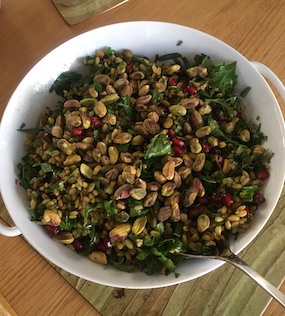
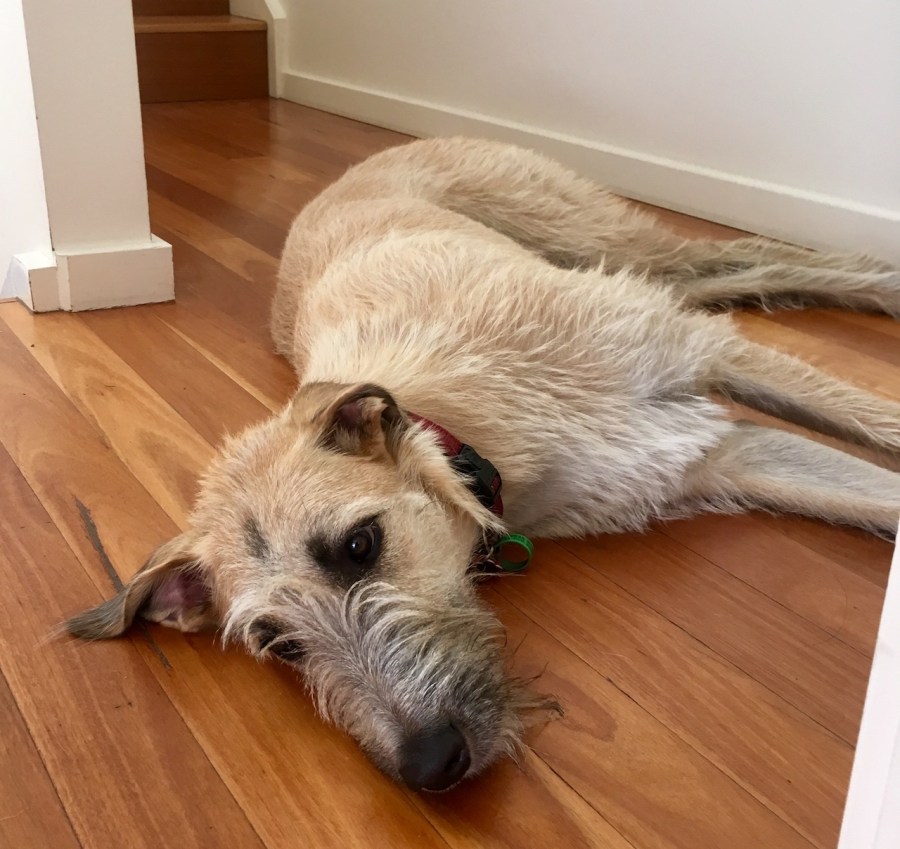
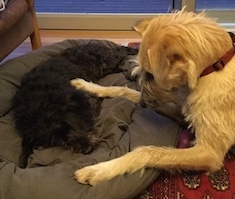
I was expecting a quiet new years eve with a couple of friends and made a delicious mushroom pie that went very nicely with a freekeh and pomegranate salad made by my partner (I’ve included the recipes below). Despite there being only four of us (and two hounds) to celebrate we did turn the evening into a party and danced till midnight. We had a small ritual as the year turned that involved writing on two pieces of paper – one for something we wanted to let go of and leave behind in 2018, and one for something we wanted in 2019. Said paper was burnt over a bowl of water (for fire safety) whilst drinking my friends home made limoncello over ice.
Mates

Needless to say, finishing my book was my wish for 2019. The madness of the festive season has subsided and today was the first day this year I have sat down to write. I’m hoping for a productive day, as at 42 degrees Celsius it’s going to be too hot to do anything else.

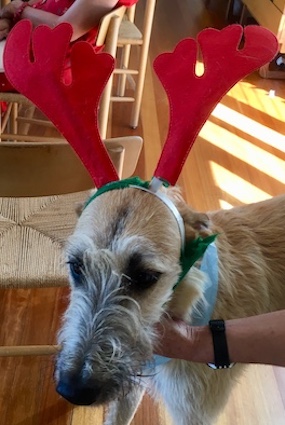
Last week was filled with helping my partner build a new kennel for the hound who has grown to big to fit in the house built for her predecessor. She seems to like the new abode and has been hanging out in it during the day.

New house fur thinkin’

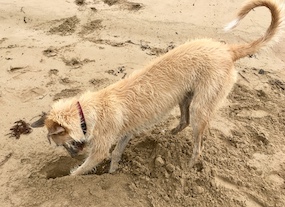
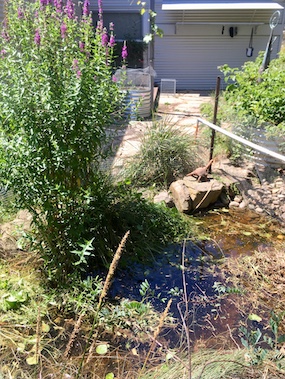
When the hound came to live with us as a puppy one of the first things she did was walk out onto the reeds in the pond and pee. I was unable to curb this habit so ended up having to fence it off and get a dog pool for the water obsessed beast. The pond lilies and reeds have grown uncontrollably since the fence went up and I have avoided the inevitable task of cleaning it out for some months. Yesterday the weather was perfect for working outside and getting wet so the day to do the deed arrived. The hound was not happy with being prevented from ‘helping’ but once she understood I would not let her climb the fence and get into the pond with me she contented herself playing with the detritus I tossed over to her.
The pond

I did make the fatal mistake of not shutting the back door properly and when I threw one particularly large bundle of sludge from the bottom of the pond over the fence, the hound grabbed it with glee and bounded inside whilst I yelled a futile “NO!” after her.

When I went in it was evident the hound has shaken the offending bundle as she entered and plastered the walls and kitchen cabinets with muddy blobs, left a couple of large sludge puddles on the floor where she dropped it a few times, then landed content on her bed with what was left making another muddy pool. I spent half an hour cleaning up then locked the dog outside and returned to my task. The pond and the house now sparkle, there is a fresh water supply for any thirsty birds that visit today in the heat and I can get back to working on my novel and see if I can make that new year wish come to fruition.

Oh, and here are the recipes for the fabulous Ottolenghi’s mushroom and tarragon pithivier (published in his book Plenty More and the Guardian online) and the freekeh salad (from BBC food recipes). Both are fairly easy to make and look and taste sensational.

Mushroom and Tarragon Pithivier (serves 6)
Ingredients:

  • 3 tbsp olive oil
  • 50g butter
  • 400g shallots, peeled
  • 50g dried porcini mushrooms
  • 200g chestnut mushrooms, cleaned and quartered
  • 150g shiitake mushrooms, cleaned and halved
  • 150g oyster mushrooms, cleaned and quartered
  • 150g buna shimeji mushrooms, divided into clusters
  • 300ml vegetable stock
  • Salt and black pepper
  • 200g crème fraîche
  • 2 tbsp ouzo (or Pernod)
  • 1½ tbsp chopped tarragon
  • 1½ tbsp chopped parsley
  • 900g all-butter puff pastry
  • 1 egg, beaten

Notes on ingredient substitutes:
Mushrooms: I was not able to find all the different types of mushrooms, so just increased the amounts of those I could find to make up the quantity.
Ouzo: I couldn’t find ouzo in mini bottles and didn’t want to buy a large one, so I substituted two tablespoons of vodka with 1/4 teaspoon of ground star anise for the ouzo.
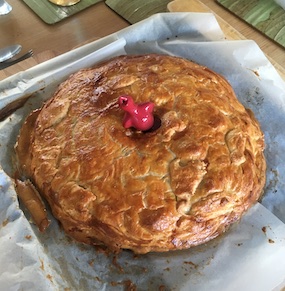
The pie

Method:
Bring the stock to a simmer and add the porcini mushrooms. Remove from the heat and set aside to soften.

Heat a large, heavy-based pan with a third of the oil and butter, add the shallots and cook on high heat for 10 minutes, stirring, until soft and brown. Transfer to a bowl. Add another third of the oil and butter to the pan, and cook the chestnut and shiitake mushrooms on medium-high heat for a minute without stirring. Stir, cook for a minute, then add to the bowl. Repeat with the oyster and buna shimeji mushrooms

Tip everything back in the pan, add the porcini mushrooms and stock and lots of salt and pepper, and simmer vigorously for eight minutes, until reduced by two-thirds. Reduce the heat to low, add the crème fraîche and cook for another eight minutes. Once a relatively small amount of thick sauce is left, add the ouzo and stir through the herbs, adjust the seasoning to taste then set aside to cool.

Meanwhile, cut the pastry in two and roll both blocks into 4mm-thick squares. Rest in the fridge for 20 minutes, then cut into circles, one 27cm in diameter, the other 29cm. Leave to rest in the fridge again for at least 10 minutes.

Heat the oven to 200C/390F/gas mark 6. Place the smaller circle on a baking sheet lined with grease-proof paper, spread the mushroom filling on top, leaving a 2cm border all around. Brush the edge with egg, lay the other circle on top and seal the edges. Use a fork to make decorative parallel lines around the edge. Brush with egg and use the blunt edge of a small knife to create circular lines running from the centre to the edge, just scoring the pastry but not cutting through it.

Bake for 35 minutes, until golden on top and cooked underneath. Allow to rest for ten minutes then serve.

Freekeh and pomegranate salad
Ingredients:

  • 200g/7oz freekeh, pearled spelt or pearled barley
  • 5 tbsp olive oil
  • 4 spring onions, finely chopped (leave these out if you don’t like them)
  • 1 pomegranate, seeds only
  • handful flatleaf parsley, roughly chopped
  • handful mint, roughly chopped
  • 1 tbsp pomegranate molasses
  • 2 tbsp pistachios, roughly crushed
  • salt and freshly ground black pepper
Freakout freekeh salad

Method:

Put the freekeh and 1 litre/1¾ pint water in a pan together with 1 teaspoon of salt and 1 tablespoon of the olive oil. Bring to the boil, then turn down to a simmer and cook for 15 minutes until just tender. Drain and allow to cool

When cool, mix together the freekeh with the spring onions, pomegranate seeds and herbs. Season with salt and pepper.

Whisk together the remaining 4 tablespoons of olive oil and the pomegranate molasses with a pinch of salt, and dress the salad with it, mixing gently. Serve topped with pistachios.

What did you do for new year?

Main image: Hot hound

Keeping it short

I hope you all survived the Christmas madness and are having some downtime in the hiatus before the new year. I’m not a big fan of new years resolutions but have been pondering what I hope to get out of 2019 (other than a magical retirement fund) as I enter the final quarter of my year long sabbatical. In the three months leave I have left I hope to near completion of my mystery novel and sign off on a few of those unfinished landscape projects on my list.

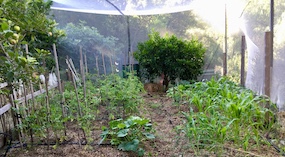
Warrandyte Food Store

Last week I weeded the patch and can now actually find the vegetables (had some delicious zucchini fitters last night) and submitted entries for a couple of short story competitions. I’ve also started to schedule into my calendar the short story competitions I’m interested in entering in 2019. I tend to write short stories as a bit of light relief from, and motivation for, my longer form project and thought I would focus on short stories for this blog post.

What is a short story?

Whilst a novel is a complex journey, a short story is more of an intensely focused experience and usually between 1,000 and 20,000 words in length. Anything less than 1,000 words is considered flash fiction, over 20,000 words is a novella.

Orange, National Gallery, Melbourne

Flash fiction writer Sherrie Flick analogises flash fiction to shoving an angry black bear into a lunch bag, without ripping the bag.

T.C. Boyle compares a short story to a toothache that you drill and fill in one sitting and it’s done. He says a novel is more like bridge work, it takes time – and you know what you will be doing when you get up tomorrow. A short story is a sprint, a novel a marathon.

A novel has a series of climaxes that lead a reader down a path with twists and turns that build tension and accumulate to a final payoff. A short story has a tight plot that moves forward from the opening line and usually leads to a single climax. A novel explores a range of emotions whilst a short story usually hones in on one emotion or theme. The opening paragraph must create a vivid image of the setting, capture the readers attention, introduce a conflict, create tension and start as close to the conclusion as possible. All using show, not tell. Phew! That’s a lot, and it means that every single word has to count.

What’s the point of writing short stories?

  1. Unlike a novel you can write a whole short story in one sitting. There’s a sense of almost immediate completion and achievement in the writing and short stories can help to develop your writing craft.
  2. Writing a novel is a long game. Short stories provide some relief and can give your long form fiction writing a jolt when you are frustrated by it.
  3. Writing short stories is a way to expel those ideas that are unrelated to your main project but keep bugging you.
  4. They are an economical way to explore writing outside the genre of your main project or to experiment in your writing.
  5. It’s an art form that takes time to develop, but is a great way to explore new writing ideas and approaches.

What’s the point of entering short story competitions?

MoMA, New York
  1. Short story competitions can help you learn to work to rules and deadlines. This is great practice if you struggle with word counts and finishing projects.
  2. Success in short story competitions can provide an excellent boost to your motivation to keep writing.
  3. Not receiving a prize is good for writing resilience – we all need to learn to graciously accept feedback and appreciate that not everyone will like our writing – and to keep writing anyway.
  4. Being placed in a competition can help you get noticed by publishers and spruik your long form novel. I happened to be sitting next to a publisher at a prize event last year who suggested I get in touch when I finish my novel.
  5. Some competitions (like NYC Midnight) give feedback to all entrants.

Tips for writing and entering short story competitions

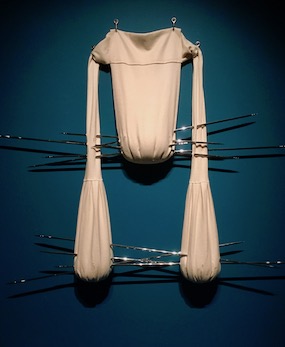
The Journey, sculpture exhibition, Werribee
  1. Plan ahead and schedule the years writing competitions in your diary.
  2. Always read the guidelines and stick to them. Read previous years winning stories if available to get a sense of the types of stories that succeed in the competition. The guidelines can help you decide if it’s the right competition for you and might inspire ideas (many have prompts or themes).
  3. Make every word count. Use a strong opening that includes the crucial incident that drives the story in the first paragraph. Drop the reader straight in and engage them and end the first section with a note of suspense to incite them to keep reading.
  4. Limit the number of characters – there’s not a lot of room in a short story for character development, so stick to a small number and make them plausible.
  5. A short story, like a novel, is a journey with an ending. This does not exclude ambiguity but it must be clear that you have taken your reader on a voyage and the tale has ended – there needs to be a clear arc.
  6. Short stories benefit from some time to breathe and edit, just like long form fiction.
  7. Don’t always wait till the final deadline to enter if possible. Most competitions get the bulk of their entries at the last minute. Getting in early can sometimes get your story noticed in the crowd.
  8. Writing fresh stories is important but you can also dig out old stuff and re-enter in new competitions or enter stories in more than one competition simultaneously (if the rules allow). The process takes a long time and if you wait to hear back from a competition before you re-use your story you could be very old before you have success. The more competitions you enter, the more likely your story will get picked up.
  9. Have fun. Approach short story competitions as a game – try different techniques, obscure or unusual ideas. It might be the one that wakes up the judges and captures their attention.
  10. Don’t be put off if you can’t afford to enter competitions, not all of them have entry fees

Websites that list short story competitions in Australia and overseas

Can you suggest other websites that are good for finding writing competitions?

Main image: Scooter Trash, Jerome, Arizona, USA

Merry Creepsmas

A friend of mine has a special Christmas tradition. Every year she posts a selection of photos for what she calls the Twelve days of Creepsmas on Facebook. This post about alarming Christmas traditions is inspired by those photos of creepy Santa’s with terrified children.

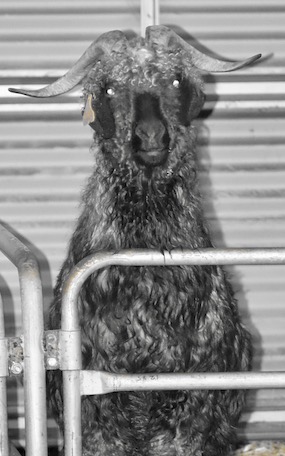
Get my goat

Krampus

A half-goat, half-demon and his band of ill tempered elves haunt the Tyrolean mountains in the Austrian Alps during the festive season on the hunt for children . Krampus, with his furry body, disfigured face inset with red eyes below big curled horns terrorizes the streets with wild jangling bells, animal like growls and fierce dancing as he beats people with birch branches.

Good children get presents from Santa, bad children (as well as drunks and laggards) got Krampus who whips or abducts them, stuffs them in a sack and drags them off through the snow to the underworld. His roots are in pre-Germanic paganism and he is believed the be the son of the Norse god of the underworld, Hel. His legend has such force that it survived attempts by the Catholic Church to banish his celebrations in the 12th century. Krampus is a perfect antidote to the overly commercial, cheer filled version of Christmas.

Mari Lwyn (Y Fari Lwyd)

Rustle

Dead horses are more in fashion than goats in Wales. Mari Lwyd (the Grey Mare) is a horses skull wrapped with a white sheet, empty eye sockets and ear holes decorated and the figure draped with colourful reins, ribbons and bells. Despite her macabre appearance Mari Lwyd is supposed to bring good luck.

She and her entourage go door knocking and sing rhyming insults in Welsh to occupants to try and gain access. In the ritual the occupants of the house must respond with their own verse to try to outwit Mari and prevent her and her gang from entry. Eventually she is let in. Apparently Mari’s entry scares off unwanted problems from the closing year and brings the household luck for the new. She also drinks all the liquor, eats all the food and generally causes mayhem (including chasing any young women she takes a fancy to around the house). You can view an example of the doorstep exchange here.

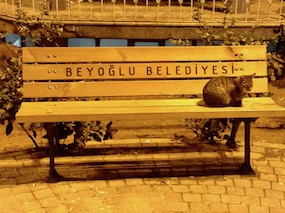
Meow, Istanbul

Yule Cat (Jólakötturin)

In Iceland if you don’t have some swanky new clothes to wear at Christmas you could be eaten up by a giant vicious cat. It’s unclear where the cat idea originated from but the clothing part of the myth is thought to have begun as a mechanism to urge farm workers to be more productive in the lead up to Christmas when hard workers were given new clothes to wear by their employers.

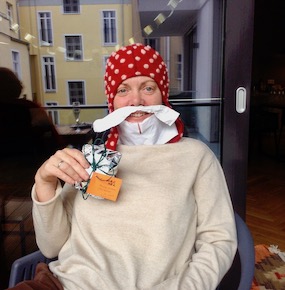
Improvised Santa

Icelanders don’t just have to worry about giant cats at Christmas either. Thirteen trolls with names like Pot Scraper, Bowl Licker, Window Peeper and Doorway Sniffer; along with a many headed, child eating, husband murdering ogress called Grýla come down from the mountains in December. Naughty children are taken back to Grýla’s lair to be devoured.

Witches and broomsticks

In Eastern Europe the Christmas witch Frau Perchta, a shape-shifter, creeps into homes and leaves a piece of silver in the shoes of children and servants who have been good. The naughty ones have their stomachs split open and after being disembowelled their organs are replaced with pebbles and straw. She’s also a bit of a stickler for domestic neatness and lazy ladies get the same treatment as naughty children if their housekeeping standards don’t measure up.

Reluctance

The Norwegians worry about evil spirits and witches that appear on Christmas eve and steal their brooms to go joy riding. Households take preventative measures and hide all the household brooms so they have the equipment needed to clean up after the festivities are over. In some households the men go outside and fire shotguns for good measure to scare the bad spirits away.

I’m anticipating my own Christmas celebrations to be far less dramatic, with a focus on the company of friends and family and the devouring of good food under the watchful eye of the giant hound who will hopefully protect us against any evil visitations. May your season be peaceful and your traditions bring good will. See you on the other side.
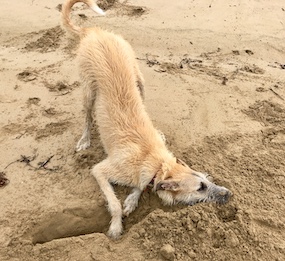
How do (or don’t) you celebrate the festive season?

Main image: The decoration, Berlin

A good life

I started to watch The Sopranos last night. From the beginning again. Psychoanalysis anyone? It’s almost twenty years since Tony Soprano, violent mobster and family man, landed in Dr. Melfi’s therapy office after a panic attack and started his own personal search for meaning.

The show is at its heart a study in existentialism. We all look for and crave a sense of meaning in our lives. Some find it in god, love, money, or the pursuit of social justice. We expend a lot of energy seeking purpose.

Extraterrestrial Highway, Nevada

Existentialism tells us that life has no meaning except for that which we ascribe to it. In the words of Dr Melfi: “When some people first realize that they’re solely responsible for their decisions, actions, and beliefs, and that death lies at the end of every road they can be overcome by intense dread.”

Existentialism demands  we are responsible for what we do, who we are, the way we face and deal with the world, and collectively we are ultimately responsible for how the world is. We cannot abdicate that responsibility to a god that only exists because we choose to believe in them.

As Satre said we are condemned to be free and we suffer from an abundance of freedom. Each of us must design our own moral code to live by, even if it is the template offered to us by our parents or our church. It is a template we choose to inherit. To live authentically we must take responsibility for all our actions as they are freely chosen.

Sand art, Byron Bay

The Sopranos showcases the impossibility of attempts to compartmentalise evil acts, and separate them from the rest of our life. In Tony Soprano’s case maintaining a real family life and a Mafia life without the latter corrupting and threatening the former is impossible. He’s convinced he’s created a church and state separation between his two lives and somehow justifies his criminal activity by the fact that he provides for his family. His wife Carmella lives in her own orbit of self deceit and turns a blind eye to the reality of her husbands ‘business’ in order to enjoy the comfort of her Mafia funded princess lifestyle. Being his accomplice means she is constantly haunted by feelings of guilt and shame herself.

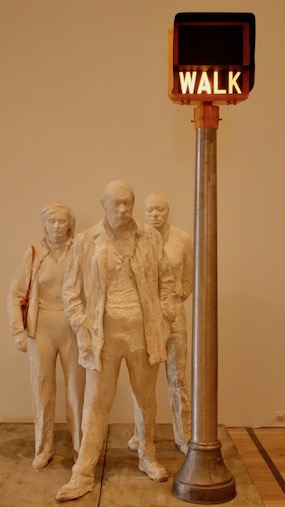
Museum of Modern Art, New York

This morning I woke up to news from the USA in an article on Facebook reporting George Pell’s conviction on historical sexual abuse charges. It had not been reported in the Australian press due to suppression orders as there is another trial yet to take place. The article made me think of The Sopranos. Like Tony Soprano, Pell’s life choices have come back to haunt him and his actions have been shown to be inconsistent with the view of himself he had promoted to the world.

The clerical hero of some of this countries most senior politicians has fallen, and it makes me wonder what it says about the judgement of our political leaders who have sworn by Pell’s counsel. What is their role, like Carmella, as accomplices in Pells deceit? Have they all chosen religion as a moral code to hide behind, rather than live by? Do they use it to justify themselves as inherently good?

Secrets and lies are at the heart of a good mystery but they do not make for a happy life. In the Sopranos there is a scene were Tony sees an abridged quote from The Scarlet Letter displayed on the wall at his daughters college: “No man can wear one face to himself and another to the multitude without finally getting bewildered as to which may be true.” To find happiness we must organise some kind of harmony between all the parts of ourselves. We need to create an internal attuned unity that is consistent with our actions to avoid the kind of existential crisis Tony Soprano faced. Public figures and prominent people cannot be exempt from the consequences of their failure to live authentically.

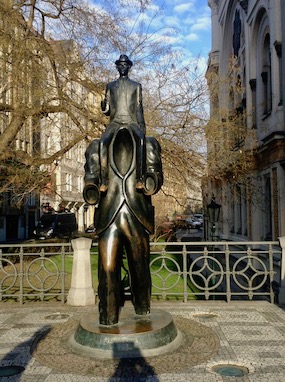
Franz Kafka, Prague

The Sopranos ends in ten seconds of black silence. An ending that bewildered viewers. Messy and contradictory. Did Tony die or not? Was he taken out without seeing it coming as he himself predicted? Does it matter? The ending is ambiguous, but we all know that eventually everything ends in death – the truth of human morality. A truth that must be faced to live authentically and grasp our full potential.

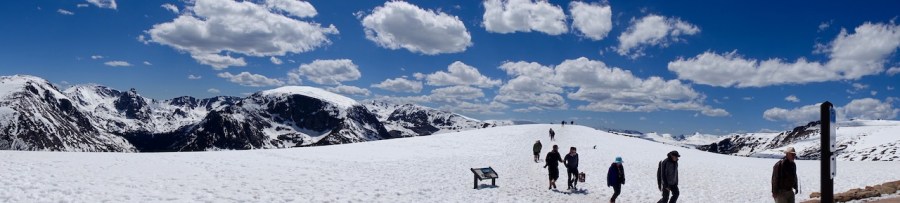
Main image: The Rocky Mountains, Colorado

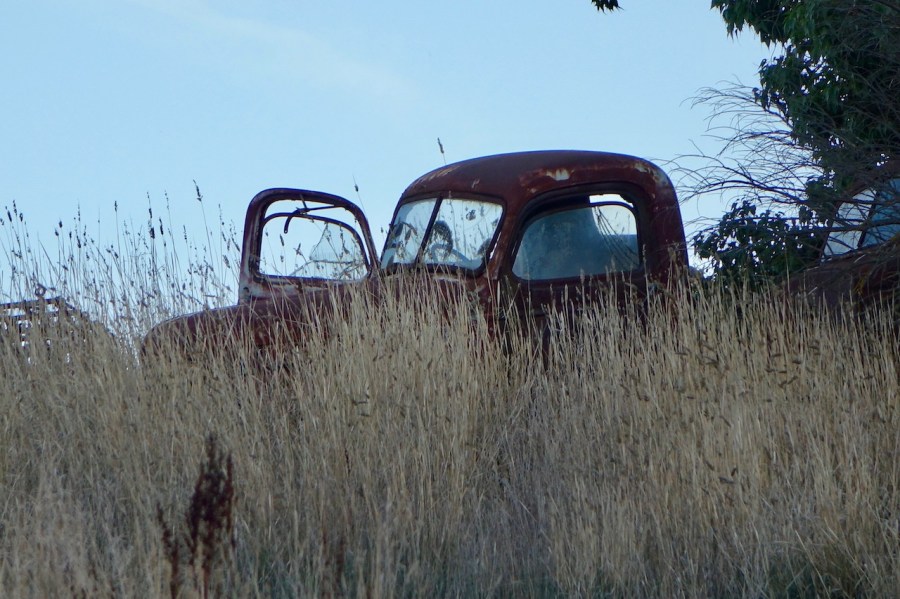
rusted old truck in long grass

A bit of noir

It’s murderously hot today. The thermometer is expected to reach 38 degrees celsius and strong north winds are blowing in from the sizzling centre of Australia. It’s the kind of day that conjures a mood of disorder and threat, like it’s cousin on the spectrum, the chilled isolation of excessive cold climates. Extremes are both thrilling and dangerous.

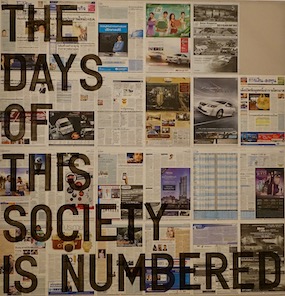
MoMA, New York City

Humans are so vulnerable to weather extremes yet we have been pitting ourselves against nature infinitum with a naive belief that we can prevail in a moral vacuum where the planet is concerned. My bet is on nature in the long run, if we don’t learn to live more harmoniously with the planet.

For some reason, when the elements are severe my mind wanders to noir at the extreme of crime fiction.  Climate change, like reading noir, summons an inescapable bleakness. Both contain themes where collective denial operates within a prism of political dysfunction and citizen hopelessness. Perhaps it is the existential angst, imbued in the idea that humanity could wipe itself out by failing to take action on climate change, that is nudged whenever the weather gets irritable that makes me draw parallels to noir.

MoMA, New York City

The world of noir is dark, chaotic and alienating, and full of the type of moral ambiguity and hypocrisy that points at human existence and calls it absurd and meaningless. In noir everyone one is imperfect and what is right and wrong are unclear. Noir is complex and messy and has a way of teasing out our interdependence as human beings in the global web of power and influence in which we live. It is much more like real life than cosy crime where the hero prevails unscathed, as if wearing teflon. Noir is saturated with the voices of angry protest against entrenched privilege and systems in which the average citizen feels powerless against inequality and corruption, yet it is often delivered with dark humour.

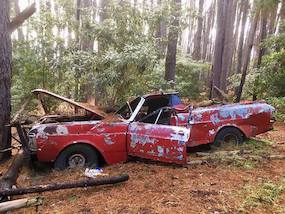
Wreck

There’s icy Nordic noir like Miss Smilla’s Feeling for Snow by Peter Hoeg and Fargo by the Coen brothers if you want to cool down, or stories like the shorts in Sunshine Noir by Annamaria Alfieri and Michael Stanley to warm up with.

Historically, noir has been dominated by white men but I have noticed that modern noir is increasing in diversity as more women like Clare Blanchard, Nikki Dolson, Saira Viola and Jo Perry (published by Fahrenheit Press) pick up the crime pen.

South Australian Museum, Adelaide

I’m currently reading Mistress Murder by Mark Ramsden also published by Fahrenheit Press (I only recently discovered this small crime publisher with attitude and am looking forward to making my way through their collection). Mistress Murder is the story of Susie Goldy, a transgressive, hedonistic, drug addicted dominatrix trying to get on with her life of mayhem whilst being pursued by an unknown malevolent stalker who has taken umbrage with her and her lifestyle. I’m finding the voice of Ramsden hilarious and the black and satirical take on a subculture most of us would never encounter has me fascinated and cringing in equal measure. Just right for a sweltering afternoon.

What are your favourite noir reads?

Main image: Rusted Out, Yandoit, Victoria

The fruits of our labour

Pomegranate flower

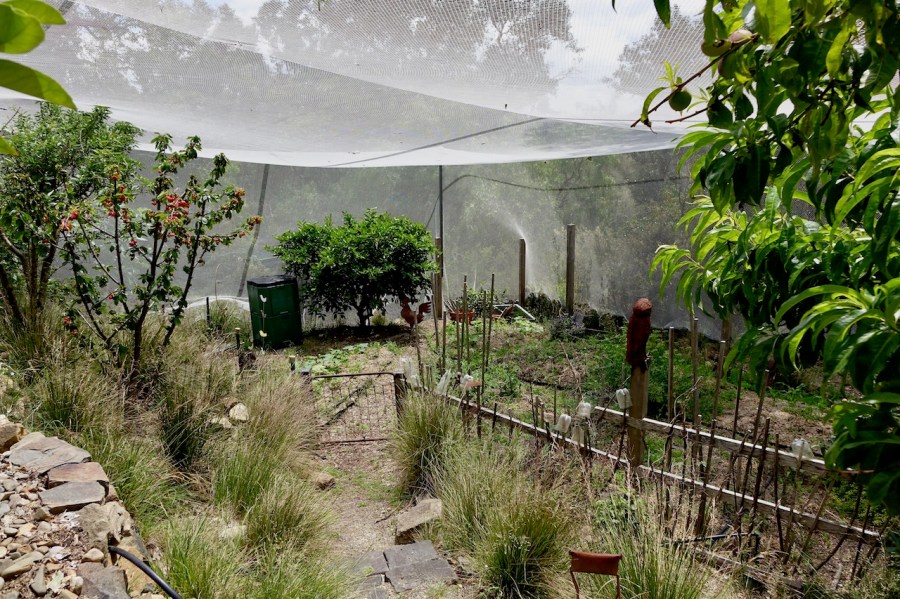
Around this time last year I remember sitting on the chaise lounge whilst I wrote.  There was a cacophony out the window and I saw a flock of Rainbow Lorikeets exit the apple tree. Upon investigation it became apparent that they had decimated the entire crop.  I was determined not to lose our fruit to birds this year, so the day before last weeks writing retreat we put a bird net up over the front yard which I fondly refer to as the Warrandyte Food Store.

Quince

 When I returned from Anglesea I was delighted to find that the rain in Melbourne had boosted the growth of the laden fruit trees. The garden had been exhibiting serious signs of stress from the lack of rainfall this year but recent downpours have enabled the earth to sigh with relief for a moment.

Sage flower

Us gardeners notice changes in weather patterns and spend a lot of time mulling over the impact on our environment. As I write this, thousands of school kids are standing up for their future and demanding action on climate change from our pre-historic politicians who insist on turning a blind eye to the crisis. They seem to find it easier to deny a problem exists than take on such a wicked intractable issue. Unlike our Prime Minister, who appears to be afraid of children, I’m delighted that kids are becoming activists and believe the school yard is exactly where activism belongs. Not being old enough to vote doesn’t mean you’re not old enough to think, and dumbing kids down is not in our future interests.

Raspberries

I have not written anything this week due to feeling a bit of RSI develop from too much typing. Instead I turned my attention to my other passion and started work on the myriad of maintenance tasks and unfinished projects in the garden. By next week I hope to have completed a small area of paving that I have been putting of doing for longer than I care to admit, and to have made some progress on a new gabion rock wall around the vegetable patch. Of course not putting fingers to keyboard does not mean I’m not working on my novel. Some time away serves as an opportunity for ideas and problems to ferment. I need to zhuzh up my opening chapter and have been pondering how to approach it and think I have an idea now.

This afternoon I will make this spring salad and take it to friends for dinner tonight. It’s one of Yotam Ottolenghi’s mouthwatering offerings.

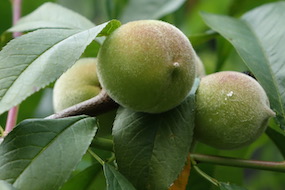
Peach

Spring Salad (serves 4-6)

Ingredients

  • 300g asparagus, trimmed and sliced on a sharp angle into 3-4 thin spears
  • 200g french beans, topped
  • 300g broad beans (fresh or frozen)
  • 50g baby spinach leaves
  • 1 shallot, peeled and very thinly sliced
  • 1 red chilli, finely diced
  • ½ tsp sesame oil
  • 3 tbsp olive oil
  • 1 tbsp lemon juice
  • 1 tbsp sesame seeds, toasted
  • 1 tsp nigella seeds
  • Salt

Method

Bring a large pot of water to boil and blanch the asparagus for about two minutes (until just cooked). Transfer to a bowl of iced water to refresh. Do the same with the beans for about five minutes and refresh in iced water. Repeat the process with the broadens for two minutes. When cooled gently discard the broadband skins.Lay all the ingredients on clean tea towels to dry.

Cherries

Place all the greens in a large bowl and add the remaining ingredients and half a teaspoon of salt and combine.

Make it to enjoy with good friends and stimulating conversation…

Main image: Warrandyte Food Store

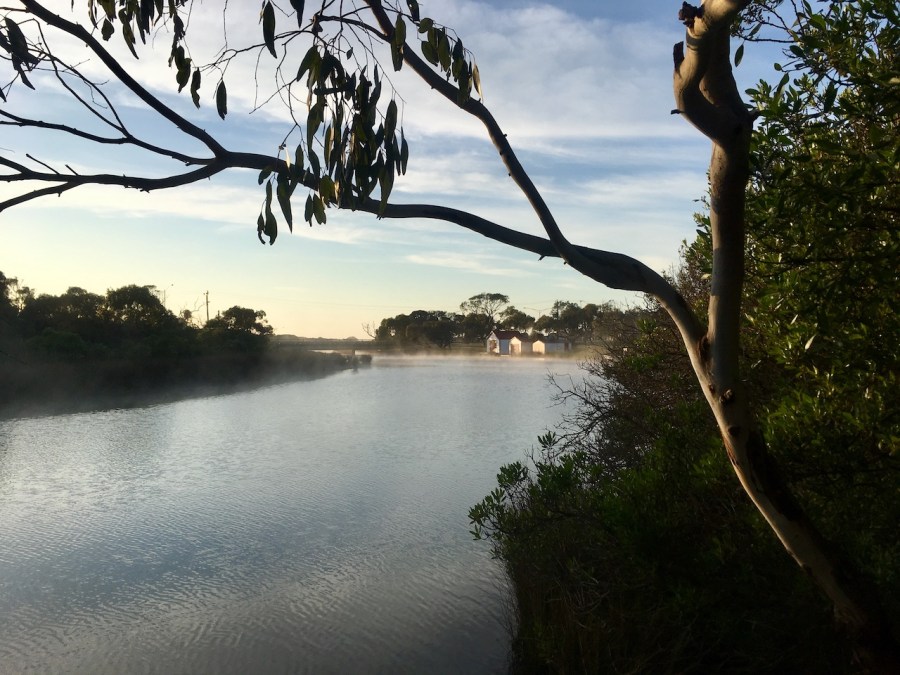
Misty morning, Coogoorah wetlands, Anglesea

The dreaded synopsis

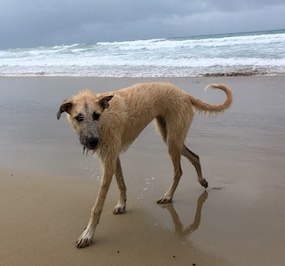
Apologies if this blog seems a bit rushed. I almost forgot to write it this week due to being ensconced in the bubble of a writing retreat at Anglesea for the week with another writer friend and two hounds. We’ve had the usual all seasons that the southern coast is famous for. On Sunday it was thirty degrees, today it’s fifteen and raining and the wood fire is burning. As I write I can hear the sounds of tapping keyboards, the crackle of the fire and the sweet sound of dogs snoring in satisfaction after their morning run on the beach.

Writers dog

At almost 65,000 words into the current draft of my work in progress (WIP) I have spent much of this week knee deep in writing a dreaded synopsis. Most writers hate this exercise – and I am no exception, but do think it’s a good activity that can improve your story. I have done it several times throughout writing my WIP and will continue to revisit it as work progresses.

I find crafting log lines, a premise and synopsis of varying lengths are a terrific mechanism to focus my writing and test the dramatic arc of the story. What is written might change a little each time I do these exercises, or the process itself may cause my story to shift and change when I notice issues or logical gaps emerge.

Do you work on your synopsis as you progress your WIP?

Following is an outline of the process I use. I start by summarizing the turning points of my WIP. These are the main beats where the story turns in a new direction as a result of some dilemma faced by the protagonist. It helps to focus on the key elements of the plot and/or character arc that I will build into the synopsis. I write the summaries in the following format:

At the start of each Turning Point, the character has xxxx problem, are feeling yyyy and they are trying to achieve zzzz goal, however when aaaa complication happens, they feel bbbb and now want ccccc. (cccc is the payoff for what has happened and it raises the desire for the next turning point).

Looking for the plot

This is a useful formula for summarising turning points, chapters and scenes as well. Here’s an example:

When Jane meets the local eccentric she is afraid (feeling) and tries to get away from him (problem) and find out whether he is dangerous (desire). However when he keeps turning up at her house (complication) and she befriends him (motivation shift) and then finds him dead on the beach, she realizes he has been murdered and wants to find out what happened (new desire – to solve the murder mystery).

The second task is to write a log line. A log line is a tight, approximately twenty-five-word summary framed as a ‘what if?’ that captures the protagonist’s predicament and conflict and aims to hook the reader. I might write many of these, then select the one I think fits best. The most recent version of the log line for my WIP is:

What if a private investigator uncovered a political scandal linked to a closed murder investigation, became infatuated with a witness, then suspected her lover could be the killer?

Going deep

Next I write a short premise (also around twenty-five words) that helps clarify the dramatic logic of the story. The premises is the promise of the story which, if borne out is proven by the narrative. Then I can say the story achieved what it set out to do. An example is: By abandoning her personal and professional rules a woman learns the importance of living according to her authentic self.

My next step is to write four varying length synopsis – in one sentence, one paragraph, one page and then an expanded 3-5-page version. The one liner identifies the central character, the story problem, the overall theme and the central driving force for the main character. I might brainstorm a number of these and select the one I most like. For example:

After a private investigator is convinced to revisit a closed murder investigation she finds herself having to break the law to save herself and ensure justice is served.

Losing the plot

When you expand the synopsis to a paragraph it brings in other central characters and explains what binds the central characters together, what drives the protagonist forward, and also reveals the climax and the lessons learned in the story.

 The long synopsis (3-5 pages) draws out the central story line and characters and includes all the detail that may be obvious to you, but not someone unfamiliar with your novel. It reveals the narrative arc and is an explanation of the problem/plot and characters, their actions and motivations. The long synopsis summarizes what happens, how the characters feel about it and how they change through the story. It reveals pace, motivations…and the ending. It is written in third person active voice and has elements that show your unique point of view.

Recovering from the plot

After I have written a draft I let it rest for a day or so then edit it. The edit involves going through to check that I haven’t included too many characters or events or plot details. I aim to have just enough to intrigue the reader and show my writing voice. Every word has to count so I try to strip out unnecessary detail, descriptions and explanations.

Sounds simple doesn’t it? It’s not and it can be a painful process, but well worth the effort. When I’ve finished I take the dog for another walk to clear my head.

How do you develop your synopsis?

Main image: Anglesea River, Coogoorah wetlands

Setting in fiction

I have contemplated how setting interacts with plot and character development this week. The community where I live is in a high fire risk area, a fact that spurs a flurry of activity at this time of year for some residents. I am fascinated by weather and climate and the effect they can have one one’s psyche.

We have forums on bushfire preparation and some residents spend many hours getting their properties ready for the summer months. I imagine the attitude of those who prefer to bury their heads in the sand is not dissimilar to climate change denial. Apathy results in inaction or the problem appears too big for their brains and emotions to bare, so they deny the risk and turn away. Like a game of Russian roulette they take the chance that they will only ever face an empty cartridge – whether it’s their home or the planet – despite what the science says.

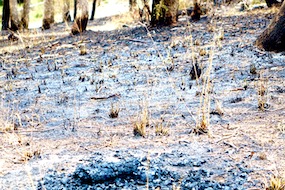
Smoking stumps

I nearly didn’t go to the community forum last night. Bushfire insurance isn’t exactly an inspired topic to spend two hours listening to, but a friend nudged me, so I dutifully went along.  And I am glad I did. It was a fascinating character study and the town revealed some interesting stories.

One woman explained the difficulties she’d had navigating an insurance claim. Some months ago her house exploded after a single lightning strike! It was a sad story but an extraordinary image. Another tale involved one resident in a neighbouring community who had taken out insurance over the phone in 2009 as they watched the flames racing toward their house on Black Saturday. They were then successful in getting the claim paid. That instance prompted insurance agencies to introduce wait periods before new insurance would activate, and people caught in the fires at Lorne in 2015 who tried the same strategy did not have the same luck.

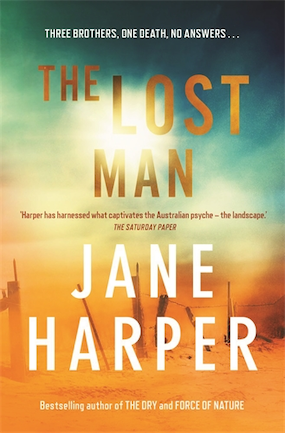
When I read Jane Harper’s book The Lost Man I was struck by how effectively she used setting to drive plot and character development. The oppressive isolation and heat of outback Queensland enabled a sense of lawlessness to loiter throughout the novel, and locating the events in the lead up to Christmas, when family relations are often under the microscope anyway, facilitated how the story unfolded.

Setting has both a physical and chronological aspect in any tale. It contributes to mood and tone and can enhance the plot. It produces the sounds, smells, sights, touch and taste for a story. A character has feelings about a place and it creates possibilities that they must respond to. The time element can influence what options are available to a character and the choices they make.

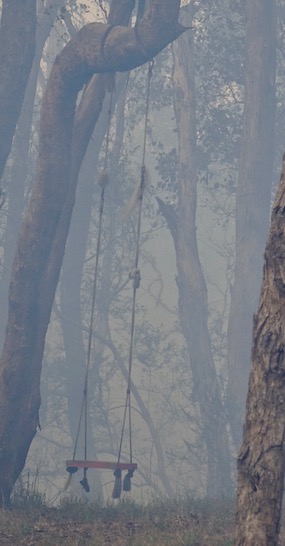
Smoke swing

C.S. Lewis used setting as its own character in the Chronicles of Narnia. Two different worlds existed on either side of the wardrobe where time, seasons and the way people and animals behaved were different purely because of the setting. Harry Potter would not exist as he did without the wizarding world filled with magic. The settings in these novels came to life through the characters interaction with them and the emotions elicited.

What’s all this got to do with a bushfire insurance forum you may well ask? Well, I found myself sitting there among my neighbours and friends and it was a stark reminder of how setting and time interact with characters.

Before 2009 there had not been a significant fire threat near my town in over forty years. When I attended forums like this back then, there would only be a handful of people. Fire was not something most were concerned about. Residents were comfortable, complacent and protective of their stunning and peaceful setting.

After the 2009 fires thousands of people turned up at forums demanding to know who would save them if a fire came. They had suddenly realised their beautiful setting was a sleeping tiger. When it became clear fire trucks would not roll up to their doors, some went home and learnt about fire preparation and behavior. Others demanded the felling of trees and the slashing of fragile grasslands. What had yesterday been peaceful and beautiful was now hostile. As characters in our own stories, our emotional reactions were varied and intense in response to our setting.

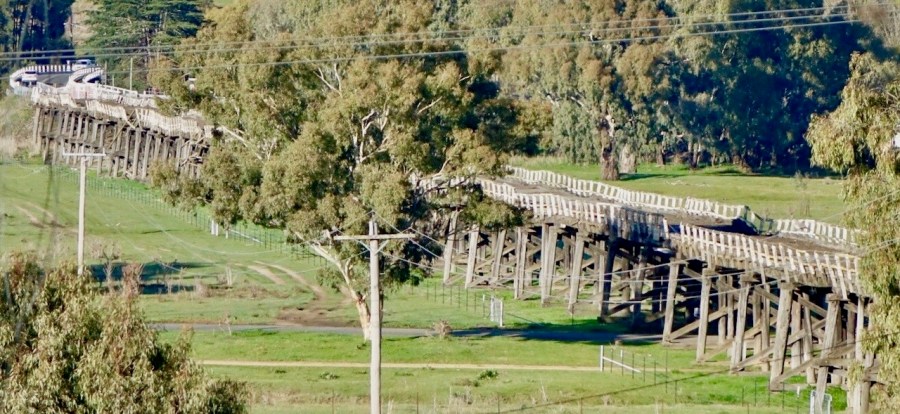
The whole town, and those who pass through it have been disrupted every day this year whilst VicRoads widen a bridge over the river to create an extra lane and install a set of traffic lights intended to improve traffic flow and cut evacuation times if there is a bushfire. The project has been controversial because the community guards its small-town charm like a boxer at the annual heavyweight championships, and modernization is anathema to that.

Time heals many wounds and almost ten years since the 2009 fires the relationship of the characters in my town to their setting has evolved once again. We are about 8,000 residents in total and attendance at bushfire forums has dwindled again, with only about 150 attendees this week.

The bridge saga illuminates the role of collective memory and how people respond to their environment over time. The construction came about because of community outcry about emergency evacuation risks after the 2009 bushfires, but the project has been plagued by complaints about the inconvenience caused by the works and the twice daily traffic jams from one end of town to the other.

The logjam gets so bad that for the last year I have organised my days around not leaving home between certain hours unless it’s on foot or a bicycle. Judging from the community Facebook page which is full of comments, cartoons and criticisms about the project a lot of people have forgotten why it was initiated in the first place. Construction workers are subject to so much abuse by frustrated drivers, they dread coming to work here. Let’s hope that bridge delivers its promise if we ever need it.

What do you notice about how people interact with their settings over time in life? How do the characters in your current project feel about their setting? How does setting interact with the plot and character development?

Main image: A bridge too far

Book Review: The Lost Man by Jane Harper

One of three brothers is found dead from exposure under the scorching sun of outback Queensland. There’s a hole dug by hand in the red earth next to his body which is found by the isolated grave of a dead stockman whose own demise many years before is the subject of myths and legends.  The circumstances of his death are odd. The dead guy is an experienced stockman and knew how easy was to perish in the open. His fully stocked vehicle is found in perfect working order ten kilometers away with the keys resting on the driver seat . The question is whether he committed suicide or was killed.The Lost Man Jane Harper

The remaining family gather at the station house of the dead man in the lead up to his funeral and Christmas.  Their shared history and personal secrets come nipping at their heels like a hungry dingo.

A sense of lawlessness lingers through the story and the intensity is amplified by the relentless isolation and heat of the outback that sizzles throughout the setting of the novel. It makes a perfect backdrop for exploring the psychology of intergenerational trauma and violence that The Lost Man puts under the microscope. Harper shows what can happen when access to services, friends and neighbours are limited and problems are dealt with in private.

The book is a disturbing page turner and Harper has once again bought ordinary characters to life by exposing the complex layers of their personalities. Family members face the ugliness of their own shortcomings and expose the underlying noxious histories between them that led to one of their own lying dead alone next to a deserted grave.

Main image: Canyonlands National Park, Utah

Inset image: The Lost Man cover (from the web)

The nostalgia of mysteries: horses and politics

This week I’ve been thinking about the mystery novels I read and loved years ago.  I hoovered up Dick Francis books as a teenager because I was obsessed with horses. I suspect that was also when my fascination for mysteries was born. As a consequence Francis holds a nostalgic place in my reading memory despite eventually coming to believe that horse racing should be banned. His novels were fast-paced easy reads full of muddy race tracks, crooked bookies, cheating jockeys and brutal owners.IMG_1172

Francis had himself been a jockey and horse trainer and all his novels revolved around the English race tracks. He wrote most, if not all, in collaboration with his wife, a former school teacher and expert researcher. Some people viewed him as the horse worlds Agatha Christie, but Francis was way more brutal than Agatha ever was in the way he physically and mentally tortured his protagonists.

One of my first jobs out of high school in the mid-eighties was as a track rider for a race horse trainer. The job reminded me of Francis’s tough masculine characters every day I went to work. I have one vivid memory of giving a young jockey a lift home and staring in horror when he leaned out of the car window, whip in hand, and cut a female cyclist across buttocks as we passed. When I threatened to turf him out of the car he just laughed. It could have been a scene from one of Francis’s novels.

When Dick Francis said he always tried to think of a dirty deed, and build a plot around it he captured the heart of the mystery.  They open with some kind of disruption to the social order that creates a puzzle our hero must solve. Along the way they uncover secrets, are diverted by red herrings, meet unexpected surprises and have their physical and psychological limits tested. They always prevail and set the world to rights again IMG_1135 (1)enabling the reader to experience the tension vicariously and discover the hero within.

By the late nineties I had started to move on from horse riding as a profession and got what my parents called ‘a real job’ in a more politically leaning pursuit.

One of Dick Francis’s last novels, 10lb Penalty (1997), blended racing and politics and was the last of his books I read. Some time after that I discovered Shane Maloney who introduced me to the use of mysteries as a form of literary protest. Who wouldn’t be excited to find politicised crime fiction novels set in their own town?

Maloney set his novels in 1990’s Melbourne and bought our political and social fabric to life on the page. His public servant protagonist Murray Whelan shone a light on the absurdity of the political landscape that emerged in the Jeff Kennett era. He satirised Australian politics well before The Hollowmen and Utopia came to our screens. Though the latter have demonstrated that the world of politics continues to be ludicrous in a very frightening way.

Maloney’s books edge into the world of the subgenre ‘apparatchik lit’, some say he invented it.  The term lends itself from the word used for bureaucrats in the Russian Communist Party and explores the intimate workings of politics, the machinery of government and lobby groups and how they impact the social fabric of the society they are set in. I love the way Maloney used suspicion, humour and play as a cover for more sinister events in his novels.

While some of the stories that emerge in this type of fiction (or tv series) appear beyond absurd, you’d be surprised how close to real life they can be. A friend who works in a government department once told me that the day after one episode of Utopia their Minister called the office demanding to know who had leaked information about an IMG_1162-1issue that had appeared on the program…

It’s fair to say that the arrogance of our politicians, their moral hypocrisy and power games continue to be ripe for the picking. You only have to turn to our own national political landscape for endless examples at the moment.

The novel I am currently working on is placed in Melbourne but draws on material from recent (mostly) national politics in an attempt to shine a light on some contemporary political absurdities.

If you have any suggestions for more Shane Maloney type novels, particularly if set in Australia – let me know.


Main image: Horses at Warnambool

Inset images in order: Horses at Warnambool; Parliament Drive, Canberra; Parliament House, Canberra.