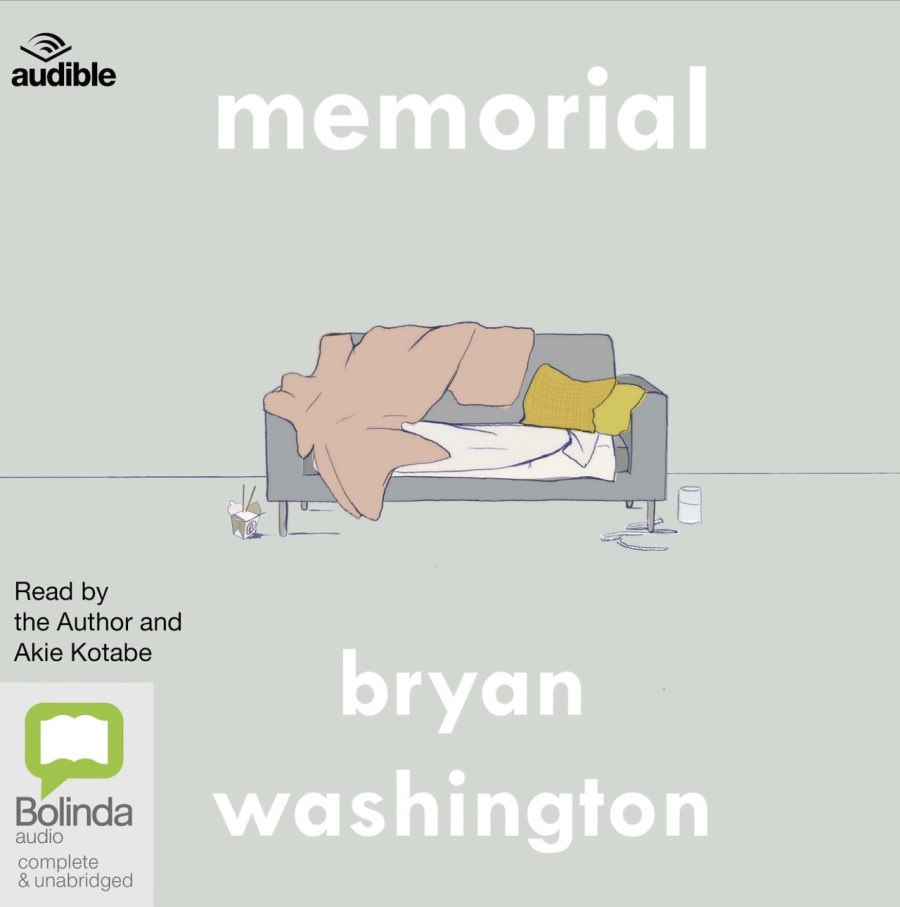
Book review: Memorial by Bryan Washington

Benson and Mike’s relationship has never been easy and now it’s in a rut. Their fights with words and fists end in sex. Each is unsure about what their relationship is or where its going. Memorial is a modern story of the relationship between two gay men – one Japanese, one a black man – and their relationships with their families.

That loving a person means letting them change when they need to. And letting them go when they need to. And that doesn’t make them any less of a home. Just maybe not one for you. Or only for a season or two. But that doesn’t diminish the love. It just changes forms.

Sexuality, race, class, trauma and grief are the subjects of Memorial by Bryan Washington.   The story is written in three parts across two locations – Houston and Osaka – and told from the perspective of the two men.  

You’re taking up space in another human’s brain, she said. You’re a foreign entity. A parasite. That’s a lot by itself.

Memorial opens from Benson’s perspective. His partner, Mike has decided to go back to Japan to see his dying father. Mike’s mother, Mitsuko, who Benson has never met arrives to stay the day before Mike leaves. Benson finds himself sharing a house with a Japanese woman he doesn’t know in a predominately black neighbourhood in the throes of gentrification. Mitsuko is disappointed that her son has run off to be with her ex-husband just as she arrives and resists Benson’s attempts to draw her out.

He came out of my body. He’s a homosexual. He left his mother with a stranger. I’ve already got everything I need to know.

Mike arrives in Japan and takes up residence with his estranged, dying father, Eiju, who runs a bar and pretends nothing is wrong. Mike communicates via sporadic text messages with Benson and equally sporadic conversions with his father.

There are a lot of spaces in this novel. The unanswered questions and awkward silences between characters draw your attention to what is not said, revealing that there is as much, if not more meaning in the unspoken than the spoken. A beautifully written insight into the ordinary life of men.

Book review: Seed to Dust. A Gardener’s Story by Marc Hamer

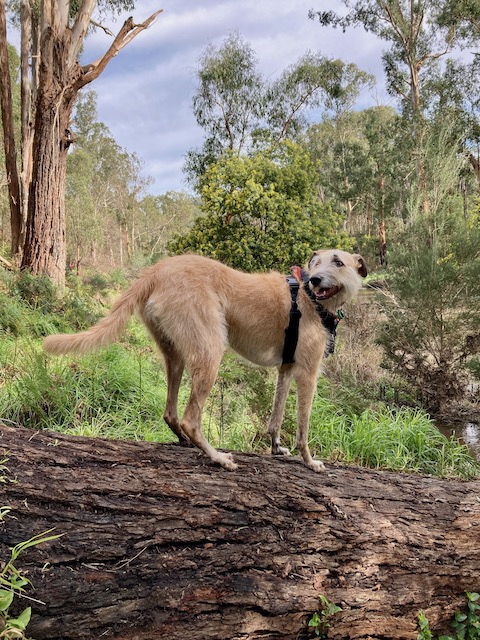
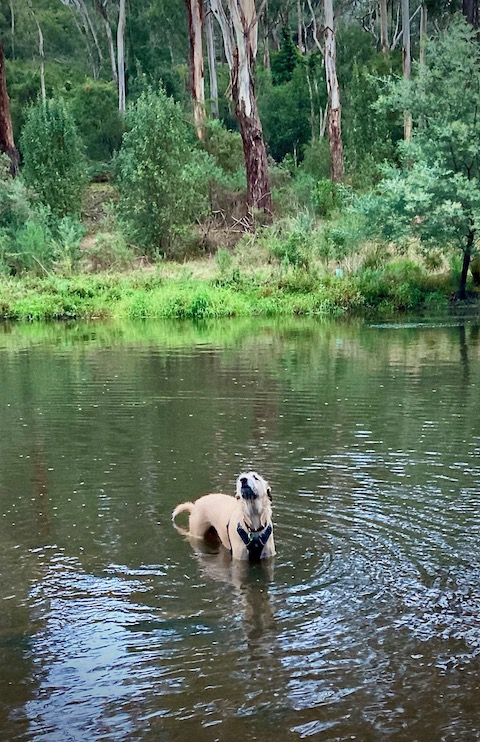
staghound dog staning in the Yarra river. River bank behind shows tall eucalypts and greenery
Natures landscaping

If lockdown continues for much longer, I may well complete most of that list of outstanding jobs that has been hanging around, some for longer than I care to admit. When I go for my daily walks in the forest I notice what a superb landscaper nature is. She throws together trees and shrubs and rocks and delicate flowers to create a display of visual perfection that I strive to emulate in parts of my constructed garden.

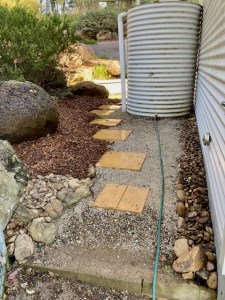
There is a patch of gravel beside my house that has been largely unchanged for over twenty years as I have never been quite sure what to do with it. The area is in a cutting and shaded and damp in winter, dry in summer. I had an inspiration after discovering some discarded pavers beneath the house and set to work over two weekends.

I often listen to audio books whilst working in the garden and chose Seed and Dust. A Gardener’s Story by Marc Hamer. His story was the perfect companion. Told over a twelve month period when Marc tended elderly Miss Cashemere’s garden on her country estate, the story is a meditation on gardening, nature and life.

In my imagination, this life has been a path with many, many forks, each one a choice to be made. Each unchosen route fading from view as it became the past, its destination unknowable. No destination is really known until you arrive, and then it becomes merely a point along the way — a vague place rarely planned for, simply the start of another adventure. The only thing to do is be happy with the outcome, whatever it is. The path leads to the end, as all paths do.

The story meanders month by month through the seasons honing in on minute changes on the estate. Marc’s work in the garden reflects his love for nature and his distant yet intimate relationship with its owner who observes him and occasionally interacts with him is tentative yet tender. Reflections on nature are interspersed with Marc’s reflections on his own life and philosophical observations of humanity and what gardening has taught him about life. It is a beautifully written story. I really enjoyed listening to the rambling baritone of actor Owen Teale reading the audio.

By the time I got to the end I had fallen in love with the garden the man and the voice and started listening to it again.

Seed to Dust was shortlisted for the Wainwright Price in 2021 (winner to be announced next week on 7th September). I understand that the printed novel is beautifully illustrated and have ordered a copy for my shelves as well as one I have sent as a gift to someone I think will enjoy it also.

200 days of solitude

“I wish it need not have happened in my time,” said Frodo.

“So do I,” said Gandalf, “and so do all who live to see such times. But that is not for them to decide. All we have to decide is what to do with the time that is given us.”

J.R.R. Tolkien, The Fellowship of the Ring

Yesterday marked the 200th day of lockdowns in Melbourne since the beginning of the pandemic. The solitude of lockdown has a rhythm, and despite the shrinking of our worlds to 5km life goes on. It is surprising how much still happens.

I wake at 5am to a dark silence interrupted only by the occasional sound of snoring from the great yellow hound languishing on my bed. 

I suppose I will have to make the coffee again, I think. Sometimes I say it out loud and wonder how I might teach the dog to do the task. Though, I suspect even if Harper knew how, I would still be the morning barista as I would lose patience with her indolence before she with mine.

I make coffee and breakfast. Chicken and vegetables for the dog, muesli, yoghurt and an orange or tangelo plucked from my tree the day prior for me. I climb back into bed with my hoard (the dog will have to get up for hers). 

My plan is always to write, but often I become lost in news stories about COVID, vaccines, politics and the destruction of the planet, or find myself falling blindly down some social media rabbit hole. My morbid fascination with all this unpleasantness so early in the morning confounds me. Though perhaps it is not so surprising considering some of my reading as reflected in my book reviews. My father keeps suggesting Thomas Hardy and Jane Austin to cure my macabre tastes in literature.

It is hard to know whether my staccato concentration is a consequence of social media or COVID brain, but I often become frustrated by it and apply additional effort to focus my concentration, congratulating myself for putting pen to paper and bleeding ink across the page (or screen), even if it is only 200 words. This blog generates a rigid moment of writing discipline each week that I am grateful for having imposed on myself, as even in my laziest writing periods this weekly ritual keeps me engaged.

Mornings are the most precious part of my day. They seem to me always to be filled with hope. 

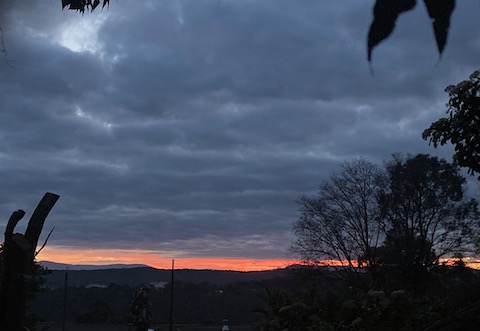
I leave the house with the dog just before dawn. The first kilometre of our morning sojourn traverses a quiet road running up a north-south ridge. To my left I catch glimpses of the sky burning shades of yellow, orange, pink and red from the sun rising behind the mountains to the east. I spy the occasional ringtail possum crouching in a tree as if enjoying the event. To my right, the  blinking lights of Melbourne gradually fade as the sky brightens. I am transported along this enchanted path by the morning chorus as it shifts and swells and rolls with the growing illumination. I am absorbed and in awe of the beauty around me.

Away from the stories of pestilence, conflict and climate change it is easy to find great pleasure and meaning in the small things of life. An emerging flower augers the coming spring, the pure joy on my dog’s face as she wallows in the muddy waters of the Yarra and explores the bushland, the sight of Tawny Frogmouths roosting high up in a eucalypt. The ninety minute walk is a fortifying elixir and the most precious part of my day.

Book review: The Feathered Flames by Alexandra Overy

These Feathered Flames is a young adult fantasy reimagining the Russian folktale The Firebird. Alexandra Overy’s debut novel is about sibling relationships and politics. Twin sisters Izaveta and Asya are born into the royal family and separated at age ten. One is destined to become the next queen of Tourin and the other chosen to train as the new (reluctant) Firebird whose role is to ensure magic in the realm remains balanced. 

How was it that her sister had been taken to live with a monster, but somehow Izaveta had become one? A creature molded by her mother’s manipulations, by the constant betrayals of the court. Asya might have a monster beneath her skin, but Izaveta had one in her heart—in her very essence. So much a part of herself that she no longer knew how to separate one from the other.

When the girls are seventeen the queen dies unexpectedly. The Firebird, Asya, receives a Calling that the queen’s death was due to a magical imbalance and returns to the palace. The princesses must step into their respective roles prematurely and become reacquainted with one another as they work out who they can trust and who killed their mother. 

Whispers are enough to bring down a queendom

The fantasy genre is a fun way to escape the world entirely whilst still exploring the human condition, good, evil, power and morality. These Feathered Flames unfolds from the perspective of each of the sisters with political intrigue, swash buckling action scenes, magic and a little girl on girl romance. The story ends with a cliffhanger in preparation for book 2.

Book review: Edie Richter is Not Alone by Rebecca Handler

Rebecca Handler’s debut novel Edie Richter is Not Alone explores Alzheimer’s and the impact of euthanasia on families. Edie, her mother and sister care for their father/husband with early onset Alzheimers. When he no longer recognises her and stops eating Edie decides to suffocate her father without telling anyone.

After Dad’s diagnosis, Mom started labeling things and let Dad grow a beard. She went to a baby store and bought plastic child-protection locks for the kitchen. Just so he won’t stab me, she said, as I wrestled with one of them, trying to get a corkscrew out from a drawer. You remember Tanya from my walking group? Her mother attacked the cleaning lady and they had to move her into a home. 

After the funeral Edie and her husband, Oren, relocate from San Francisco to Perth, Australia. The story unfolds with dark humour as Edie explores her new home and is incrementally undone by her dark secret. She murdered her own father. Eadie’s behaviour becomes increasingly unpredictable and outlandish. The story is a well crafted, if discomforting, study of a woman unravelling due to her own lack of insight into her very complicated grief. Oren scrabbles around in fruitless frustration trying to penetrate her emotional defences and help.

I thought that life was about moving from one thing to another, all the previous things falling down behind you, but I was beginning to see this was not the case at all. That in fact every action, every thought, and every word uttered, they all stayed with you and formed a sort of jumbled collage

I found this novel morbidly compelling, a little voyeuristic and viscerally uncomfortable. It is a study of a woman’s mental and emotional disintegration resulting from her inability to open up to others about what pains her the most. She pushes away those closest to her and behaves in such appalling ways that she infuriates others who begin to believe she really is either bad or mad. As Edie becomes more and more isolated her realtionships and inner life fray. Eventually something has to give. 

A challenging, engaging and thought provoking read.

Book review: The Art of Being Normal by Lisa Williamson

I don’t read a lot of young adult fiction, but enjoy it almost without fail when I do. The Art of Being Normal is a story about a couple of teenagers on the outer. David is on the cusp of puberty and hasn’t told his parents that he is transgender – they just think he’s gay.

Leo is the new kid at school. He’s from the wrong side of the tracks and there are rumours he was kicked out of his previous school for doing something terrible. Most of the kids avoid him as they think he’s dangerous. David decides to try and befriend him. Leo doesn’t want (nor think he needs) friends and just wants to be left alone. His councillor talks to him about anger management and thinks he would benefit from making friends.

Participating?’ I ask, screwing up my face. ‘Participating in what?

Jenny sighs again. ‘In life, Leo. I want you to start participating in life.’

Author Lisa Williams was inspired to write the story after working in the national health service in England in a department focussed on helping teenagers who are questioning their gender identity. I would be interested to know the perspective of someone with lived experience, but for me it was a refreshing read. Diversity of representation is an important progression in fiction – stories like this did not have exist in mainstream fiction until quite recently. We all want to be ‘seen’ and being reflected in fiction contributes to that sense.

For someone so convinced that life isn’t fair, she plays an awful lot of bingo.

Told in first person, The Art of Being Normal is a funny and moving story about class, coming of age, and coming out in all its multi-colours. Told with plenty of surprising plot twists, the story is beautifully and sensitively written and had me laughing out loud in places. A great book for young people who don’t fit the mould and anyone who wants to engender a greater understanding and empathy for difference and diversity.

Grand Dames of Crime: Dorothy L Sayers

One of the greats of British crime fiction Dorothy L Sayers (13 June 1893 – 17 December 1957) wrote numerous crime fiction novels including eleven featuring the character Lord Peter Wimsey. The character Harriet Vane, a Wimsey love interest, also appeared in four of them and shone a light on Sayers strong views on equality. 

Facts are like cows. If you look them in the face long enough, they generally run away.

Her work also touches on other issues of the day including generational and class divides, the effects of war, Depression-era loansharking, financial scandals of the late 1920’s, fear of Fascism, the Chinese civil war and more. The themes provided background to ingenious mystery puzzles and full characters conveyed with humour, grace and flair.

Time and trouble will tame an advanced young woman, but an advanced old woman is uncontrollable by any earthly force.

Sayers worked in advertising for a period and was responsible for among other things the Guiness advertising campaign featuring zoo animals, some of which still make an appearance. She was also responsible for Colman’s Mustard 1920 guerrilla marketing campaign The Mustard Club.

Writing poetry and advertising copy didn’t earn enough, and the need to make a living is what motivated her to start writing crime fiction. The character Lord Peter Wimsey gave her an opportunity to spend money she didn’t have herself. She published Whose Body? at age 30 and never looked back, becoming a member and president of the Detection Club alongside writers such as Agatha Christie. Sayers strong principles of fair play were codified in the oaths required of prospective members of the Detection Club.

Do you promise that your detectives shall well and truly detect the crimes presented to them, using those wits which it may please you to bestow upon them and not placing reliance on, nor making use of, Divine Revelation, Feminine Intuition, Mumbo-Jumbo, Jiggery-Pokery, Coincidence or the Act of God?

Do you promise to observe a seemly moderation in the use of Gangs, Conspiracies, Death-Rays, Ghosts, Hypnotism, Trap-Doors, Chinamen, Super-Criminals and Lunatics; and utterly and forever forswear Mysterious Poisons unknown to Science?

Sayers crime novels were published between 1923 and 1937 along with dozens of short stories. During the same period she edited the three volumes of Great Short Stories of Detection, Mystery and Horror (1928, 1931, 1934), its sequel Tale of Detection (1936), and reviewed more than 350 detective novels for the Sunday Times.

Some people’s blameless lives are to blame for a good deal.

In the late 1930s Sayers stopped writing crime fiction, although some unpublished works were released after her death. The cessation was partly due to the war and feeling there was enough death and violence in the world without putting it in books. In addition, now she had the financial resources to follow her passion for poetry and religion. She translated Danete’s Inferno, The Divine Comedy, Hell, Purgatory and was working on Paradise when she died in 1957. She also produced a raft of religious literature and radio plays.

Four of Sayers crime novels appeared in the UK Crime Writers Association 1990 list of the Top 100 Crime Novels of All Time and five in the Mystery Writers of America’s 1995 list of 100 novels.

How fleeting are all human passions compared with the massive continuity of ducks.

Limited Bibliography

Crime-Mystery Books

Whose Body? (1923)

Clouds of Witness (1926)

Unnatural Death (1926)

The Unpleasantness of the Bellona Club (1928)

The Documents in the Case (1930)

Strong Poison (1930)

The Five Red Herrings (1931)

Have his Carcase (1932)

Murder must Advertise (1933)

The Nine Tailors (1934)

Gaudy Night (1935)

Busman’s Honeymoon (1937)

Short Story Collections

Lord Peter Views the Body (1928)

Hangman’s Holiday (1933)

In the Teeth of the Evidence (1939)

Lord Peter (1972)

Striding Folly (1972)

With the Members of the Detection Club

The Floating Admiral (1931)

Ask a Policeman (1933)

Double Death (1939)

The Scoop (1983)

No Flowers by Request (1984)

How fleeting are all human passions compared with the massive continuity of ducks.

Theatre review: Because the Night @Malthouse Theatre

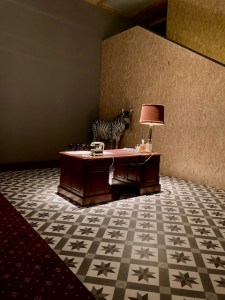
Theatre set showing office desk with light on a diamond motif carpet. There is a trussed up Zebra replica in one corner.

I saw a great promenade theatre show in New York in 2015. Sleep No More was a silent riff on Macbeth performed inside the McKittrick Hotel. The massive space over five floors was transformed into theatrically designed rooms through which the audience wandered interacting with the set and observing the actors perform.

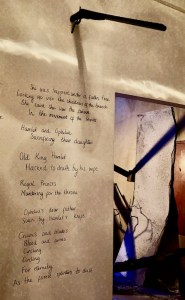
Writing on a wall beneath a replica shot gun:
She was trapped under a fallen tree
Looking up into the shadows of the branch
She said she saw the future
In the movement of the leaves
Hamlet and Ophelia 
sacrificing their daughter
Old King Hamlet
Hacked to death by his wife
Royal Princess
Murdering for the throne
Ophelia's dear father
Slain by Hamlet's knife
Crowns and blades
blood and arms
circling
for eternity
As the forest splinters to dust

Slow to emerge from Melbourne lockdown IV, other than a couple of dinner parties I have mostly stayed home. The temptation of an immersive theatre performance motivated my first foray out into the wilds with the general public and it was definitely worth it. After all what is a Melbourne Winter for if not beanies, dinner parties and theatre?

Because the Night runs from March to September 2021 so grab some tickets and get out and support the arts. You will not be disappointed. The entire Malthouse Theatre space has been transformed into a labyrinth of interconnected spaces for the adventure.

Text on theatre wall:

The trees were screaming
the people fleeing
the king
flung and flayed

I fear that if my daughter 
learns
the true ordeal of the forest 
and speaks it aloud at school
she will be beaten

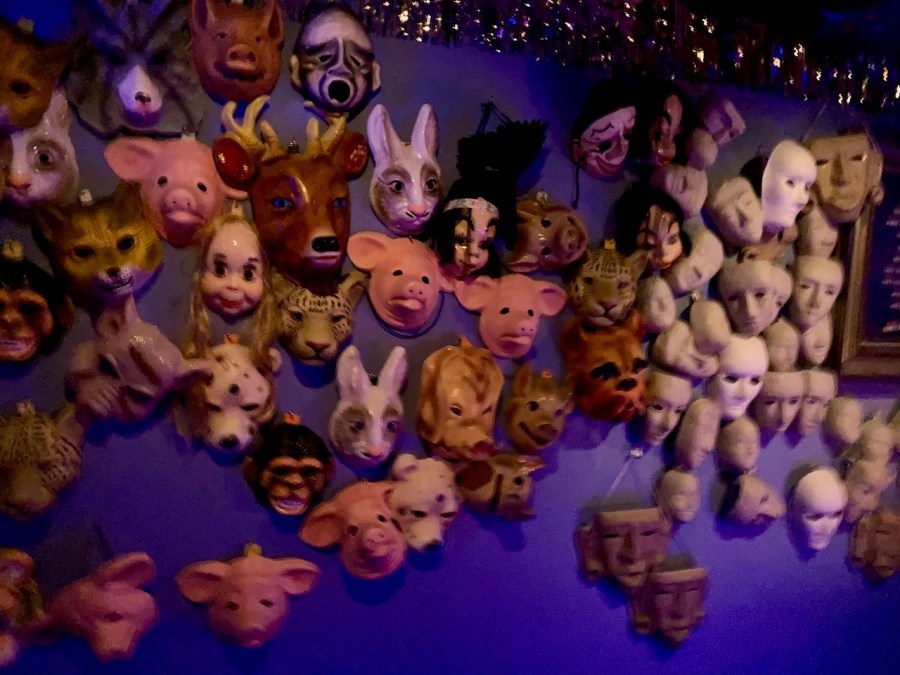
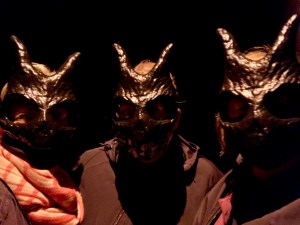
The audience gets divided into three, each group led into a dark foyer and instructed to wear identical dark robes and Donnie Darko masks that transform the crowd into macabre giant black rabbits. We were also intersected to remain silent.

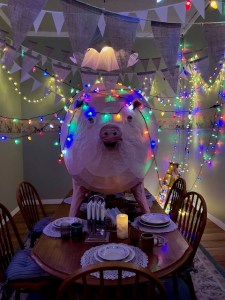
A room with a dining table set for a dinner party with fairy lights.  There is a very large replica pig standing in the middle of the table amongst the crockery

My adventure in Elsinore, a 1980s logging town, started in the Palace bedroom (others were taken to the Royal Office or the Gymnasium) where Gertrude lay prostrate on her bed mourning the kings death. The ancient forest was restless for blood…

This is choose your own adventure theatre. You can stalk one actor, go in search of different scenes or focus on exploring the space during the 1.5 run time. You are invisible to the actors so don’t worry you won’t suddenly find yourself being dragged into the action.

Three theatre goers dressed in dark cloaks and wearing black Donnie Darko masks

I started out following Gertrude, then got sidetracked by other dramatic scenes, following the loudest voices. After a while I broke off from the crowd and went in search of hidden rooms (of which there were many) and props that provided insight into the story – discarded notebooks and writing scrawled on walls. I simply soaked up the sensory experience until joining the actors again for the final dramatic scene. And pigs, there are lots of pigs.

The script is loosely based on the story of Hamlet with a bit of gender bending and it helps to have the general gist of Shakespeare’s play before you start. The show is designed in such a way that you won’t see the entire performance in one visit, though of course there is nothing to stop you from going more than once

Postscript: lucky I went because we’re back in lockdown again…

Book review: Digging Up Dirt by Pamela Hart

Thought I’d lighten things up a bit this week with a cozy mystery. Cozies are an easy read that can be gobbled up without any uncomfortable feelings, whilst still offering satisfying twists and turns. Digging Up Dirt also includes a splash of simmering romance.

Nothing like the builder digging up bones to halt the work on your renovation. TV researcher Poppy McGowan needs to find out if the bones are human or animal so she can get on with finishing her house. When archaeologist, Dr Julieanne Weaver, whom Poppy doesn’t like, interferes and slaps a heritage order over the property because she thinks the bones a significant Poppy is really annoyed. But then Julieanne is found murdered onsite, face down in the excavation dressed in heels and an evening frock, and things get really complicated.

Pamela Hart is a prolific author who has written more than 35 books and successfully crosses the genre divide. She is best known for her historical fiction (The Soldiers Wife, The War Bride, A Letter from Italy and The Desert Nurse).

Hart has also penned speculative fiction (Ember and Ash)and children’s books under the name Pamela Freeman as well as being an accomplished scriptwriter for ABC kids. I’ve done a few of the online courses she has written for the Australian Writers Centre as well, which have all been of good quality. She’s no slouch!

Digging Up Dirt is Hart’s first mystery novel and it’s a fun Australian read (or listen to the audio book). 

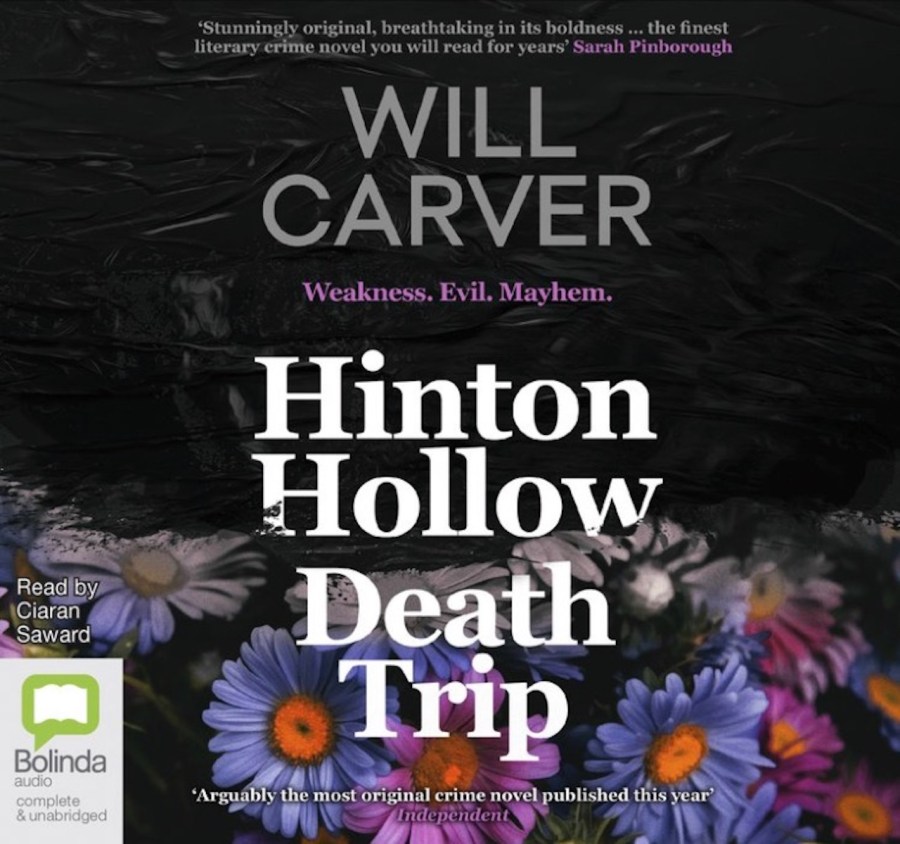
Book review: Hinton Hollow Death Trip by Will Carver

The devil made me do it.

Fear is my greatest tool. It can be used to make a person do almost anything. You can take education, information, motivation and throw it all away, fear is the only thing you require. It is a slow and deadly poison. And it is effective.

Detective Sergeant Pace flees London to return to his hometown of Hinton Hollow for some respite after the trauma of his previous case. Pace’s shadow follows him, enveloping the idyllic small town in darkness and creating disarray in the community. Hinton Hollow Death Trip is the third Carver novel featuring Pace (see Good Samaritans and Nothing Important Happened Today) but could also be read as a stand alone.

The story is a noirish pulp meditation on what can happen when we abandon our values and give into our darkest parts, unleashing the monster within driven by our disappointments, bitterness, resentment and jealousies.

This is how evil works. I just have to get you started. What you do with that feeling is entirely down to you.

The unique twist in this tale is the narrator. Evil. Evil takes great pleasure insinuating itself into the cracks of people’s goodness, prodding at their insecurities and encouraging them to indulge the more selfish, destructive and violent elements of their nature. The message here is that we all have this capacity for destruction in us, but we make choices in response to experiences that determine whether we indulge our malevolent sides or keep turning toward the good in ourselves and others. Evil encourages the characters of Hinton Hollow to indulge their blackness and cheat, steal and kill.

Where everything happened for a reason. A leap of faith. Detective Sergeant Pace is no good. Detective Sergeant Pace is a footnote. Detective Sergeant Pace is a small story. 

In keeping with Will Carvers style, Hinton Hollow Death Trip, its cast and their behaviour leave the reader feeling queezy, despite the macabre content being tempered with equally dark humour. The characters are outrageous but believable and the narrative has a way of making the reader reflect on their own dark corners. 

This is not a story for the squeamish so if you can’t stomach a bit of graphic violence, stick with the cosies. It seems the writing of the story was also uncomfortable for Carver. Apparently the manuscript landed in the bin twice before Carver felt it was good enough to call complete. 

Some people are more comfortable in the dark. Some seek it out. Some thrive there…