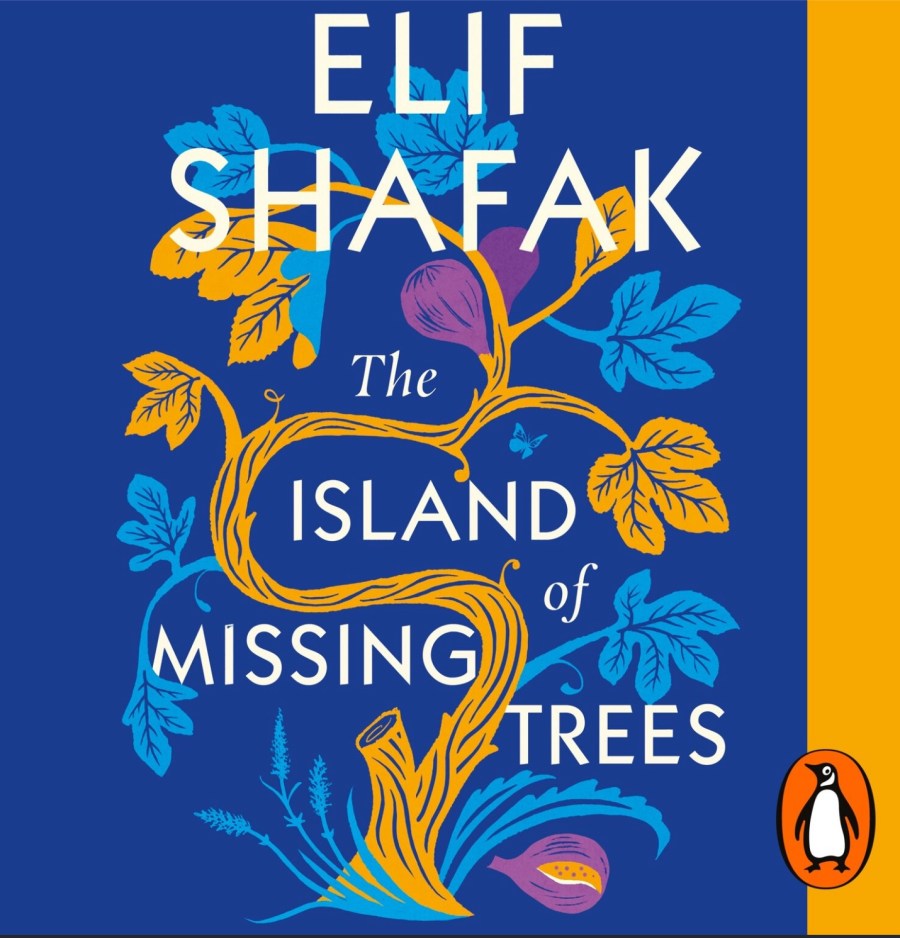
Book review: The Island of Missing Trees by Elif Shafak

I have been know talk to trees and animals myself, so a novel that includes the point of view of a fig tree was enticing. The Island of Missing Trees by Elif Shafak is a beautiful story about the turbulent history of Cyprus and its impact on the lives of ordinary people. The story contains three narratives.

Because in real life, unlike in history books, stories come to us not in their entirety but in bits and pieces, broken segments and partial echoes, a full sentence here, a fragment there, a clue hidden in between. in life, unlike in books, we have to weave our stories out of threads as fine as the gossamer veins that run through a butterfly’s wings.

A forbidden marriage between a Greek Christian and a Turkish Moslem during the post colonial violence in Cyprus is so disapproved of that Kostas and Defne Kazantzakis move to England. As young lovers in 1974 they met in secret at The Happy Fig, a tavern owned by two men who understand forbidden love.

That is what migrations and relocations do to us: when you leave your home for unknown shores, you don’t simply carry on as before; a part of you dies inside so that another part can start all over again.

Kosta and Defne’s 16-year-old Ada in London in the 2010’s is grieving her mother’s death when her aunt Meryem arrives and unravels the Cypriot history of Ada’s parents.

So I guess it is in my genes, this melancholy I can never quite shake off. Carved with an invisible knife into my arborescent skin.

The third narrative belongs to the talkative fig tree originally growing at the The Happy Fig tavern. A cutting of the fig is transplanted into an English garden by Kosta.

I wish I could have told him that loneliness is a human invention. Trees are never lonely. Humans think they know with certainty where there being ends and someone else’s starts. With there roots tangled and caught up underground, linked to fungi and bacteria, trees harbour no such illusions. For us, everything is interconnected

The Island of Missing Trees is about beauty and violence, secrets, history, natural history, love, trauma and resilience. The story examines ordinary lives can be recast by societal events, what compels someone to leave their homeland, the adjustments of immigration and the impact of the consequent loss of culture.
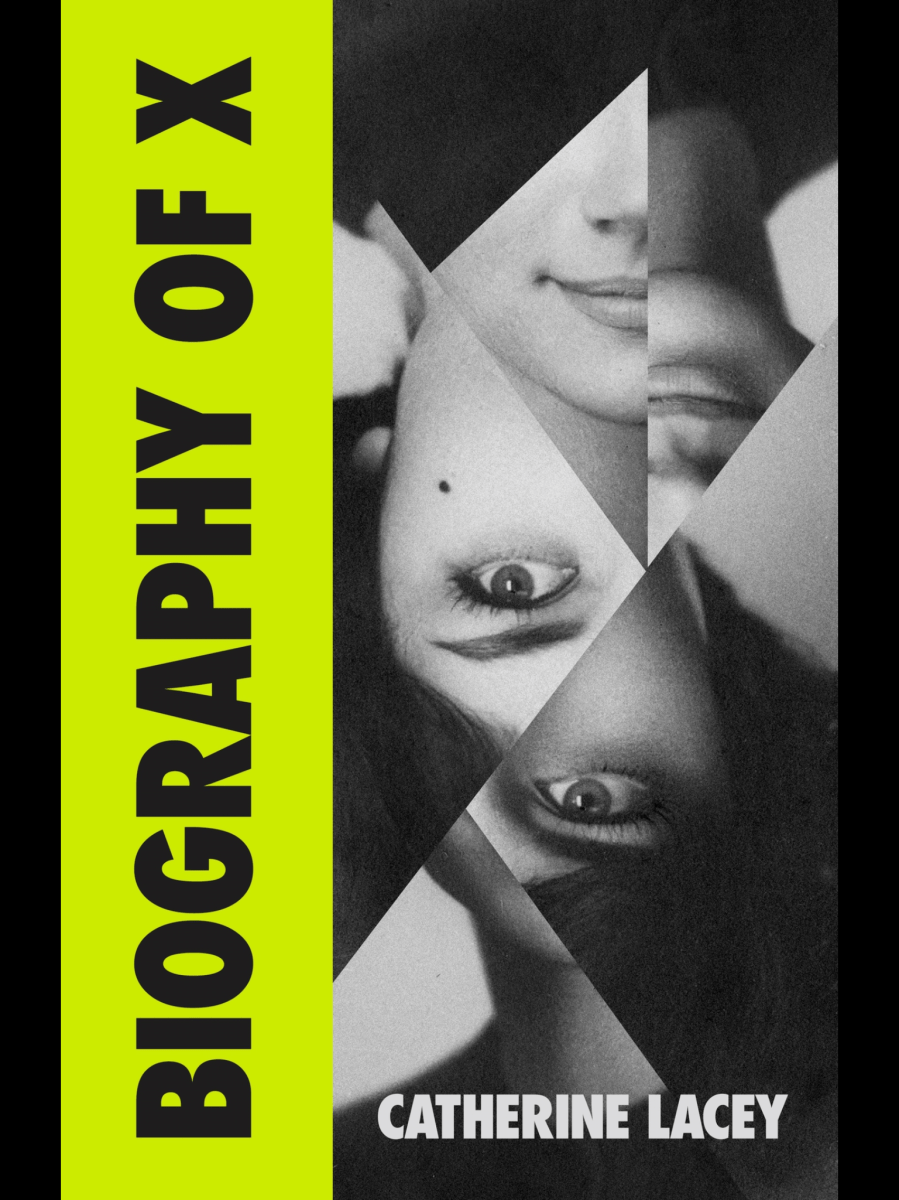
Book review: Biography of X by Catherine Lacey

The title of this book—as titles so often are—is a lie.

Biography of X by Catherine Lacey is an odd, but compelling genre-bending work of fiction. It is written in the style of a biography, including photographs, bibliography and references with footnotes, by a narrator who is a journalist. Biography of X is set in a USA with an alternative history in which the southern states have succeeded during the ‘great disunion’ of 1945 and become a dictatorial theocracy.

The sky was moonless and blasted full of stars, and as I looked at them, exhausted into naïveté, I felt almost fearful of the vastness above me.

X was an eclectic artist, of books, music and art installations. Before her death in 1996, the mysterious X had collaborated with the likes of David Bowie and Tom Waits. She took the name X in 1982. It was unclear whether any of her many prior pseudonyms where her real name.

The first winter she was dead it seemed every day for months on end was damp and bright—it had always just rained, but I could never remember the rain—and I took the train down to the city a few days a week, searching (it seemed) for a building I might enter and fall from, a task about which I could never quite determine my own sincerity, as it seemed to me the seriousness of anyone looking for such a thing could not be understood until a body needed to be scraped from the sidewalk.

The narrator/author of the biography is, CM Luca, X’s widow. She is obsessed with trying to find the truth about the woman to whom she was married. She is motivated to write the biography after becoming infuriated by another published by someone else that she feels misrepresents her beloved.

This pathetic boy—no biographer, not even a writer—was simply one of X’s deranged fans. I don’t know why she attracted so many mad people, but she did, all the time: stalkers, obsessives, people who fainted at the sight of her. A skilled plagiarist had merely recognized a good opportunity and taken it, as people besotted with such delusion hold their wallets loosely.

Despite their marriage, when X died, Luca did not know her birthplace, date or real name. She sets out to piece together X’s past, untangle fact from fiction and process her own grief through a series of interviews with former spouses, lovers, and friends. Luca trawls through papers left behind by X trying to make sense of who her wife was and by extension their relationship and herself.

We cannot see the full and terrible truth of anyone with whom we closely live. Everything blurs when held too near.

X was clearly brilliant, difficult and troubled in the way that great artist often are. Her relationship with Luca was imbalanced and dysfunctional. Luca traces X’s origins to the Southern Territories and seeks out her family of origin, her roots as a revolutionary or terrorist depending on whom she speaks to.

But I did not find this so awful. Grief has a warring logic; it always wants something impossible, something worse and something better.

Biography of X is one of the most unusual and ambitious works of fiction I have read in a long time. Its mesh of genres, bending of history, and melding of the real with the imagined is discombobulating and enthralling.

Perhaps your ability to feel it waned, perhaps you are the one who ruins things, it was you, you—and there it was again, that useless, human blame two people will toss between each other when they become too tired or weak to carry the weight of love.

There was so much in this novel, both in form, content and emotion that it took me a long time to read it, but I am glad I did.

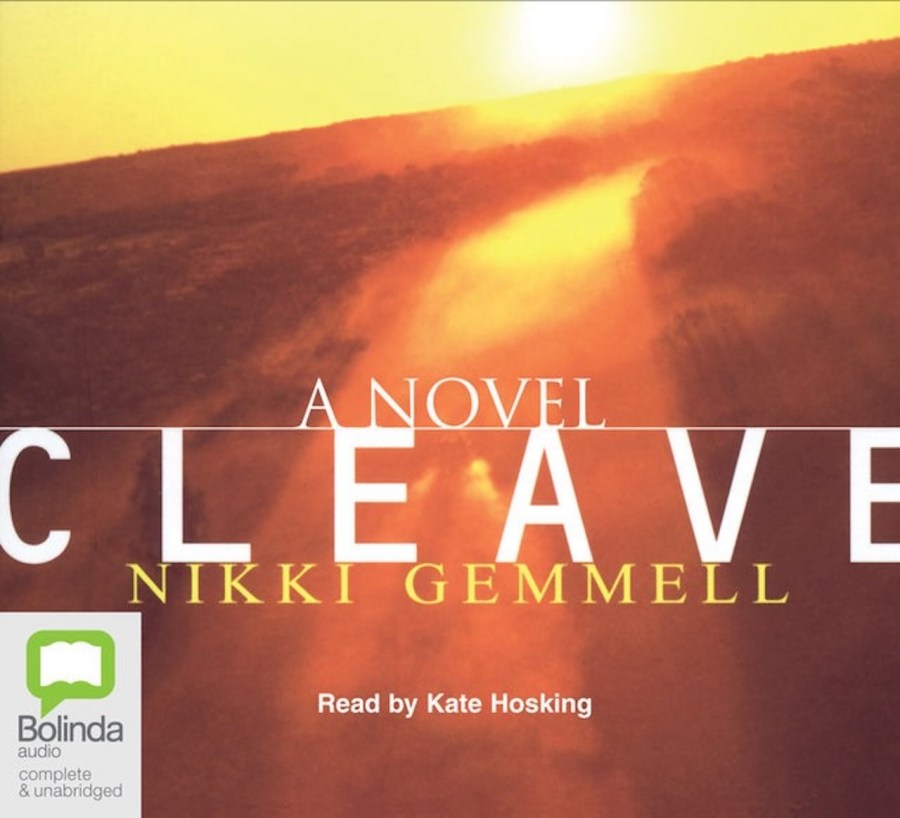
Book review: Cleave by Nikki Gemmell

Cleave by Nikki Gemmell is a story about the relationship between a father and his daughter set against the stark landscape of the desert in the Australian outback.

The story begins with a cheque. The envelope that carried it was bruised with grubbiness and worn thin from too many hands. The envelope took two months to find her. The amount of the cheque was substantial and the typewritten instructions were blunt: hunt him down

Thirty year old Snip Freeman is a nomadic loner and artist based in Sydney. Her grandmother died and left her enough money to buy a ute and a request to return to Alice Springs and find her father, Bud. Dave responds to an add Snip places for someone to share the journey and the two strike up a relationship of sorts. Dave is fascinated by Snip’s free spiritedness, even after she abandons him.

A man told her once she’s the type of woman men never leave. They don’t. She leaves them. She gives them the feeling that any minute she’ll be off, so while they’re with her they’re obsessed.

Snip and Bud’s relationship is complicated. He absconded with her when she was a child after his relationship with her mother ended, cut Snip’s hair and turned her into a boy to disguise who she was. Their reunion almost becomes deadly when the two of them take trip into the desert.

People without curiosity are like houses without books: there’s something unsettling about them.

Cleave was written in 1998, but its outback setting gives it a timeless quality. The story includes Indigenous characters written without appropriation – perhaps a consequence of Gemmell’s personal experience of living in Alice Springs.

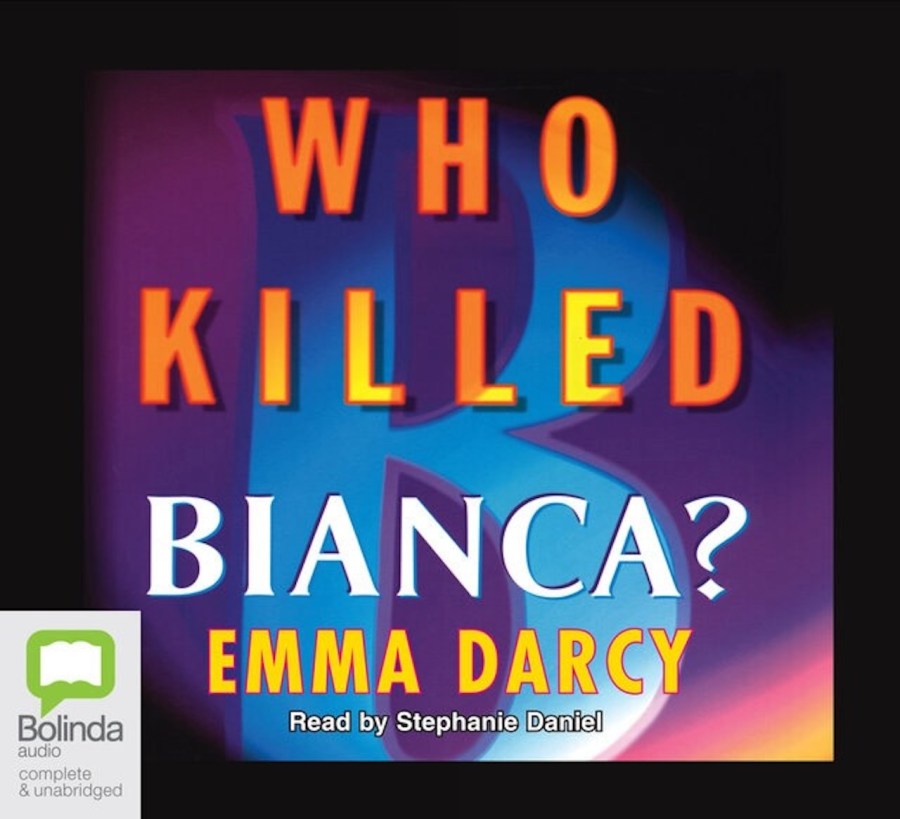
Book review: Who Killed Bianca? by Emma Darcy

Who Killed Bianca? by Emma Darcy is a mystery that riffs on the locked room mystery concept. The book won the 2002 Ned Kelly Award for best new novel.

K.C. Gordon is a romance novelists who likes to travel to recharge her batteries, see new places and meet new people. Travel provides inspiration for her stories and she wants to set her next book in the Australian outback so decides to join a trip from Sydney to Alice Springs on The Ghan. K.C. is joined by a host of privileged passengers, and Bianca Bernini, a gossip columnist who’s motive is to out a few secrets of some of the other passengers.

Bianca Bernini had only 36 hours left to live. She didn’t know it. No one knew it at this point in time. Her death hadn’t been planned, yet.

The story’s characters include the quintessential wealthy sisters, a French ex-nun, a gay couple, and a handsome cad with a naive neurotic wife and her supposed best friend. Each of these main characters have some kind of hidden connection to one another and they want to keep secret.

The wealthy do not like their indiscretions being exposed and soon after Bianca starts to reveal them she is killed and thrown off the train. While no one particularly misses Bianca, K.C. soon finds herself trying to unravel the mystery and flush out the murderer.

Who Killed Bianca? is a rollicking multi-point-of-view tale of deceit, betrayal and death, and it’s a quick read.

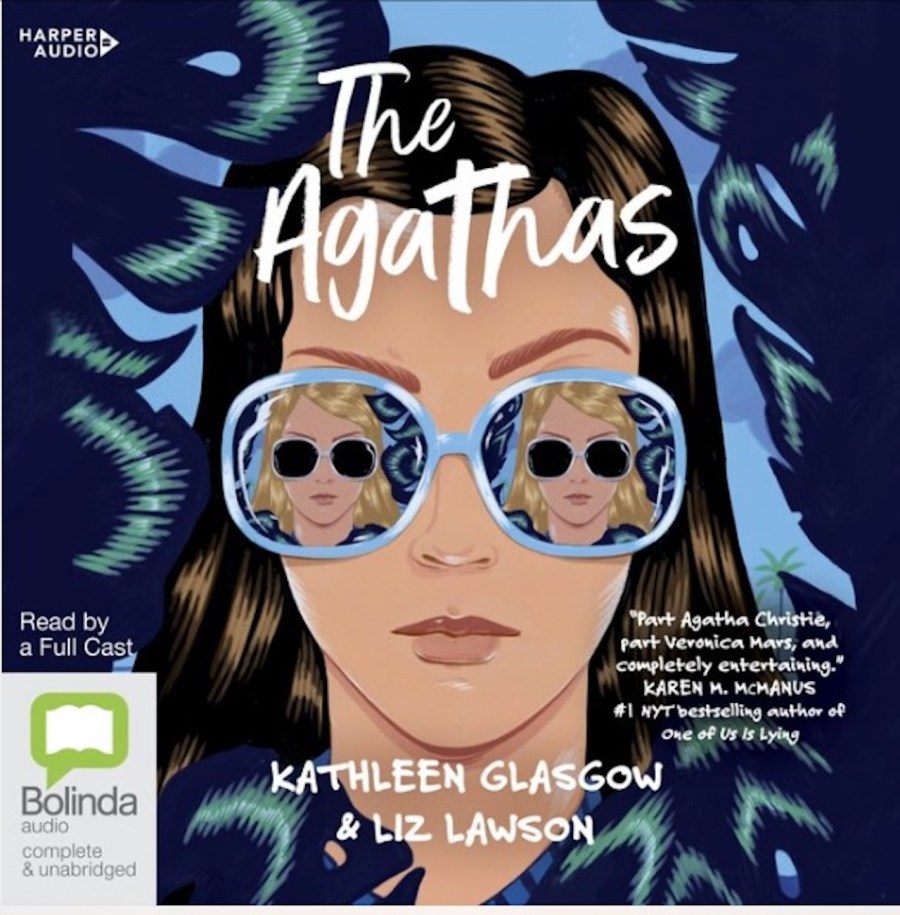
Book review: The Agathas by Kathleen Glasgow & Liz Lawson

The Agathas by Kathleen Glasgow and Liz Lawson is a fun twisty young adult mystery.

Alice Ogilvie is a financially privileged A-lister but her upbringing is largely outsourced. She has been ostracised by the popular group at school after disappearing when her best friend stole her basketball star boyfriend. Now she refuses to talk about it and just needs to stay out of trouble.

Three hours back at school and I’m already in trouble? Good lord, I’ve barely had time to pee.

Iris Adams lives in a working class area with her single mum who works hard to provide for her daughter. Iris is asked by the school to become Alice’s tutor. The two are an unlikely pair, but soon become friends as they bond trying to solve a mystery – the disappearance of Alice’s best friend Brooke.

Well,” I say, “I once saw a show about a guy who bludgeoned his mother to death in the kitchen and then cooked a full meal of pot roast and mashed potatoes, so anything is possible.”
“Iris,” Alice says wearily. “You seem like such a nice person and her your brain is full of horrible things.

As the title suggests, the book pays homage to Agatha Christie. Alice is a big fan and is inspired by what she’s learnt from the mystery writers novels, using the strategies in her own search to solve the mystery of her missing friend.

We are probably this far from donning trench coats, smoking Lucky Strikes, and slinking furtively around town, taking notes in a little black book.
Which doesn’t actually sound all that bad, truth be told.

When Brooke’s body turns up and her boyfriend is arrested, the girls decide they need to find the real truth and fix the miscarriage of justice. They are aided by the hard drinking, smoking, disheveled female lawyer representing the boyfriend who also used to be Iris’s babysitter.

An English writer known for her 66 detective novels and 14 short story collections. Also known as the bestselling author of all time. Also, one bad bitch.

I really enjoyed the characters, the teenage dramas, the red herrings and the Christie references. Something in this one for young and old.

Book review: Devil House by John Darnielle

Devil House by John Darnielle is about a true-crime writer who takes his craft to the next level. Gage Chandler buys an abandoned property in small town Milpitas, California. He moves in to write his next book – about a supposed occult double murder that happened in the building two decades prior when it was a pornographic book and video shop.

The future feels dramatic when you think you see a little of it cresting the horizon, the more so if the present feels routine.

After he moves in, Chandler starts recreating the crime scene, interviewing locals and scouring eBay for artifacts from the time of the murders. He interrogates rumours about what happened, searching for scraps of facts to sew together into a narrative.

But few things, at any rate, are more powerful than expectations. Blunt force, maybe. Firepower, certainly. Sword and steel. But even those have their limits. The imagination has none.

The world building is vivid in this story as the lives of disenfranchised small town teenagers are unpacked with a shifting broken narrative and Chandler grapples with the moral dilemma of writing about other people’s suffering.

There is, among the public, a perennial urge to believe the worst about the generation that will eventually replace them.

Devil House is gothic horror meets true-crime and almost fantasy…go there if you dare…bwahahaha!

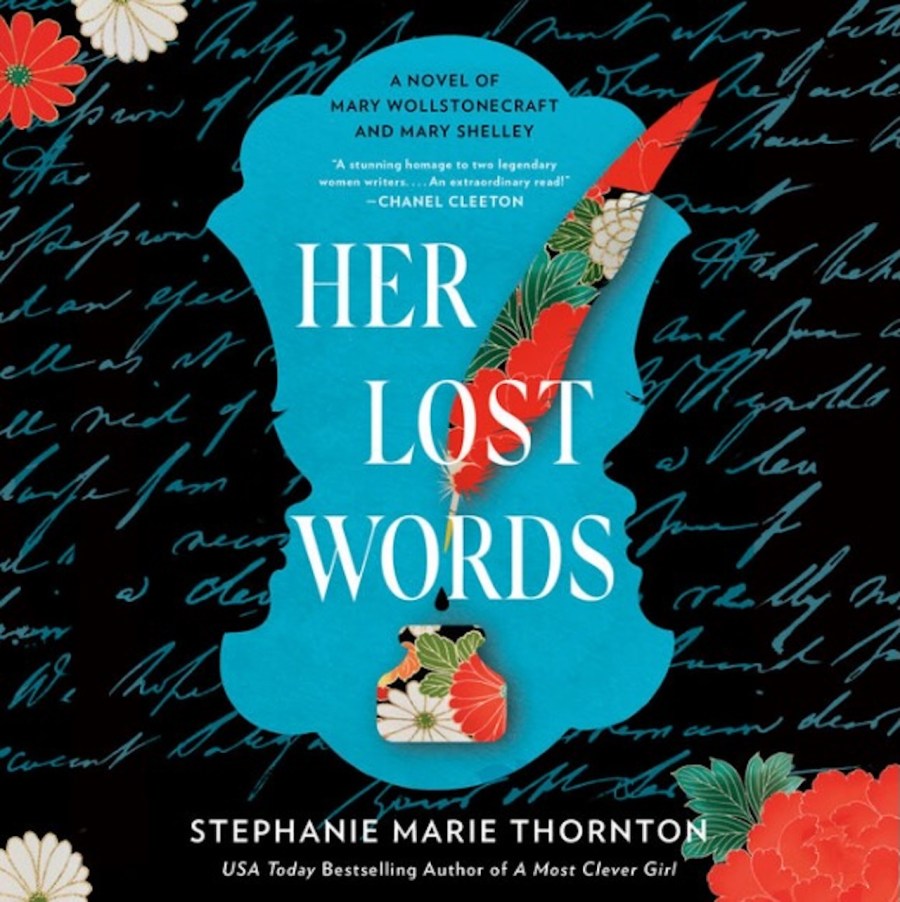
Book review: Her Lost Words by Stephanie Marie Thornton

Who doesn’t love a literary novel about fierce feminist writers? Her Lost Words chronicles the lives of mother and daughter authors Mary Wollstonecraft and Mary Shelley.

Words have the power to transform us, Mary. They can lift us from our grief. The ideas they form can even offer humanity the hope for the future,

Teenage Wollstonecraft fled her violent father’s home in 1775 and was taken in by a reverend’s family who encouraged her love of reading and helped her find a life for herself with a job as a governess. She became one of the founding feminist philosophers with her book A Vindication of the Rights of Women in which she proposed that women were equal to men. Vindication was a trailblazing feminist text.

Mary did know, she’d learned from Claire—who had heard it from her mother—that Mary Wollstonecraft’s life had scandalized society to the point where the entry for prostitution in the conservative publication The Anti-Jacobin Review read “see: Mary Wollstonecraft.”

An independent woman who never bowed to conventions, Wollstonecraft died soon after giving birth to her daughter, Mary. Mary Shelley grew up in the shadow of her mother. Even her lover, Percy Bysshe Shelley, whom she met at a dinner party and then eloped with, first confessed to being a fan of her mother’s writings.

Knowledge is the fairest fruit and the food of joy. You must never forget that. And you must swear a solemn oath that you will never stop reading, or learning, or sharing that knowledge, like the philosophers of old.

Her Lost Words is a historical fiction novel based on the real lives of women who went against the grain and forged their own paths. The story spans England, France during the revolution, Switzerland and Italy. It tells of their loves and loves lost, their relationships with one another and the world around them at at time when women were on the cusp of changing the world and its relationship to them. A touching and inspiring tribute to two literary women of history.

This is a love letter to two brilliant women who lit the way for not just women writers, but all women.

authors note

Fringe review: Spunk Daddy

I’ve heard a few stories from women friends about having a baby conceived through IVF. However, I’ve never given much thought to the donor of the sperm, jazz, spunk as it’s variously called. Then last night I saw Spunk Daddy, on as part of Melbourne Fringe at The Butterfly Club, a cozy venue perfect for settling in for an intimate story.

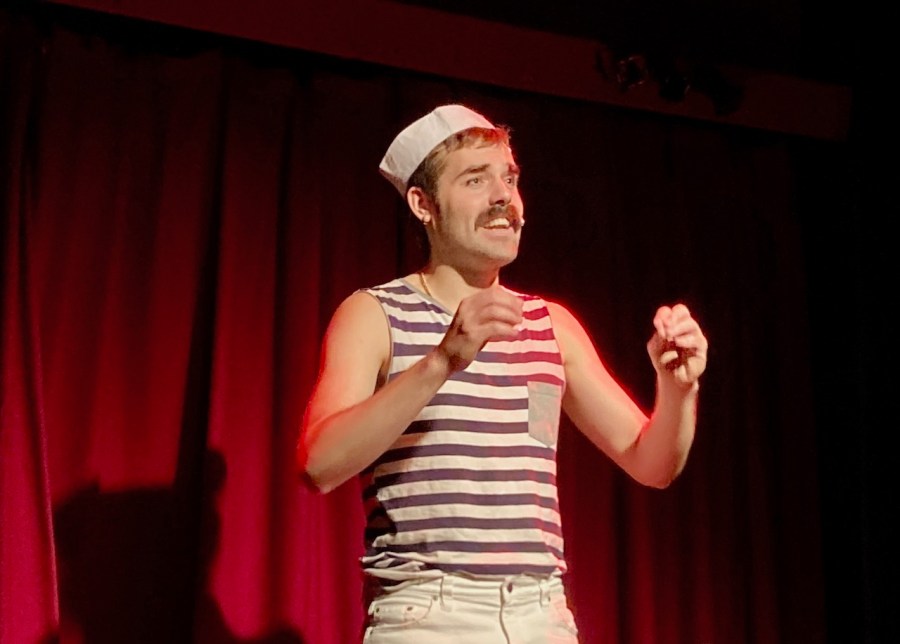
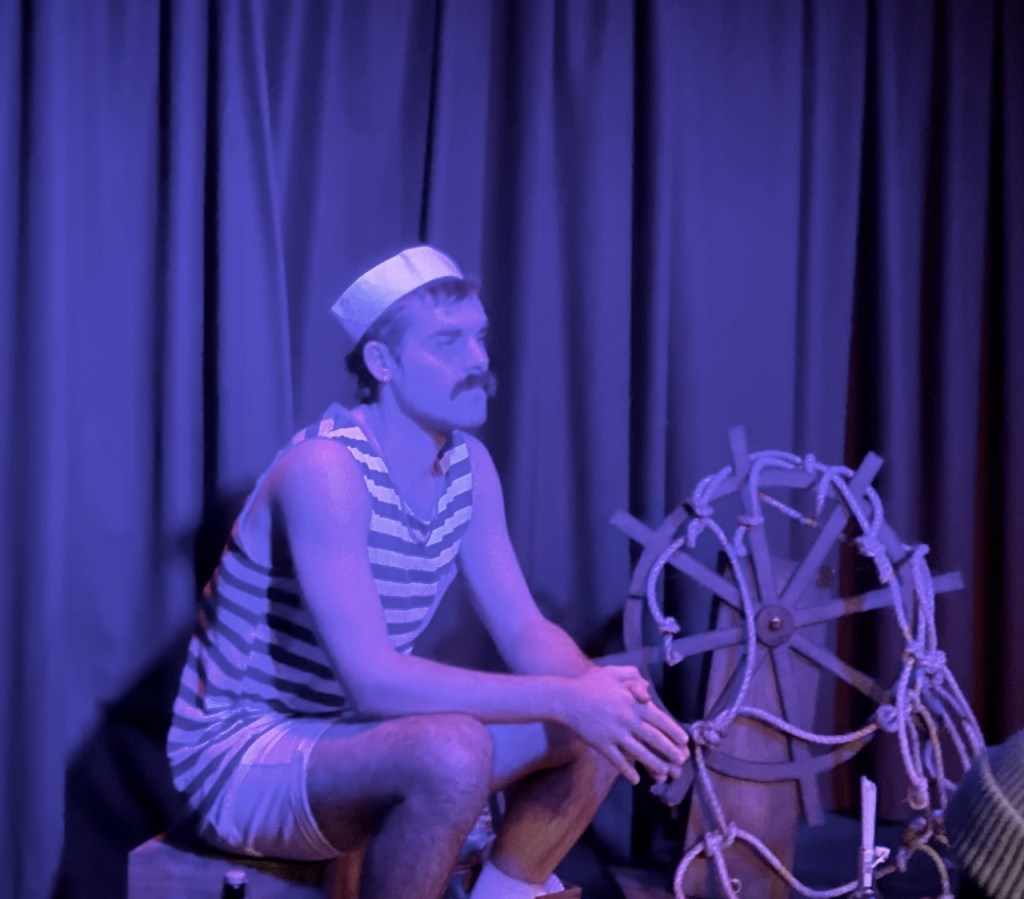
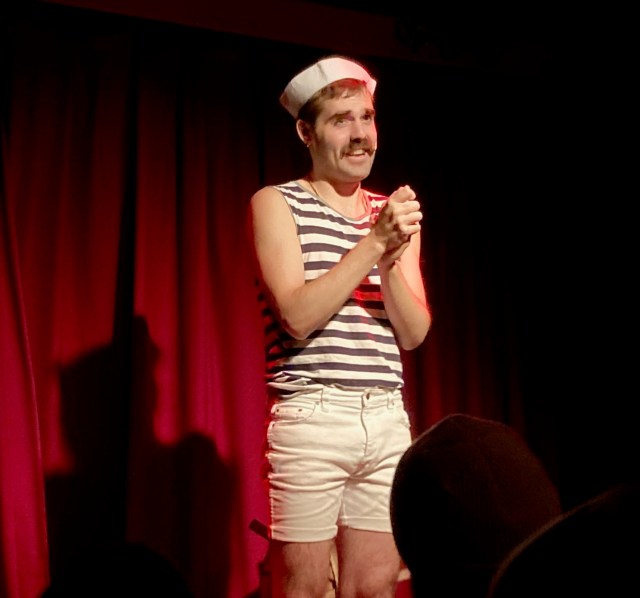
Enter the theatre and a young man, Darby James, is sitting there dressed in a sailor suit next to a ships wheel looking a bit like Bob Denver, the hapless first mate of the S.S. Minnow on 60s TV series Gilligan’s Island.

Spunk Daddy is a sweet, heartfelt and funny cabaret that takes us through the story and vulnerabilities of a young queer man deciding to become a sperm donor. From clicking on a random link on Facebook about donating sperm and grappling with the decision, to writing a letter to an unborn child who may never eventuate and that he will probably never meet, and all the dilemmas in between – which I will not venture into as it could spoil the experience.

Spunk Daddy is a clever, fast paced cabaret show. James leaves no stone unturned and fully exposes the ethical and moral dilemmas of having children or of donating sperm so that someone else can. His willingness to expose his inner thoughts and experience uncensored is refreshing and moving.

The Butterfly Club is quirky, kitsch-crammed parlour with a bar. Go early or stay late for a drink while you peruse the decor, and if you’re looking for a close by spot for a bite to eat, I can recommend Little Ramen Bar, a short walk away.

Spunk Daddy runs until the 22 October, so go on, support Fringe and the arts and grab a ticket here.

Fringe review: Leather Lungs: Happy Ending

It’s not often I see a show that gives me a full visceral response, but last night I laughed, I cried AND I laugh-cried.

I turned up at Trades Hall expecting just another drag show. I have seen a few over the years and I can confirm whole heartedly that Leather Lungs: Happy Ending is not just another drag show.

Sure Leather Lungs: Happy Ending had its share of bawdy jokes, rampant silliness, and of course a great frock made by Leather Lungs’s (aka Jason Chasland) mum, but the show was also a genuine heartfelt and powerful personal story of survival and backing yourself.

The biggest surprise of all was their voice. Beautiful, powerful and with a range that spans four octaves they belted out songs by ABBA, Whitney Houston and Queen selected to accompany their story that talks about serious issues delivered with humour to lighten the tone.

Trades Hall is a great venue for Melbourne Fringe with all its nooks and crannies. I made a night of it with friends by popping across to The Lincoln for a meal and then catching a late show at 9.30 as well – Ned Kelly: the Big Gay Musical – a joyful singing and dancing re-imagining of our iconic bushranger.

So get your Fringe on for an artistic feast. There is so much art on offer to expand, affirm and challenge your thinking – a night of escape into the creative arts is food for the soul.

Leather Lungs: Happy Ending runs untill 15th October so there is still a chance to catch this amazing talent. Tickets available at Melbourne Fringe.

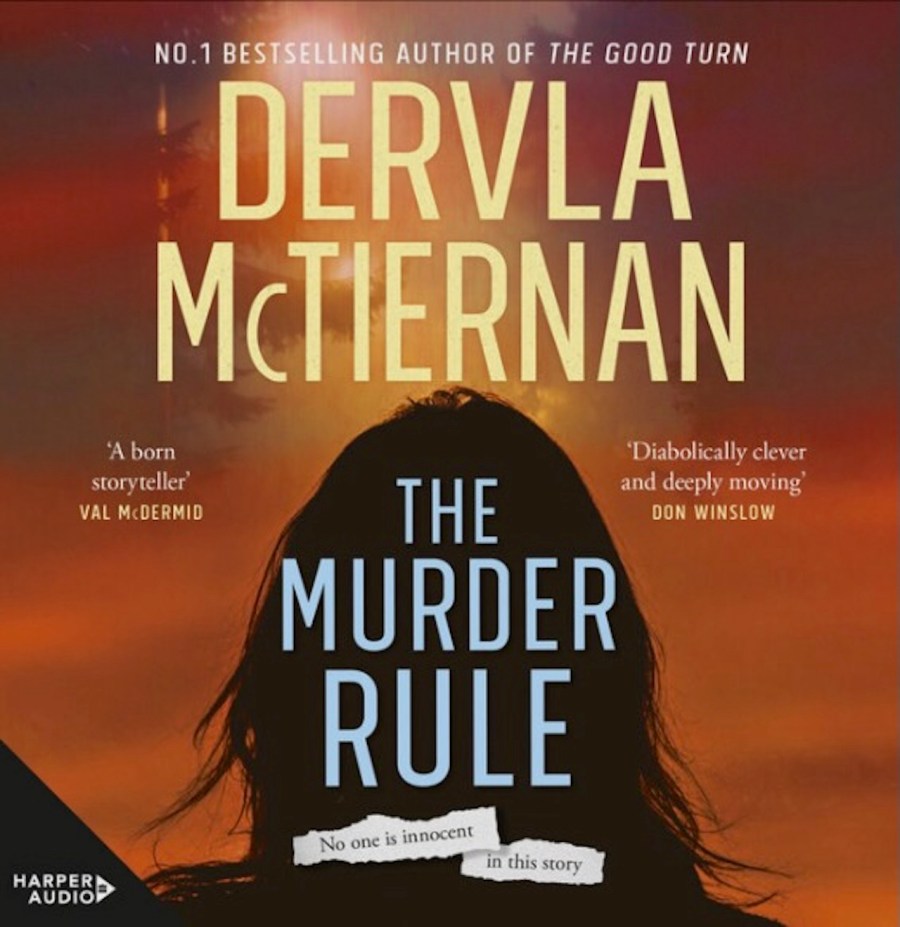
Book review: The Murder Rule by Dervla McTiernan

The Murder Rule is a legal thriller by seasoned Irish-Australian author Dervla McTiernan.

Hannah Rockeby was bought up by her a sole parent mother, Laura, after a youthful summer love affair with the son of a wealthy family. The boy drowned in a suspicious accident while the two were seeing one another. Laura had been the families house cleaner. She becomes an alcoholic and the mother-daughter relationship between her and Hannah is highly enmeshed.

Hannah moves from Maine to join a group of idealistic volunteers working on the Innocence Project in Virginia. The Innocence Project is an initiative to free wrongly convicted death row prisoners. Her plan is to prevent the man who she believes ruined her mother’s life from being released from jail. Hannah is prepared to do anything including deceiving and undermining colleagues and her boss to succeed in her quest.

Hannah pulled the door slowly closed. There was no creak from the hinges because she had oiled them the day before. She went downstairs, took a folded note from her backpack, and placed it so that it was held in place by the coffee machine.

The novel unfolds with the dual points of view of Hannah’s current life and her mother’s diary from her youth. The Murder Rule is a quick read, and a skilfully plotted story with plenty of twists. The female leads who are complex and engaging (if not always likeable).

The Murder Rule is McTiernan’s first stand alone novel – she is best known for her acclaimed debut, The Ruin.