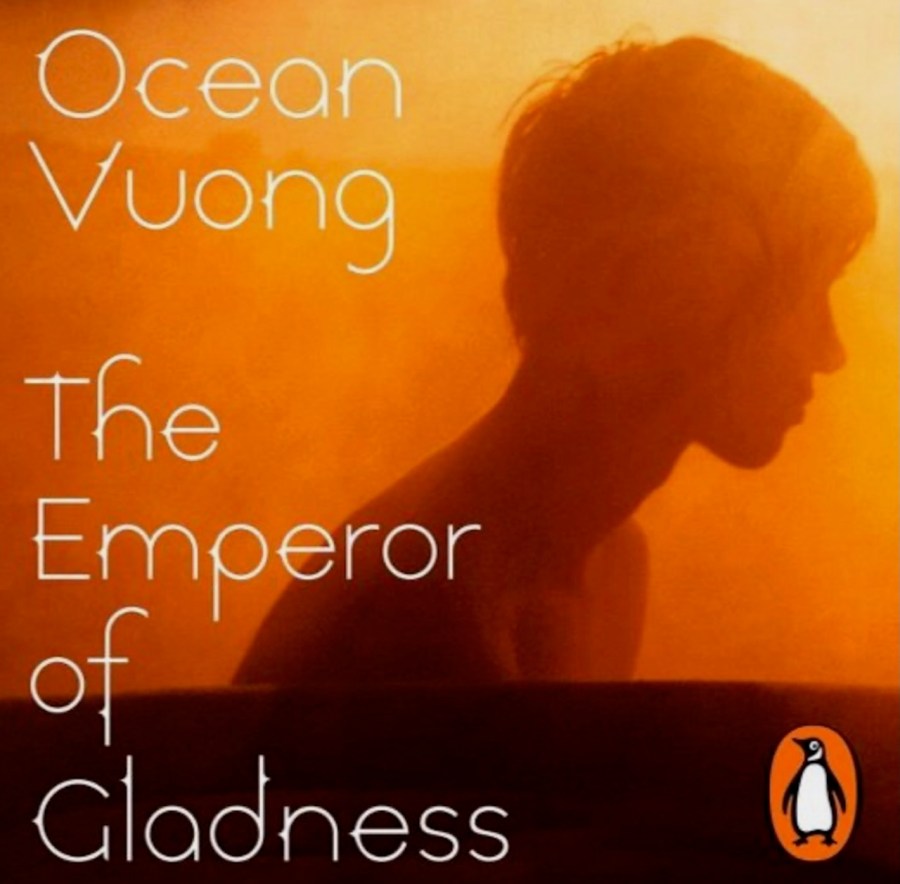
The Emperor of Gladness by Ocean Vuong is a poetic rendering. It is also a bleak story, both beautiful and sad.
The hardest thing in the world is to live only once. But it’s beautiful here, even the ghosts agree.
The Emperor of Gladness is set in the fictional town of East Gladness, Connecticut. Nineteen year old Hai stands on a bridge looking down at the river and contemplating jumping. He is interrupted by an old woman who threatens to call the police if he doesn’t climb down.
Words cast spells. You should know this as a writer. That’s why it’s called spelling, Labas.
The woman is eighty-two year old Grazina from Lithuania with mid-stage dementia. She demands that Hai come to her when he climbs down, and she adopts him.
You see, carrots become bright orange because it’s so dark in the ground. They make their own light because the sun never reaches that far—like those fish in the ocean who glow from nothing? So when you eat it, you take in the carrot’s will to go upward. To heaven.
Hai moves in with Grazina and becomes her carer and friend. He also rifles through her medicine cabinet looking for medications to feed his addiction.
The prisons and madhouses have locked them up, so you think you’re the only one out there losing your mind when in fact there are many like you, trapped in this supposedly free world of work and sleep and endless fucking cakes.
Meanwhile, Hai’s Vietnamese mother thinks he has gone to medical school in Boston. Hai continues this charade, calling his mother to give her updates on his studies, for much of the novel. As Grazina’s mental state worsens, Hai uses various role plays to assist her. Her delusional episodes make her relive distressing scenes from her escape from Nazi-occupied Europe.
It was one of those friendships that came on quick, like the heat on a July day, and long after midnight you could still feel its sticky film on your skin as you lie awake in your room, the fan blowing in what remained of the scorched hours, and realize for the first time in your peep of a life that no one is ever truly alone.
The Emperor of Gladness is about grief, addiction, despair, poverty, sadness and trauma. There is also an enduring hope in the friendship that develops between Hai and Grazina.
 R L Smith