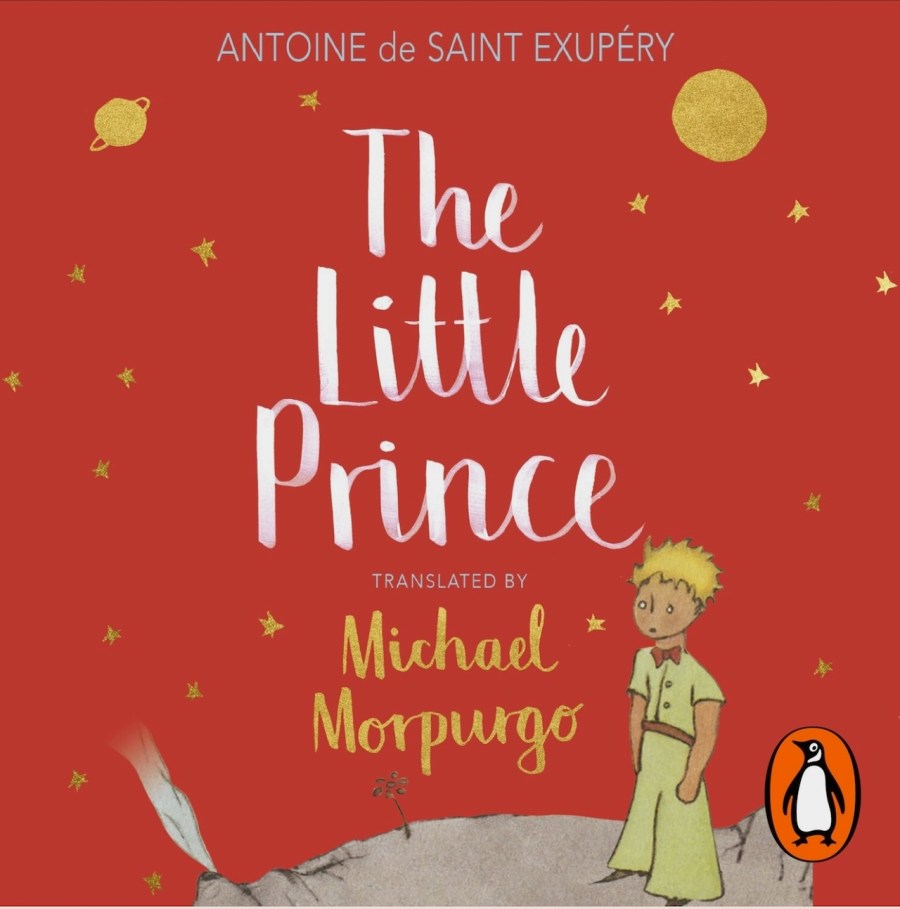
Written in 1942, The Little Prince by Antoine de Saint-Exupéry is a philosophical fable and allegory translated from French. It is a book about what it is to be human. The narrator, a pilot, tells the story six years after he meets the Little Prince in the desert.
The most beautiful things in the world cannot be seen or touched, they are felt with the heart.
A little boy leaves his tiny planet where he lived with a single rose. He departs out of loneliness, catching a ride with a flock of birds to travel the universe. Eventually he comes to Earth and is tutored by a fox who reveals truths to him as he learns about adult behaviour through a series of chance encounters.
If you love a flower that lives on a star, it is sweet to look at the sky at night. All the stars are a-bloom with flowers.
A pilot crashes in the Sahara desert, he will die if he cannot repair his plane. This is where he meets the Little Prince. The pilot laments the adult world and their lack of creative thought, as a child he wanted to be an artist, but was discouraged by his parents. The Little Prince recognises his drawings immediately, and asks for a drawing of a sheep. Through his relationship with the Little Prince, the pilot begins to open up and to draw again.
Grown-ups never understand anything by themselves, and it is tiresome for children to be always and forever explaining things to them.
Eventually the Little Prince realises the importance of the relationship he developed with his rose through caring for it, and that he must return to his plant to be with the flower. But he must die in order to return, so seeks the help of a sinister snake.
I have lived a great deal among grown-ups. I have seen them intimately, close at hand. And that hasn’t much improved my opinion of them.
At its root, The Little Prince is about how curiosity, connection and love are the antidote to uncertainty, fear and exile. A timeless story worth revisiting if you have read it before, and seeking out if you have not.
 R L Smith