Book Review: The End Of The World Is Bigger Than Love By Davina Bell

Post apocalyptic young adult novel, The End of the World is Bigger than Love is mind-bending idiosyncratic and weird, in a compelling way.

We live on a blue planet that circles around a ball of fire next to a moon that moves the sea, and you don’t believe in miracles?

Identical teenage twin sisters Summer and Winter live alone on an island surviving on rations stockpiles by their father before he died. They spend their time reading the classics and hiding from a world destroyed by a virus.

When a stranger called Edward appears, their bubble of existence begins to unravel. Their past is slowly revealed via the alternating points of view of the girls and we see how their world has shrunk from a happy family of world travellers to an isolated family of two.

I will say it again in case you missed it: the world had stopped turning, just like they say might happen in corny love songs if the lovers are ripped apart, and little did we know there were earthquakes rumbling all around the rest of the planet, like deeper hunger pangs, a blanket of fog was settling down on the top of the cold slabs of sea, like when you toss a doona up over your bed and it drifts down in perfect rumples that make you want to lie on top of it immediately.

Edward appears and changes everything. Winter falls in love and Summer become jealous and suspicious of their relationship. But both sisters are unreliable narrators, so the reader is unsure who to believe as their stories diverge. Then the world stops turning.

And Summer isn’t with me. Perhaps she never was.

The End of the World is Bigger than Love is a dystopian speculative fiction story about control, love, grief, family, sisters, and survival, all soften by some beautiful magical realism.
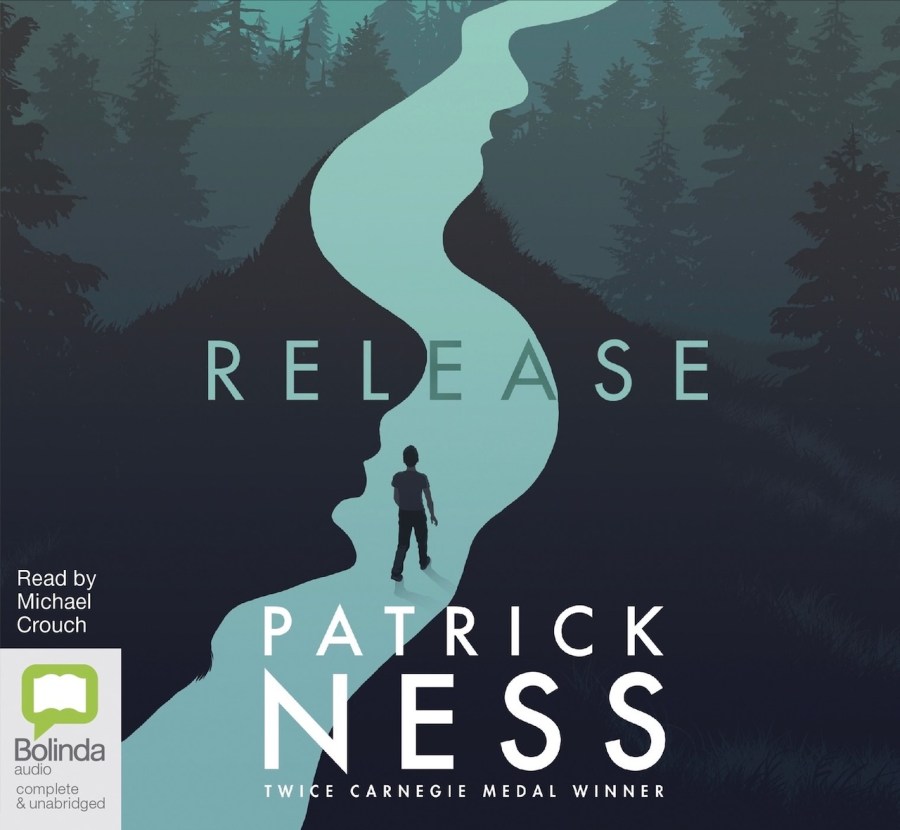
Book Review: Release By Patrick Ness

What happens when you are the gay teenage son of a devout conservative homophobic preacher in a small town? Young adult novel, Release by Patrick Ness is the story of a day in the life of seventeen year old Adam.

They’re your parents. They’re meant to love you because. Never in spite.

Adam knows who he is, but has to hide it from his parents. Knowing that his parents wouldn’t accept him if they knew means he struggles with his self worth and lives a double life. His funny, open minded friend Angela is his solid ground. The ‘yolk’ as he calls it is only till he finishes school. Simultaneously Adam is dealing with an exploitative, lecherous boss, the end of one relationship with Enzo, and the beginning of another with the sensitive, thoughtful Linus.

Why did everyone no longer a teenager automatically dismiss any feeling you had then? Who cared if he’d grow out of it? That didn’t make it any less true in those painful and euphoric days when it was happening.

Release has a dual supernatural narrative about a Queen and a Faun that is set in the spirit world. The queen’s spirit is entwined with a murdered teen and she wants revenge.

It may cost you, my Queen. It may cost you dear.”
“All the best journeys do, faun.”

At first I was confused by the dual narrative, but as the story progressed, I started to anticipate it, wanting to know what that narrative was about. It’s an unusual literary device, and the novel would have been great with Adam’s narrative as a stand alone. But the supernatural-magical-realism twist does add an unusual angle, and right at the end the two stories overlap, entwined by a drop of blood.

Marty: Dad’s right about you. You got lost on your journey somewhere.
Adam: That’s what everyone says who never bothered to go on a journey in the first place

Release is about freeing yourself, coming out, religion, sex, sexual harassment, love, heartbreak, friendship, logical family, toxic relationships and knowing yourself.

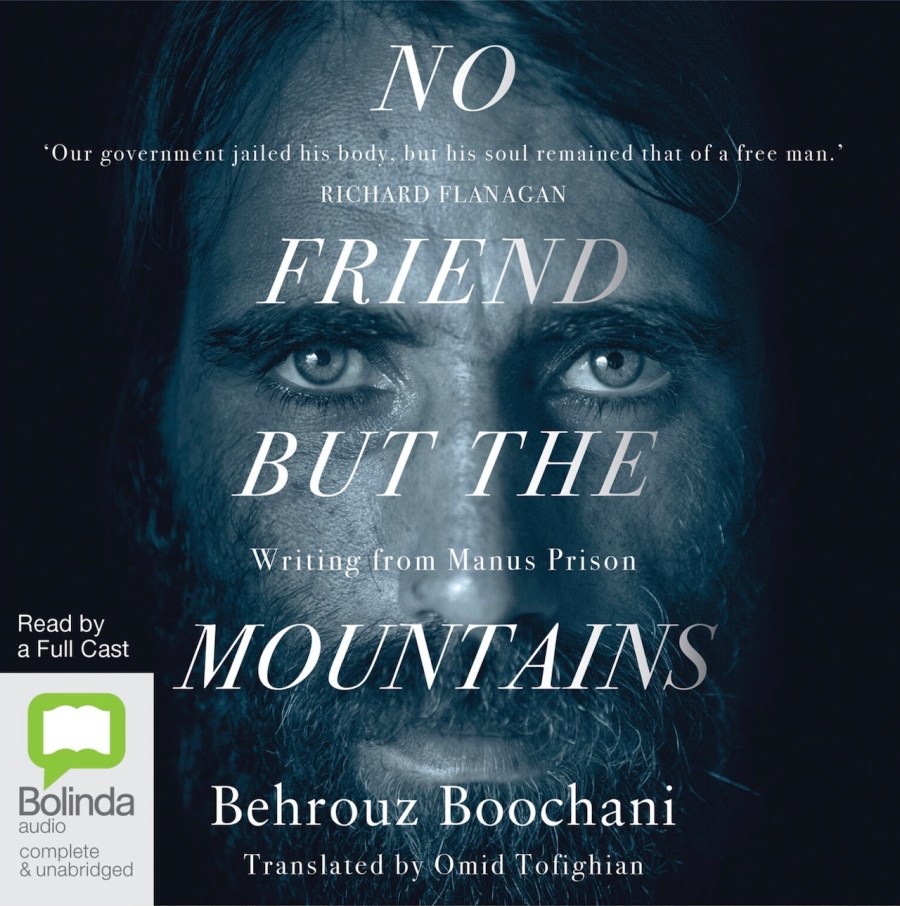
Book review: No Friend But The Mountains by Behrouz Boochani

What is a border? … My whole life has been impacted by the concept of “border”.

Humans have a unique capacity for both kindness, cruelty and survival, attributes that are displayed with stark vividness in this memoir about Australia’s archaic detention policies and what it was like to experience them as an asylum seeker shipped to Manus Island.

For some moments I exert everything to reach something far down inside the deepest existential places of myself. To find something divine. To grab at it… maybe. But I uncover nothing but myself and a sense of enormous absurdity and futility.

The phrase ‘truth is stranger than fiction’ is alive and well in No Friend but the Mountains by Kurdish refugee, Behrouz Boochani. Boochani is a journalist and poet with an education in politics and philosophy. He bore witness to, and survived, Australia’s inhumane detention policies by writing about them. His narrative was written in snatches and dispatched from Manus Island in a series of Farsi text messages over five years. His words were translated to English for the memoir by Omid Tofighian.

For some moments I exert everything to reach something far down inside the deepest existential places of myself. To find something divine. To grab at it … maybe. But I uncover nothing but myself and a sense of enormous absurdity and futility.

The narrative begins on the arduous journey from Indonesia to Australia with a group of mostly strangers gripping to the hope of a safe future beyond their boat that was not seaworthy. Boochani observes his fellow asylum seekers as a mixture of brave, selfless and selfish. As conditions at sea deteriorate, so do the passengers, some displaying their best, and others their worst selves.

The asylum seekers were rescued from their flailing boat and handed over to the Australian navy. A few days later, the men from the boat found themselves imprisoned on Manus Island where they experienced the brutality and degradation of Australia’s immigration detention system and the ‘stop the boats’ policy. The memoir takes us to February 2014 when attacks on the detention centre resulted in the murder of Iranian Kurd, Reza Bharati.

The bureaucratic ranks are determined by relationships of power. Every boss is subordinate to another boss. And the superior boss is also subordinate to another boss. If one investigated this chain it would possibly lead to thousands of other bosses. All of them repeating the one thing: ‘The Boss has given orders.

Nature offered Boochani some relief from the cruel reality of the day to day on Manus. There is beautiful imagery of the sea, mountains, trees, flowers and birds interspersed through observations of his fellow prisoners and captors and the hardships and humiliations they suffered.

The prisoner constructs their identity against the concept of freedom. Their imagination is always preoccupied with the world beyond the fences and in their mind they form a picture of a world where people are free. At every moment their life is shaped by the notion freedom. It’s a basic equation: a cage or freedom.

No Friend but the Mountains won the Victorian Prize for Literature and the Victorian Premier’s Literary Awards Prize for Non-Fiction in 2019. A must read for the socially conscious and those who need to be awoken to become so.

This will take time, but I’ll continue challenging the system and I will win in the end. It’s a long road, but I’ll do it

Podcast review: The Publishing Rodeo

I love a good writerly podcast. The Publishing Rodeo is a raw, gloves off, no holds barred look under the hood at the world of publishing. Two authors discuss how the industry works, the different pathways to it, and the elements that come together to make a book a best seller or a flash in the pan.

Sunyi and Scott are two authors who wrote their debuts in the same genre. They signed with the same publisher, but had very different outcomes with their novels – one became a hit and the other barely made a bleep. The Publishing Rodeo interrogates the differential treatment of authors and how that can impact success, the publishing ecosystem, self publishing versus traditional publishing, what ‘success’ looks like and the pitfalls to looks out for (of which there are many).

The podcast is like listening to a bunch of authors in a pub talking about the alchemy of the world of publishing and the injuries they sustained trying to navigate it. The first episode is called ‘Publishing is Nuts’, which is the conclusion you will probably come to after listening to this podcast series.

I love the authenticity of this show. And as an author who has dipped their toe into this world and backed away from publishing offers on the basis of concerns about contract terms, or because I didn’t think I could meet the publishers expectations (because I have a day job), the show is also quite validating. And it has a great title.

My take away is that writing is an activity that must be done foremost for oneself, and that you should never judge your worth by whether you manage to get a publishing contract. There is a significant element of luck and subjectivity at play once you send your words out into the world.

A full list of my favourite podcasts can be found here.