
Book review: Love Me Tender by Constance Debré

Writer Constance Debré, from a prestigious French family quit her job as a lawyer and left her husband of twenty years in pursuit of herself as a butch lesbian. When she tells her ex-husband she is sleeping with women and wants a divorce, he responds by telling her that their eight year old son Paul hates her. He takes custody of their son and severs Debré’s relationship with him. Love Me Tender is about her journey as her life is falling apart.

I spit it out, I say, I’ve started seeing girls. Just in case there was any doubt in his mind, with the new short hair, the new tattoos, the look in general. It’s basically the same as before, obviously just a bit more distinct.

After six months Debré applies for joint custody, only to be accused of incest and paedophilia. The judge grants the ex-husband sole custody, and Debré only supervised visits under the watchful eyes of experts. One hours every fifteen days until the next hearing in two years time. By the time the courts grant her access rights to spend time alone with her son, the distance between them cannot be bridged, largely due to her ex-husband’s campaign against her. Eventually she gives up, grieves her son and moves on.

As for your dad and I, his anger towards me, everything he’s said about me, to the judge, to you, don’t take it to heart. Don’t be angry with him. This kind of thing happens all the time, arguments between two people who once loved each other. That’s the ways it’s always been, acid getting thrown in faces when people fall out of love.

Debré’s life shrinks. She gives up the apartment that she once shared with her son to stay in cheap studios and the beds of lovers and friends. She sheds possessions down to three t-shirts, two pairs of jeans, an old leather jacket and a Rolex. She spends her time swimming, smoking cigarettes and having sex. Swimming keeps her sane. Sex is addiction, not romance – it obliterates the self.

I don’t know if you hate me. You don’t have to answer. You’re allowed to hate me. In fact, hate is a necessary part of love. There is no love without hate. Anyone who says otherwise is a liar or a coward.

Love Me Tender tracks Debré’s transformation. She does not just come out and continue her life trajectory. She sheds people and things and femininity and embraces a kind of machismo, shaving her head, getting tattoos and giving her lovers, ‘the girls’, a number rather than a name.

I don’t see why the love between a mother and son should be any different from other kinds of love. Why shouldn’t we be allowed to stop loving each other? Why shouldn’t we be allowed to break up?

Her refusal to participate in a way that is expected of a woman of her class results in her sliding from her formerly bourgeois life and being rejected by her family. As her roles as a wife, mother and professional dissolve, she becomes a new person and takes on a new existence and life and relationship to the world.

I wasn’t made for the domestic life. That’s usually the reason it doesn’t work out with girls.

Love Me Tender is a short book (only 165 pages) with free flowing sentences that make compelling reading. Neither the book nor Debré will be for everyone, but we all respond differently and grief. Perhaps is the due to the distance at which she keeps her reader, that I could not turn away and kept turning the pages, hoping to get beneath the lack of sentimentality and almost blasé tone. Her prose is punchy, unapologetic and hauntingly honest. I found Love Me Tender uncomfortably refreshing and could not put it down.
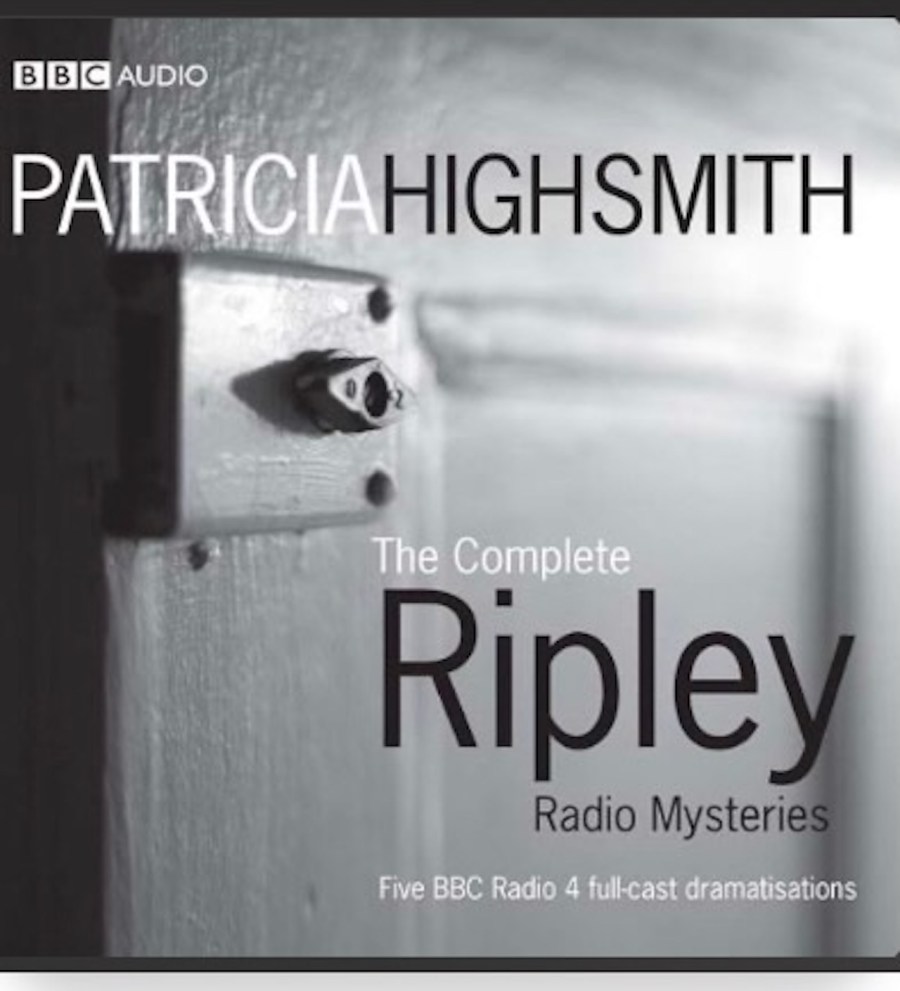
Review: The Complete Ripley Radio Mysteries by Patricia Highsmith

A couple of weeks ago I went to see the documentary Loving Highsmith about American author Patricia Highsmith. The content for the doco was drawn from her unpublished diaries and notebooks, and the personal accounts of her lovers, friends and family.

But love and hate, he thought now, good and evil, lived side by side in the human heart, and not merely in differing proportions in one man and the next, but all good and all evil. One had merely to look for a little of either to find it all, one had merely to scratch the surface. All things had opposites close by, every decision a reason against it, every animal an animal that destroys it, the male the female, the positive the negative.

Strangers on a Train

Highsmith was best known for her psychological thrillers (Strangers on a Train and The Talented Mr. Ripley) and for being part of the Modernist movement. Most of her novels were adapted to the big screen, notably with little need to be changed for the screen.

The partly autobiographical The Price of Salt written in the 1950s and published under the pseudonym Claire Morgan was also adapted for film in 2015 as Carol. Due to the social morals of the time, Highsmith led a double life, hiding her love affairs with women from the public and her family, but reflecting on them in her personal writings. Carol was the first lesbian story with a happy ending published in the USA.

Happiness was like a green vine spreading through her, stretching fine tendrils, bearing flowers through her flesh.

Carol

The documentary was fascinating and led me to seek out the audio series, Ripley Radio Mysteries that dramatises her five Ripley novels. The character of Ripley was inspired by a man Highsmith saw from a hotel room in Italy after she moved to Europe. Ripley is not a nice man, though he only kills when absolutely necessary (I mean who doesn’t?). Highsmith wrote him empathetically so as a reader I both liked and loathed him – it’s creepy.

He loved possessions, not masses of them, but a select few that he did not part with. They gave a man self-respect. Not ostentation but quality, and the love that cherished the quality. Possessions reminded him that he existed, and made him enjoy his existence.

The Talented Mr Ripley

Protagonist Tom Ripley is materialistic, though not in the usual way. He has an unstable sense of identity and possessions give him a feeling of safety and stability. It is this that leads him to his first kill. He befriended Dickie but felt uncertain about their relationship and killing reduced his friend to a collection of possession of clothes, rings and cash – much more predictable.

The series is tense, atmospheric and twisted. Perfect for a thriller!

Mayfield Street Poetry Slam

I’ll be joining poets Amy Crutchfield, Joe Pascoe and Suzanne Kennedy for Mayfield Streets first poetry slam and art exhibition, Mrs Cardwell’s Ghost, on 17th February. It’s free, just register via Eventbrite.

Amy Crutchfield – author of forthcoming book The Cyprian. Her poems have been published in Australia, England, Ireland and China and she won the Gwen Harwood Poetry Prize in 2020/21.  She will be reading her poem entitled “The Memory of Water”.

Rachel Smith – poet and crime fiction writer from Warrandyte. Published in poetry magazines, her work has also  featured on the walls of the Deutsche Bank in Krakow for the UNESCO City of Literature Multi Poetry program. She will read a domestic noir prose poetry spoken piece called “Feet of Clay”.

Suzanne Kennedy – Melbourne-based poet, who has lived in Tasmania and Central America. She won the 2022 American Association of Australasian Literary Studies (AAALS) award, the 2022 Nillumbik Poetry prize (open), and was shortlisted for the 2022 Australian Catholic University Poetry Prize. She will be reading her poem “Cemetery Carnival”.

Joe Pascoe – a contemporary Australian poet who bases his work on what people are doing every day in their lives. His new book is called Sharp Pencil.

17 February, 2023 – 7pm
Mayfield Gallery (Upstairs at Cardwell Cellars)
461 Victoria Street
Abbotsford

Theatre review: Devastating Beauty by Christopher Fieldus

Midsummer show Devastating Beauty by Christopher Fieldus is an original performance fusing prose poetry, storytelling and cabaret.

From a boy in Thailand who felt he was ‘too much’ to a young lover in Melbourne who discovered he was ‘not enough’. Devastating Beauty is about growing up queer and personal crises.

Fieldus enters the stage in dazzling drag, including the most exquisite sequin platform shoes. They start to tell us about a young boy growing up in an expat family in Thailand who then moved to Melbourne.

As a story of longing unfolds, Fieldus tells of their journey to adulthood, shedding clothing along the way to reveal their true self.

Fieldus has an extraordinary vocal range reminiscent of a young Freddie Mercury or Paul Capsis. In Devastating Beauty they do justice to music by the likes of Celine Dion, Róisín Murphy and The Killers intertwined in a spoken word story of self discovery that will touch your heart.

Devastating Beauty runs nightly at 7.15pm till Saturday 11th February at The Motley Bauhaus in Carlton. The Motley is an intimate venue with a bar and snacks so go a bit early and grab a beer for the show.

Get tickets for Devastating Beauty and support Midsumma live performances, you won’t be disappointed.

Dames of Crime: Dorothy B. Hughes

Dorothy B. Hughes (1904-1993) was a journalist, crime fiction reviewer and crime writer of fourteen novels in the hardboiled and noir style.

She carried her head like a lady and her body like a snake.

Dread Journey

Hughes first published book was Dark Certainty (1931) a volume of poetry, followed by Pueblo On the Mesa (1939), a history of the first fifty years of the University of New Mexico. She worked as a journalist in Missouri, New York and New Mexico and Married Levi Allan Hughes Jr. in 1932. They had two children.

By 1940 she had turned to crime with her first novel The So Blue Marble (1940), an Art Deco suspense set in the glamour and luxury of New York’s elite. Hughes then went on to write eleven novels in seven years. All bar one, Johnnie (1944) were crime novels. Influenced by writers such as Eric Ambler, Graham Greene, and William Faulkner she wrote tight suspenseful plots centred around outsiders, haunted loners, or upper-class characters involved in evil intrigues.

Once he’d had happiness but for so brief a time; happiness was made of quicksilver, it ran out of your hand like quicksilver. There was the heat of tears suddenly in his eyes and he shook his head angrily. He would not think about it, he would never think of that again. It was long ago in an ancient past. To hell with happiness. More important was excitement and power and the hot stir of lust. Those made you forget. They made happiness a pink marshmallow.

In a Lonely Place

Three of her crime novels for which she is best known were adapted for Hollywood films – The Fallen Sparrow (1943), Ride the Pink Horse (1947) and In A Lonely Place (1950) about toxic masculinity with a feminist resolution.

Hughes became a professional crime fiction reviewer around 1940 and moved to Los Angeles in 1944. She wrote for the Los Angeles Times, the New York Herald Tribune and the Albuquerque Tribune.

She was afraid. It wasn’t a tremble of fear. It was a dark hood hanging over her head. She was meant to die. That was why she was on the Chief speeding eastward. This was her bier.

Dread Journey

Her last novel, The Expendable Man was published in 1963. She continued to publish short stories and won an Edgar Award for best critical/biographical work for Erle Stanley Gardner: The Case of the Real Perry Mason (1978)

Being a poet before she began writing crime, Hughes books were known for their ominous and mournful quality of mood, infused with dread and intrigue. On their surface they had a middle class normalcy, but scratch the facade and her characters lives were full of danger, desperation and despair that unsettles the reader.

He drove until emotional exhaustion left him empty as a gourd. Until no tears, no rage, no pity had meaning for him.

In a Lonely Place

Published Books

  • Dark Certainty (1931) – poetry
  • Pueblo on the Mesa: The First Fifty Years of the University of New Mexico (1939) – non-fiction
  • The So Blue Marble (1940) – first novel
  • The Cross-Eyed Bear (1940)
  • The Bamboo Blonde (1941)
  • The Fallen Sparrow (1942) – filmed in 1943
  • The Blackbirder (1943)
  • The Delicate Ape (1944)
  • Johnnie (1944)
  • Dread Journey (1945)
  • Ride the Pink Horse (1946) – filmed in 1947
  • The Scarlet Imperial (1946)
  • In a Lonely Place (1947) – filmed in 1950
  • The Big Barbecue (1949)
  • The Candy Kid (1950)
  • The Davidian Report (1952)
  • The Expendable Man (1963)
  • Erle Stanley Gardner: The Case of the Real Perry Mason (1978) – critical biography