Book review: How to Kill Your Family by Bella Mackie

I wrote this a week ago, but decided publishing a review of a book called How to Kill your Family on Christmas Eve was in poor taste, particularly as my dad reads this blog (for the record the thought has never crossed my mind).

Kelly decided that I was her new best friend, and worse, a trophy cellmate. At breakfast, she will bustle up to me, linking arms and whispering to me as if we are in the middle of a confidential discussion. I’ve heard her talking to the other prisoners, her voice dropping to a stage whisper, as she intimates that I’ve confessed all the details of my crime to her. She wants leverage and respect from the other girls, and if anyone can provider her with it, the Morton murderer can. It is immensely tiresome.

Grace Bernard is writing her memoir from a jail cell in Limehouse prison. She was locked up for a murder she did not commit. Her memoir confesses to murders that she did commit. By age 28 she had killed six members of her own family.

Helene was kind, but she was hardly a great intellect, and had a fairly basic level of insight. Her favourite shows were all on ITV, if that makes it at all clearer.

She was raised by a single mother who died of cancer and exhaustion when Grace was a teenager. Whilst her mother was dying Grace discovered that her father was a business tycoon and owner of a well known fashion label. He had abandoned her mother and wanted nothing to do with Grace. Grace spends her remaining teenage years plotting revenge.

How to Kill Your Family is a story of class, family, betrayal, rejection and retribution. Dark and at times brutal, yet told with a hilarious wry humour.

Kelly asks if I want to talk anything over, tilting her head in what I image she thinks is a sympathetic gesture. She knows my final appeal is due any day now, and her recent forays into group therapy seem to have convinced her that she has a bright future in counselling. I have to stifle the urge to explain that the vest therapy that Harley Street has to offer wouldn’t help me much, so I doubt that Kelly’s offer of trying to contact my inner child will suddenly fix whatever she imagines might be wrong with me. Besides the fact that Kelly is an undeniable moron, I think talking is overrated.

The character of Grace is a little reminiscent of Villanelle from Killing Eve. Grace is smart, sarcastic, cunning, meticulous, judgemental and conniving. Yet despite her psychopathic tendencies and twisted view of the world, you can’t help but like her.

A great read for when you a looking for some light-hearted dark humour.

Happy New Year, may 2022 be kind to you. See you out the other side.

The silly season and S.S. Metaphor

I decided it was time to stop shying away from the world last week and got out amongst it. I went out to lunch with work colleagues on Friday, to live music Saturday and to caught Ash Flanders latest stage show, S.S. Metaphor, on an outdoor stage at the Malthouse on Sunday.

It had been a bleak day of storms but the clouds parted and the boat sailed under a perfect sky. S.S. Metaphor was one of those performances you’re either going to love or hate. I could tell when I perused the crowd whilst belly laughing, because some of the audience members wore expressions that sat somewhere between a scowl and a grimace. Whilst my more serious friends sat at their tables looking tortured I immersed myself in the absurdity of the cabaret-comedy show.

The audience became the passengers on a boat stuck at sea for 365 days in order to avoid some unknown catastrophe onshore whilst also trying to dodge the Great Pacific Trash Vortex. We were entertained by cabaret singers vying for centre stage whilst jollying the audience along by repeatedly saying, ’We’re all in this together.’ Below decks, some of the crew who were sick of being at sea hijacked the ship. Then all hell broke loose.

S.S. Metaphor was perfect absurdity masking more serious themes such as man made environmental disasters, and of course the pandemic. Slapstick at its best. It was exactly what I needed – to shine a humorous light on the current world madness in which we live.

Back to semi hibernation now that Omicron is here…I trust you all have a peaceful and pleasant festive season.

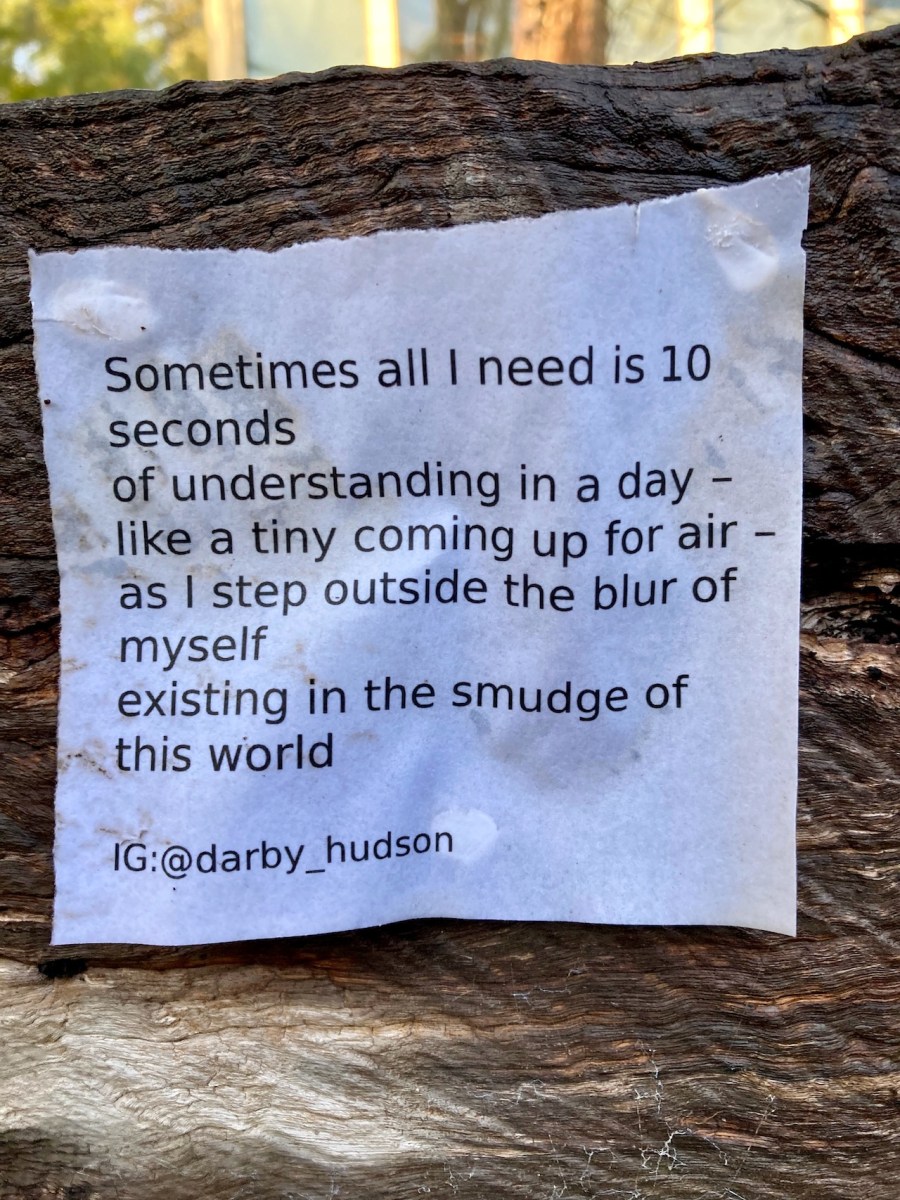
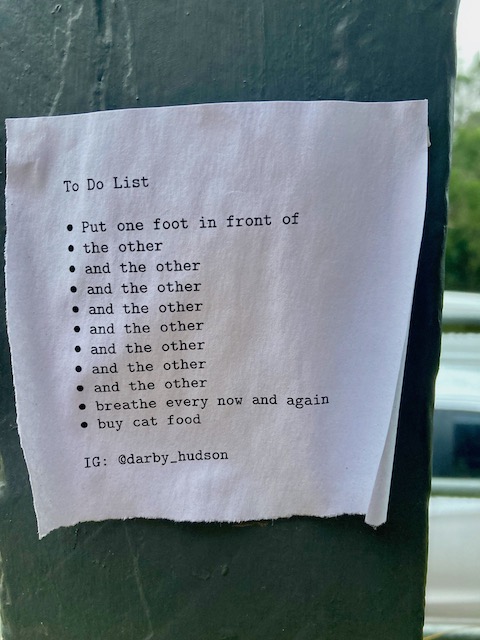
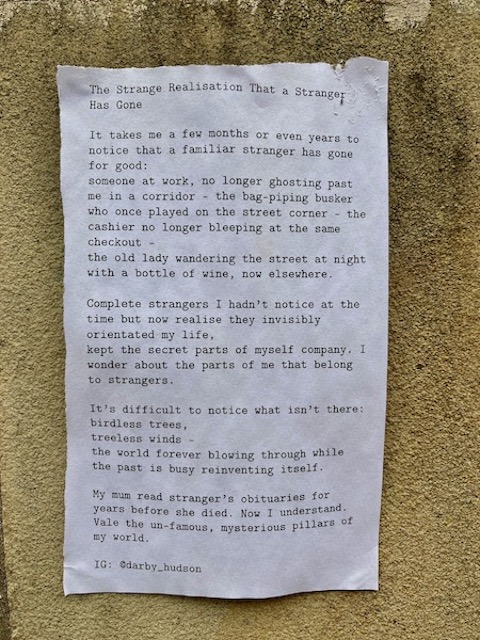
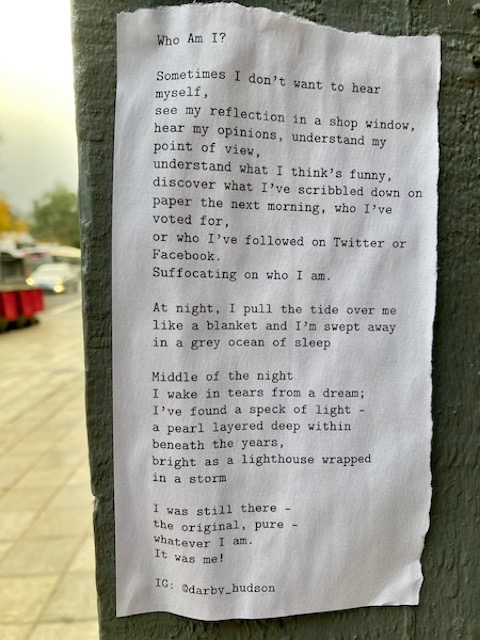
Review: @darby_hudson

I first came across Darby Hudson outside the local real estate agent. After that first encounter I started running into him all over town. Each meeting was like a gift – sometimes amusing, sometimes joyful or heart-wrenchingly sad. Occasionally he elicited disbelief, but always awe at his sublime observations on life. Each utterance was food for the soul.

Over the following weeks Darby kept appearing by stealth, at bus stops, outside the Bendigo Bank, and leaning on a post out front of the opportunity shop. I’d see him when out walking my dog at all times of day and night, always stopping to absorb his words. Such beautiful, authentic examinations of life. Snippets of simple, crystal clear observation made by a guy leaning so casually on a post or a wall.

I imagined him slouching like that, one knee bent, foot against the wall, fag hanging from the corner of his mouth, fedora tipped slightly downward. And as the world rushed by in a spin, he was stillness, scribbling on a tiny note pad.

I was changed by each encounter. As if when I noticed him, he had gently peeled back his chest to reveal his heart. His repose imploring me to pay more attention to the world around me. I started looking for Darby everywhere. It was like a treasure hunt.

Eventually Darby disappeared from my town. I suppose he had moved on to observe other places and other people. So I bought his collection of poems Falling Upward to keep him close and remind me of him.

When I dip into his work, the chaos of the world falls away and everything makes sense. Darby’s words were like an elixir, I could not get enough. So of course I had to have his other works – 100 Points of ID and Walk. I sense I may be buying more to give away to friends who would also enjoy his pearls.

Images: @darby_hudson around Warrandyte

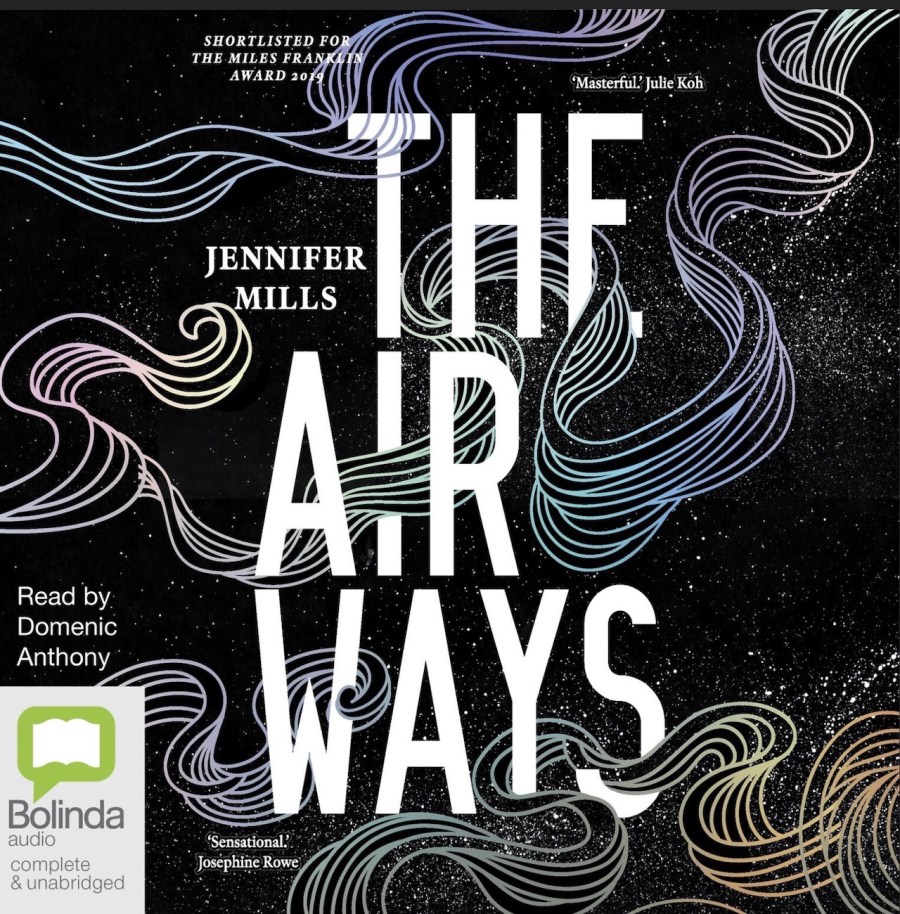
Book review: The Airways by Jennifer Mills

The first thing that struck me about The Airways is that it was beautiful to read (or listen to in my case). The first time I listened to this book I was so taken by its mellifluousness that I had to visit it a second time for the story. The melody and rhythm of the prose adds to the unsettling, immersive and discombobulating story that explores boundaries, consent, survival, trauma and violence.

I had a body once before. I didn’t always love it. I knew the skins my limit, and there were times I longed to leave it. Days I wanted to claw my way out of the earth, out of this shell. To become something else, something as yet unseen, untethered. To take flight.
I knew better than to wish for this.

Non-binary Yun is murdered just outside their Sydney share house. Their presence leaves their body and inhabits the living by entering their airways. Yun’s ex-housemate, Adam, is socially awkward and creepy. He has a compulsion. He likes to watch people whilst they sleep, he used to watch Yun. Adam goes to Beijing to escape his past, convincing himself he is a good guy and has done nothing wrong. He picks something up on the subway.

Minds are illegible; they read the body. Wet cold prickles under the back, the shirt too thin. Bacteria hitches a ride in the air, clings to a hair in the nostril. They move, are moved, into these discomforts, go where there are openings. (Do they open things?) The body coughs, its whole length poised and racking. The eyes leave the stars and return; the body sits up, relaxes. The joint held aloft. They are in the fingers where the burn will meet the skin. In sweet smoke.

The stories of Yun and Adam swirl around each other shifting between Sydney in a share house of young people in the mid 2000, and Beijing a few years later where Adam has moved to reinvent his life. The story is told from the point of view of Yun’s consciousness or ghost that has the ability to move between bodies as if inhabiting them. They are seeking revenge.

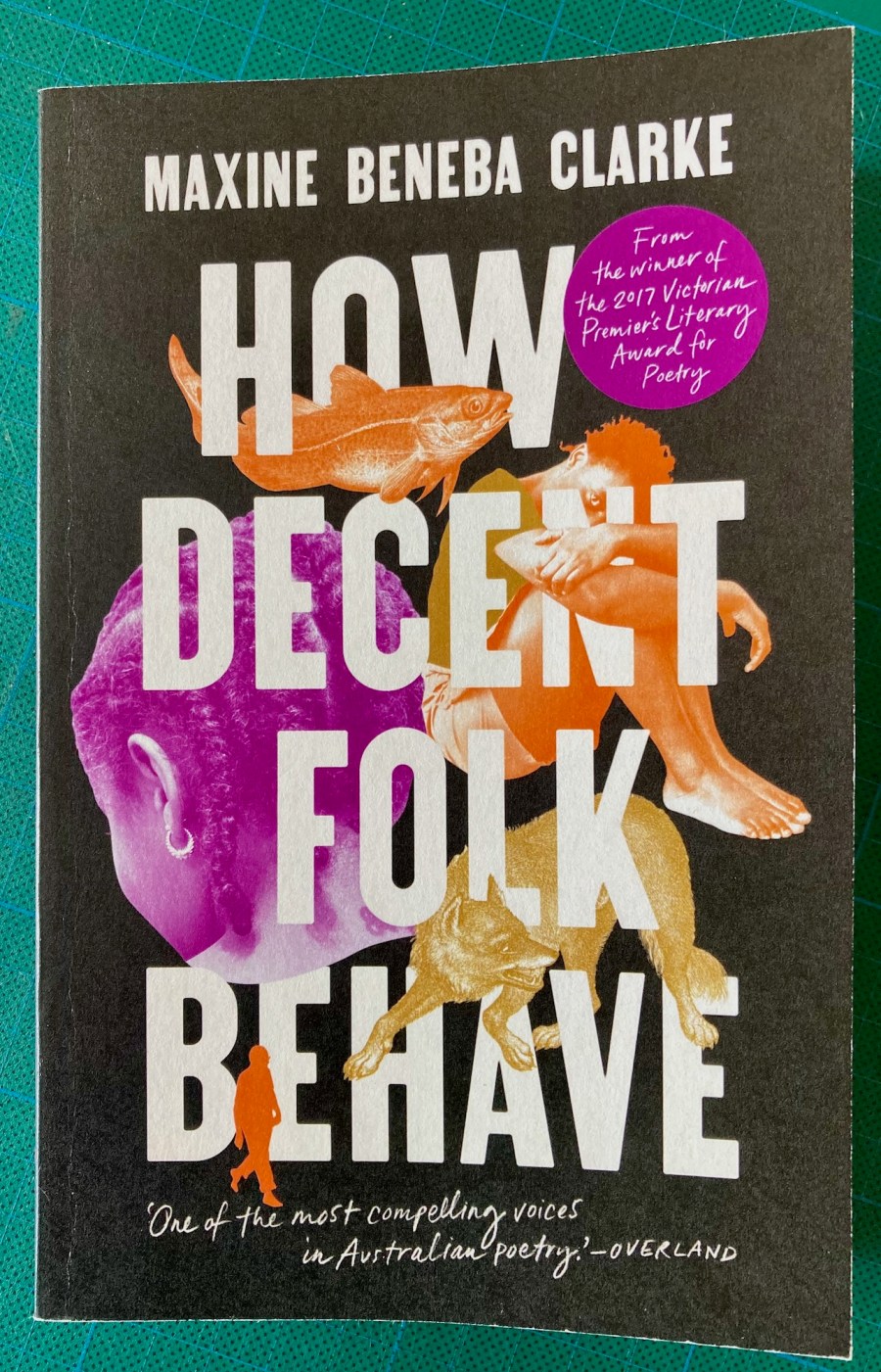
Book review: How Decent Folk Behave by Maxine Beneba Clarke

Maxine Beneba Clarke’s latest poetry collection, How Decent Folk Behave, arrived in the post recently. The book is a thought provoking collection of contemporary poems ranging across topics including climate change, domestic violence, parenting, feminism, Black Lives Matter and the pandemic.

Her words are clean, clear, simple, provocative and powerful as you’d expect from someone who comes from slam poetry roots. In How Decent Folk Behave, she reflects on the intersectionality of feminism, race, class and violence, shines a light on refugee detention, as well as young people in the age of digitisation and climate woes.

hannah and them kids died brutal
we don’t know ’em all from soap
but it aches my soul to muse on it
so babe, your mama needs to know
that a good man
exactly the man you’ll be
will lead a bad man home.

Beneba Clarke’s work is wide ranging and offers a fresh perspective on recent world events. Her short stories Foreign Soil won the 2013 Victorian Premier’s Unpublished Manuscript Award amongst others, her memoir The Hate Race (2016) won the NSW Premier’s Literary Award, and her first poetry collection Carrying the World won the 2018 Victorian Premiers Prize for Poetry. How Decent Folk Behave earns its place amongst her award winning works.

Grab a copy. How Decent Folk Behave is a great book to open at random and read out loud at your next soiree.