What it means to be human…

(There needs to be an error code that means “I received your request but decided to ignore you.”)

Ok, so I confess I binged listened to the entire Murderbot Diaries series by Martha Wells last week – all five after last weeks review of All Systems Red. I could probably just stop there. Declaring that fact is review enough, but stopping would leave a lot of white space in this blog post…

So the plan wasn’t a clusterfuck, it was just circling the clusterfuck target zone, getting ready to come in for a landing.

At their heart, the Murderbot Diaries are about a machine coming to understand what it means to be human. Murderbot is a construct, part-human part-robot, designed to be owned, used and discarded by humans. The novellas are simple stories with complex themes and characterisation. I could draw parallels to issues of slavery, racism, gender and sexuality, as well as the role of artificial intelligence.

As a heartless killing machine, I was a terrible failure.

The Murderbot Diaries are also bubbling over with brilliant one liners delivered from the SecUnits point of view. I have included some of my favourites scattered through this post.

I hate caring about stuff. But apparently once you start, you can’t just stop.

The series reminds me of studying transhumanism and the likes of Turing, Huxley, Putnam and Searle in philosophy at university. Philosophers who made us grapple with the idea that we could create a being that is equal to human, even replace humans, using artificial intelligence.

Yes, talk to Murderbot about its feelings. The idea was so painful I dropped to 97 percent efficiency. I’d rather climb back into Hostile One’s mouth.

Could a convergence of human and machine consciousness result in a superior being? AI that could think and therefore by definition reduce humans to nothing more than machines. It was mind bending stuff but I fell squarely in the camp of AI being a tool for humans, not being capable of replacing us.

It was very dramatic, like something out of a historical adventure serial. Also correct in every aspect except for all the facts, like something out of a historical adventure serial.

As a decision making tool AI and the use of data have myriad benefits, including the capacity to remove human biases from decision making in some circumstances. But in many respects I believe the essence of our humanity is our fallibility. That we can become overcome and driven by our fears and anxieties, anger, sadness or elation is a unique characteristic of organic sentient beings. Perhaps even more important is our capacity for creativity. Our emotional worlds and imaginations are at the essence of being human, characteristics I do not believe can be replicated by AI.

Disinformation, which is the same as lying but for some reason has a different name, is the top tactic in corporate negotiation/warfare.

That central question in the Murderbot Diaries of what it means to be human is something that all of us actual humans must grapple with throughout life – either consciously or unconsciously. We do this every time we make judgements and decisions because those acts determine the kind of person we want to be, in relation to both ourselves and others.

They were all annoying and deeply inadequate humans, but I didn’t want to kill them. Okay, maybe a little.

Murderbot expresses an irresistible blend of deep love for its humans and angry, pessimistic, exhausted cynicism because he believes the world is a terrible place and humans are hopeless. Part-robot, part-organic beings such as Murderbot were built after all to have superior performance and prevent stupid humans from making stupid decisions and getting themselves killed. Yet Murderbot is driven by a passionate sentimental commitment to do the right thing by them. No wonder he’d rather zone out binging on his favourite show Sanctuary Moon than engage with the world.

I hate having emotions about reality; I’d much rather have them about Sanctuary Moon.
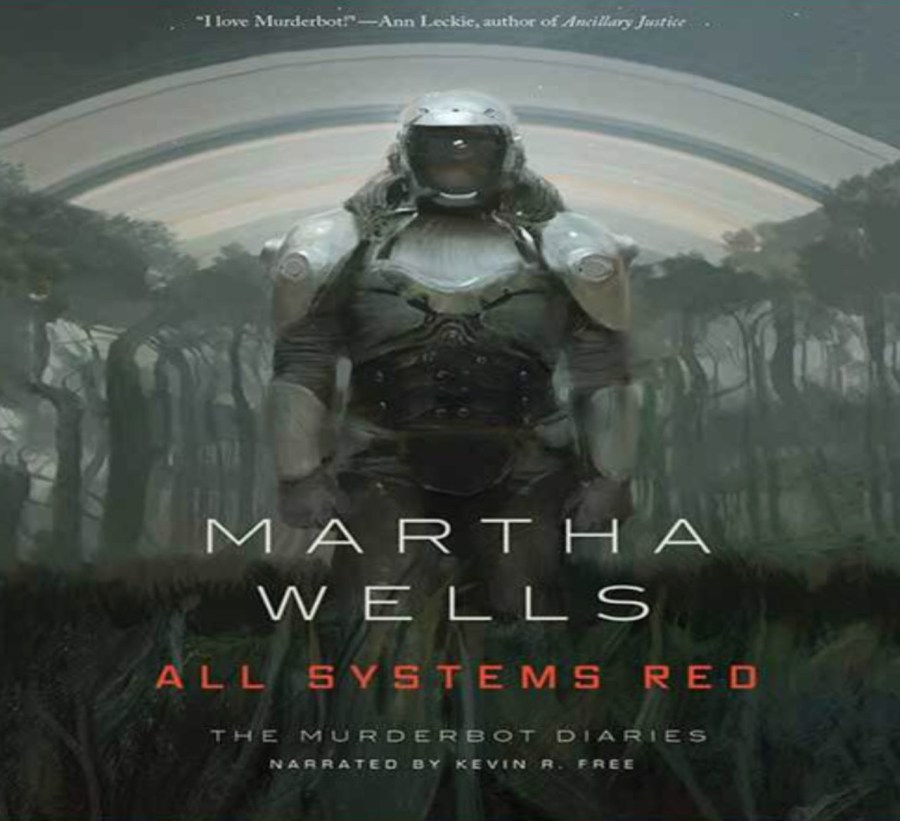
Book Review: All Systems Red by Martha Wells

Whenever I visit my GP we talk about books and writing. She once filled an entire appointment telling me about the crime fiction novel she was writing about a GP who murders people. Lucky I’m a crime writer as well or I might have been reticent to accept any more scripts from her. On my last visit she got very animated about Martha Wells’s The Murderbot Diaries so I borrowed the first one to find out what her excitement was about.

All Systems Red is a 2017 science fiction novella and the first in The Murderbot Diaries series. For a simple story, it packs a powerful punch – I listened to the audiobook in one sitting whilst gardening, giggling to myself as I pulled weeds. The premise is simple: Two groups of scientists on an alien plant; something terrible happens to one lot and the others have to work out what, before the terrible thing happens to them as well. So what’s so good about it? …Murderbot…

I could have become a mass murderer after I hacked my governor module, but then I realized I could access the combined feed of entertainment channels carried on the company satellites. It had been well over 35,000 hours or so since then, with still not much murdering, but probably, I don’t know, a little under 35,000 hours of movies, serials, books, plays and music consumed. As a heartless killing machine, I was a terrible failure.

Murderbot is a part organic-part robot SecUnit – a security guard of unspecified gender for hire to protect explorers of the universe. Murderbot is a little bit different to the other SecUnits because they have disabled their governing programming unit, giving them agency. The sulky Murderbot keeps this secret, along with their addiction to binge-watching soap operas. They just want to be left alone.

Murderbot is a kind of coming out story because this SecUnit feels like they need to hide an essential part of themselves from everyone else – those who are more powerful than Murderbot and wouldn’t understand.

Wells has given Murderbot, who is essentially a killing machine, extraordinary vulnerability as they struggle with their fears about their robot and human parts. They are trying to work out how to be comfortable in their own skin, and their efforts to hide this from those around them are touchingly hilarious.

The best part? There are five more books in the series.

Environmental crime fiction

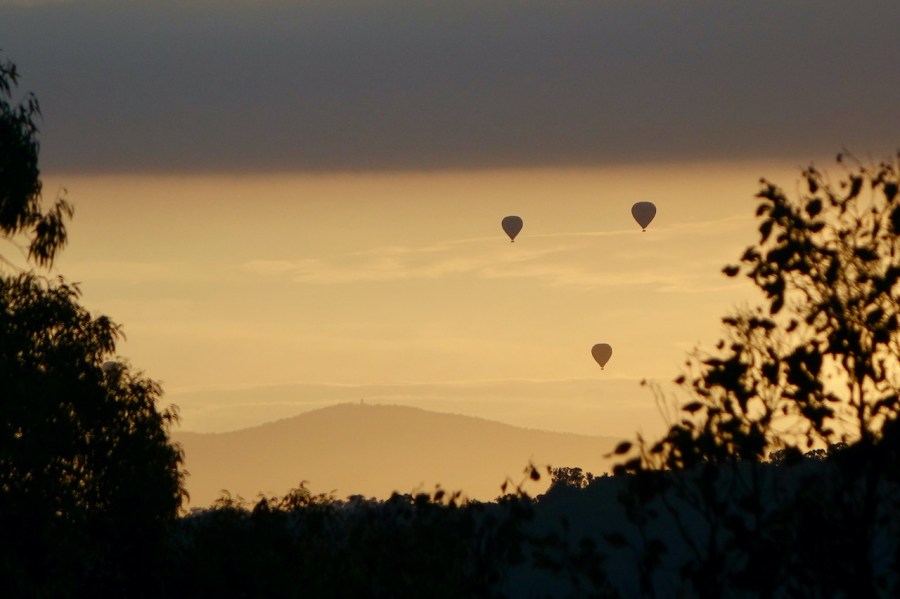
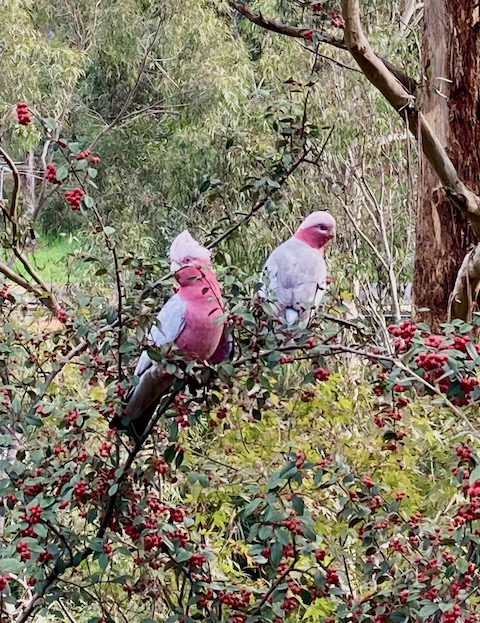
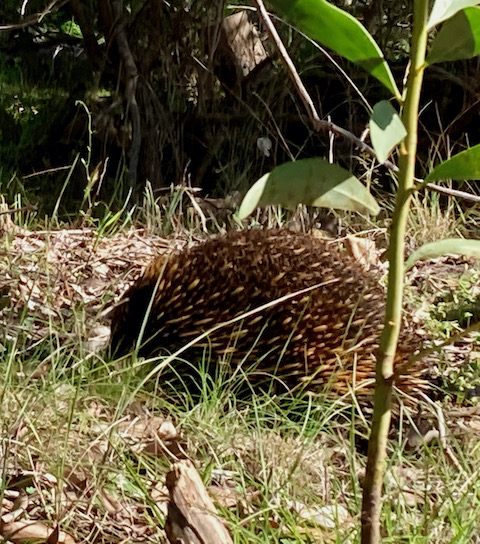
I woke up to a startlingly beautiful sky filled with hot air balloons this morning. After doing some writing I set out with the hound on a long walk. It is a stunning Autumn day. Already I have been squawked at by some cheeky galas and said hello to an echidna going about its day.

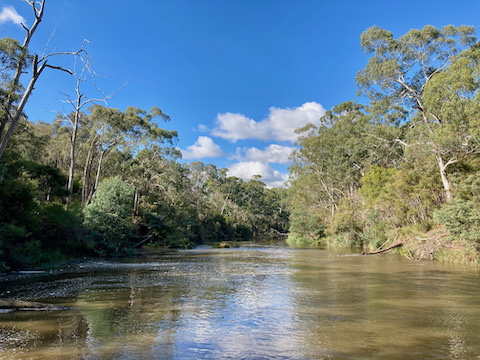
Now, I have stopped for a moment and I am squatting on a rock looking at the river scene in the the photos include in this blog post as I write it on my phone. The intermittent sound of birds play a tune over the background base of the swollen Yarra River waters spilling across rocks on their way to the city. It is peaceful and soothing and my mind turns to my writing.

My current manuscript is a crime fiction novel with a backdrop of the environmental movement. One of the underlying themes is climate grief and I have taken much inspiration from my local environment as well as from a period living in East Gippsland.

The idea for the story came to me during a writing workshop I attended with Angela Savage, former CEO of Writers Victoria, at the Terror Australis Readers and Writers Festival (TARWF) in October 2019 and I commenced work on the manuscript in November that year (TARWF will run again this year in November and I hope to go again as it was a hoot last time – I delivered spoken word piece at their Noir at the Bar event. You can listen to that here.)

The story for my current manuscript is set in 2018, before the Victorian bushfires and the pandemic. Whilst the premise pre-dates our recent disasters, the story has certainly been shaped by them. It is a lament to Victoria’s beautiful disappearing landscapes and humanities seeming collective inability to do what needs to be done to save them from the impacts of climate change. There have been moments when I considered abandoning the endeavour, particularly after the terrible bushfires in Victoria that consumed much of the landscape in which the story is set. Instead I made some changes to include a foreboding of disasters such as the fires and the pandemic so that the story does not seem dated.

I entered the first few chapters into a competition for a Varuna Fellowship last year and was chuffed to be shortlisted. I hope to take up the opportunity for a supported residency later this year.

My writing has been interrupted a bit over the last year, but I have now crossed the half way mark of the first draft at just over 40,000 words and am feeling inspired to forge on into the home stretch so I can set myself to editing.

For now, I must continue on my walk as the hound is getting restless.

Book review: Too Much Lip by Melissa Lucashenko

Kerry Salter’s girlfriend is in jail and her pop is dying, so she leaves Brisbane and her arrest warrants behind and heads south on a stolen Harley to her hometown of Durrongo – a place she’s been avoiding.

Thing is, you run now, after last night, and it’ll haunt you forever. You can go as far away as you like, but the past always comes along for the ride.

Too Much Lip is Goorie author Melissa Lucashenko’s seventh novel. Shortlisted for the Victorian Premier’s Literary Award and the Stella Prize and winner of the 2019 Miles Franklin Award, it is a dark, funny story about family, home, country, intergenerational trauma, evil property developers, talking animals, life and death.

Kerry knew from long experience that there was no winning an argument with her mother. To Pretty Mary she was and always would be the Great Abandoner. Shame enough to turn out a dyke, but her far greater sin was the empty hole she’d left behind her in the family. Even in the terrible dark shadow cast by Donna’s disappearance, Kerry had still up and left to live among whitefellas and city people. Sharper than a serpent’s tooth, blah blah de-fucken-blah.

Bundjalung language words are peppered through a narrative that exposes the impacts of the history of colonisation and dispossession on Australian Aboriginal people. Lucashenko’s voice in the novel is unique and effectively echoes the voices of Australian aboriginal people I have known. I have never read a novel like it – which primarily tells me that there are far too few Indigenous voices in literature.

Kerry looked around the deserted road.

‘Yugam baugal jang! Buiyala galli! Yugam yan moogle Goorie Brisbanyu? You could help instead of sitting up there like a mug liar from the city.

Kerry looked around again. The waark hopped up and down in rage.

Then the second crow chimed in, dripping scorn.

It’s no good to ya, fang face. Can’t talk lingo! Can’t even find its way home! Turned right at the Cal River when it shoulda kept going straight. It’s as moggle as you look.’

On being awarded the Miles Franklin some critics claimed Too Much Lip to be undeserving as Lucashenko’s voice was not ‘literary’. My reading of that criticism is that those critics are pompous, entitled gits – probably in need of empathy training – and most likely educated in posh private schools with little experience of diversity and no understanding or appreciation of its value.

For a moment Kerry thought her mother was talking about killing the old man. Putting him down gently. Her second thought, hard on the heels of the first, was: just as well Ken’s drug of choice isn’t morphine. If the hospital had prescribed malt whisky to ease Pop’s last days they would have been in trouble.

The Salter family are gritty representations of people living in poverty and battling with day-to-day existence in all its joys, sorrows, and frustrations. Their education is primarily in their own culture, and in survival – not academia and privilege. They are flawed, funny survivours who love and hurt the people they care about, and go through life trying to make the best of it.

Into the river that was about to be stolen away again, as it always had been since Captain James Nunne Esq. first rode up with his troopers, one two three, crying I’ll have that, and that, oh, and that too, while I’m at it.

Too Much Lip is a political novel, which perhaps makes it confronting and challenging for some white Australians to read, but we all should read it because within its pages there is opportunity for greater understanding, and that might help lift our humanity above our turned-up wanker noses.

I’ll definitely be adding more of Lucashenko’s work to my reading list.