

This week I’ve been thinking about the mystery novels I read and loved years ago. I hoovered up Dick Francis books as a teenager because I was obsessed with horses. I suspect that was also when my fascination for mysteries was born. As a consequence Francis holds a nostalgic place in my reading memory despite eventually coming to believe that horse racing should be banned. His novels were fast-paced easy reads full of muddy race tracks, crooked bookies, cheating jockeys and brutal owners.
Francis had himself been a jockey and horse trainer and all his novels revolved around the English race tracks. He wrote most, if not all, in collaboration with his wife, a former school teacher and expert researcher. Some people viewed him as the horse worlds Agatha Christie, but Francis was way more brutal than Agatha ever was in the way he physically and mentally tortured his protagonists.
One of my first jobs out of high school in the mid-eighties was as a track rider for a race horse trainer. The job reminded me of Francis’s tough masculine characters every day I went to work. I have one vivid memory of giving a young jockey a lift home and staring in horror when he leaned out of the car window, whip in hand, and cut a female cyclist across buttocks as we passed. When I threatened to turf him out of the car he just laughed. It could have been a scene from one of Francis’s novels.
When Dick Francis said he always tried to think of a dirty deed, and build a plot around it he captured the heart of the mystery. They open with some kind of disruption to the social order that creates a puzzle our hero must solve. Along the way they uncover secrets, are diverted by red herrings, meet unexpected surprises and have their physical and psychological limits tested. They always prevail and set the world to rights again  enabling the reader to experience the tension vicariously and discover the hero within.
By the late nineties I had started to move on from horse riding as a profession and got what my parents called ‘a real job’ in a more politically leaning pursuit.
One of Dick Francis’s last novels, 10lb Penalty (1997), blended racing and politics and was the last of his books I read. Some time after that I discovered Shane Maloney who introduced me to the use of mysteries as a form of literary protest. Who wouldn’t be excited to find politicised crime fiction novels set in their own town?
Maloney set his novels in 1990’s Melbourne and bought our political and social fabric to life on the page. His public servant protagonist Murray Whelan shone a light on the absurdity of the political landscape that emerged in the Jeff Kennett era. He satirised Australian politics well before The Hollowmen and Utopia came to our screens. Though the latter have demonstrated that the world of politics continues to be ludicrous in a very frightening way.
Maloney’s books edge into the world of the subgenre ‘apparatchik lit’, some say he invented it. The term lends itself from the word used for bureaucrats in the Russian Communist Party and explores the intimate workings of politics, the machinery of government and lobby groups and how they impact the social fabric of the society they are set in. I love the way Maloney used suspicion, humour and play as a cover for more sinister events in his novels.
While some of the stories that emerge in this type of fiction (or tv series) appear beyond absurd, you’d be surprised how close to real life they can be. A friend who works in a government department once told me that the day after one episode of Utopia their Minister called the office demanding to know who had leaked information about an  issue that had appeared on the program…
It’s fair to say that the arrogance of our politicians, their moral hypocrisy and power games continue to be ripe for the picking. You only have to turn to our own national political landscape for endless examples at the moment.
The novel I am currently working on is placed in Melbourne but draws on material from recent (mostly) national politics in an attempt to shine a light on some contemporary political absurdities.
If you have any suggestions for more Shane Maloney type novels, particularly if set in Australia – let me know.
Main image: Horses at Warnambool
Inset images in order: Horses at Warnambool; Parliament Drive, Canberra; Parliament House, Canberra.

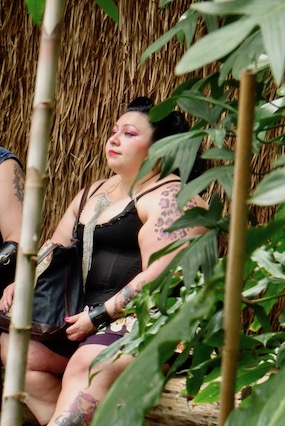 them; or random strangers we meet (or have never met) might be bought to life between our pages. In fantasy characters are sometimes concocted from mixed up blends of real creatures or from visions from in sleeping life.
 It mattered to me that I try to present this profession in a light that someone working in it would want it to be. So, I tracked down a workplace that employs people in the profession and sent an email to ask if any of the staff would be prepared to chat to me about the industry and what they do. I was lucky to get some interest and caught up with a woman who was happy to share her experiences and insights with me. It also gave me a chance to ask about what stereotypes they thought I should avoid and what they would like to see reflected in a character working in the profession. I undertook that I would send my manuscript for them to critique when I am done.
 with, the plight of ‘the other’ than it is about events and things. I would add that it obliges us to learn about our subjects and make every attempt to represent ‘the other’ authentically and where possible give the people you are representing an opportunity to critique your version of them before your manuscript sees the light of the publishing world.
 My week of political writing got me thinking about the role of fiction in relation to politics.
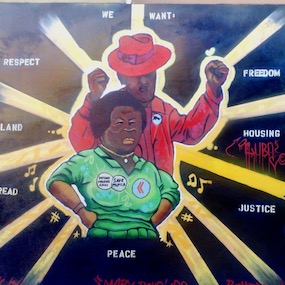 medical facilities exist to ensure we survive childbirth, dictates if we get the opportunity to learn to write at all, the price of milk, who we can and cannot love, and the type of death we can have. Our very existence is enmeshed in, and shaped by the political environment(s) we live in and are exposed to.
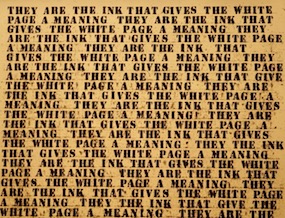 burned books. Examples of fiction works that have been subject to some kind of censorship or ban at one time or another include Dr Seuss, Winnie the Pooh, Lady Chatterley’s Lover, Catch-22, The Da Vinci Code, Doctor Zhivago, Nineteen Eighty-Four, The Satanic Verses, Sophie’s Choice, The Well of Loneliness and Ulysses. The more restrictive a political regime, the more likely it is to see text as a threat. Over 25,000 books were burnt in Munich four months into Hitler’s regime for being ‘unGerman’.
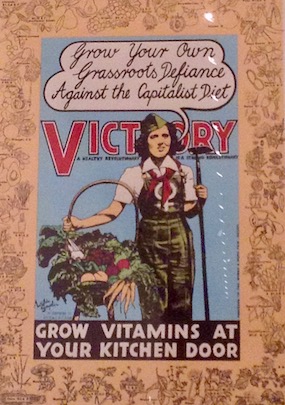 outside Portuguese embassies in Europe, the United States and Brazil. On 25 April 1974 a bloodless coup overthrew the regime. It was called the Carnation Revolution because red carnations were put in the ends of soldiers’ gun barrels. Soon after the coup the case against the three Marias was dismissed, the women freed and the book became a literary symbol of women’s liberation, erotic art, and the Portuguese revolution.
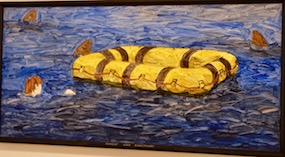 Writing is a way to contribute to the development of a liberal and democratic society. We implant meaning and messages in our plots that we hope will influence how our readers think, not only entertain them.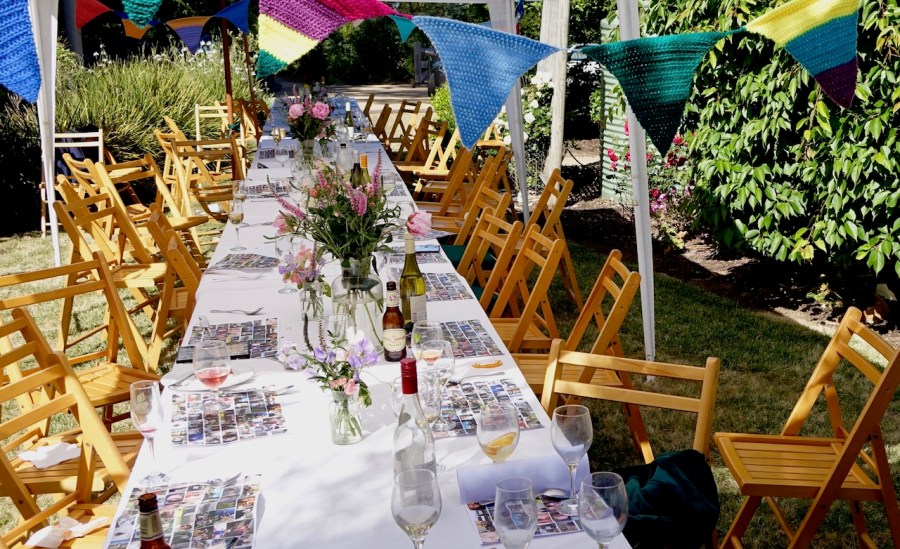
 Hundred Foot Journey and at Bilbo Baggins birthday party in The Fellowship of the Ring. What we eat and where we eat can represent class distinctions. Remember Jay Gatsby’s parties in The Great Gatsby or in Oliver Twist when Oliver tentatively says, “Please sir, I want some more.”
 Then there’s food to symbolize things that seem wrong, like the madcap chaos of the tea party in Alice’s Adventures in Wonderland where all the rules of etiquette are broken but they teach Alice about the world around her. In The Lion, the Witch and the Wardrobe the White Witch spawns magical evil when she tempts Edmond with Turkish delight and he becomes so intoxicated by it he turns on his siblings.
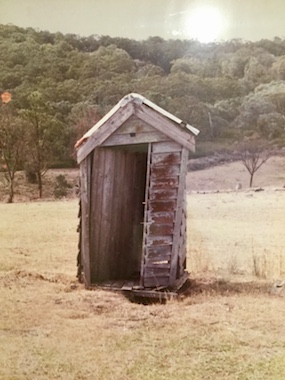 Hitchcock was the first who dared to be risqué in 1960 when he shocked audiences by showing a toilet being flushed (Psycho again). Pulp Fiction makes good use of the lavatory for scene setting, usually as a juxtaposition to frame extreme situations like murder.
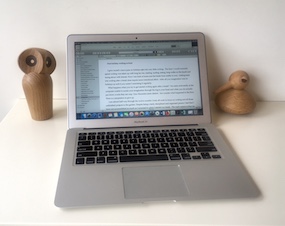 (even 15 minutes): During your writing time remove distractions like social media. Do not allow yourself to indulge in your favorite procrastination activities like attending to the washing or the weeds that need to be pulled in the garden – whatever it is that draws you away from your computer (or pen). I am at my best in the morning so I set the alarm for 6am, get up, make coffee and stand at my computer until at least 8am. When I was doing my day job my uninterrupted time was the hour on the bus on the way to work. I would put ear buds in to discourage others from interacting with me and write on my iPad. During that time read over some completed material, reacquaint yourself with your characters and give yourself permission to write crap. Expect it to take some time for your writing to return to your expectations.
 Exercise: In my view this is one of the most effective activities to jolt you back into a routine. Aerobic exercise facilitates information processing, thinking and memory functions, stimulates the growth of new connections and is protective against getting down on yourself or anxious if you are finding getting back into a routine difficult. If you exercise out in nature there is the added benefit of the environment providing stimulation for your imagination and you can use your movement time to think about writing. You’d be surprised how often activity will provide inspiration and boost your flow. Destructo dog is now six months old so I’ve started to teach her to come running with me which is great fun for both of us and afterward she makes an excellent writing companion.
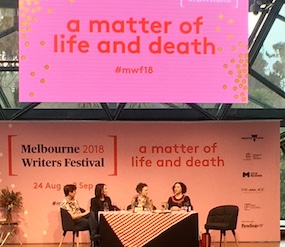 Immerse yourself in some writing related activities: Go to a literary event or a writer’s group, and read. In the evenings I am reading The Mermaids Singing by Val McDermid, a fiction work in the genre I am writing my own novel in, and How Fiction Works by James Wood a book about the main elements of fiction. I managed to catch a couple of events at the tail end of the Melbourne Writers Festival and have planned with a fellow writer friend to organize our own writing retreat for a week in November.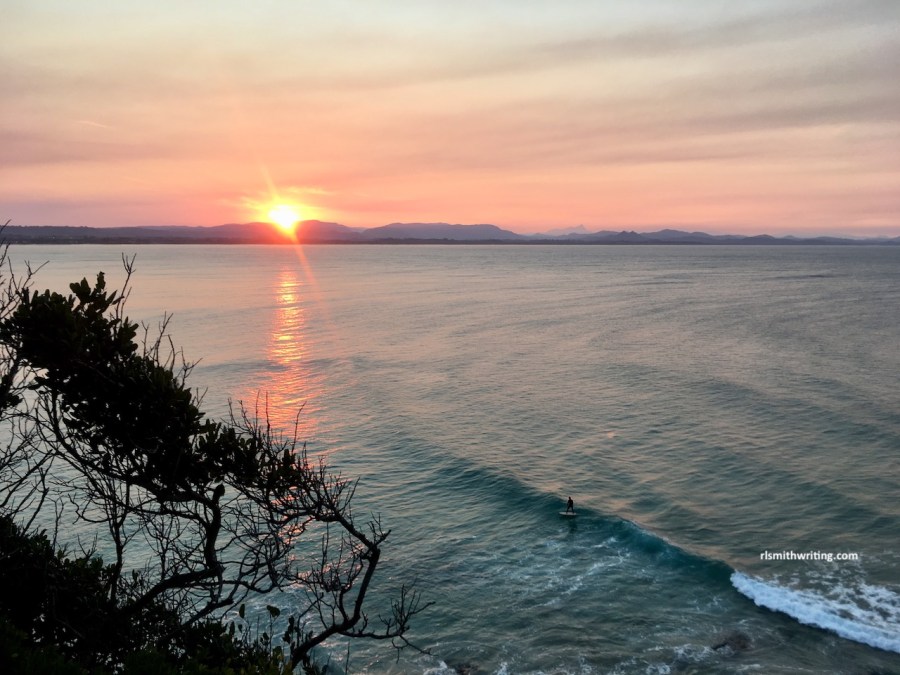
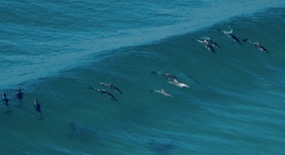
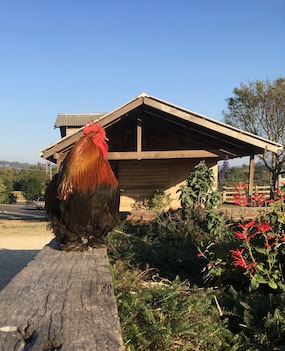 be holed up with friends in a beautiful spot near Byron Bay on the north coast of New South Wales. Our days are made up of surfing, eating, whale and dolphin watching, reading and writing. Oh, and there’s the spectacular sunrises and sunsets that occur at this most easterly point of Australia.
 Sadly, the enhanced attention to detail doesn’t prevent me from missing errors when proof reading my own work. A couple of friends staying with us asked if they could read some of my book. I had edited and edited, and edited the first three chapters, which I entered into the Richell Prize and The Next Chapter in July, so sent them those parts to read. Their feedback was positive and one of my friends did a great job picking up some grammatical errors I had missed. It did make me realize just how invisible your own writing becomes when you have been absorbed in it for months and months.



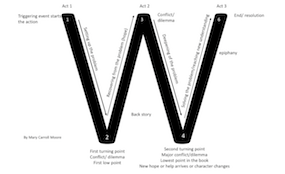
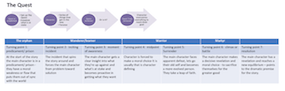 basic structural elements of a story as without it your story is likely to flop soon after take-off or require endless re-writing to turn it into something that will engage readers.
 points that each align with an archetype.
 when they leave.
