Is writing fiction a political act?

“…our stories influence what we see and what we believe is possible or impossible in the world.” – Ethan Miller

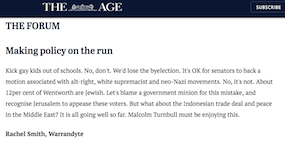
My post last week was a response to events in Australian politics that I found exasperating. The political circus continued to get my goat so much I wrote a letter to The Age. unspecifiedMy week of political writing got me thinking about the role of fiction in relation to politics.
When we consider politics and writing we generally think of journalists. If a journalist fabricates content it is a betrayal of public trust, but making stuff up is the very purpose of creative fiction so does it have a role in politics? Is there such a thing as fiction that is not political? Is writing fiction a political act?

Many say they are not political (or not interested in politics), but the sociopolitical environment in which we reside shapes our entire lives. Politics determines the haves and have-nots.  It tells us who’s experience is legitimate. For example governments determine whether IMG_4092medical facilities exist to ensure we survive childbirth, dictates if we get the opportunity to learn to write at all, the price of milk, who we can and cannot love, and the type of death we can have. Our very existence is enmeshed in, and shaped by the political environment(s) we live in and are exposed to.
Work of the creative imagination, be it fiction, poetry, art or drama, is shaped by our own experience and our views of the world – in other words our own sociopolitical lens. The world shapes us, and then as writers we try to shape the world. We question or bend reality, invent new worlds and invite readers to consider a new perspective. To understand the other. We pick out themes and create personalities that we sew together into a plot to show, magnify or transform how a particular set of circumstances can impact on the world now, or in the future.

What reader would not be able to name a book that had a significant influence on their lives? Writers, story tellers and poets have been holding a mirror up to reality for centuries. They often say what would otherwise be considered unsay-able in public.

The threat writers pose is evident when we study the history of censured, banned or IMG_4359burned books. Examples of fiction works that have been subject to some kind of censorship or ban at one time or another include Dr Seuss, Winnie the Pooh, Lady Chatterley’s Lover, Catch-22, The Da Vinci Code, Doctor Zhivago, Nineteen Eighty-Four, The Satanic Verses, Sophie’s Choice, The Well of Loneliness and Ulysses. The more restrictive a political regime, the more likely it is to see text as a threat. Over 25,000 books were burnt in Munich four months into Hitler’s regime for being ‘unGerman’.
A lesser known but poignant example of how literature can threaten and intersect with politics was a book called New Portuguese Letters (Novas Cartas Portuguesas) by Muria Isabel Barreno, Muria Teresa Horta and Maria Vento da Costa. The book, published in 1972, was a post-modern collage of fiction, personal letters, poetry, and erotica inspired by the original letters of a Portuguese nun, Mariana Alcoforado to her lover, the Chevalier de Chailly, at the time of Portugal’s struggle for independence against Spain. When New Portuguese Letters was written the Portuguese had been living under a dictatorship for almost fifty years and the book exposed the tyrannical relations that existed between the sexes.

The authorities banned New Portuguese Letters soon after its release – though not before a copy was smuggled to French feminists in Paris who arranged for its translation. The three Marias were arrested and allegedly tortured by the regimes secret police. They were charged with ‘abuse of the freedom of the press’ and ‘outrage to public decency’ by a censorship committee. The three women were criticized because they wrote like men. They were sexually explicit, frank about their desires, fantasies, sexuality and bodies.  They critiqued patriarchal structures, family violence and political repression.

The trial dragged on for two years, made worldwide headlines and gave rise to protests IMG_1892outside Portuguese embassies in Europe, the United States and Brazil. On 25 April 1974 a bloodless coup overthrew the regime. It was called the Carnation Revolution because red carnations were put in the ends of soldiers’ gun barrels. Soon after the coup the case against the three Marias was dismissed, the women freed and the book became a literary symbol of women’s liberation, erotic art, and the Portuguese revolution.
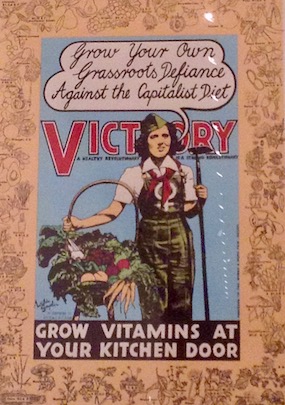
At its essence politics is about power and the rules we impose on society as a way of maintaining order. Do all authors strive to effect change in the world through their writing? If we don’t, why do we hope to be published and read?

What about genre fiction? Is romance gender politics at work? The genre is often dismissed as unworthy. Is that not itself political? Is to disregard romance a dismissal of women (the main consumers of romance), their views on relationships and their sexuality?

Is mystery fiction social justice at work? It often explores and gives voice to the fringes of society – drugs, prostitution, the dispossessed, or the underdog taking on the powerful elite. The very essence of a mystery is about who holds power, who abuses power and how the imbalance can be redressed. That is political. Mystery authors often use their writing to bring to light the concerns of minority groups and to provide commentary on a societies moral issues – Val McDermid’s lesbian protagonist, Lindsay Gordon; Emma Viskic’s deaf character, Caleb; Barry Maitland’s Aboriginal protagonist in the Belltree trilogy.

Reading a novel uncouples us from our ordinary lives and transports us to a self-created world through our interaction with a work of fiction. We read fiction to get ‘lost in a book’ or to ‘escape from our own existence’. Reading is an opportunity for some kind of small transformation.
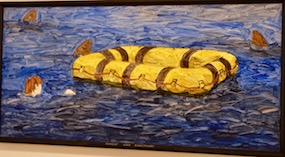
DSC02842Writing is a way to contribute to the development of a liberal and democratic society. We implant meaning and messages in our plots that we hope will influence how our readers think, not only entertain them.

We judge and unpack what we read and ascribe a value to books. That is political – just read any book review or go to a book club meeting and listen to the debate about a novel to see how a single story can take on different contours and unique significance for individual readers.

How do you hope to influence your readers?

Main image: DOX Centre for Contemporary Art, Prague;

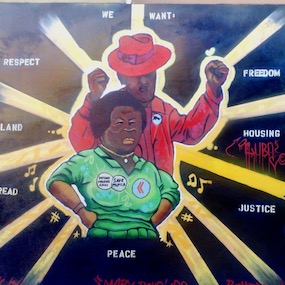
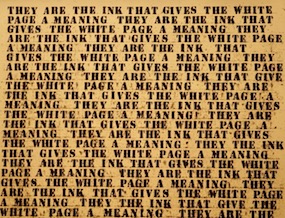
Inset images in order: Letter to The Age; Street Art, San Francisco; Guggenheim museum, New York City; Gallery of Modern Art, Brisbane; Threat and Sanctuary, Museum of Modern Art, New York City
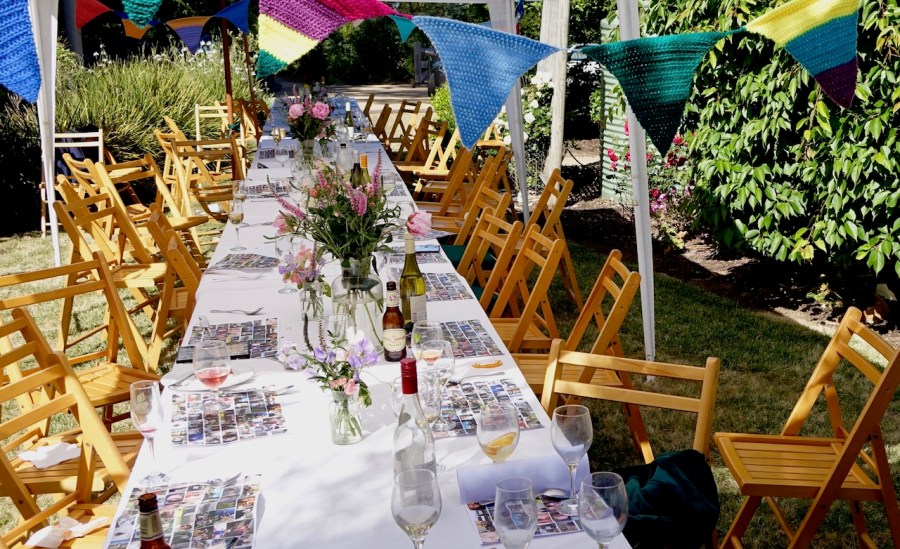
Back to basics: Food and bathrooms in fiction

If you’ve been following my blog you may have noticed my obsession with food. I grow it, cook it and love to eat good food. I’ve been thinking about the basics this week because I have noticed that I do notice when characters in fiction don’t appear to eat, wash or go to the toilet. Ever. And these very basic of human functions can portray so much in a story.

Eating is such a fundamental part of being human and necessary for survival. How and what we eat, and who we eat with, are an important part of life. Eating can be a ritual to bring people together in kinship (think Babette’s Feast or The Kids are Alright); it can expose the absence of significant others such as in Great Expectations; or used to enhance the disintegration of friendships like when the dinner burns in The Party by Sally Potter.

Who we eat with can define us as part of a social or cultural group, as it did in The IMG_0602Hundred Foot Journey and at Bilbo Baggins birthday party in The Fellowship of the Ring. What we eat and where we eat can represent class distinctions. Remember Jay Gatsby’s parties in The Great Gatsby or in Oliver Twist when Oliver tentatively says, “Please sir, I want some more.”

We can portray things about a character’s motivations, attitudes and personality through their relationship to food. We make judgements about people based on their table manners. Who could forget the mammoth Mr Creosote vomiting all over the restaurant from over eating in Monty Python’s The Meaning of Life, or the role of food as a vehicle to portray character transformation in The Poisonwood Bible?

Food often symbolizes sensuality in fiction. It’s a great instrument for romance, passion and desire such as in Like Water for Chocolate; Chocolat; The Lunch Box; and the masturbation with a peach scene in Call Me By Your Name.

IMG_0547Then there’s food to symbolize things that seem wrong, like the madcap chaos of the tea party in Alice’s Adventures in Wonderland where all the rules of etiquette are broken but they teach Alice about the world around her. In The Lion, the Witch and the Wardrobe the White Witch spawns magical evil when she tempts Edmond with Turkish delight and he becomes so intoxicated by it he turns on his siblings.
We can use food to illustrate how a character compensates for emotional, physical or social problems like the painfully thin, gothic, antisocial Lisbeth Slander who compulsively smokes, drinks coffee and eats Billys Pan Pizzas in the Girl with the Dragon Tattoo.

Bathroom scenes are less common than those with food, but can also serve as a vehicle for storytelling. The bathroom is contemplative, intimate and exposing. We drop our guard when we drop out pants and we become vulnerable.

Shower scenes can be character defining, meaningful, sensual, funny or frightening. In Carrie, the main character with eyes closed and neck exposed washes herself seductively then discovers with shock (because she hasn’t been told about it) what menstruation means.  Her cries for help to her friends are met with mockery and shouts of “Plug it up!” In Arthur, the main characters wealthy man-child persona is highlighted in a scene when he takes a bubble bath, cocktail in hand and wearing a top hat and asks the butler to keep him company. The butler perches on the edge of the bath and tells him like a parental figure that bathing is a lonely business.  American Beauty opens with Kevin Spacey masturbating in the shower to symbolize the woeful treadmill of his suburban life. And who could forget the iconic shower-murder scene in Psycho – my that scream!

We all read in the toilet (don’t we?) but how much toilet is there in fiction? Alfred IMG_2646Hitchcock was the first who dared to be risqué in 1960 when he shocked audiences by showing a toilet being flushed (Psycho again). Pulp Fiction makes good use of the lavatory for scene setting, usually as a juxtaposition to frame extreme situations like murder.
Humor on the porcelain throne is most common in kids’ books (Pirate Pete’s Potty) and with blokes (like in Dumb and Dumber and Crocodile Dundee) and the use of poop to make a comment about character can be memorable. We knew something wasn’t right with Kevin when we’re told his mother still had to change his nappies when he was six and that he used his shit as a weapon against her in We Must Talk about Kevin. It’s harder to find examples of women on the loo. One of the most well-known is when Nicole Kidman pees in the opening scene of Eyes Wide Shut as a mechanism to demonstrate to the audience the ease and longevity of her relationship with the character played by Tom Cruise.

We all eat, wash (at least some times), shit and piss, so it’s curious there isn’t more of it in fiction – I’m sure Freud would have something to say about that.

What are some of your most memorable scenes in fiction involving eating or bathrooms?

Do you incorporate eating or bathrooms in your writing?

Main image: After the party

Inset images in order: Turkish tea at smoko, Istanbul; Turkish delight, Istanbul;

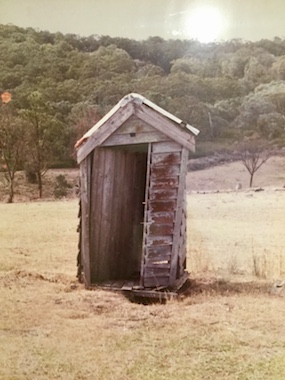
Outdoor dunny, Australia

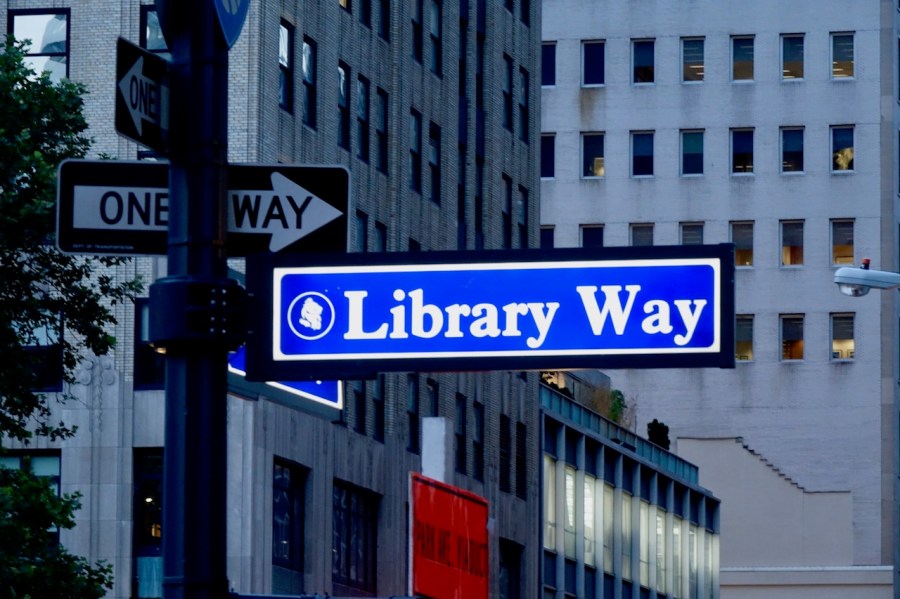
Library Way street name sign, New York

Reading for writing

Do you read for your writing?

I’ve  invested quite a bit of time in the last year into reading books and listening to podcasts about writing to expand my thinking about technique and style and see what I could glean to improve my own skills.

I try to work on my novel every day even if there is only have a small window of time. Writing this blog itself is an experiment in developing my own voice, a way to track my progress and share random ideas about writing and other interests. As I made a promise to myself (and more publicly on this site) that I would post to this blog once a week it has become a great vehicle to make sure I think about writing (and write) every week, even if I don’t feel like it. It was the only writing I did when I was on holidays, but it was writing! I also hope the blog will contribute to firing my motivation to keep working until I complete my book.

There is selection of the reading about writing I have been doing on my Books on Writing page and links to the podcasts I listen to.  There is also a page dedicated to crime fiction related links on my crime page.  I update these resource pages when I find a new reference that inspires me.

What books on writing would you recommend?

I have noticed that how I read fiction changes the more I write and my own creative skills develop. Though not generally a fast reader, I do read as much fiction as possible and try to analyse it to help improve my own practice. When I do read at speed I know I have been gripped by a story and try to understand what it is that I love about it. These days books that do not hold my interest are discarded (often after skipping to the last chapter just to find out what happened).

Most of the books I read are in the genre in which I am writing (mystery) but I do try to read more widely as I think reviewing work outside of your genre also expands your skills, thinking and approach to how you write.

I am currently about 100 pages from the end of Belinda Bauer’s Snap which was long listed for the Man Booker Prize this year and could barely tear myself away from it to write this blog post. Yesterday I caught the bus to the city just so I could sit for an hour each way and read it uninterrupted.

Snap is without a doubt one of the best novels I have read in a while from any genre and reading it has excited me.  I feel there is so much to learn between its pages about writing as well as being a ripping read. The characters all have their own unique, if at times unsavoury, but believable quirks and I cannot  help but be fascinated by what motivates each of them.  The sentence structure and use of words are beautiful and drive me forward as much as the plot, and the short chapters have me simultaneously hungry to read one but disappointed as it feels like the book will end too soon.

I am doing a major structural edit of my own novel at the moment which at times has my mind spinning, but reading Bauer’s book has injected a new enthusiasm to get stuck into my own work with gusto…as soon as I finish reading Snap.

What fiction you have read has inspired your writing?


Image: Library Way, New York

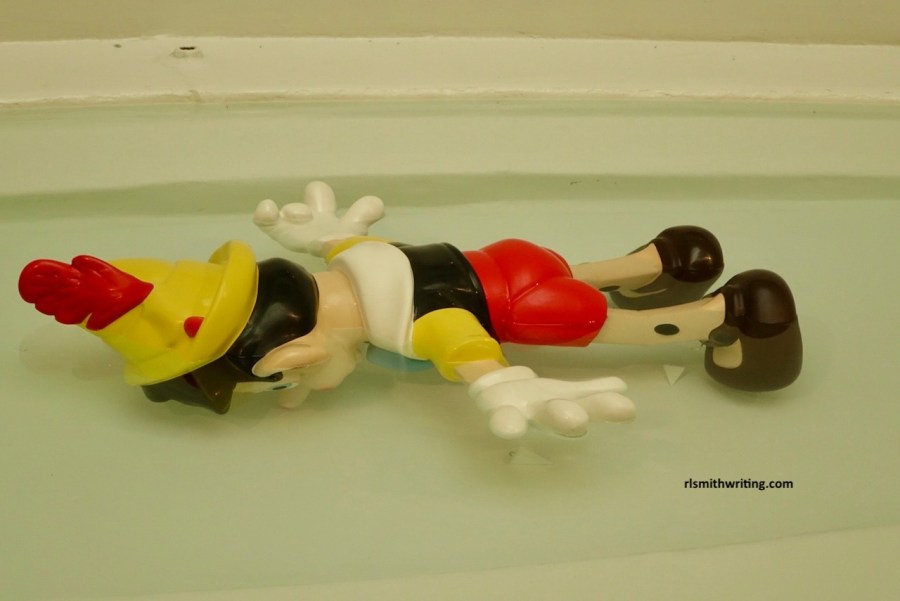
Pinnochio floating face down in water at the Guggeheim New York

Post-holiday writing re-boot

I gave myself a leave-pass on holidays and did very little work on my novel.  Time I would spend writing was taken up with lie-ins, reading, surfing, eating, long walks on the beach and lazing about with friends. Now I am back at home and the break from reality is over.  Getting back into writing after time off does require some intentional effort.  After all your imagination was on holidays as well if you weren’t exercising it.

What happens when you try to get back to writing again after time away from it?  Do you stare awkwardly at the computer unable to access your imagination through the fog in your head? When you do manage to put down words are they crap? Do your characters seem distant? Do you wonder what happened to your flow?  Is there is a temptation to give up?

I am almost half way through the twelve months I took off work to focus on writing and all those unfinished projects in the garden. Despite being a disciplined and organized person, I do not feel that I have accomplished as much as I expected to when I started my break.  The main reason is that (as usual) my plans were too ambitious for my timeframes when life and day-to-day responsibilities are factored in. At times there is a temptation to focus on what is not done and abandon all plans. Why not just kick back and enjoy the rest of the time off? It’s a sophisticated form of procrastination. Nothing is stopping me getting started again except myself. So, this week has been dedicated to some writer wrangling. At its core is re-creating a routine, discipline and patience. Here are my five tips to get your writing mojo back after a break.

Set aside some uninterrupted time to write on as many days as possible each week IMG_0992(even 15 minutes): During your writing time remove distractions like social media. Do not allow yourself to indulge in your favorite procrastination activities like attending to the washing or the weeds that need to be pulled in the garden – whatever it is that draws you away from your computer (or pen).  I am at my best in the morning so I set the alarm for 6am, get up, make coffee and stand at my computer until at least 8am. When I was doing my day job my uninterrupted time was the hour on the bus on the way to work. I would put ear buds in to discourage others from interacting with me and write on my iPad. During that time read over some completed material, reacquaint yourself with your characters and give yourself permission to write crap.  Expect it to take some time for your writing to return to your expectations.
Schedule in space for procrastination and life commitments: There are things that you have to do and things other than writing that you want to do.  Attend to them when you are not at your best for writing.  For me this is toward the end of the day. I try to book appointments, check social media, read or weed in the afternoon.

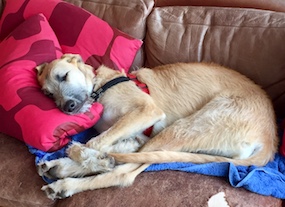
IMG_0980(1)Exercise: In my view this is one of the most effective activities to jolt you back into a routine.  Aerobic exercise facilitates information processing, thinking and memory functions, stimulates the growth of new connections and is protective against getting down on yourself or anxious if you are finding getting back into a routine difficult. If you exercise out in nature there is the added benefit of the environment providing stimulation for your imagination and you can use your movement time to think about writing.  You’d be surprised how often activity will provide inspiration and boost your flow.  Destructo dog is now six months old so I’ve started to teach her to come running with me which is great fun for both of us and afterward she makes an excellent writing companion.
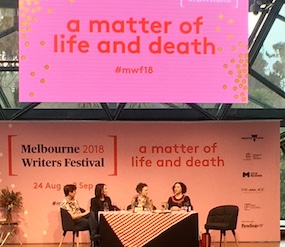
IMG_0978Immerse yourself in some writing related activities: Go to a literary event or a writer’s group, and read. In the evenings I am reading The Mermaids Singing by Val McDermid, a fiction work in the genre I am writing my own novel in, and How Fiction Works by James Wood a book about the main elements of fiction. I managed to catch a couple of events at the tail end of the Melbourne Writers Festival and have planned with a fellow writer friend to organize our own writing retreat for a week in November.
Be patient: It takes a bit of time to get back into the flow after a break.  Expect that, and don’t give yourself a hard time about it.  When you get distracted, keep returning to your routine, until it becomes your routine.  Just like it was before you took a break.


Main image: The Guggenheim Museum, New York

Inset images in order: Writing Supervisors; Destructo dog after a run; A Toast: Judith Lucy’s Dream Dinner Party, Melbourne Writers Festival.

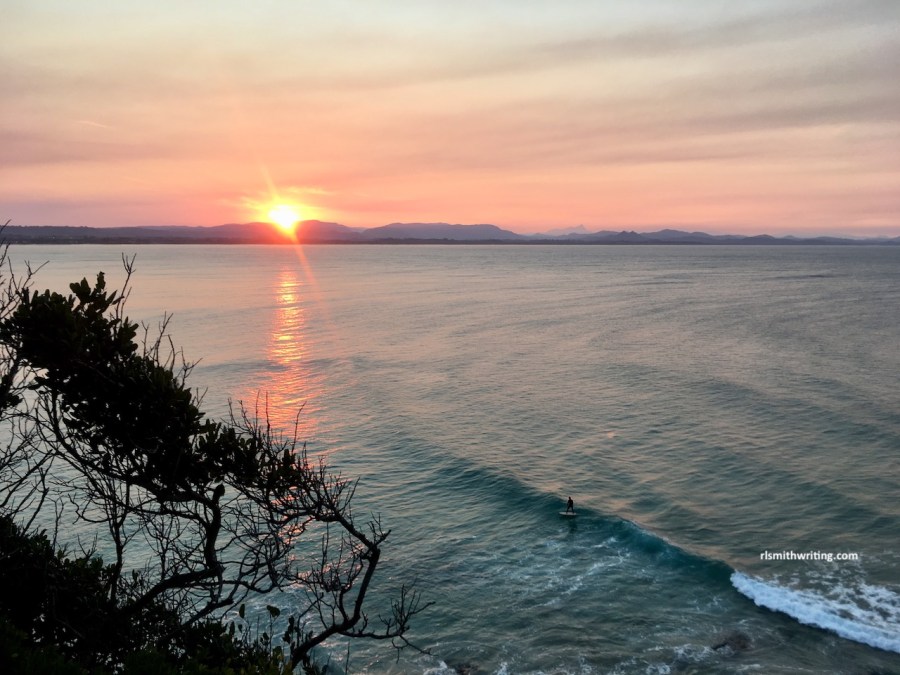
A surfer on a wave at sunset, Byron Bay, NSW

Beta readers

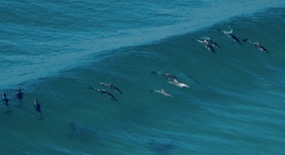
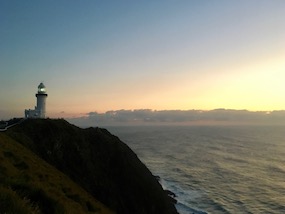
While our political leaders play out the story of Chicken Little in Canberra, I am fortunate enough toIMG_0892 be holed up with friends in a beautiful spot near Byron Bay on the north coast of New South Wales.  Our days are made up of surfing, eating, whale and dolphin watching, reading and writing. Oh, and there’s the spectacular sunrises and sunsets that occur at this most easterly point of Australia.
I have read three books this week, but done only a little writing. I have noticed how reading helps improve writing skills. Reading crime writers like Peter Temple, Raymond Chandler and Jane Harper among others is motivating but I have mixed feelings about reading fiction when I am also trying to write myself. A good book can become a vehicle for procrastination and a distraction from putting your own pen to page. There is also the risk that when you sit down to write you drift from your own voice and start to sound like the author of the book you are reading.

I have noticed that as I develop my fiction writing skills the way I read also changes. Grammatical errors and typos leap off the page when I come across them in published works and I am much more attuned to whether I like an author’s voice and style, why and what it is that keeps me turning the pages (or not).

UMWZE7464Sadly, the enhanced attention to detail doesn’t prevent me from missing errors when proof reading my own work. A couple of friends staying with us asked if they could read some of my book. I had edited and edited, and edited the first three chapters, which I entered into the Richell Prize and The Next Chapter in July, so sent them those parts to read. Their feedback was positive and one of my friends did a great job picking up some grammatical errors I had missed.  It did make me realize just how invisible your own writing becomes when you have been absorbed in it for months and months.
The exercise also got me thinking about Beta readers . Who should they be and what type of guidance should you provide to support them to undertake their task in a way that will help you make your story better.

It makes sense that your beta readers include people who have an interest in the genre you write in, or be someone that might buy the type of book you are writing. They must be prepared to provide uncensored constructive criticism and praise (and be people from whom you are prepared to take it!) and they must commit to complete the task in the time you want to get it done. IMG_0856

I started to compile a list of questions that I could provide to prompt beta readers when the time comes:

Story questions:

  1. Did the story create a clear image? A world that seems alive?
  2. Did the story seem to be propelled forward and hold your interest from the start? If not, why not?
  3. Did you get whose story it was at the beginning?
  4. Was there enough tension to hold your interest all the way through? Do you think the stakes should be raised? In which parts?
  5. Was the ending believable and satisfying?
  6. Are there parts where you wanted to skip ahead or put the book down?
  7. Which parts resonated with you and/or connected with you emotionally?
  8. Are there parts that should be condensed or deleted?
  9. Are there parts that should be elaborated on or enhanced?
  10. Did you find any parts confusing? What confused you?
  11. Highlight in green any scenes/paragraphs/lines you really liked.
  12. Highlight in blue any scenes you found particularly amusing.
  13. Highlight in red any parts did you disliked. What didn’t you like?

Setting questions:

  1. Was it clear where and when it takes place? If not, why?
  2. Were the setting descriptions vivid and real to you? Did the setting interest you?
  3. Did you feel there was too much description or exposition at any point? Not enough?

Character questions:

  1. Did you relate to the main character? Did you connect to how they felt about what was happening to them?
  2. Were the characters believable? Are there any characters you think could or should be made more interesting or more likeable?
  3. Did you experience any confusion about who’s who in the characters? Why?
  4. Were there too many characters to keep track of? Too few? Would you get rid of any of them?
  5. Which characters did you really connect to?
  6. Do any characters need more development?
  7. Did the dialogue seem natural? Did it keep you engaged? If not, whose dialogue did you think sounded unnatural? Why?
  8. Did you think there was too much dialogue in parts? Where?

Style/Grammar:

  1. Did you notice any obvious, repeating grammatical, spelling, punctuation or capitalization errors? Examples?
  2. Did you notice any over-use of words?
  3. Do you think the writing style suits the genre? If not, why not?
  4. Was the point of view consistent?
  5. Is anything unclear? Clumsy? Any cliches? Does the writing flow?
  6. Did you notice any inconsistencies in places, time sequences, character information, or other details?

Are there any questions you would add to, or delete from this list?

Main image: Sunset @ Byron Bay, NSW

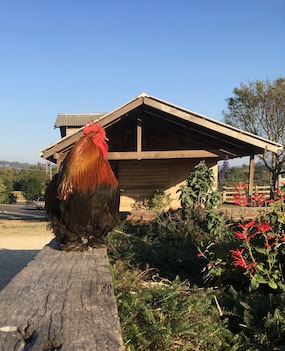
Inset in order: Chicken Little @ The Farm, Ewingsdale, NSW; Dolphins @ Byron Bay;  Lighthouse sunrise, Byron Bay. 

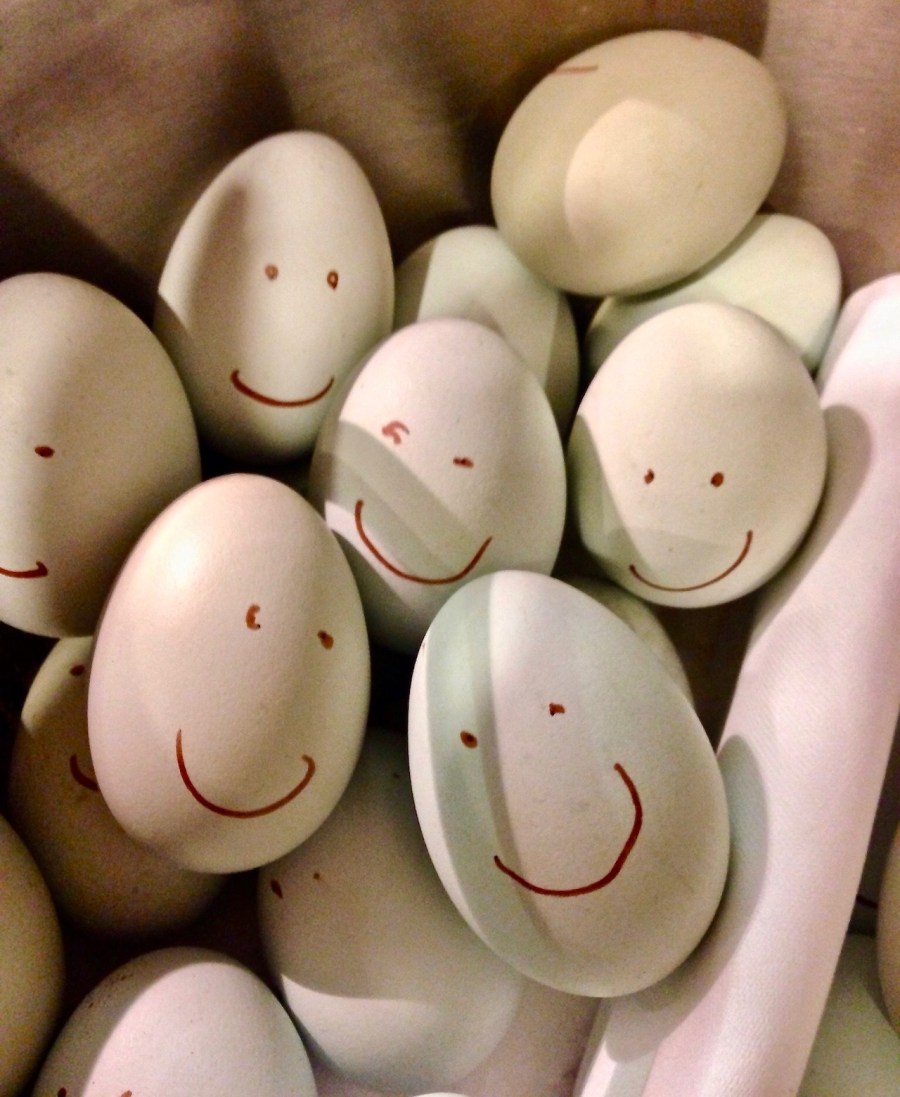
picture of a basket of eggs with faces drawn on them

Characters and journeys

Between my attempts to get some writing done I have worked my way through the obligatory list of tasks that required completion this week before we pack up and head off on a road trip. Like changing the washer on that tap that’s been dripping for months. We will travel to Byron Bay for a few weeks to surf and enjoy some warmer weather. A journey within a journey. My laptop will accompany me so I can continue to work on my novel with some inspiration from the Australian landscape and the characters I meet along the way.

When I started writing I spent a bit of time developing the personalities of the characters for my novel. I wrote back stories for the main players that explained how they came to embody who they are at the start of the book. Most of this material will never be included but was necessary for me to understand them.

All of the characters are completely fictitious, except one. A colleague from my workplace inspired my protagonists sidekick. Before I started my long service leave I decided I’d better tell James and check how he felt about it. He was flattered, but a little cautious. What kind of person had I made him? I promised I would give him some material to read in due course and if he wasn’t happy about the idea I would make changes to the character to create more distance.

I emailed the first three chapters to James this week and waited to hear what he thought, holding my breath figuratively speaking. To my relief he said he loved the story and was happy with the persona he’d inspired (particularly the six-pack I gave him). James is my favourite person in the novel and he’s a great foil for my protagonist, Jude Lawson. He and his relationship with Jude are what injects humor into the story and I enjoy writing the banter they have.

The process of developing the personalities of all the characters in the novel included deciding on names, age, occupation and character traits. I wrote personal story lines to identify what drives each person and what their hidden agendas are. I wrote a back story to find the ghost of each character. I wrote about what has made them the person they are at the start of the story and how they know the other players. I explored what each character wants that they won’t admit to themselves as well as what they want in concrete terms and why it is important to them. I wrote about the conflict that exists to works against them reaching their goal. I tried to find any epiphanies they might have as events unfold and I told the story in summary from each main characters own point of view. It resulted in thousands of words that will never appear in the book but were necessary to find depth in the people. The process of getting to know them is similar to getting to know a real person and they continue to reveal more of themselves to me as I write.

Packing the car will be tricky as I have to make room for all our stuff and my imaginary friends. There’s nothing like travelling to test friendships. I hope they all travel light and and don’t argue about directions or ask ‘are we there yet’ too often.

Image: unformed characters…

Artwork from Queensland Museum

Beginnings and endings

There are two ways to begin a journey. One is with a clear destination visualized. A definite purpose to drive you forward. The other is with a determination to have an experience without any particular expectation of how it will end. To allow things to unfold and wash over us. Either way where we end up is often not where we expected to be. I have been thinking a lot about beginnings and endings this week after spending a couple of months rewriting the beginning of my own project and contemplating how I feel about the current ending.

Stephen King said “An opening line should invite the reader to begin the story. It should say: Listen. Come in here. You want to know about this.”

I have revisited some beginnings of novels I have read and included some that I’ve found compelling…

I did not scream when I came in the back door of Sal’s Saloon, where I work, to find Sal himself lying there on the floor of the stockroom, the color of blue ruin, fluids leaking from his various holes and puddling on the ground, including a little spot of blood by his head. – Noir: A Novel by Christopher Moore

I found Moore’s voice in the is book really compelling. It’s quite unique. He’s also hooked me with the character who found Sal and the question – why is Sal dead?

It wasn’t as though the farm hadn’t seen death before, and the blowflies didn’t discriminate. To them there was little difference between a carcass and a corpse -The Dry by Jane Harper

Harper evokes rural Australia in such a simple and evocative way with this opening, and of course there is the question of why is there a corpse.

I heard the mailman approach my office door, half an hour earlier than usual. He didn’t sound right. His footsteps fell more heavily, jauntily and he whistled. – Storm Front by Jim Butcher

Butcher sent shivers up my spine with this one and made me wonder if there was a psycho mailman on the loose.

I go by many names, none of my own choosing. – The Parcel by Anoshi Irani

Irani’s opening is short, simple and elegant and asks an evocative question.

A great beginning compels the reader to continue. Sometimes the voice draws you in by insisting on your attention, or using intimacy or intrigue. Sometimes the opening contains a hook or drama to make you want to know what happens next, particularly in mysteries or stories with a quest. A character may be so compelling that you want to know more about them or the rhythm or pacing of the writing can power you to read on. You also have to find the right place and time to begin. Start to soon and you will bore readers with routine and no goal or conflict, start too late and you confuse people with inadequate context.

The ending is a long way from the beginning. But it has to answer the question that was asked at the opening in order to satisfy readers. It has to take all that you have written about in depth and bring it to a satisfying conclusion. If the ending fails to answer the specific question set out in the beginning, the whole book will fail. Many authors say they write the ending before they begin. I cannot always see the ending until I am well into the story. I am fairly confident the ending I wrote in my first draft will not be the ending I finish with. It is something I agonize over intermittently. Time will tell whether I find a satisfying conclusion.

Here are some endings that I’ve found gratifying and that have given me something to take away and think about…

My name is Harry Blackston Copperfield Dresden. Conjure by it at your own risk. When things get strange, when what goes bump in the night flicks on the lights, when no one else can help you, give me a call. I’m in the book. – Storm Front by Jim Butcher

The creatures outside looked from pig to man, and from man to pig, and from pig to man again; but already it was impossible to say which was which. – George Orwell, Animal Farm (1945)

I never saw any of them again — except the cops. No way has yet been invented to say goodbye to them. – The Long Goodbye, Raymond Chandler

When they finally did dare it, at first with stolen glances then candid ones, they had to smile. They were uncommonly proud. For the first time they had done something out of Love. – Perfume: The Story of a Murderer, Patrick Süskind

What are some of your favorite beginnings and endings?


Image: Queensland Museum


Full moon through electrical pylon wires

Holding up words

Writers are often described as one of two types – plotters or pantsers. It’s curious that one of the things most talked about when discussing how writers write involves a word that doesn’t actually exist. Pantsing (commonly known as dakking if you’re Australian) is a word – the action of pulling down a person’s trousers, but pantser does not exist in the English dictionary and it sends the spellcheck into meltdown.

Plotters (also known as architects or planners) outline the plot points of their story before they sit down to write. Their tales are pre-planned to varying levels of detail and they know what’s going to happen before they put pen to paper. Pantsers (sometimes called gardeners) fly by the seat of their pants when they write. Their approach gives them the freedom to take their novel in any direction, not knowing where they are going or how the story ends. It’s a road trip without a map.Screenshot 2018-07-11 16.02.45

There’s about a 50-50 split in published writers – half plotters, half pantsers. Regardless of which approach is taken, writers who are successful end up in the same place – with  a story that has a beginning, a middle and an end – a structure in other words. I think successful pantsers must have an innate sense for how the plot needs to be structured as their story unfolds.

I confess to being a bit of a geeky nerd and learning about the structural possibilities has become something of a fascination of late. Story structure is the scaffold that supports your words and moves the reader through your story. It creates flow and helps to keep readers engaged. Regardless of whether you write organically, plot your story before writing or use a hybrid of these methods (me) you still need to understand the Screenshot 2018-07-11 15.12.37basic structural elements of a story as without it your story is likely to flop soon after take-off or require endless re-writing to turn it into something that will engage readers.
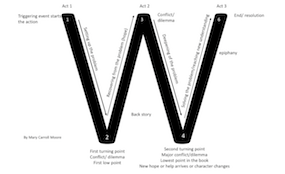
The W-plot structure (made accessible by Mary Carroll Moore on Youtube) provides a great overview of story flow. This is a simple representation of the three act play, though it can have more than three acts of course.

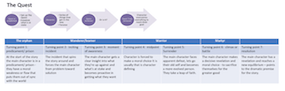
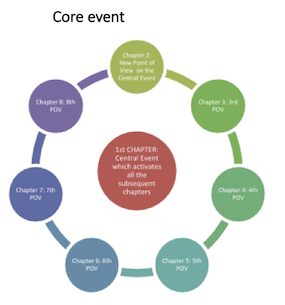
The quest or idea story is a classic for adventure/crime/mystery/speculative fiction stories (think Harry Potter, The Hunger Games, Don Quixote). A question is raised or a problem needs to be solved early on and the novel sets out to find the answer. The mystery novel I am currently working uses a variation on the quest structure and involves seven turning Screenshot 2018-07-11 15.12.49points that each align with an archetype.
An idea for another novel bubbling away in the back of my mind will most likely use a blend of the core event structure and the place structure. For core event think The Lord of the Rings or The Slap by Christos Tsiolkas were a pivotal dramatic incident (the slap) unleashes a turbulent sequence of events that propel the story forward.

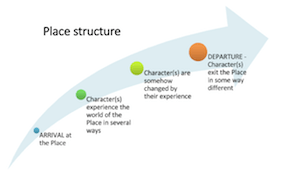
In the place (or milieu) structure (think The Firm, The Wonderful Wizard of Oz or Lord of the Flies) the arrival at a place and the impact it has on its characters is what drives the story. Writers who love world building (eg. science fiction and fantasy) often use this structure. The plot follows a character who explores the world created and is transformed by it. The story starts when the character enters the world and ends Screenshot 2018-07-11 15.12.58when they leave.


Whether you think of yourself as a plotter or a pantser, a solid understanding of structure is a must. Holding the framework on which you want to build your story in your mind will help you drive your adventure where it needs to go.

What type of writer are you? Which story structures have you used?  What about literary fiction?

Main image: Pylons on a full mooon

Inset images: representation of story structures

Dainty Swallowtail Butterfly on grapefruit leaves

The chrysalis

As the southern hemisphere tilted further and further away from the sun I was beginning to wonder whether the celestial machinery might break down entirely and the sun disappear over the horizon, never to return.    The winter solstice is a reason to rejoice as it marks the journey toward the emergence of spring, but it’s cold enough to freeze the (insert your preferred body part) off a brass monkey at the moment.

The words ‘emerge’ and ‘spring’ make me think of a butterfly as it emerges from its chrysalis and bursts into the air to entertain the spring flowers.  Last week I experienced a different kind of emergence when I went along to the Emerging Writers Festival National Writers Conference.  What is an ‘emerging writer’ you ask?  I love the image of a soft moist writer breaking out of a chrysalis, pen in hand, ready to flutter about enlightening the world with their words. But it’s a bit more complicated and contentious than that.

Humans love a hierarchy of power and it turns out the industry for introverts is no different.  The world of writing has its own meritocracy designed around the utopia of publication.   We are categorized as early, emerging or established depending on how much, and how, we have published.  Early writers have not published, emerging have published in journals or anthologies and established writers have published a full manuscript.  The last category excludes self-publishing.  Publishing and self-publishing is a whole other hierarchical discussion.  These writer categories relate to peer recognition and the politics of power tied to that.  They completely overlook the effort an individual may have put in to produce their work and discount that there are some excellent self-published books on the market.

The writer status must apply to the development of ones ‘craft’ in the public domain rather than a lucrative career given that most published authors still need a day job to sustain them. The terms also serve a purpose in the funding arena to determine who can and cannot apply for grants.  For example, the Richell Prize is for early and emerging writers (publication in anthologies and journals or self-publishing do not exclude you from entry).

I recall when one of my earliest poems (judged blind) had been selected for publication.   The organization sponsoring the prize contacted me and said, “I don’t know why they selected that one,” as if being unknown should have excluded me from the privilege of selection.  It does highlight the importance of not taking yourself or what other says about you too seriously, something I waxed lyrical about in an earlier post about writing resilience.   As the saying goes what other people think of you is none of your business.

Anyway, I digress.  The National Writers Conference was an opportunity to hear a range of established authors reflect on their emergent journeys.  One common theme was that the angst of recognition is almost immediately replaced by a different kind of angst once established.  Many of the established writers who spoke wished for the lack of expectation that existed before they were published.  They suffered from fear of the blank page.  Will I be able to do it again? Perhaps writers and artists in general are an inherently anxious bunch due to the mysterious and sometimes illusive muse, aka imagination.

The festival was a great opportunity to hear writers and publishers reflect on their craft and the industry. The thing I love most about music and writing festivals is coming across an artist you find inspiring but have never heard or read before.  I was particularly taken by Melissa Lucashenko’s reflections to inspire writers.  She also shared her eloquent insights on writing and colonization and how we, as Australian writers, think about land, place, people and out history when writing.   I’ll be adding her novel Mullumbimby to my reading list and she has another one, Too Much Lip, coming out in September.  Rajith Savanadasa, author of Ruins, a novel about a family living in Colombo and grappling with the changes brought about by the Sri Lankan civil war, gave a poetic lecture about nourishing yourself and your creative practice. I will also add his book to my reading list.

What are you reading now?


Image: Dainty Swallowtail Butterfly checking out the grapefruit

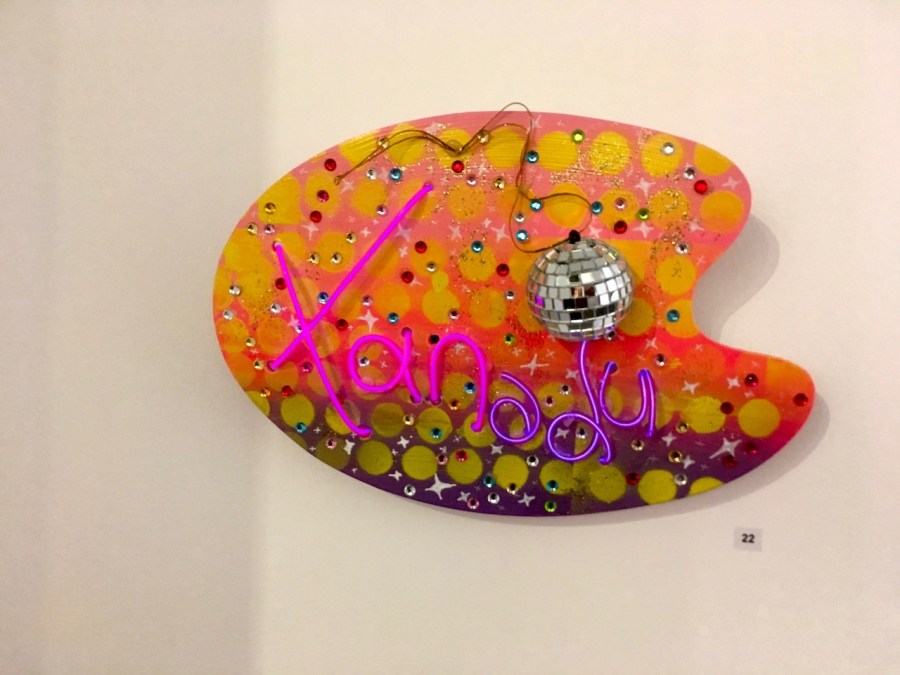
Xanadu - Sue Beyer, The Exquisite Palette exhibition at Tacit Galleries, Collingwood

Creative seeds

The ancient Greeks believed creativity to be something that resulted when a person was bereft of their senses. Goddesses controlled the creation of art and literature and spoke P'ulur'ette - Jen Drysdale, Tacit Galleries to the artist as their muse. In reality sometimes the subject itself acts as the muse and when you give a group of creatives the same task you will get very different outcomes – as many as the number of artists involved.

I attended the opening of an art exhibition at Tacit Galleries in Collingwood recently because a friend had a piece in the show. I had not read the blub about it before I arrived at The Exquisite Palette and the demonstration of creativity and divergent thinking in the exhibition blew me away.

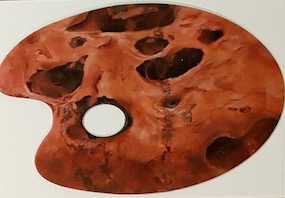
Paper Boat.  Susan BarbicHundreds of artists took a simple blank plywood artists palette to use to create an artwork. The palette’s became a playground for the imagination of the participants, and were indeed exquisite. No two palettes were alike but all shone with the passion and inspiration of the artists. One palette was untouched except for a pencil sketch of a cats head stuck to it with masking tape. It was as if the artist had mocked the process itself. Some were painted with scenes that inspired the creators and incorporated the palette hole into the design. Others were completely deconstructed and no longer recognizable from their original form. Palettes ranged from playful, through elegant, novel and disturbing and used a range of materials from paint to pewter to blood, glass, shells and feathers.
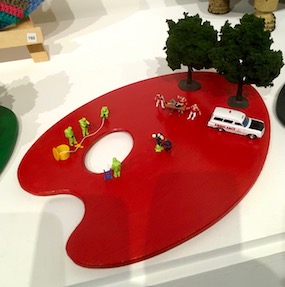
When you speak to creatives their processes are as varied as the number of IMG_0573artists themselves across all art forms. Regardless of whether the creative output is painting, sculpture, writing or design within industry the process begins with a seeding incident, something that inspires curiosity and exploration.
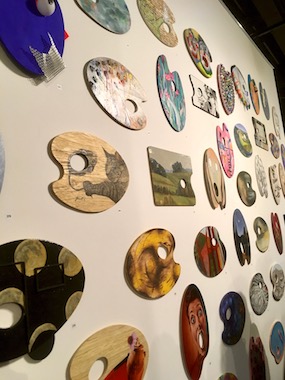
I know that when I write, the starting point is usually either a strong feeling, an image that sticks in my mind or a snippet of a conversation that sparks my imagination. I rarely know where the idea will go, or indeed how I will get there but the seed of inspiration is what drives productivity in creation.

The initial inspiration for the book I have been working on (for what seems like forever now) came from a mashing together of an incident I saw cycling home one day and a IMG_0565 (1)conversation with a work colleague. I let the story take me in the first draft and expect that the end product (if I ever get there) will only contain a shadow of the original spark as development of ideas themselves change and evolve as they progress. Someone else who had the exact same two experiences might have written a romance or science fiction novel.   I was drawn to crime fiction.

The rewrite of the opening of my story which I mentioned in an earlier blog was partly inspired by a throw away comment a friend made over lunch.  I manipulated it into a new context to develop a new character and a different path into the story.  Like a blank palette, a comment or a visual stimulus can bend into new forms and ideas to inspire us in new ways and create fresh works of art.

How does your process begin?

Images in order:

Sue Beyer – Xanadu;

Jen Drysdale – P’ulur’ette;

Susan Barbic – Paper Boat;

Lino Savery – Unfortunate Death (from set of three);

Various artists – wall of palettes at Tacit Galleries.