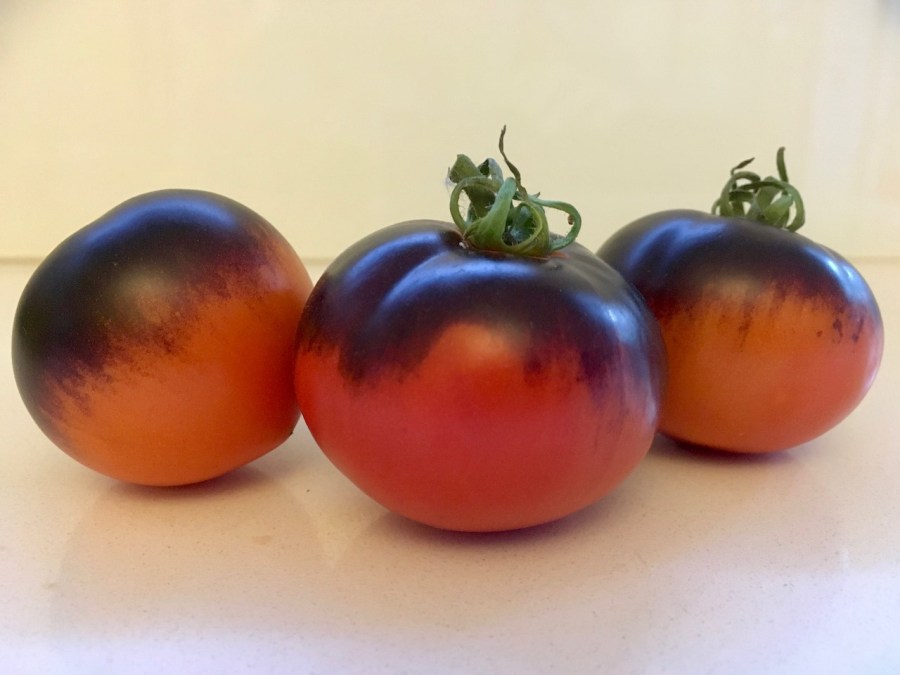
Three red and black heirloom tomatoes

The summer food store

Plunging your hands into fertile soil is such a sensuous experience. The garden is my physical creative space and where I retreat to recharge and to think. There is a meditation created by the rhythm of the seasons. Gardening puts you in touch with the beautiful but harsh reality of the cycle of life. New seedlings are planted with such tender hope and there is joy in the budding of new fruit. There is also loss when pests attack, flocks of birds and other animals raid your fruit and vegetables, rain comes when it is not welcome or there is no rain at all and the scorching sun shrivels your produce.

I live on about a third of an acre of tough clay ground on a steep north facing hill. The whole area was mined for gold from the late 1800’s through to the 1960’s, so the soil was quite depleted when I moved here. Over the twenty years I have lived in Warrandyte I have gradually built up the soil and the garden to be productive enough to provide over 50% of the household food. There are twenty-one fruit and nut trees, and the only flat piece of ground on the block has been dedicated to the vegetable garden. I also have kiwi fruit, passion fruit, raspberries and herbs growing.

This year I lost all my apples from one tree in an afternoon when a flock of Crimson Rosellas swooped in the day before I planned to net the tree.  The tree convulsed for about ten minutes emitting a cacophony until they had eaten the lot, leaving only apple cores hanging on stalks. I have had a bumper crop of about twenty kilos of tomatoes though. I have frozen and pickled tomatoes and sought out recipes to eat them in a variety of ways, most recently with the abundance of green beans growing. A very simple but tasty combination is cooked as follows:

  1. lightly cook the beans in boiling water
  2. add olive oil to a non-stick fry pan and throw in several thinly sliced cloves of garlic (had a great crop of garlic last year which hangs in the shed till we need it)
  3. stir in the beans then push them to the outside of the pan and fill the middle with chopped tomatoes till they are cooked (you can also throw in some chopped zucchini if you have some growing)
  4. stir in some parsley and basil if you have any. Add salt and pepper.

I’ve been serving it with a bit of grilled or lightly fried chicken and some corn on the cob from the garden. Yummo.

What’s happening in your patch?
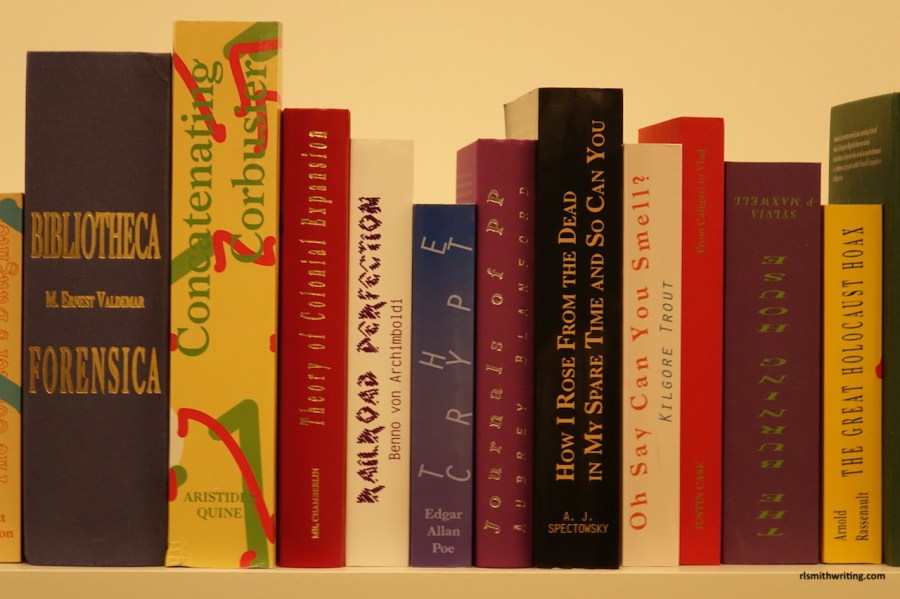
 

Books on shelf at Guggenheim, New York

Getting started

I’d been toying with the idea of writing a book about the two years I spent living in Portugal riding horses in my early twenties. I was lucky to become a working pupil of Maesto Nuno Oliveira, considered to be one of the last great masters of classical dressage (think Spanish Riding School if that term leaves you wondering). I started writing and developed quite a bit of material, but soon realised I didn’t really know what I was doing. How do I structure my ideas to craft them into an engaging story on the page?

I am practical and pragmatic about what I don’t know and love learning, so I sought out some help. I looked into a range of courses. I didn’t really want to do another university degree and soon found myself at the virtual door of The Writers Studio signing up for their introductory online course. It was great fun and I learnt a lot. That was in January 2016.

The second problem was that I kept experiencing an overwhelming urge to kill off characters. One of the questions the tutor asked was what type of books we liked to read. I like to read widely, but in reality mystery and crime fiction dominate my bookshelves. Start by writing what you like to read was the best piece of advice to really kick start my writing. My Portugal book went into a virtual drawer and I commenced a journey to write a crime fiction novel under the tutelage of The Writers Studio.

The first draft commenced in March 2016. I work full time in a fairly demanding job and commute for three hours each day, usually one way on a bus, one way on a bicycle. That meant about an hour and a half in transit each day on a bus with my iPad working through course notes and writing. I’d also snatch a few hours over the weekends in between other commitments.

I discovered Scrivener early on, which I love, I’m a bit of a tech geek and it allows me to work on the iPad or the laptop and sync between the two. I rarely write with a pen as my handwriting is almost illegible and I can type fast enough to keep up with my thoughts. When I do hand write it’s because I’ve become stuck and the switch to a pen can get the creative brain flowing again.

I started my third draft in February 2018. Reflecting on the last two years, the key things I have learnt:

• it takes more than a good imagination to produce a good story. It has to be harnessed by a sound, well planned structure to make it really engaging

• develop a writing habit, even if it’s only fifteen minutes a day, it adds up

• grammar matters a lot, if you missed out go and learn it

• seek outside objective feedback, it makes a world of difference

• practice patience – it’s a journey, settle in, enjoy the process and don’t worry about the destination

This is to be the year of writing for me. I will start long service leave from my job in April and take the rest of the year off to work on my novel and my craft. I have set up this website as part of my writing project and plan to post a blog post each Friday.  It’s a place to share some of my work and pondering about life – initially the blog will alternate between writing topics and garden/food topics (one of my other passions). What are you working on?

Image: Guggenheim, New York