Keeping it short

I hope you all survived the Christmas madness and are having some downtime in the hiatus before the new year. I’m not a big fan of new years resolutions but have been pondering what I hope to get out of 2019 (other than a magical retirement fund) as I enter the final quarter of my year long sabbatical. In the three months leave I have left I hope to near completion of my mystery novel and sign off on a few of those unfinished landscape projects on my list.

Warrandyte Food Store

Last week I weeded the patch and can now actually find the vegetables (had some delicious zucchini fitters last night) and submitted entries for a couple of short story competitions. I’ve also started to schedule into my calendar the short story competitions I’m interested in entering in 2019. I tend to write short stories as a bit of light relief from, and motivation for, my longer form project and thought I would focus on short stories for this blog post.

What is a short story?

Whilst a novel is a complex journey, a short story is more of an intensely focused experience and usually between 1,000 and 20,000 words in length. Anything less than 1,000 words is considered flash fiction, over 20,000 words is a novella.

Orange, National Gallery, Melbourne

Flash fiction writer Sherrie Flick analogises flash fiction to shoving an angry black bear into a lunch bag, without ripping the bag.

T.C. Boyle compares a short story to a toothache that you drill and fill in one sitting and it’s done. He says a novel is more like bridge work, it takes time – and you know what you will be doing when you get up tomorrow. A short story is a sprint, a novel a marathon.

A novel has a series of climaxes that lead a reader down a path with twists and turns that build tension and accumulate to a final payoff. A short story has a tight plot that moves forward from the opening line and usually leads to a single climax. A novel explores a range of emotions whilst a short story usually hones in on one emotion or theme. The opening paragraph must create a vivid image of the setting, capture the readers attention, introduce a conflict, create tension and start as close to the conclusion as possible. All using show, not tell. Phew! That’s a lot, and it means that every single word has to count.

What’s the point of writing short stories?

  1. Unlike a novel you can write a whole short story in one sitting. There’s a sense of almost immediate completion and achievement in the writing and short stories can help to develop your writing craft.
  2. Writing a novel is a long game. Short stories provide some relief and can give your long form fiction writing a jolt when you are frustrated by it.
  3. Writing short stories is a way to expel those ideas that are unrelated to your main project but keep bugging you.
  4. They are an economical way to explore writing outside the genre of your main project or to experiment in your writing.
  5. It’s an art form that takes time to develop, but is a great way to explore new writing ideas and approaches.

What’s the point of entering short story competitions?
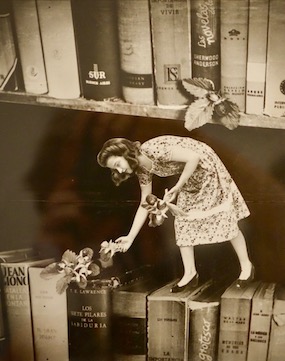
MoMA, New York
  1. Short story competitions can help you learn to work to rules and deadlines. This is great practice if you struggle with word counts and finishing projects.
  2. Success in short story competitions can provide an excellent boost to your motivation to keep writing.
  3. Not receiving a prize is good for writing resilience – we all need to learn to graciously accept feedback and appreciate that not everyone will like our writing – and to keep writing anyway.
  4. Being placed in a competition can help you get noticed by publishers and spruik your long form novel. I happened to be sitting next to a publisher at a prize event last year who suggested I get in touch when I finish my novel.
  5. Some competitions (like NYC Midnight) give feedback to all entrants.

Tips for writing and entering short story competitions

The Journey, sculpture exhibition, Werribee
  1. Plan ahead and schedule the years writing competitions in your diary.
  2. Always read the guidelines and stick to them. Read previous years winning stories if available to get a sense of the types of stories that succeed in the competition. The guidelines can help you decide if it’s the right competition for you and might inspire ideas (many have prompts or themes).
  3. Make every word count. Use a strong opening that includes the crucial incident that drives the story in the first paragraph. Drop the reader straight in and engage them and end the first section with a note of suspense to incite them to keep reading.
  4. Limit the number of characters – there’s not a lot of room in a short story for character development, so stick to a small number and make them plausible.
  5. A short story, like a novel, is a journey with an ending. This does not exclude ambiguity but it must be clear that you have taken your reader on a voyage and the tale has ended – there needs to be a clear arc.
  6. Short stories benefit from some time to breathe and edit, just like long form fiction.
  7. Don’t always wait till the final deadline to enter if possible. Most competitions get the bulk of their entries at the last minute. Getting in early can sometimes get your story noticed in the crowd.
  8. Writing fresh stories is important but you can also dig out old stuff and re-enter in new competitions or enter stories in more than one competition simultaneously (if the rules allow). The process takes a long time and if you wait to hear back from a competition before you re-use your story you could be very old before you have success. The more competitions you enter, the more likely your story will get picked up.
  9. Have fun. Approach short story competitions as a game – try different techniques, obscure or unusual ideas. It might be the one that wakes up the judges and captures their attention.
  10. Don’t be put off if you can’t afford to enter competitions, not all of them have entry fees

Websites that list short story competitions in Australia and overseas

Can you suggest other websites that are good for finding writing competitions?

Main image: Scooter Trash, Jerome, Arizona, USA
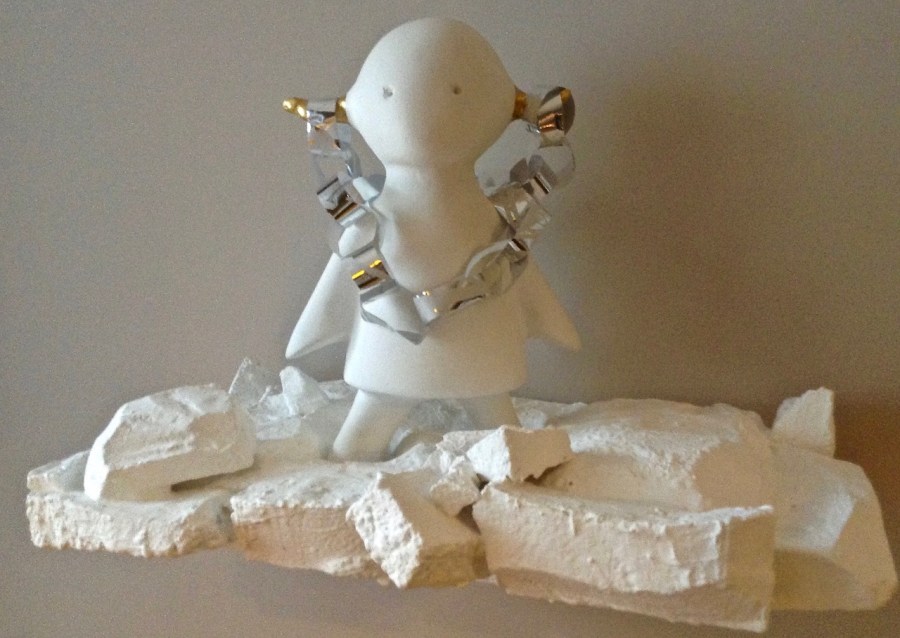
Merry Creepsmas

A friend of mine has a special Christmas tradition. Every year she posts a selection of photos for what she calls the Twelve days of Creepsmas on Facebook. This post about alarming Christmas traditions is inspired by those photos of creepy Santa’s with terrified children.

Get my goat

Krampus

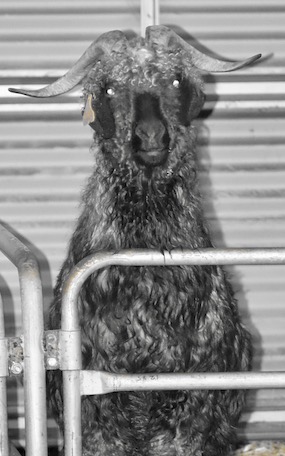
A half-goat, half-demon and his band of ill tempered elves haunt the Tyrolean mountains in the Austrian Alps during the festive season on the hunt for children . Krampus, with his furry body, disfigured face inset with red eyes below big curled horns terrorizes the streets with wild jangling bells, animal like growls and fierce dancing as he beats people with birch branches.

Good children get presents from Santa, bad children (as well as drunks and laggards) got Krampus who whips or abducts them, stuffs them in a sack and drags them off through the snow to the underworld. His roots are in pre-Germanic paganism and he is believed the be the son of the Norse god of the underworld, Hel. His legend has such force that it survived attempts by the Catholic Church to banish his celebrations in the 12th century. Krampus is a perfect antidote to the overly commercial, cheer filled version of Christmas.

Mari Lwyn (Y Fari Lwyd)

Rustle

Dead horses are more in fashion than goats in Wales. Mari Lwyd (the Grey Mare) is a horses skull wrapped with a white sheet, empty eye sockets and ear holes decorated and the figure draped with colourful reins, ribbons and bells. Despite her macabre appearance Mari Lwyd is supposed to bring good luck.

She and her entourage go door knocking and sing rhyming insults in Welsh to occupants to try and gain access. In the ritual the occupants of the house must respond with their own verse to try to outwit Mari and prevent her and her gang from entry. Eventually she is let in. Apparently Mari’s entry scares off unwanted problems from the closing year and brings the household luck for the new. She also drinks all the liquor, eats all the food and generally causes mayhem (including chasing any young women she takes a fancy to around the house). You can view an example of the doorstep exchange here.

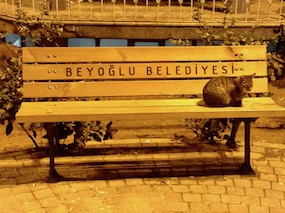
Meow, Istanbul

Yule Cat (Jólakötturin)

In Iceland if you don’t have some swanky new clothes to wear at Christmas you could be eaten up by a giant vicious cat. It’s unclear where the cat idea originated from but the clothing part of the myth is thought to have begun as a mechanism to urge farm workers to be more productive in the lead up to Christmas when hard workers were given new clothes to wear by their employers.

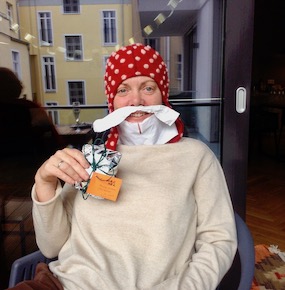
Improvised Santa

Icelanders don’t just have to worry about giant cats at Christmas either. Thirteen trolls with names like Pot Scraper, Bowl Licker, Window Peeper and Doorway Sniffer; along with a many headed, child eating, husband murdering ogress called Grýla come down from the mountains in December. Naughty children are taken back to Grýla’s lair to be devoured.

Witches and broomsticks

In Eastern Europe the Christmas witch Frau Perchta, a shape-shifter, creeps into homes and leaves a piece of silver in the shoes of children and servants who have been good. The naughty ones have their stomachs split open and after being disembowelled their organs are replaced with pebbles and straw. She’s also a bit of a stickler for domestic neatness and lazy ladies get the same treatment as naughty children if their housekeeping standards don’t measure up.

Reluctance

The Norwegians worry about evil spirits and witches that appear on Christmas eve and steal their brooms to go joy riding. Households take preventative measures and hide all the household brooms so they have the equipment needed to clean up after the festivities are over. In some households the men go outside and fire shotguns for good measure to scare the bad spirits away.

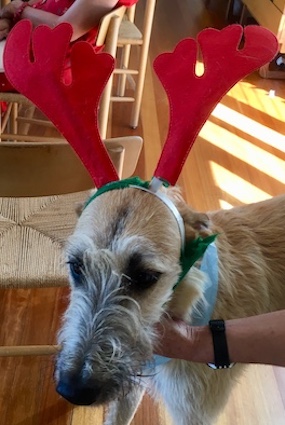
I’m anticipating my own Christmas celebrations to be far less dramatic, with a focus on the company of friends and family and the devouring of good food under the watchful eye of the giant hound who will hopefully protect us against any evil visitations. May your season be peaceful and your traditions bring good will. See you on the other side.

How do (or don’t) you celebrate the festive season?

Main image: The decoration, Berlin

A good life

I started to watch The Sopranos last night. From the beginning again. Psychoanalysis anyone? It’s almost twenty years since Tony Soprano, violent mobster and family man, landed in Dr. Melfi’s therapy office after a panic attack and started his own personal search for meaning.

The show is at its heart a study in existentialism. We all look for and crave a sense of meaning in our lives. Some find it in god, love, money, or the pursuit of social justice. We expend a lot of energy seeking purpose.

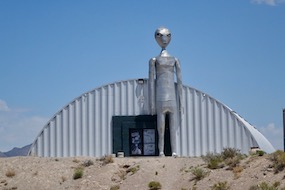
Extraterrestrial Highway, Nevada

Existentialism tells us that life has no meaning except for that which we ascribe to it. In the words of Dr Melfi: “When some people first realize that they’re solely responsible for their decisions, actions, and beliefs, and that death lies at the end of every road they can be overcome by intense dread.”

Existentialism demands  we are responsible for what we do, who we are, the way we face and deal with the world, and collectively we are ultimately responsible for how the world is. We cannot abdicate that responsibility to a god that only exists because we choose to believe in them.

As Satre said we are condemned to be free and we suffer from an abundance of freedom. Each of us must design our own moral code to live by, even if it is the template offered to us by our parents or our church. It is a template we choose to inherit. To live authentically we must take responsibility for all our actions as they are freely chosen.

Sand art, Byron Bay

The Sopranos showcases the impossibility of attempts to compartmentalise evil acts, and separate them from the rest of our life. In Tony Soprano’s case maintaining a real family life and a Mafia life without the latter corrupting and threatening the former is impossible. He’s convinced he’s created a church and state separation between his two lives and somehow justifies his criminal activity by the fact that he provides for his family. His wife Carmella lives in her own orbit of self deceit and turns a blind eye to the reality of her husbands ‘business’ in order to enjoy the comfort of her Mafia funded princess lifestyle. Being his accomplice means she is constantly haunted by feelings of guilt and shame herself.

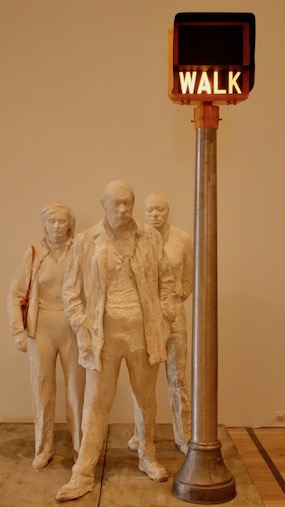
Museum of Modern Art, New York

This morning I woke up to news from the USA in an article on Facebook reporting George Pell’s conviction on historical sexual abuse charges. It had not been reported in the Australian press due to suppression orders as there is another trial yet to take place. The article made me think of The Sopranos. Like Tony Soprano, Pell’s life choices have come back to haunt him and his actions have been shown to be inconsistent with the view of himself he had promoted to the world.

The clerical hero of some of this countries most senior politicians has fallen, and it makes me wonder what it says about the judgement of our political leaders who have sworn by Pell’s counsel. What is their role, like Carmella, as accomplices in Pells deceit? Have they all chosen religion as a moral code to hide behind, rather than live by? Do they use it to justify themselves as inherently good?

Secrets and lies are at the heart of a good mystery but they do not make for a happy life. In the Sopranos there is a scene were Tony sees an abridged quote from The Scarlet Letter displayed on the wall at his daughters college: “No man can wear one face to himself and another to the multitude without finally getting bewildered as to which may be true.” To find happiness we must organise some kind of harmony between all the parts of ourselves. We need to create an internal attuned unity that is consistent with our actions to avoid the kind of existential crisis Tony Soprano faced. Public figures and prominent people cannot be exempt from the consequences of their failure to live authentically.

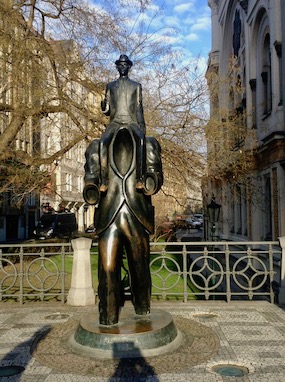
Franz Kafka, Prague

The Sopranos ends in ten seconds of black silence. An ending that bewildered viewers. Messy and contradictory. Did Tony die or not? Was he taken out without seeing it coming as he himself predicted? Does it matter? The ending is ambiguous, but we all know that eventually everything ends in death – the truth of human morality. A truth that must be faced to live authentically and grasp our full potential.

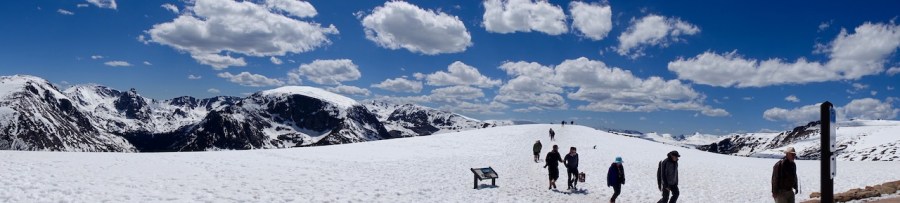
Main image: The Rocky Mountains, Colorado

rusted old truck in long grass

A bit of noir

It’s murderously hot today. The thermometer is expected to reach 38 degrees celsius and strong north winds are blowing in from the sizzling centre of Australia. It’s the kind of day that conjures a mood of disorder and threat, like it’s cousin on the spectrum, the chilled isolation of excessive cold climates. Extremes are both thrilling and dangerous.

MoMA, New York City

Humans are so vulnerable to weather extremes yet we have been pitting ourselves against nature infinitum with a naive belief that we can prevail in a moral vacuum where the planet is concerned. My bet is on nature in the long run, if we don’t learn to live more harmoniously with the planet.

For some reason, when the elements are severe my mind wanders to noir at the extreme of crime fiction.  Climate change, like reading noir, summons an inescapable bleakness. Both contain themes where collective denial operates within a prism of political dysfunction and citizen hopelessness. Perhaps it is the existential angst, imbued in the idea that humanity could wipe itself out by failing to take action on climate change, that is nudged whenever the weather gets irritable that makes me draw parallels to noir.

MoMA, New York City

The world of noir is dark, chaotic and alienating, and full of the type of moral ambiguity and hypocrisy that points at human existence and calls it absurd and meaningless. In noir everyone one is imperfect and what is right and wrong are unclear. Noir is complex and messy and has a way of teasing out our interdependence as human beings in the global web of power and influence in which we live. It is much more like real life than cosy crime where the hero prevails unscathed, as if wearing teflon. Noir is saturated with the voices of angry protest against entrenched privilege and systems in which the average citizen feels powerless against inequality and corruption, yet it is often delivered with dark humour.

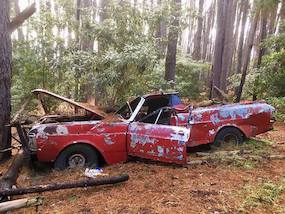
Wreck

There’s icy Nordic noir like Miss Smilla’s Feeling for Snow by Peter Hoeg and Fargo by the Coen brothers if you want to cool down, or stories like the shorts in Sunshine Noir by Annamaria Alfieri and Michael Stanley to warm up with.

Historically, noir has been dominated by white men but I have noticed that modern noir is increasing in diversity as more women like Clare Blanchard, Nikki Dolson, Saira Viola and Jo Perry (published by Fahrenheit Press) pick up the crime pen.

South Australian Museum, Adelaide

I’m currently reading Mistress Murder by Mark Ramsden also published by Fahrenheit Press (I only recently discovered this small crime publisher with attitude and am looking forward to making my way through their collection). Mistress Murder is the story of Susie Goldy, a transgressive, hedonistic, drug addicted dominatrix trying to get on with her life of mayhem whilst being pursued by an unknown malevolent stalker who has taken umbrage with her and her lifestyle. I’m finding the voice of Ramsden hilarious and the black and satirical take on a subculture most of us would never encounter has me fascinated and cringing in equal measure. Just right for a sweltering afternoon.

What are your favourite noir reads?

Main image: Rusted Out, Yandoit, Victoria